The Toyota Camry’s Automatic High Beam system, often shown as AHB, is a driver-assistance feature that helps manage your headlights at night. It can switch between high beams and low beams when conditions allow, but it is not a substitute for paying attention or using the headlight stalk yourself when needed.
Quick Answer
Toyota Camry Automatic High Beam uses a forward-facing camera near the top of the windshield to detect darkness, streetlights, headlights, and taillights. When enabled, it automatically switches between high and low beams to improve nighttime visibility while helping reduce glare for other drivers.
Key Takeaways
- Automatic High Beam only works when the system is turned on, the headlights are set correctly, and road conditions meet the operating requirements.
- Toyota’s recent Camry manual lists automatic high-beam operation at about 21 mph or higher, but older Camry guides may list about 25 mph. Always follow your specific Owner’s Manual.
- Rain, fog, snow, dirt on the windshield camera, curves, hills, bright signs, and vehicles with dim or unusual lighting can affect performance.
- You are still responsible for manually switching high beams on or off whenever the automatic system does not react correctly.
How Does the Toyota Camry’s Automatic High Beam Work?
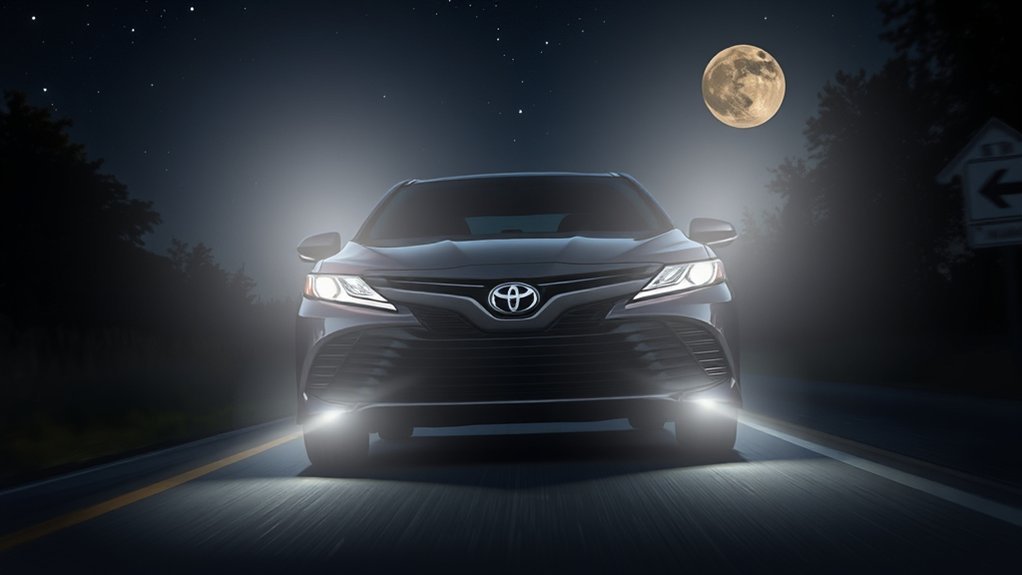
The Toyota Camry’s Automatic High Beam system uses a front camera mounted near the upper portion of the windshield. According to the Toyota Camry Owner’s Manual, this camera checks the brightness of lights ahead, including headlights, taillights, and streetlights, then changes the headlights between high and low beams when appropriate.
In simple terms, the system tries to give you high-beam visibility on dark roads when there is no vehicle ahead, then returns to low beams when it detects traffic or brighter surroundings. This can make night driving easier, especially on rural roads, but it does not guarantee the perfect beam setting in every situation.
Automatic High Beam Operating Conditions
Operating speeds and conditions can vary by model year, market, and software version. For example, Toyota’s recent Camry Hybrid digital manual lists these general conditions:
| System Action | Typical Conditions |
|---|---|
| High beams turn on automatically | Vehicle speed is about 21 mph or more, the road ahead is dark, no vehicle lights are detected ahead, and there are few streetlights. |
| Low beams return automatically | Vehicle speed drops below about 17 mph, the area ahead is not dark, a vehicle ahead has lights on, or there are many streetlights. |
Note: Some older Toyota Camry quick reference guides describe Automatic High Beams as activating above about 25 mph. Check your exact Camry year and Owner’s Manual before relying on a specific speed threshold.
How to Turn On Automatic High Beam in a Toyota Camry
At a Glance
| Time Required | Less than 1 minute |
| Difficulty | Easy |
| Tools Needed | None |
| Cost | No cost |
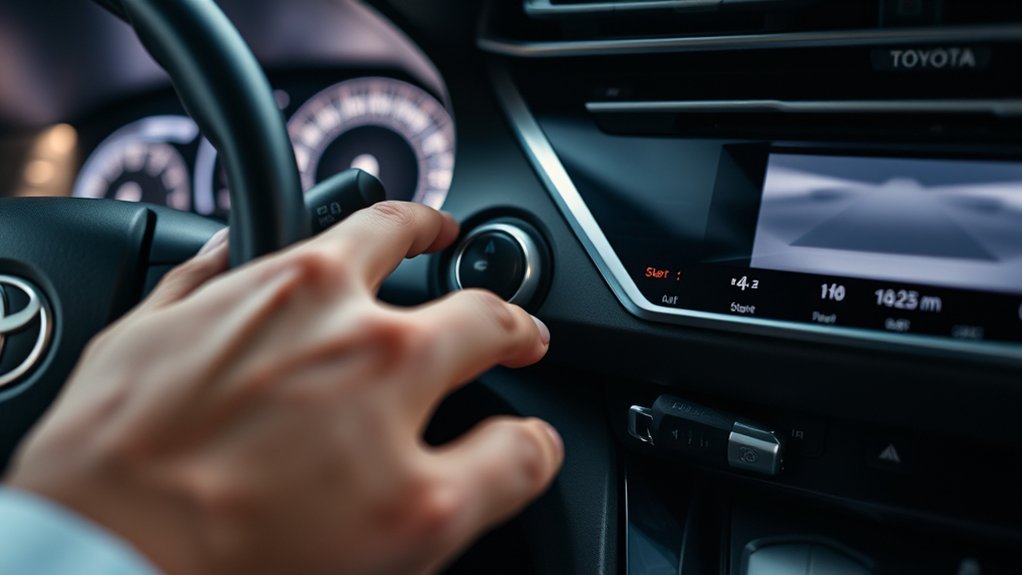
Most Camry models with Automatic High Beam use a button or control near the headlight stalk. The exact layout can vary, so use your Owner’s Manual if the button is not obvious.
- Start the vehicle or turn it to the proper power mode.
- Turn the headlight switch to the automatic or low-beam position specified in your manual.
- Press the Automatic High Beam button if your Camry has a separate AHB switch.
- Look for the AHB indicator on the instrument panel.
- Drive in dark conditions at the required speed. The system will control high beams only when all operating conditions are met.
The Automatic High Beam symbol usually looks like a headlight icon with light rays and the letter A. When the indicator is on, the system is enabled or active depending on your vehicle’s display state.
What Conditions Affect High Beam Functionality?
Driving conditions play an essential role in how well your Toyota Camry’s Automatic High Beam system works. The camera needs a clear view and enough contrast to identify lights ahead.
| Condition | Impact on High Beams |
|---|---|
| Rain, fog, snow, or mist | Can reduce camera visibility and cause delayed or unexpected beam changes. |
| Dirt, ice, stickers, or accessories near the camera | Can block the sensor and prevent accurate detection. |
| Curves, hills, dips, or uneven roads | Can hide or reveal vehicle lights suddenly, changing how the system reacts. |
| Vehicles with dim, dirty, missing, or one-sided lights | May be harder for the camera to detect. |
| Bicycles, motorcycles, or small vehicles | May not always be detected as reliably as larger vehicles. |
| Bright signs, reflective objects, or roadside lighting | May cause the system to stay on low beams or switch unexpectedly. |
Warning: Do not rely only on Automatic High Beam. If the high beams could glare into another driver’s eyes, or if the system fails to dim soon enough, switch to low beams manually.
Why Driver Awareness Is Essential With Automatic High Beams
Automatic High Beam is helpful, but it is not foolproof. Toyota warns drivers not to over-rely on the feature and to manually turn high beams on or off when needed. That matters because real roads include weather, curves, hills, dirty glass, unusual lighting, and vehicles the camera may not recognize quickly.
You should stay ready to use the headlight stalk at any time. This is especially important on two-lane roads, near pedestrians, around cyclists, in construction zones, and when approaching vehicles cresting a hill or rounding a bend.
Pro Tip: Clean the windshield area around the camera when you clean your windshield. A clear camera view is one of the easiest ways to help the system work properly.
Safety Benefits of Automatic High Beams
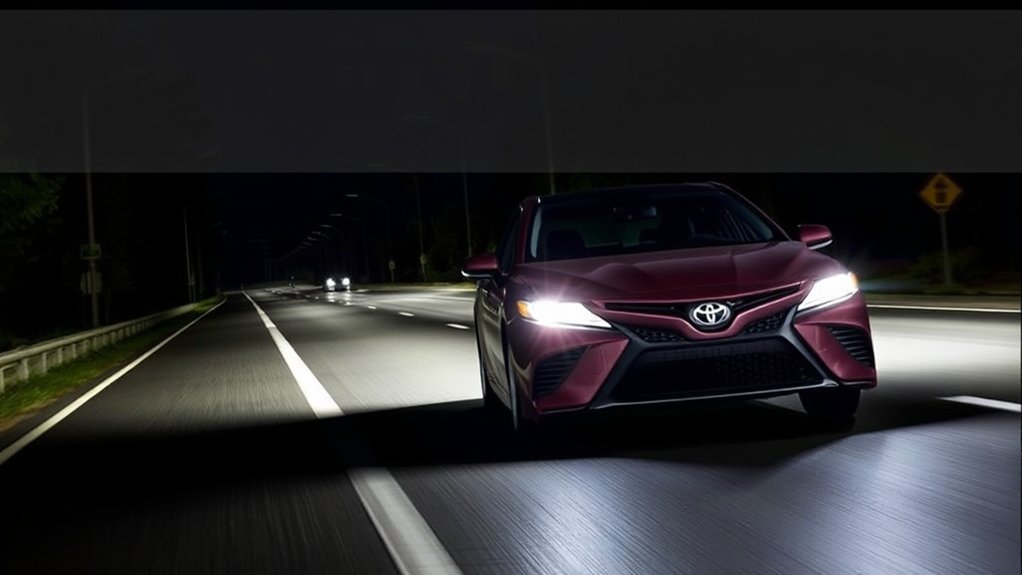
The main benefit of Automatic High Beam is better use of high beams when road conditions allow. High beams can help you see farther ahead on dark roads, while automatic dimming helps reduce glare for drivers in front of you or coming toward you.
The National Safety Council notes that nighttime visibility is limited even with high-beam headlights, which is why clean, correctly aimed headlights and safe speeds matter.
Enhanced Nighttime Visibility
On dark roads with little traffic, Automatic High Beam can help keep high beams on more consistently than a driver might use them manually. This can improve your ability to notice curves, road edges, animals, pedestrians, and debris sooner.
Reduced Glare for Others
The system is designed to return to low beams when it detects headlights or taillights ahead. That helps limit glare for oncoming drivers and drivers you are following.
| Feature | Benefit |
|---|---|
| Automatic beam switching | Helps reduce glare for traffic ahead. |
| High-beam use when conditions allow | Improves forward visibility on dark roads. |
| Camera-based light detection | Responds to headlights, taillights, and surrounding light levels. |
Improved Obstacle Detection
Better forward lighting can give you more time to react. The Insurance Institute for Highway Safety notes that high-beam assist, curve-adaptive headlights, and adaptive driving beams can improve on-road visibility, while proper headlight aim helps limit glare.
Key Limitations of the Automatic High Beam System
The Automatic High Beam system can miss or misread certain situations. Knowing these limits helps you use the feature safely.
- The system may not dim quickly if a vehicle suddenly appears from a curve, hill, side road, or far lane.
- Vehicles with lights turned off, dirty lights, dim lights, one working light, or unusual lighting may be harder to detect.
- Bicycles and small vehicles may not always be detected.
- Fog lights, reflective signs, bright storefronts, or roadside lights may confuse the camera.
- Heavy rain, snow, fog, windshield dirt, or ice can reduce camera performance.
- The system may switch between high and low beams more often than expected in changing light conditions.
These limits are normal for camera-based driver-assistance systems. They do not mean the system is broken, but they do mean the driver must stay involved.
Manually Adjusting Your Headlights: A Safety Guide
Manual control is still important even when Automatic High Beam is turned on. Use the headlight stalk whenever the system does not choose the safest beam setting.
Switch to low beams manually when you approach oncoming traffic, follow another vehicle closely, enter a well-lit area, drive through fog or heavy rain, or notice that your high beams are reflecting harshly off signs, mist, snow, or road surfaces.
Use high beams manually only when it is legal, safe, and helpful. Follow your local traffic laws, and do not use high beams when they could reduce another driver’s visibility.
[Products Worth Considering]
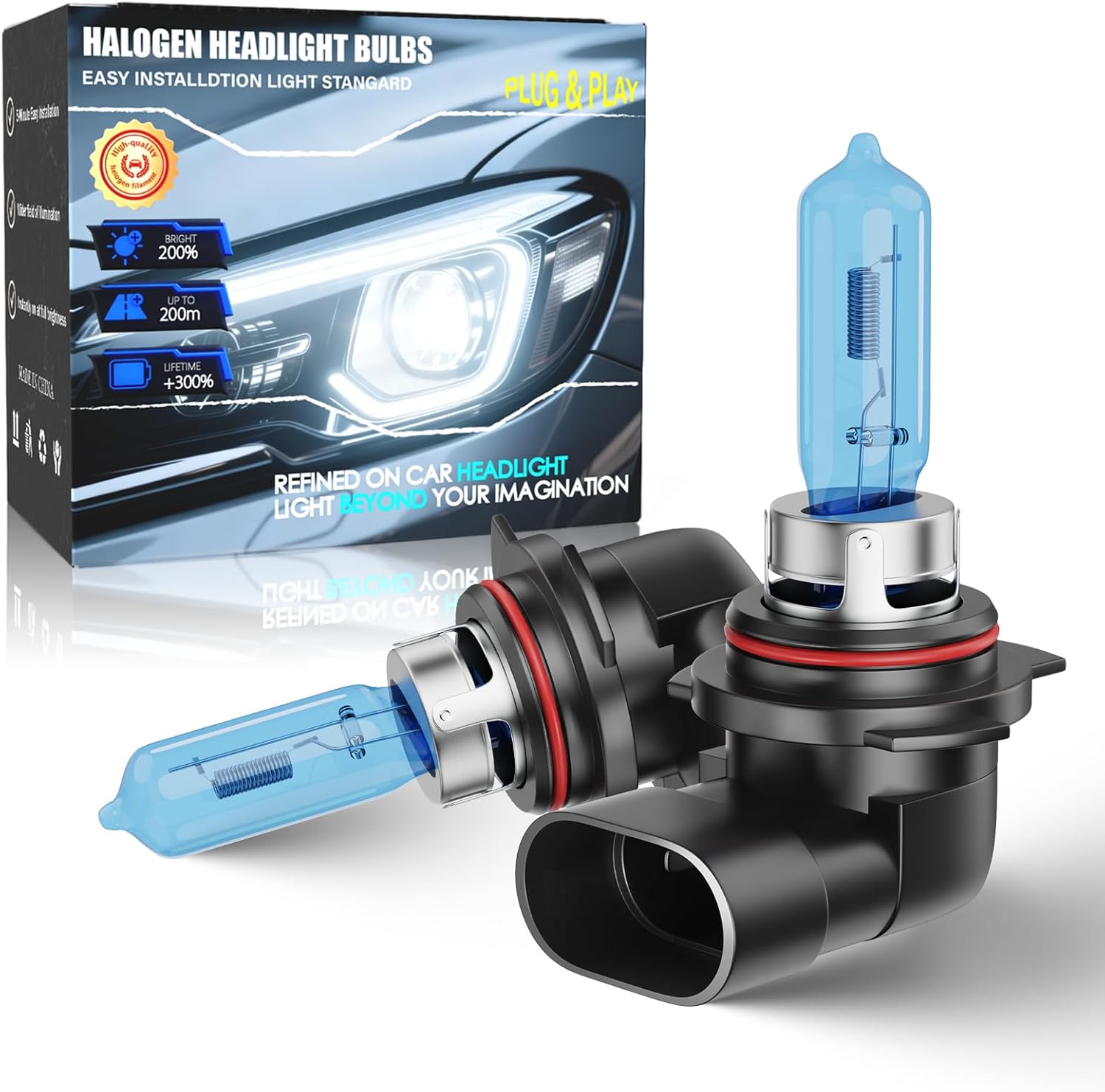
Upgrade your nighttime driving with these halogen headlight bulbs designed for 2016-2019 Toyota RAV4 models. The HIR2/9012 high and low beam combo delivers a brighter white light, a safer beam pattern, and broader road coverage for improved visibility. With plug-and-play installation and durable construction, this two-bulb set is built for a fast, hassle-free replacement.

These SYJIIP halogen headlight bulbs are designed for Toyota RAV4 models from 2013 to 2015, offering a plug-and-play replacement with stock-size fitment for easier installation. They deliver brighter warm white light for improved night visibility while maintaining a safe beam pattern with reduced flicker and fewer CANBUS issues. The four-pack makes it convenient to refresh multiple bulbs or keep spares on hand for reliable driving performance.
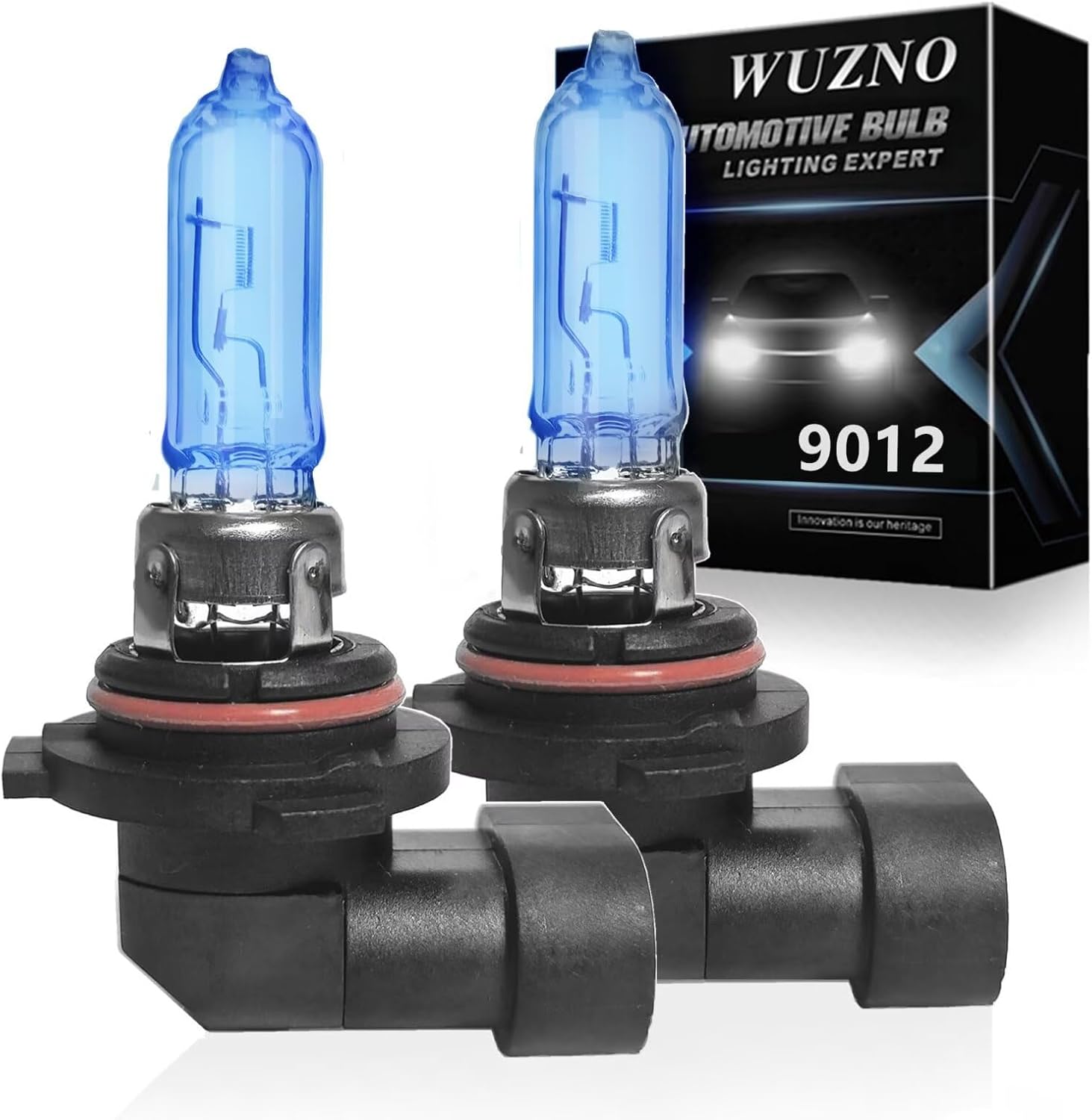
These halogen headlight bulbs are designed as a direct replacement for compatible Toyota models, offering plug-and-play installation with the same base and connector as the original bulbs. They deliver brighter, whiter light for improved visibility and a more modern look while helping reduce eye fatigue during night driving. Built for long life and reliable performance, this two-pack is ideal for restoring or upgrading your vehicle's headlight output.
Tips for Keeping Your High Beam System in Top Shape
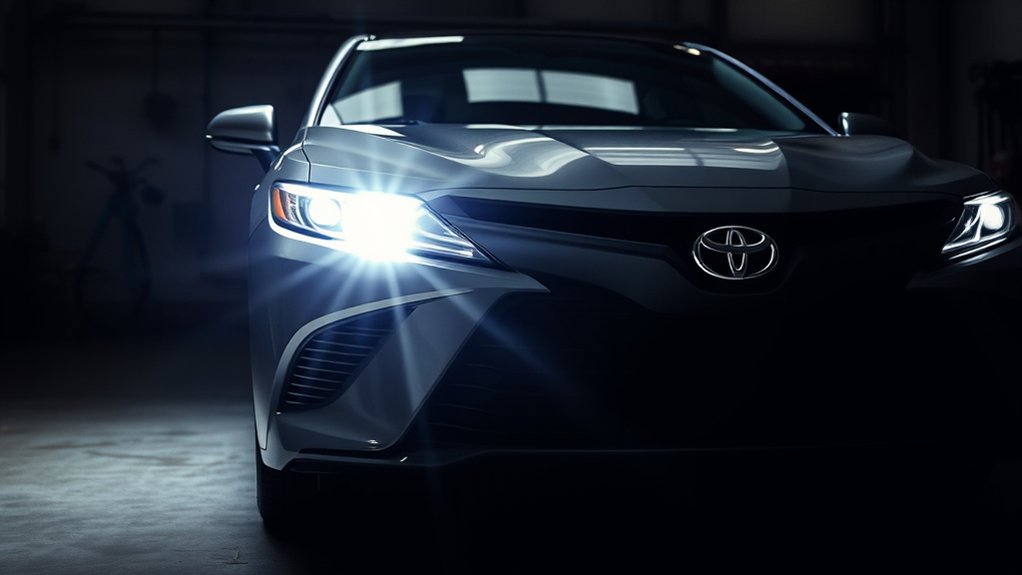
Regular maintenance helps the Automatic High Beam system work as intended. Start with the windshield and headlights because both affect what the camera can see and how well your lights illuminate the road.
- Keep the windshield clean, especially near the camera area at the top of the glass.
- Remove snow, ice, and heavy dirt before driving at night.
- Do not place stickers, dash accessories, or windshield-mounted devices where they can block the camera.
- Clean the headlight lenses so your Camry can project light clearly.
- Replace burned-out bulbs or repair faulty lighting promptly.
- Have headlight aim checked if other drivers flash their lights at you or if visibility seems uneven.
- Review your Owner’s Manual after a windshield replacement, camera service, or driver-assistance system warning.
Note: If the windshield is replaced or the camera area is repaired, the front camera may need inspection or calibration by a qualified technician.
[Products Worth Considering]

SIMPLE AND EFFECTIVE: Just spray on a small amount of cleaning fluid and use the included microfiber cloth to clean and polish the lens of your camera or the screen of your smartphone or tablet.

CRYSTAL CLEAR VISION – EVERY TIME: Our obsessively engineered, best-in-class formula is the only streak-free glasses cleaner that leaves your eyeglasses, sunglasses, camera lenses, and screens ridiculously clean and clear. With almost no effort, our premium ingredients wipe away dirt, grime, and oils, safely and consistently.

Dependable: ZEISS lens cleaner and microfiber cleaning cloth work together to provide a streak-free finish suitable for everyday use.
What to Do If Your High Beam System Fails
If your Toyota Camry’s Automatic High Beam does not work as expected, start with simple checks before assuming there is a major problem.
[Products Worth Considering]

Introducing our new simple lens-cleaning system effective, durable and long lasting
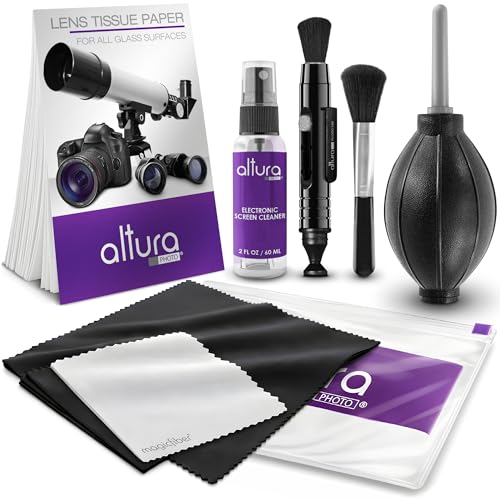
COMPLETE CAMERA CLEANING KIT: Our camera lens cleaning kit includes an alcohol & ammonia-free lens cleaner spray, cleaning brush, lens pen, air blower, MagicFiber microfiber cloths (3), and lens tissue paper wipes (50). Most competing lens cleaning kits cost more and still make you buy the spray and brush separately. Ours doesn't.

LENS KIT INCLUDES: Pump atomizer with specially formulated Oakley cleaning solution, streak free lens cloth and ballistic storage case.
Check System Settings
Make sure Automatic High Beam is enabled and that the headlight switch is in the position required by your Camry’s manual. If the dashboard indicator is not on, the system may not be active.
Inspect Camera Lens
Look at the windshield area in front of the camera. Dirt, fogged glass, ice, stickers, or a dash-mounted accessory can interfere with detection. Clean the glass carefully and remove anything blocking the camera’s view.
Confirm the Driving Conditions
The system will not activate high beams just because it is turned on. The road must be dark enough, vehicle speed must be high enough, and the camera must not detect vehicle lights or heavy street lighting ahead.
Use Manual High Beams When Needed
If the automatic function is unavailable, use the high beams manually when conditions are safe and legal. Return to low beams whenever high beams could glare into another driver’s eyes.
Visit a Toyota Service Center if the Problem Continues
If the indicator flashes, a warning message appears, or the system still fails after cleaning the windshield and checking settings, schedule service. A technician can inspect the camera, wiring, headlight switch, and related driver-assistance systems.
What’s New in the Latest Toyota Camry High Beam Features?
Newer Camry models are part of Toyota’s broader driver-assistance lineup, commonly discussed under Toyota Safety Sense. The basic purpose of Automatic High Beam remains the same: improve nighttime visibility while reducing glare for others.
What has changed over time is the surrounding technology. Newer Toyota Safety Sense packages may use updated camera hardware, improved software, and model-specific settings. However, exact behavior can vary by vehicle year, trim, region, and software version, so your Owner’s Manual is the most reliable source for your Camry.
- Camera-based detection: The system uses a forward-facing camera to read lights and surrounding brightness.
- Automatic switching: It changes between high and low beams when the operating conditions are met.
- Glare reduction: It helps avoid leaving high beams on when another vehicle is ahead.
- Manual override: The driver can still switch beams manually when needed.
- Model-year differences: Activation speed and indicator behavior may differ, so check your exact manual.
Frequently Asked Questions
What is the symbol for Automatic High Beam in a Toyota Camry?
The symbol usually looks like a headlight with light rays and the letter A. Depending on the model year, it may appear on the dashboard display, near the headlight control, or both.
What does Automatic High Beam mean?
Automatic High Beam means the vehicle can switch between high beams and low beams by using a camera to detect darkness, headlights, taillights, and surrounding light. It helps with visibility but does not replace driver judgment.
Why are my Toyota Camry automatic high beams not turning on?
The system may not turn on if it is disabled, the headlight switch is not in the correct position, your speed is too low, the road is not dark enough, there are streetlights or vehicle lights ahead, or the windshield camera is blocked.
Do Toyota Camry automatic high beams work in fog or heavy rain?
They may work poorly in fog, heavy rain, snow, or mist because the camera can have trouble detecting lights accurately. In those conditions, low beams are often safer, and you should control the lights manually when needed.
Can I still use high beams manually?
Yes. You can manually switch high beams on or off with the headlight stalk. Toyota specifically advises drivers to take manual control whenever the automatic system does not choose the correct beam setting.
Is Automatic High Beam the same as adaptive driving beam headlights?
No. Automatic High Beam usually switches the headlights between high and low beams. Adaptive driving beam technology can shape or shade parts of the light pattern to reduce glare while keeping more forward illumination. Features vary by vehicle and market.
Conclusion
The Toyota Camry’s Automatic High Beam system can make night driving easier by using a windshield-mounted camera to switch between high and low beams. It is most useful on dark roads with limited traffic, where better forward visibility can help you spot hazards sooner.
Still, the system has limits. Weather, dirty glass, curves, hills, unusual lighting, and vehicles with dim or missing lights can affect how it works. Keep the camera area clean, understand the dashboard indicator, and be ready to control the headlights manually whenever safety calls for it.
Sources
- Toyota Camry Hybrid Owner’s Manual: AHB Automatic High Beam — operating conditions, camera use, warnings, and limitations.
- Toyota Manuals and Warranties — model-specific Owner’s Manual lookup for current Toyota Camry vehicles.
- Toyota Safety Sense — official Toyota safety-feature information and Owner’s Manual guidance.
- IIHS Headlights Research Area — headlight visibility, glare, high-beam assist, and lighting technology background.
- National Safety Council: Driving at Night — nighttime visibility and headlight safety guidance.