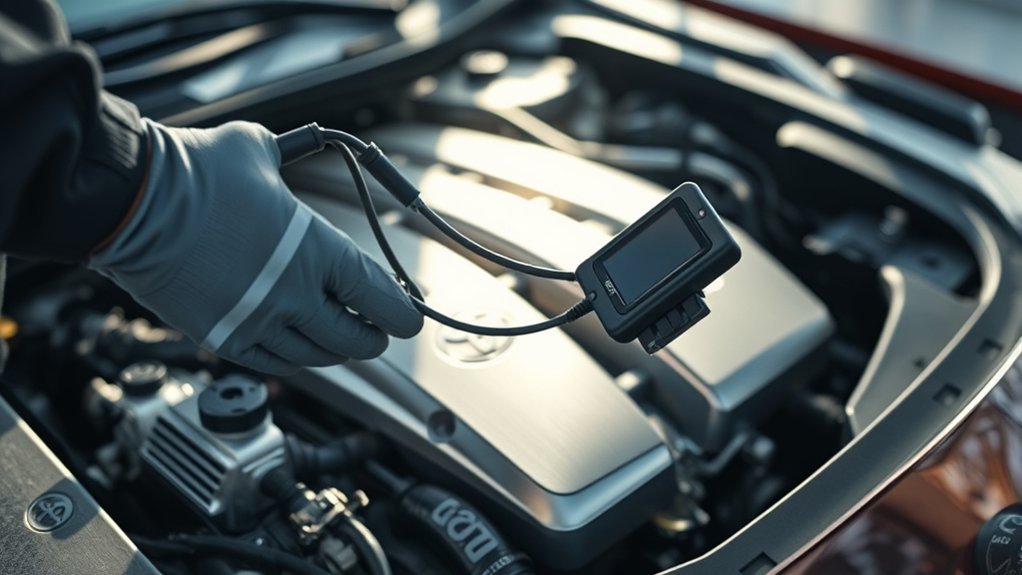
The P0300 code in your Toyota Camry indicates random, multiple cylinder misfires, which can lead to poor performance and hesitation. Common causes include faulty ignition components, clogged fuel injectors, or sensor malfunctions. To fix this, inspect your spark plugs and ignition system, check fuel delivery, and examine for mechanical issues like vacuum leaks. Regular maintenance can prevent future misfires. Keep troubleshooting to uncover detailed steps for resolution and ensuring your engine runs smoothly.
Common Symptoms of P0300 Misfires
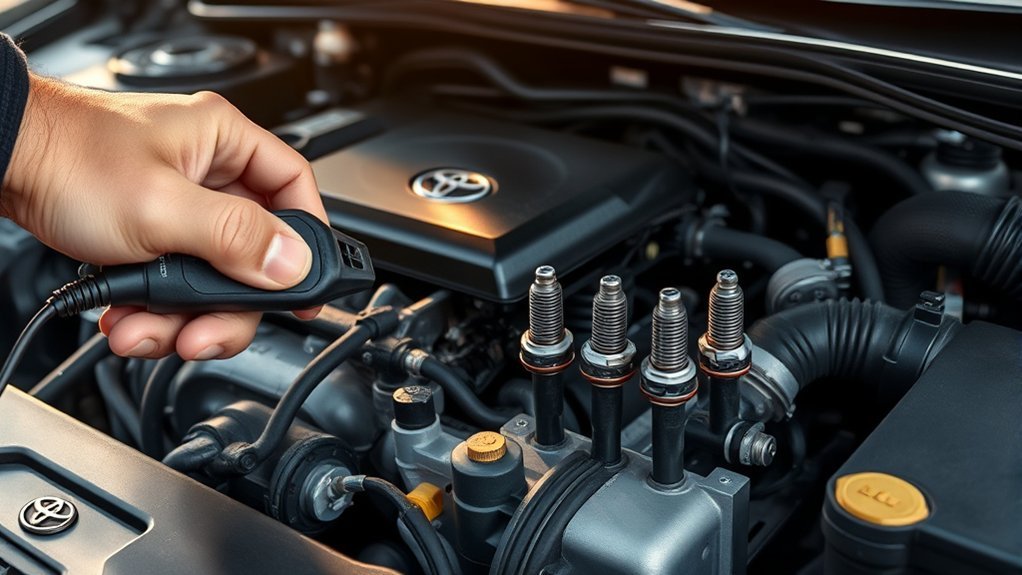
When your Toyota Camry triggers the P0300 code, it’s essential to recognize the common symptoms of misfires. You might notice a rough idle, where the engine feels unstable or shaky, especially at stoplights. This unstable engine performance can lead to a lack of power and acceleration, making your vehicle feel sluggish and slow to reach desired speeds. During acceleration, you may experience vibrations, indicating that the engine isn’t firing smoothly across all cylinders. Additionally, engine hesitation or stumbling can occur during quick accelerations, which compromises both safety and overall performance. These symptoms are all critical for effective misfire detection. By understanding them, you can take proactive steps to address the issue, ensuring your Camry runs smoothly and efficiently. Recognizing these signs early can liberate you from further complications down the road.
Common Causes of P0300 Misfires in Toyota Camrys
Understanding the common causes of P0300 misfires in your Toyota Camry can help you address the issue more effectively. One primary culprit is faulty ignition components, such as worn spark plugs or malfunctioning ignition coils, which can disrupt combustion. In addition, clogged fuel injectors or issues with the fuel pump can hinder fuel delivery, leading to random cylinder misfires. Mechanical problems, like low engine compression or vacuum leaks, also play a significant role by affecting overall engine performance. Moreover, sensor malfunctions—especially with the crankshaft or camshaft position sensors—can cause timing issues that result in multiple cylinder misfires. To prevent these issues, regular maintenance and timely replacement of ignition and fuel system components are essential. By staying proactive, you can help guarantee your Camry runs smoothly and efficiently, reducing the likelihood of P0300 misfires.
Diagnosing P0300 Code Issues
Diagnosing the P0300 code in your Toyota Camry requires a systematic approach to pinpoint the underlying issues. Start by using a diagnostic scanner to retrieve any additional trouble codes; these can offer valuable insights. Next, inspect the ignition system components, especially the spark plugs and ignition coils. Any wear or damage here can lead to multiple cylinder misfires.
After that, check the fuel system for clogged injectors and verify proper fuel pressure, as inadequate fuel delivery can trigger the P0300 code.
Don’t overlook mechanical components; check for vacuum leaks, low compression, or valve train issues that might affect engine performance. Finally, test relevant sensors, like the crankshaft and camshaft position sensors, to rule out timing-related problems that contribute to random misfires. This thorough diagnosis will help you identify the source of the P0300 code effectively.
Step-by-Step Guide to Fixing P0300 Problems
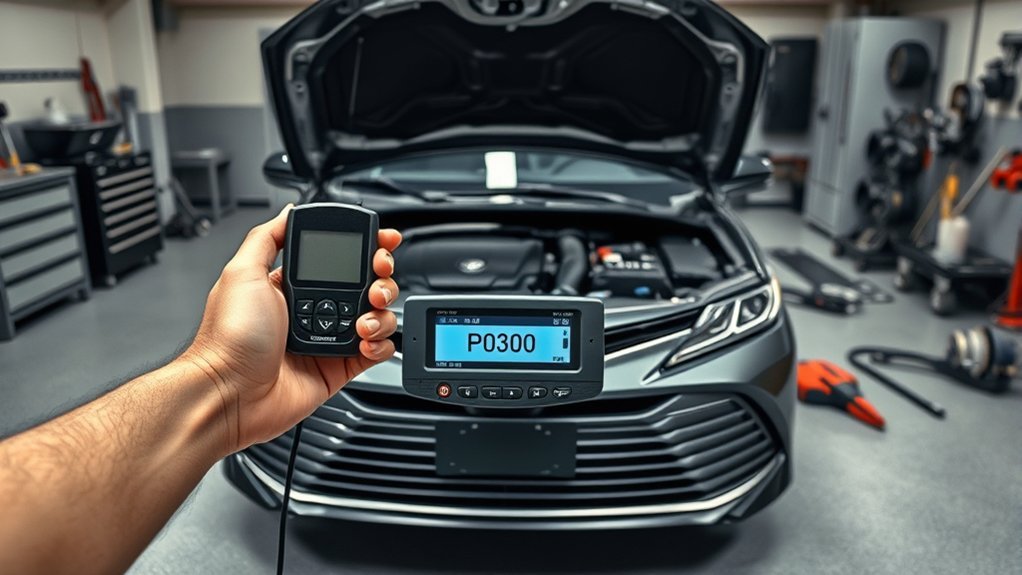
To effectively tackle P0300 code issues in your Toyota Camry, begin by gathering all relevant trouble codes using a diagnostic scanner. This will provide a detailed analysis of potential issues affecting engine performance. Next, inspect spark plugs and ignition components for wear or damage; faulty parts can lead to misfires.
Following this, check the fuel system for clogged injectors and verify fuel pressure to guarantee adequate fuel delivery to the engine. It’s also essential to conduct a thorough inspection of mechanical components, looking for low compression, vacuum leaks, or valve train issues that might contribute to misfires.
Once you’ve made necessary repairs, clear the fault codes with your scanner. Finally, perform a test drive while monitoring the check engine light to confirm the issue has been resolved. This step-by-step approach will help you effectively address the P0300 code and restore proper ignition timing and performance.
Tips for Successful Repairs and Preventing Future Misfires
Once you’ve addressed the P0300 code issues in your Toyota Camry, maintaining peak engine performance requires ongoing attention. Here are some essential tips to help you succeed:
- Spark Plug Maintenance: Regularly inspect and replace spark plugs and ignition coils to prevent wear-related misfires.
- Fuel System Cleanliness: Use quality fuel and routinely check the fuel filter and injectors for clogs.
- Routine Engine Maintenance: Check for vacuum leaks and guarantee proper compression to catch mechanical issues early.
- Sensor Performance: Monitor crankshaft and camshaft sensors, as faulty readings can lead to timing issues and misfires.
Frequently Asked Questions
How Long Can You Drive With a P0300 Code?
You shouldn’t drive long with a P0300 code. If you notice engine misfire symptoms, limit your travel. Use temporary driving tips, but prioritize getting the issue diagnosed to prevent further damage and inefficiency.
Conclusion
To summarize, dealing with the P0300 code in your Toyota Camry can be challenging, but understanding its symptoms and causes makes it manageable. Notably, about 15% of all vehicle misfires are due to ignition system issues. By following the diagnostic steps and repair tips outlined, you can effectively address the problem and reduce the risk of future misfires. Regular maintenance and prompt attention to warning codes are key to keeping your Camry running smoothly.