The P0171 code in your Toyota Camry signifies a lean fuel mixture, meaning your engine’s getting too much air and not enough fuel. Common causes include vacuum leaks, faulty mass airflow sensors, or fuel system issues like clogged filters. Start by inspecting vacuum hoses and the intake manifold for cracks. Use an OBD-II scanner for thorough diagnostics. If problems persist despite fixes, you might want to consult a professional to guarantee peak performance and reliability. Discover more about solutions and preventive measures ahead.
What Causes the P0171 Code in Your Toyota Camry?
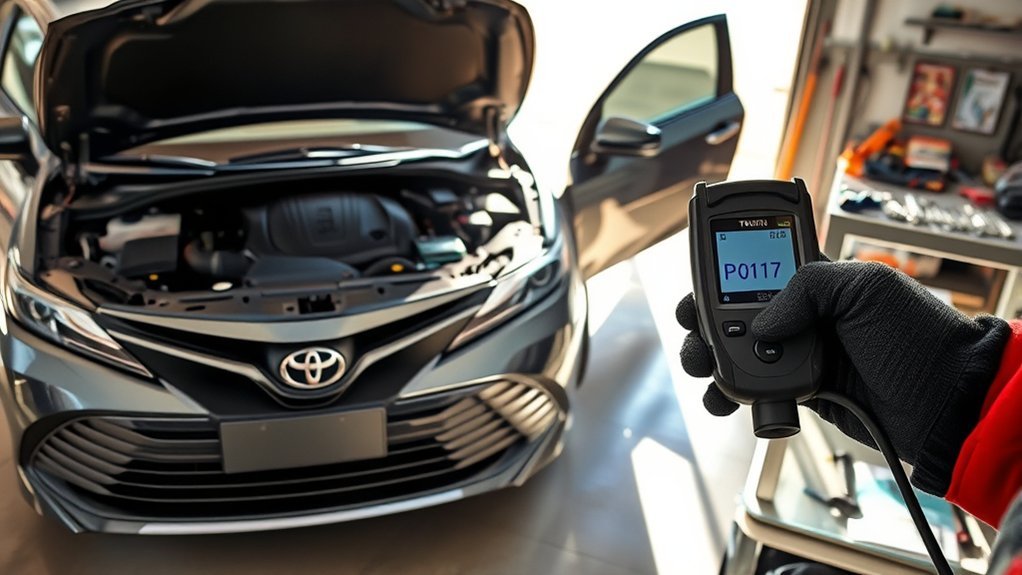
When your Toyota Camry displays the P0171 code, it signals a lean condition in the engine, meaning there’s too much air relative to fuel in the combustion mixture. One primary culprit is a malfunctioning mass airflow (MAF) sensor, which can misread the air intake, leading to incorrect fuel delivery. If the MAF sensor fails, it can cause your fuel injectors to supply insufficient fuel, exacerbating the lean condition.
Additionally, vacuum leaks in hoses or connections can allow excess air to enter the engine. These leaks disrupt the intended air-fuel ratio, triggering the P0171 code. Issues within the fuel system, like a clogged fuel filter or a failing fuel pump, can further restrict fuel delivery, contributing to the problem. Finally, a damaged purge valve may hinder the evaporative emission control system, complicating matters. Addressing these issues promptly is essential for peak engine performance.
Common Causes of P0171 in Your Toyota Camry
When you encounter the P0171 code in your Toyota Camry, it’s essential to identify common causes. Vacuum leaks can disrupt the air-fuel mixture by allowing excess air into the engine. Additionally, fuel system issues, such as insufficient fuel pressure, can lead to the same lean condition, triggering the code.
Vacuum Leaks Identification
Identifying vacuum leaks is essential for addressing the P0171 code in your Toyota Camry, as these leaks can disrupt the air-fuel mixture necessary for peak engine performance. Common areas to inspect include the intake manifold, throttle body, and connections to the brake booster and purge valve. A cracked vacuum hose can introduce excess air, leading to rough idle and diminished performance.
| Location | Common Issues | Impact on Performance |
|---|---|---|
| Intake Manifold | Cracks or loose fittings | Lean mixture, rough idle |
| Throttle Body | Damaged gaskets | Poor throttle response |
| Brake Booster/Purge | Faulty connections | Increased air intake |
Regular inspection and replacement of damaged vacuum hoses can help maintain peak engine performance and prevent lean conditions.
Fuel System Issues
After addressing potential vacuum leaks, it’s important to turn your attention to fuel system issues that can also trigger the P0171 code in your Toyota Camry. Insufficient fuel delivery can stem from a few key problems. First, check your fuel injectors; they may be clogged or malfunctioning, preventing the right amount of fuel from reaching the engine. Next, assess your fuel pressure. A failing fuel pump or a clogged fuel filter can drastically reduce pressure, leading to a lean condition. Additionally, a malfunctioning mass air flow (MAF) sensor can misread airflow, further complicating the mixture. Inspect these components carefully to guarantee a balanced fuel-air ratio and resolve the P0171 code effectively.
Identifying Vacuum Leaks in Your Engine
Identifying vacuum leaks is essential for maintaining your engine’s performance, as even minor leaks can cause a lean fuel mixture. Start by checking common leak sources like cracked hoses and damaged intake manifolds. Use visual inspections and techniques like smoke tests to pinpoint any hidden issues effectively.
Common Leak Sources
Vacuum leaks can stealthily compromise your engine’s performance, allowing excess air into the intake system and leading to a lean fuel mixture that often triggers a P0171 code. Common sources include cracked or damaged vacuum hoses, loose fittings, and faulty components like the purge valve and throttle body. Conducting a thorough vacuum hose inspection is vital; look for cracks, splits, or signs of wear, especially near high-stress areas of the engine. Intake manifold checks can also reveal issues that might not be immediately apparent. Even minor leaks can lead to rough idling and poor performance without triggering a check engine light, so regular inspections are essential for maintaining ideal engine function.
Inspection Techniques Explained
To effectively pinpoint vacuum leaks in your engine, employing a combination of inspection techniques is essential. Start with smoke detection; using a smoke test allows you to visually spot leaks as smoke escapes from cracks in vacuum lines. Inspect all vacuum hoses closely, especially around connections and bends where damage is likely. Don’t overlook components like the purge valve and solenoid valves, as leaks here can drastically affect performance. Additionally, conduct vacuum testing using a propane torch or carburetor cleaner near suspected areas; if a leak exists, the engine’s RPM will fluctuate when the flammable substance is introduced. Regularly check and replace damaged vacuum lines to maintain the proper air-fuel mixture for peak engine performance.
How to Fix Vacuum Leaks?
When troubleshooting a P0171 code, addressing vacuum leaks is crucial for restoring the engine’s performance. Start by inspecting all vacuum hoses for visible cracks, damage, or disconnections. Even minor leaks can trigger a lean condition. For more effective leak detection, consider using a smoke test; this method reveals hard-to-find leaks that might go unnoticed. Don’t forget to check the integrity of the purge valve and its associated hoses, as a malfunctioning purge valve can introduce excess air into the intake system.
If you find any damaged vacuum lines, replace them immediately to restore the proper air-fuel mixture balance, improving engine performance and idle stability. Regularly inspecting and maintaining vacuum components as part of routine servicing can help prevent issues that lead to a lean condition and associated engine codes. Taking these steps will guarantee your Toyota Camry runs smoothly and efficiently.
Key Components to Inspect for P0171 Issues
After addressing potential vacuum leaks, it’s important to inspect key components that could contribute to the P0171 code. Start with a thorough vacuum line inspection; even minor cracks or damage can lead to a lean condition. Next, check the purge valve functionality and its connections. A malfunctioning valve can introduce excess air into the intake manifold, worsening the issue.
Don’t forget to examine the charcoal canister for blockages or damage, as it plays a vital role in fuel vapor management. Verify the intake hoses are secure and free from leaks, allowing the engine to maintain proper air flow. Finally, look for any issues with the mass airflow sensor (MAF); incorrect readings can disrupt the air-fuel mixture, triggering the P0171 code. By systematically inspecting these components, you can effectively diagnose and address the underlying issues.
Preventing Future P0171 Issues
Preventing future P0171 issues requires proactive maintenance and regular inspections of your vehicle’s components. By staying ahead of potential problems, you can guarantee your Toyota Camry runs smoothly and efficiently. Here are some key steps to take:
Proactive maintenance and regular inspections are essential for keeping your Toyota Camry running smoothly and efficiently.
- Regularly inspect and replace vacuum lines to avoid air leaks.
- Verify the purge valve and related components function correctly.
- Maintain proper fuel levels; running low can disrupt the fuel system.
- Conduct periodic smoke tests to identify hidden vacuum leaks in the air intake system.
- Keep the engine and air intake clean to prevent carbon buildup.
When to Seek Professional Help for P0171 Diagnostics
If you’re unable to pinpoint vacuum leaks through visual inspection or smoke testing, it’s important to seek professional help for P0171 diagnostics. Specialized diagnostic tools and expertise are essential for accurately identifying issues that might not be obvious. If you’ve replaced suspected faulty components but the P0171 code persists, a mechanic consultation is critical to evaluate other potential problems, like fuel system malfunctions or sensor issues.
Furthermore, if you experience symptoms such as a rough idle—especially worsening during braking or after fueling—consulting a professional can prevent further engine damage. Advanced diagnostic tests, including the use of an OBD-II scanner, can uncover hidden issues that may not trigger a check engine light. If you lack the experience or tools for a thorough inspection, seeking professional help can save you time and guarantee proper resolution of the P0171 code.
Frequently Asked Questions
How Do I Fix the Code P0171 on My Toyota Camry?
To fix the P0171 code on your Toyota Camry, inspect the fuel system for leaks, check vacuum integrity, clean the air filter, and guarantee the oxygen sensor functions properly. Address any issues immediately for peak performance.
What Is the Most Common Fix for Code P0171?
Fixing code P0171’s like patching a leaky boat; start by inspecting your fuel system for damaged vacuum lines. Ensuring accurate air intake through a clean MAF sensor can also restore balance, keeping your engine afloat.
How Much Does It Cost to Fix a P0171 Code?
Fixing a P0171 code typically costs between $150 and $600. Diagnostic tools help identify issues like vacuum leaks or faulty sensors, influencing repair costs. Regular maintenance can reduce these expenses considerably, ensuring your vehicle runs smoothly.
How Long Can You Drive With a P0171 Code?
Driving with a P0171 code isn’t a walk in the park; ideally, limit it to a few miles. Affected fuel system can compromise engine performance, leading to costly repairs if you push your luck.
Conclusion
In conclusion, if you’re dealing with a P0171 code in your Toyota Camry, addressing vacuum leaks and inspecting key components is essential. Think of your engine as a finely tuned orchestra; even one missing note can throw everything off balance. By staying proactive and following the steps outlined, you can prevent future issues and keep your Camry running smoothly. If problems persist, don’t hesitate to seek professional help—your car deserves the best care.