By: Editorial Team · Last updated: July 31, 2026 · Reviewed against Toyota owner information, Toyota fail-safe diagnostic guidance, EPA OBD-II documentation, and NHTSA recall resources
What’s in This Article
- Toyota Camry Limp Mode Diagnostic Map
- Why Is My Toyota Camry in Limp Mode?
- Common Causes of Limp Mode Activation
- Transmission Issues That Cause Limp Mode
- How Engine Irregularities Lead to Limp Mode
- The Impact of Electrical Problems on Limp Mode
- Do Faulty Sensors Trigger Limp Mode?
- Steps to Safely Restart a Camry in Limp Mode
- How to Diagnose Limp Mode With an OBD-II Scanner
- How to Reduce the Chance of Limp Mode Returning
- When to Stop Driving and Get Professional Help
- Frequently Asked Questions
- Conclusion
- References
A Toyota Camry enters what drivers call limp mode when a control module activates fail-safe operation after detecting a fault. Depending on the model year and failed system, the Camry may limit throttle response, hold one gear, disable certain driver-assistance functions, reduce hybrid-system output, or run only well enough to reach a safe stopping place.
Do not assume the transmission has failed, and do not disconnect the battery before saving the diagnostic information. First, move out of traffic, record every warning light and dashboard message, check for urgent signs such as overheating or low oil pressure, and scan all relevant modules before clearing codes.
Quick Answer
Toyota Camry limp mode is usually a fail-safe response to an electronic-throttle fault, accelerator-pedal or position-sensor disagreement, transmission sensor or solenoid problem, engine misfire, overheating condition, low system voltage, or communication fault. Restart the car only after checking for red warnings, smoke, leaks, severe shaking, or harsh shifting. Save the codes and freeze-frame data before clearing anything. Use a Toyota-capable scanner when a basic OBD-II reader cannot access the transmission, hybrid, ABS/VSC, or network modules.
Key Takeaways
- “Limp mode” is a broad driver term; Toyota service information more often describes system-specific fail-safe control.
- The exact behavior depends on the Camry year, engine or hybrid system, transmission, stored codes, and failed circuit.
- Do not clear codes or disconnect the 12-volt battery before saving stored, pending, permanent, and freeze-frame information.
- A code identifies a system or test failure. It does not automatically prove that the named sensor or module is bad.
- Tow the car if it overheats, shows low oil pressure or braking warnings, flashes the check-engine light, stalls, leaks fluid, or cannot maintain a safe speed.
Toyota Camry Limp Mode Diagnostic Map
Match the symptom to the system before buying parts. This table is a starting point, not a substitute for model-specific service information.
| What the Camry Does | Likely System to Check First | Immediate Action |
|---|---|---|
| Accelerator barely responds or the engine stays near idle | Electronic throttle control, accelerator-pedal position circuits, throttle-position circuits, wiring, power, or ground | Pull over, record messages, restart once only if no red warning is present, then scan the engine module |
| Transmission stays in one gear, shifts harshly, or will not upshift | Transmission speed sensor, shift solenoid, fluid-temperature circuit, wiring, CAN communication, calibration, hydraulic pressure, or internal wear | Avoid highway driving and heavy throttle; tow it if it slips, bangs into gear, overheats, or loses drive |
| Engine shakes and the check-engine light flashes | Active misfire, ignition, fuel delivery, air leak, injector, compression, or timing problem | Stop driving and arrange a tow to reduce catalytic-converter and engine-damage risk |
| Temperature warning appears or power drops while hot | Low coolant, cooling fan, thermostat, water pump, radiator, temperature-sensor circuit, or hybrid-system overheating | Stop safely, switch the vehicle off, and let it cool; never open a hot pressurized cooling system |
| Several unrelated warning lights appear after a weak start | 12-volt battery, charging system, battery terminals, grounds, fuses, or module communication | Check connections and battery condition, but scan before assuming every warning represents a failed component |
| Hybrid-system or reduced-output message appears | Hybrid control, inverter cooling, traction-battery temperature, engine control, accelerator system, or 12-volt supply | Follow the exact dashboard instruction; do not touch orange high-voltage cables or connectors |
Why Is My Toyota Camry in Limp Mode?

Your Toyota Camry enters fail-safe operation when a control module receives data that is missing, implausible, out of range, or unsafe for normal control. The response is not identical on every Camry. One fault may restrict electronic throttle opening, another may hold the transmission in a limited gear range, and another may disable traction or stability functions while the engine continues to run.
The dashboard may show a check-engine light, a hybrid-system message, a temperature warning, or several lights at once. Write down the exact wording and note whether the light is steady or flashing. That information, together with diagnostic trouble codes and freeze-frame data, is more useful than the phrase “limp mode” by itself.
If the problem is mainly weak acceleration with an engine-output warning, compare the symptoms with this guide to Toyota Camry reduced power mode. This page covers the broader fail-safe condition, including transmission, engine, hybrid, electrical, and network faults.
Gas vs. Hybrid Camry: Why the Model Year Matters
Older U.S.-market Camrys may have a conventional gasoline powertrain, a V6, an automatic transmission, or a separate hybrid version. The U.S.-market 2025 Camry moved to an exclusively hybrid lineup, so newer cars can show hybrid-system and reduced-output messages that do not apply to an older gasoline model.[2]
Do not use conventional alternator, transmission, or battery-disconnect advice on a hybrid without checking the exact owner’s manual. The 12-volt system is still important, but the hybrid vehicle also contains high-voltage components that require trained service procedures.
Warning: Stop driving if the Camry shows low oil pressure, braking-power loss, overheating, smoke, a burning smell, a flashing check-engine light, severe shaking, fluid loss, repeated stalling, or unsafe acceleration. Use roadside assistance rather than trying repeated resets.
Common Causes of Limp Mode Activation
The most useful way to group Camry limp-mode causes is by the type of control the car has lost. Electronic throttle faults often limit acceleration. Transmission faults can hold a gear or create harsh shifts. Misfires and temperature problems can reduce power to protect the powertrain. Voltage and communication faults can affect several modules at once.
Start with the warning message, driving symptom, and scan data. Do not start with a parts list.
Transmission and Shift-Control Faults
Possible causes include a speed-sensor signal fault, shift-solenoid circuit problem, automatic-transmission-fluid temperature fault, wiring damage, low control voltage, CAN communication loss, software or calibration concerns, hydraulic-pressure problems, or internal transmission wear. Low fluid from a leak can contribute to pressure loss and overheating, but low fluid is not the only explanation for a Camry that is stuck in one gear.
Many Camry transmissions use a model-specific fluid-level procedure rather than a simple owner check. Do not add fluid by guesswork. Use the exact Toyota procedure and fluid specification for the model year and transmission.
Engine, Throttle, and Misfire Faults
Electronic throttle-control faults are among the clearest Toyota examples of limp or fail-safe operation. The ECM compares redundant accelerator-pedal and throttle-position signals. If the signals disagree or the throttle actuator cannot follow the commanded position, the ECM may restrict throttle control.
An active misfire, severe fuel-delivery problem, incorrect air measurement, cam or crank signal fault, or engine-timing problem can also produce major power loss. A flashing check-engine light or severe shaking is a stop-driving condition, not a reason to keep testing on the road.
Electrical, Voltage, and Communication Faults
A weak 12-volt battery, charging problem, loose battery terminal, poor ground, blown fuse, corroded connector, damaged harness, or CAN communication fault can create multiple warnings or prevent modules from sharing reliable data. Low voltage can make unrelated systems appear to fail at the same time.
Check the battery and charging system before replacing a control module, but do not assume a voltage problem explains every stored code. Save the codes first, correct the power-supply fault, then rescan to see which faults return.
Transmission Issues That Cause Limp Mode
A Camry transmission can enter fail-safe control when the ECM or transmission-control logic cannot trust a sensor, solenoid, pressure, temperature, or communication signal. Depending on the transmission and fault, the car may hold a limited gear, refuse an upshift, shift harshly, or reduce available drive.
[Products Worth Considering]

This engine water pump kit is designed to help maintain reliable cooling performance across a wide range of compatible Toyota, Lexus, Scion, and Pontiac vehicles. Built with aluminum and tested for leak-free operation, it offers a direct replacement solution that supports engine efficiency and long-term service life. The kit includes a professional water pump and gasket for a convenient installation-ready repair.

This 2-piece oil control variable valve timing solenoid set is designed to help restore proper VVT operation and engine performance across a wide range of Toyota, Lexus, Scion, and Pontiac applications. Built to meet or exceed OE performance, it uses quality seals for reliable oil control and helps reduce issues caused by improper oil flow. It is a practical replacement choice for maintaining smooth engine timing and dependable drivability.
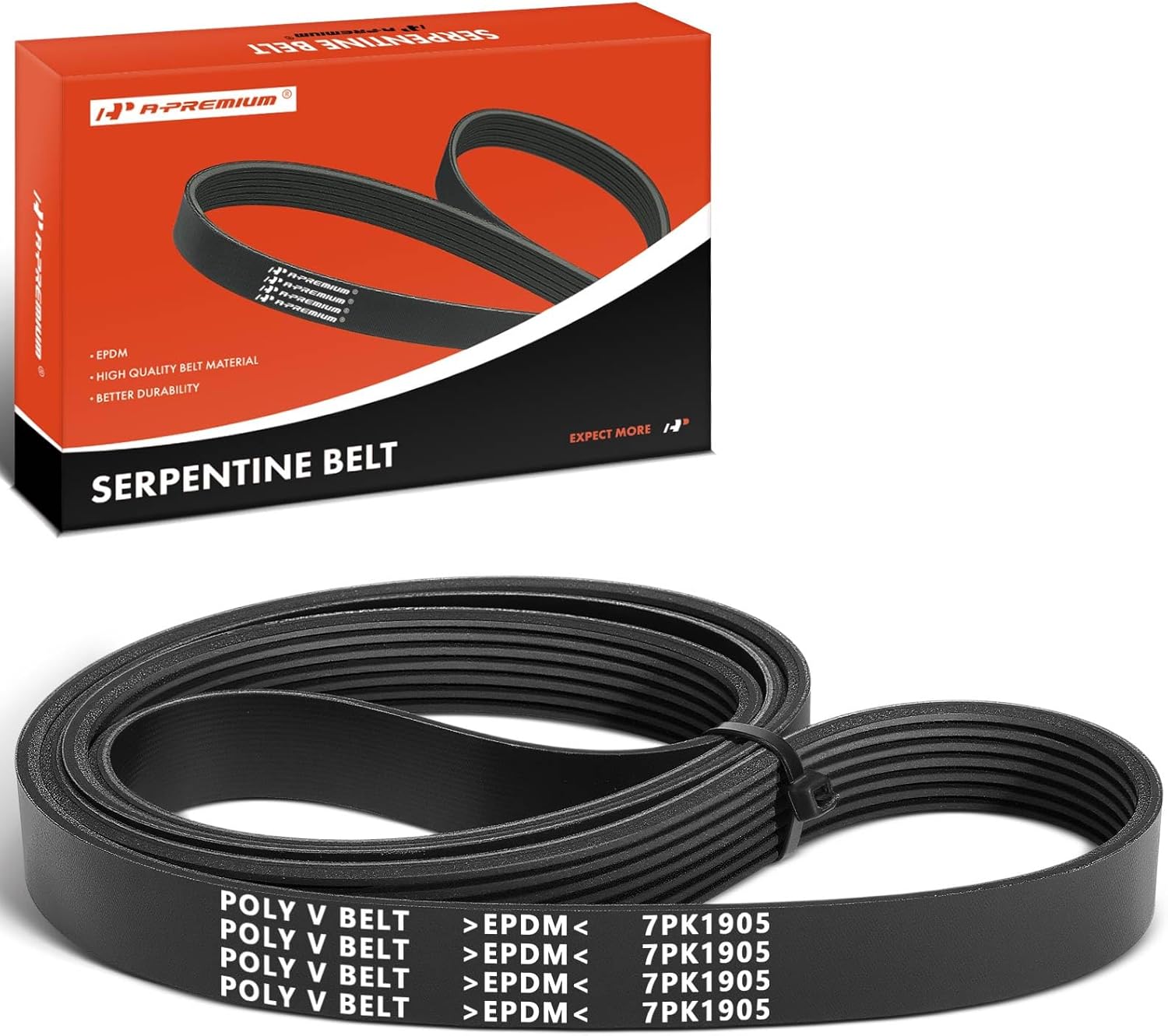
This A-Premium serpentine belt is engineered for select Toyota, Scion, and Pontiac vehicles with the L4 2.4L gas engine, delivering dependable air conditioning drive performance. Made with durable EPDM and precision dimensions, it helps resist cracking, reduce noise, and maintain stable tension for smooth operation. It's designed for straightforward installation and backed by a one-year unlimited-mileage guarantee for added confidence.
Low Transmission Fluid, Leaks, and Overheating
Low automatic-transmission fluid can reduce hydraulic pressure, lubrication, and cooling. Warning signs include a fresh leak, delayed engagement, slipping, a burning odor, or worsening shift quality as the transmission heats up.
Do not rely on fluid color alone, and do not use a universal dipstick method. Some Camrys have sealed or overflow-type level checks that require the vehicle to be level and the fluid to be within a specified temperature range. Adding the wrong amount or wrong fluid can create new problems.
If the transmission slips, loses drive, leaks quickly, smells burnt, or bangs into gear, stop driving. For a symptom-by-symptom comparison, see Toyota Camry hard shifting causes and checks.
Control Module, Solenoid, Sensor, and Wiring Faults
Do not assume the Camry has a separate replaceable transmission control unit. On many model years, transmission control is integrated into the ECM or closely linked through the vehicle network. A scan result that mentions communication or shift control may still come from a power, ground, connector, harness, sensor, solenoid, or calibration issue.
A technician should check module communication, battery voltage, fuses, grounds, connector condition, relevant live data, and circuit integrity before recommending an ECM, transmission assembly, or other high-cost part.
How Engine Irregularities Lead to Limp Mode
Engine problems can cause reduced output when normal combustion or temperature control is no longer reliable. The highest-priority patterns are a flashing check-engine light, severe misfire, overheating, low oil pressure, repeated stalling, or an electronic-throttle warning.
For a misfire, save the cylinder-specific and random-misfire codes, then inspect ignition, fuel, air, compression, and timing in a logical order. Do not replace all coils, injectors, or sensors from a code alone. A code shows what the ECM detected, not necessarily which part caused it.
For overheating, stop the vehicle and let it cool before checking the coolant reservoir or visible leaks. Possible causes include low coolant, a leak, fan-control trouble, a thermostat, water pump, radiator restriction, temperature-sensor circuit, or hybrid-system cooling concern. See the model-specific steps in this Camry coolant check and refill guide.
Pro tip: Before scanning, note the engine temperature, vehicle speed, gear, fuel level, weather, recent repair work, and whether the fault happened during acceleration, cruising, braking, or a cold start. Compare those details with the saved freeze-frame data.
The Impact of Electrical Problems on Limp Mode

Electrical problems can limit engine, transmission, brake-control, and hybrid functions because the modules depend on stable voltage and reliable communication.
- 12-volt battery and charging system: Check for loose or corroded terminals, weak cranking, repeated low-voltage events, and charging warnings. Gas and hybrid Camrys use different charging hardware, so use the correct test procedure.
- Fuses, grounds, and connectors: Inspect only accessible components with the vehicle switched off. Look for loose plugs, moisture, green corrosion, rubbed wiring, or recent service damage.
- CAN communication: A network code can mean a module is offline, but it can also come from low voltage, a blown fuse, damaged wiring, connector trouble, or another module pulling the network down.
For related voltage symptoms, use this Camry charging-system warning guide. Correct the power problem, clear codes only after recording them, and rescan to identify faults that return.
Do Faulty Sensors Trigger Limp Mode?
Yes. A faulty sensor or sensor circuit can trigger fail-safe operation when the control module cannot confirm a safe value. The strongest Toyota examples involve redundant electronic-throttle and accelerator-pedal signals, where the ECM compares two circuits and restricts throttle control when the signals disagree.
Other possible inputs include throttle position, accelerator position, transmission speed, transmission-fluid temperature, engine coolant temperature, crankshaft position, camshaft position, and module communication data. A mass-airflow or oxygen-sensor code may affect engine control, but it does not prove that the sensor itself caused limp mode.
Test the circuit before replacing the sensor. Check the connector, reference voltage, ground, signal response, wiring continuity, related codes, and live data. Intermittent wiring faults often imitate a failed sensor.
[Products Worth Considering]
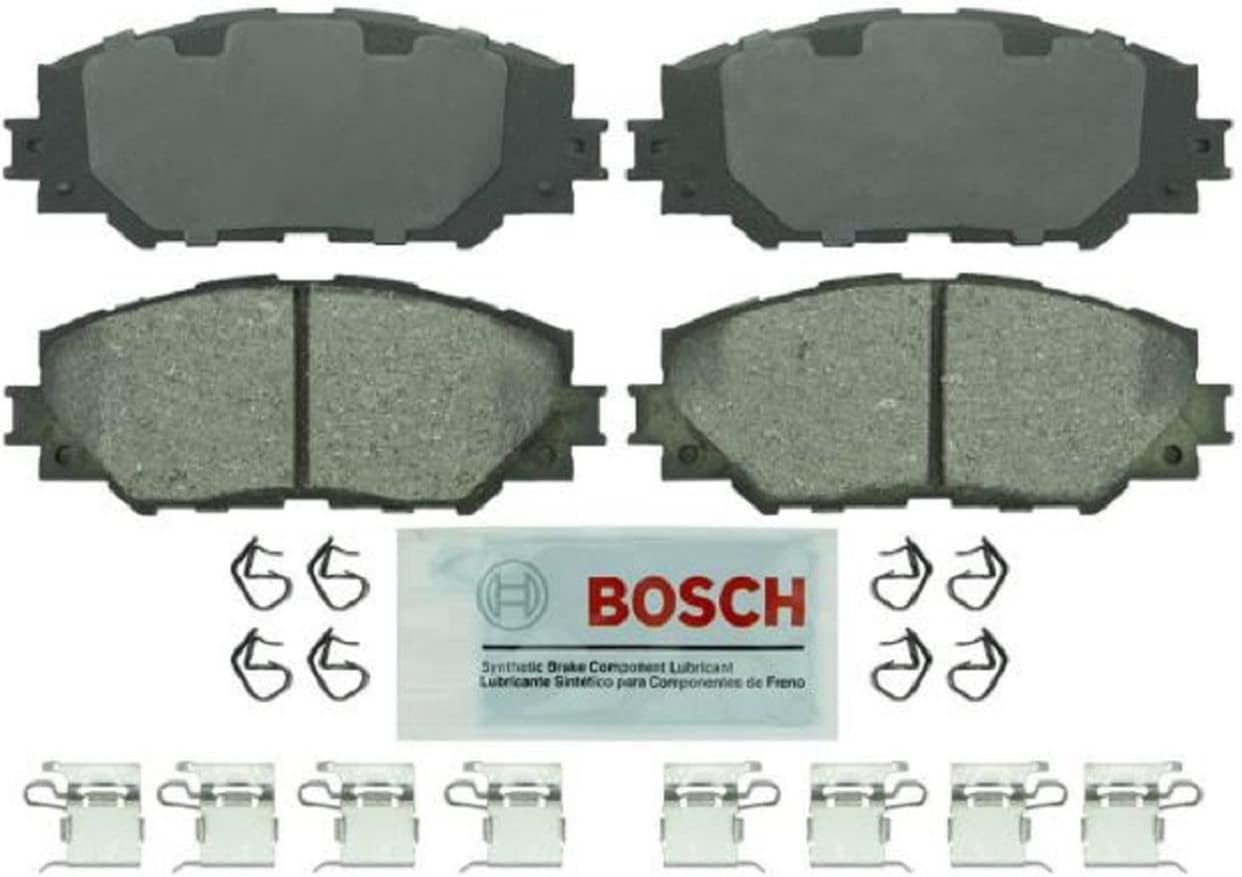
Bosch Blue ceramic front brake pads deliver dependable stopping power with platform-specific friction material designed for select Lexus, Pontiac, Scion, and Toyota vehicles. OE-style shims, slots, and chamfers help promote quiet braking, while the rust-inhibitive coating supports long-lasting performance and cleaner operation. The set includes hardware and synthetic lubricant for easier installation on one axle.

Bendix Premium Ceramic Front Brake Pads are engineered to match original equipment fit, form, and function for a straightforward replacement. Built with durable materials to help resist wear and corrosion, they support consistent braking performance and reduced brake fade for everyday driving. These pads are a dependable choice for compatible Pontiac, Scion, Toyota, and related vehicles.

COMPREHENSIVE PROBE SET - Includes 15 stainless steel probes (straight/90°/135° angles), 5 banana plug wires with alligator clips, and 2 nickel-plated copper clips for complete automotive circuit diagnosis
Steps to Safely Restart a Camry in Limp Mode
A restart may end fail-safe operation if the fault is no longer present, but it does not repair the cause. Treat it as a one-time safety check, not a reset procedure.
- Move to a safe place: Leave traffic, shift to Park, set the parking brake, and turn on the hazard lights.
- Record the evidence: Photograph or write down every warning light and message. Note whether the check-engine light is steady or flashing.
- Check for stop-driving signs: Look for overheating, low oil pressure, brake warnings, smoke, severe shaking, fluid leaks, a burning smell, or repeated stalling.
- Switch the vehicle off: Wait at least a minute so the modules can power down. Do not press the accelerator during restart.
- Restart once: If the warning is gone and the car runs normally, drive only as needed to reach a safe diagnostic location. If the fault returns or the car cannot accelerate safely, stop and tow it.
- Scan before clearing: Save stored, pending, permanent, manufacturer-specific, and freeze-frame data. Scan all relevant modules, not only the engine.
Do not disconnect the 12-volt battery as the first reset step. Battery disconnection can erase useful diagnostic data and emissions readiness information, disturb learned values, and create model-specific initialization needs. It is especially poor advice for a broad gas-and-hybrid Camry guide.
Note: If a repair procedure for your exact model year requires battery disconnection, follow the Toyota procedure for shutdown, reconnection, and any required initialization.[1] Do not touch hybrid high-voltage components.
How to Diagnose Limp Mode With an OBD-II Scanner
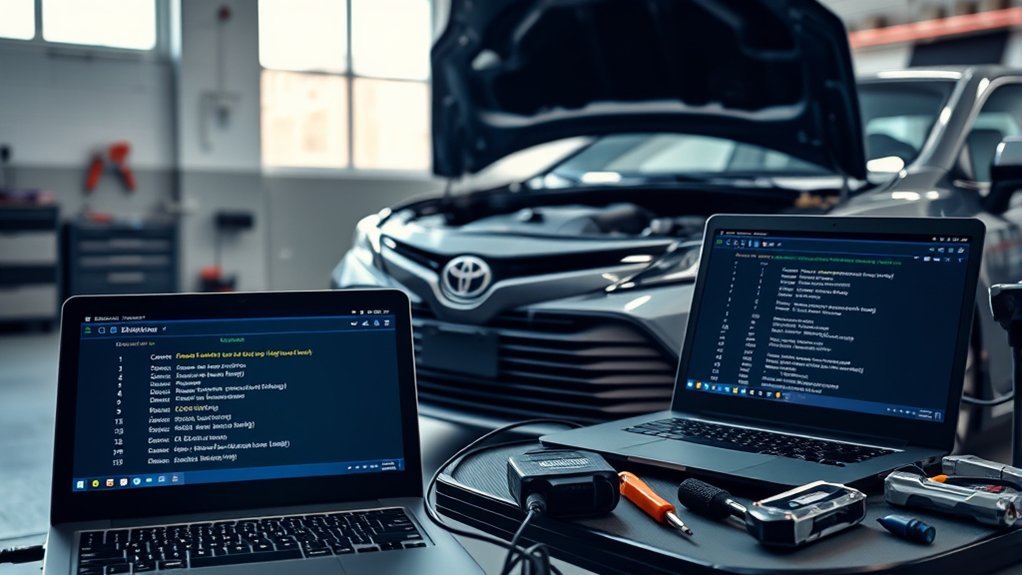
An OBD-II scanner is the first diagnostic tool, but scanner coverage matters. A basic reader normally focuses on standardized emissions-related powertrain information.[3] A Toyota-capable enhanced scanner may be needed for transmission, hybrid, ABS/VSC, body, and network codes or for model-specific live data.
- Connect the scanner with the vehicle switched off unless the scanner instructions say otherwise.
- Turn the ignition to ON or place the hybrid system in the instructed diagnostic state without driving.
- Run a full-system or health scan when the tool supports it.
- Save stored, pending, permanent, and history codes plus freeze-frame data.
- Write down which module stored each code. The same code number or warning can have different diagnostic meaning by model year and system.
- Check live data and circuit conditions before replacing a sensor, solenoid, throttle body, module, or transmission.
- Repair the verified cause, clear the codes, complete the required drive or confirmation test, and rescan.
[Products Worth Considering]

[Easy to Use—Work Out of the Box] + [FOXWELL 2026 New Version] FOXWELL NT604 Elite scan tool is the 2026 new version from FOXWELL, designed for car owners who want to figure out the cause of issues before fixing car problems by scanning common systems like ABS, SRS, engine, and transmission. The NT604 Elite obd2 scanner diagnostic tool comes with the latest software—no need to waste time downloading software first. Plug the scanner into the OBDII port with OBDII cable to start the diagnosis.

CEL Doctor: The ANCEL AD310 is one of the best-selling OBD II scanners on the market and is recommended by Scotty Kilmer, a YouTuber and auto mechanic. It can easily determine the cause of the check engine light coming on. After repairing the vehicle's problems, it can quickly read and clear diagnostic trouble codes of emission system, read live data & hard memory data, view freeze frame, I/M monitor readiness and collect vehicle information.
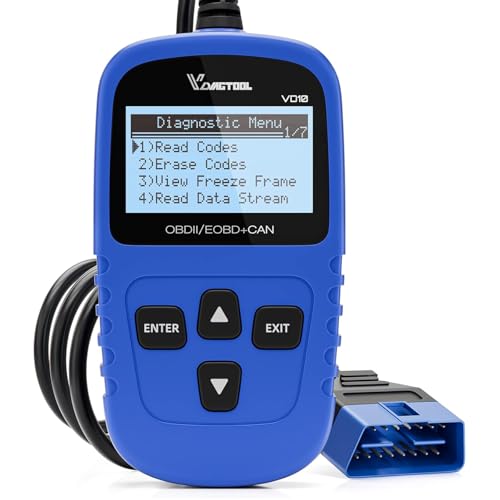
【A MUST-HAVE TOOL FOR DIYERS】 - VDIAGTOOL VD10 car code reader is an incredibly useful obd scanner for each car owner or hobbyist, even for those with little to no experience when it comes to vehicle mechanics! Similar to a fixd car diagnostic tool, using this car diagnostic scanner is extremely easy. All you have to do is attach it to your car OBDII port and you can diagnose car problems in seconds! Read Codes (DTCs); Clear Codes; Live Data; View Freeze Frame; I/M Readiness; Vehicle Information.
Common Code Families Linked to Fail-Safe Operation
| Code Family | System Area | What to Check Before Replacing Parts |
|---|---|---|
| P0120-series, P2100-series, P2110-series, P2120-series, P2135/P2138 | Throttle actuator, throttle-position, or accelerator-pedal circuits | Connector condition, reference voltage, grounds, dual-signal agreement, wiring, throttle contamination, and commanded versus actual position |
| P0300 and P0301-P030x | Random or cylinder-specific misfire | Ignition, injector operation, intake leaks, fuel pressure, compression, timing, and freeze-frame conditions |
| P07xx and manufacturer-specific transmission codes | Shift solenoids, speed sensors, temperature, pressure, ratio, or transmission control | Fluid leaks and correct level procedure, wiring, power, grounds, live speed data, solenoid circuits, calibration, and hydraulic or mechanical tests |
| P0115-P0118 and related temperature codes | Engine coolant temperature circuit | Actual coolant level and temperature, sensor reading versus ambient temperature, connector, wiring, reference voltage, thermostat, and cooling-system operation |
| U-codes such as module-communication faults | CAN network or missing module communication | 12-volt supply, fuses, grounds, connectors, wiring, terminating resistance, and which modules are offline |
These are examples, not a universal Camry code list. The exact fail-safe response and test sequence depend on the model year, engine, hybrid system, transmission, and subcode. For scanner setup and code-reading steps, see how to read OBD-II codes on a Toyota Camry.
How to Reduce the Chance of Limp Mode Returning
Maintenance cannot prevent every sensor, wiring, or module fault, but it can reduce avoidable powertrain and voltage problems.
- Use the model-specific schedule: Follow the Toyota maintenance guide for the exact year, engine, hybrid system, and operating conditions.
- Repair leaks early: Oil, coolant, and transmission-fluid loss can create heat, pressure, lubrication, and electrical-connector problems.
- Protect the 12-volt supply: Keep terminals clean and secure, test a weak battery, and diagnose charging warnings promptly.
- Do not ignore intermittent codes: Save pending codes and freeze-frame data before they become a repeat breakdown.
- Inspect recent repair areas: If limp mode began after battery, intake, throttle-body, transmission, axle, or engine work, recheck disturbed connectors, grounds, hoses, and wiring.
- Check recalls by VIN: Use Toyota or NHTSA’s VIN lookup because campaigns are vehicle-specific, not based on symptom alone.[4]
Keep a log of dates, mileage, codes, weather, fuel level, and driving conditions. Repeat patterns can reveal heat-related, vibration-related, or low-voltage faults that a one-time inspection misses.
When to Stop Driving and Get Professional Help
Arrange a tow immediately if the Camry has any of these symptoms:
- Low oil-pressure, braking-power, or overheating warning
- Flashing check-engine light or severe engine shaking
- Smoke, burning smell, rapid fluid loss, or visible fuel leak
- Repeated stalling or inability to maintain a safe traffic speed
- Transmission slipping, loss of drive, severe banging, or overheating
- Hybrid-system message that instructs you to stop or visit a dealer immediately
A careful, stable drive to a nearby repair location may be reasonable only when there are no red warnings, no overheating, no flashing check-engine light, no severe vibration, no fluid loss, and the vehicle can accelerate, steer, and brake safely. Avoid highways, steep grades, towing, and heavy throttle.
Ask the shop for the full scan report, code status, freeze-frame data, tested circuit values, and the reason a part failed the test. That evidence is more useful than a recommendation based only on a code description.
Frequently Asked Questions
Can I Drive My Toyota Camry in Limp Mode?
Only when the Camry remains stable, has no red warning, no overheating, no flashing check-engine light, no severe shaking or fluid leak, and can keep up with traffic safely. Drive only far enough to leave danger or reach nearby diagnostics. Tow it when acceleration, shifting, braking, steering, or engine operation feels unsafe.
How Long Can Limp Mode Last?
Fail-safe operation can last until the module sees a passing condition, the vehicle is restarted, or the underlying fault is repaired. A restart may temporarily restore normal operation, but an intermittent wiring, sensor, voltage, heat, or pressure fault can trigger it again without warning.
Will Limp Mode Damage My Engine?
Limp mode is designed to reduce risk, but it cannot make an unsafe fault harmless. Driving with overheating, low oil pressure, an active misfire, transmission-fluid loss, severe slipping, or repeated stalling can still damage the engine, catalytic converter, transmission, or hybrid system.
Can I Reset Limp Mode Without a Scanner?
You can switch the vehicle off and restart it once after checking for urgent warnings. Do not disconnect the battery merely to erase limp mode. Without a scanner, you cannot save the codes, freeze-frame data, or module information needed to diagnose why the fail-safe response occurred.
How Often Does Limp Mode Occur in Camrys?
It is not a scheduled or normal driving event. One occurrence can come from a temporary voltage or signal problem, but any repeat occurrence needs diagnosis. Record the exact conditions each time instead of repeatedly clearing the warning.
What Codes Can Trigger Limp Mode in a Toyota Camry?
Possible groups include throttle and accelerator-pedal codes, transmission sensor or solenoid codes, misfire codes, temperature-related codes, and module-communication codes. Not every code in those groups activates fail-safe control on every Camry, and the code alone does not identify the failed part.
Why Did Camry Limp Mode Return After a Restart?
The restart ended the temporary fail-safe state, but the module detected the same fault again. Heat, vibration, moisture, low voltage, a loose connector, an intermittent sensor signal, or a mechanical problem may appear only under certain driving conditions. Use the saved code status, freeze-frame data, and symptom timing to reproduce the fault safely.
Conclusion
Toyota Camry limp mode is a system-specific fail-safe response, not a diagnosis. Record the warning message, rule out urgent safety conditions, restart only once when safe, and save all scan data before clearing codes. Then test the affected circuit or system instead of replacing the part named in the code description. Tow the car when it overheats, misfires severely, loses oil pressure, slips, stalls, leaks fluid, or cannot move safely.
References
- Toyota Manuals and Warranties — Toyota Owners, accessed July 31, 2026
- Toyota Camry Goes Exclusively Hybrid — Toyota USA Newsroom, April 18, 2024
- On-Board Diagnostics — U.S. Environmental Protection Agency, accessed July 31, 2026
- Vehicle Recalls and VIN Lookup — National Highway Traffic Safety Administration, accessed July 31, 2026