If your Toyota Camry’s interior lights aren’t working, start by checking the overhead light switch; it should be set to “door.” Inspect fuse number three (10 amp) and fuse number 36 for faults, as blown fuses can disrupt functionality. In moonroof models, verify map light settings are correct. Don’t forget to consult your vehicle manual for specific features. If these steps don’t resolve the issue, you’ll find additional troubleshooting tips that might help.
Top Causes of Interior Light Failures in Your Camry
When you notice your Toyota Camry’s interior lights aren’t working, it can be frustrating, especially if you rely on them for visibility. One common issue is the switch position; make sure it’s set to “door” for automatic activation when doors open. If it’s not, your interior lights won’t function as intended. Different interior light types might also complicate matters, especially in models with moonroofs that come with additional controls.
Another critical factor is the fuse. A malfunctioning fuse, specifically fuse number three (10 amp) under the driver’s side dash or fuse number 36 in the engine compartment, can lead to complete interior light failures. Finally, if previous owners altered settings or found hidden switches, this might create inconsistencies. Regularly reviewing your vehicle manual and checking light settings is essential for maintaining proper functionality in your Camry’s interior lights.
Quick Guide to Checking Fuses for Interior Lights
To guarantee your Toyota Camry’s interior lights function properly, start by checking the relevant fuses. Begin with the first fuse box under the driver’s side dash for fuse number three (10 amp), vital for the interior lights in the 2012-2014 models. Next, locate the second fuse box under the hood near the battery to inspect fuse number 36. Even if fuses look intact, faulty connections can occur, so fuse testing is critical to avoid replacing other components unnecessarily. Additionally, verify the overhead light switch is set to the “door” position for automatic activation.
| Fuse Location | Fuse Number |
|---|---|
| Under Dash | 3 (10 amp) |
| Under Hood | 36 |
| Function | Interior Lights |
| Testing Importance | Essential for diagnosing issues |
Refer to your vehicle manual for detailed fuse labeling and functions.
Differences in Camry Lighting Systems: What You Need to Know
Understanding the differences in the Toyota Camry’s lighting systems is essential, especially since features vary greatly between models with and without moonroofs. Here’s what you need to know about these lighting variations:
- Models without moonroofs: Typically have a single overhead light for cabin illumination.
- Models with moonroofs: Include additional controls for front map lights, enhancing functionality.
- Trim-specific wiring: Certain trims may alter how lights respond to door activation or manual control, adding complexity.
Keep in mind that front personal lights might not activate when the door opens, unlike the main interior lights. Previous ownership or modifications can also affect light settings, so always check all accessible controls and settings. Understanding these moonroof features helps you troubleshoot lighting issues more effectively, leading to a more liberated driving experience.
Troubleshoot Your Camry’s Interior Light Issues Step-by-Step
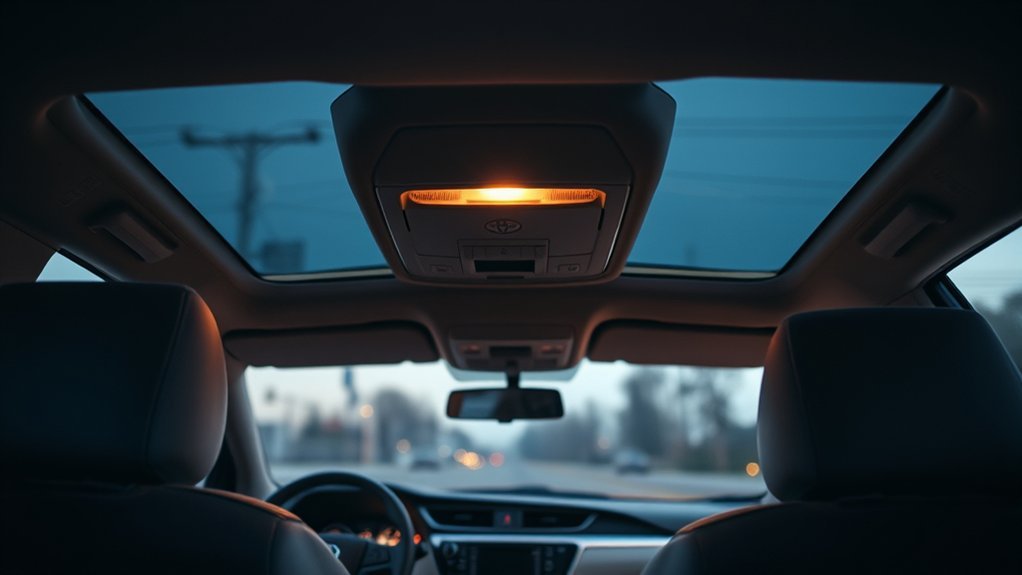
1. To troubleshoot your Camry’s interior light issues, start by checking the interior light switches. Confirm the overhead light is set to the “door” position, which activates the lights when the doors open. Next, look for any specific settings in the main console that control interior light timing.
| Step | Action |
|---|---|
| 1. Check Overhead Switch | Set to “door” position |
| 2. Console Settings | Look for interior light activation options |
| 3. Moonroof Controls | Verify front map light settings |
| 4. Inspect Fuses | Check fuse #3 (10 amp) and fuse #36 |
| 5. Consult Manual | Refer to the vehicle manual or dealer for help |
If these troubleshooting techniques don’t resolve the issue, consult your vehicle manual for further assistance. This structured approach can help you pinpoint the problem effectively.
Tips for Adjusting Your Camry’s Interior Light Settings
Adjusting your Camry’s interior light settings can enhance your driving experience and confirm functionality. Here are some tips to make sure your lights operate as intended:
- Check the switch position on the ceiling light; set it to “door” for activation with door openings.
- Experiment with buttons in the overhead console to find specific controls you might’ve overlooked.
- Review your vehicle manual for unique settings related to interior lighting that vary by model.
Additionally, verify that no previous owners altered the light settings, as this can lead to switch malfunctions and impact light dimming. Don’t forget to check both front and back ceiling light controls, especially in models with separate settings for different seating areas. By following these steps, you’ll make certain your Camry’s interior lights operate smoothly, enhancing both comfort and safety on the road.
What to Do if Troubleshooting Doesn’t Solve Your Light Issues?
If your troubleshooting efforts haven’t resolved the issue with your Camry’s interior lights, there are several steps to take next. First, check that the overhead light switch is in the “door” position, as some models require this setting for door-activated lighting. Next, consult your vehicle manual for specific diagrams related to your interior light system, since different trims may vary.
Inspect the under-dash and under-hood fuse boxes for blown fuses, particularly fuse number three (10 amp) and fuse number 36; these are essential for interior light functionality. If you suspect wiring issues, engage with community forums or consult a dealer to clarify any modifications made by previous owners. Finally, test the actual bulb types to confirm they’re functioning properly. If the bulbs are fine, the problem likely lies within the electrical system.
Frequently Asked Questions
How Do I Replace a Blown Fuse in My Camry?
To replace a blown fuse in your Camry, locate the fuse box under the dash or hood. Identify the faulty fuse, remove it with pliers, and insert a new one for fuse replacement. Always check the fuse location first.
Can a Bad Battery Affect Interior Lights?
Yes, a bad battery can definitely affect your interior lights. In fact, about 50% of electrical issues stem from battery problems. Regular battery maintenance and electrical troubleshooting can help prevent these frustrating situations.
Where Can I Buy Replacement Fuses for My Camry?
You can buy replacement fuses at auto parts stores or online retailers. Check your owner’s manual for specific fuse types and their location in your Toyota Camry to guarantee compatibility.
Why Do My Interior Lights Flicker Occasionally?
Your interior lights might flicker due to loose connections, faulty bulbs, or electrical issues. Try these troubleshooting tips: check connections, replace bulbs, and inspect wiring. Identifying flickering causes can help restore consistent lighting in your vehicle.
Are There Any Common Wiring Issues to Check?
Yes, check common wiring issues like damaged connection points. Use wiring diagrams to trace paths and identify faults. Verify all connections are secure, and inspect for frayed wires that might disrupt your interior lights’ functionality.
Conclusion
So, you’ve followed all the steps and still find yourself in the dark? Ironically, even the brightest minds can overlook the simplest solutions. If your Toyota Camry’s interior lights remain stubbornly off, it’s time to consult a professional or dig deeper into wiring issues. Remember, sometimes the fix is as elusive as finding the perfect parking spot. Don’t let a little darkness dampen your drive—shine a light on the problem!