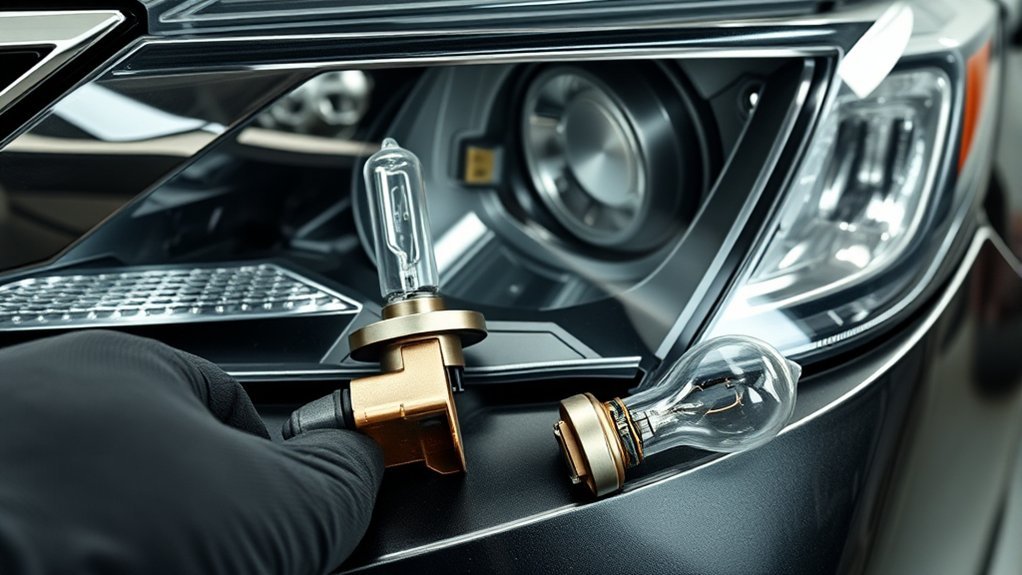
You’ll find Camry headlight bulbs vary by year and assembly: low beams are usually H11 (some years use H8/H9), highs are commonly 9005 (9006 in some trims), and rear signals/brakes typically use 3156/3157 or 7440/7443 while backups can be 7440/7443 or T15/921/912. Always confirm the owner’s manual or socket before buying aftermarket parts to match base, lumen, and CAN‑Bus needs; continue for precise year‑by‑year codes and fitment tips.
Who This Guide Helps and What You’ll Learn
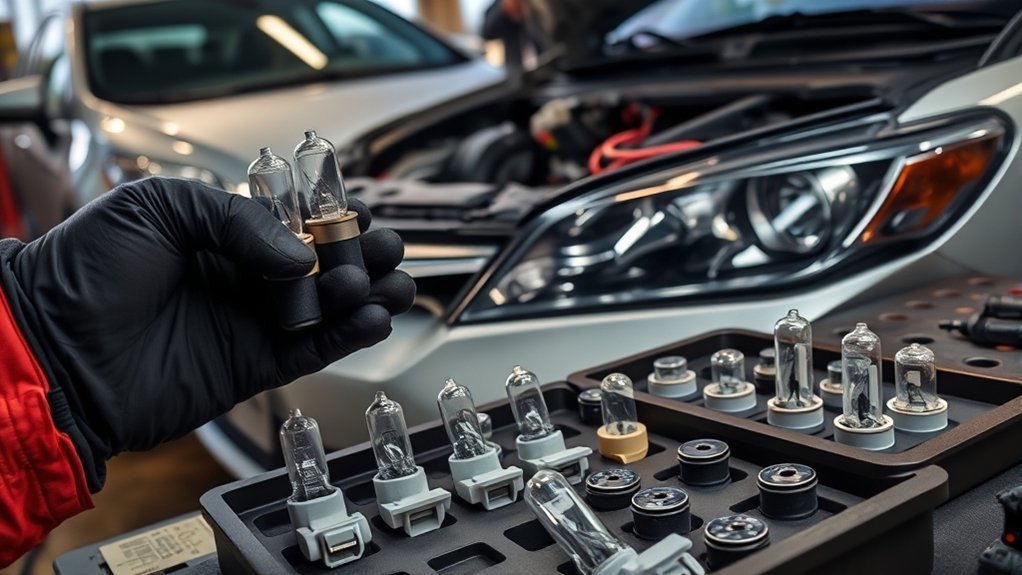
Who needs this guide and what will you get from it? You need this guide if you own, service, or liberate a Toyota Camry (2000–2024) and want precise headlight bulb compatibility to restore safety and autonomy. You’ll get concise identification of correct bulb codes for common functions, plus guidance on owner’s-manual verification to avoid mismatches.
You’ll learn how OEM versus aftermarket options affect bulb lifespan and fit: differences in filament/LED architecture can change heat, light output, and mounting tolerances. You’ll receive targeted installation tips to guarantee proper seating, connector integrity, and aiming without trial-and-error. The guide flags risks of incorrect sizes and urges community feedback to refine data across model years.
This section empowers you to choose correct replacements confidently, reduce downtime, and maintain peak lighting performance while protecting factory specifications and your right to independent vehicle maintenance.
Quick Answer: Camry Headlight Bulb Codes (2000–2024)
You’ll find the Camry’s common headlight codes are H11 for low beams and 9005 for high beams across most model years. Models from 2002–2017 may list H11/H8/H9 for lows and 9005/HB3 for highs depending on trim, while 2018–2024 retain H11 low and 9005 high. Note factory LED systems aren’t serviceable with standard bulbs—check your owner’s manual or dealer for specifics.
Common Bulb Codes
Although bulb types can vary with trims and aftermarket swaps, most Toyota Camry models from 2000–2024 use H11 (or H8/H9 equivalents for some LED low‑beam kits) for low beams and 9005/HB3 for high beams, with signal/brake/tail lamps typically using 3156/3157 or 7440/7443 and backup lights using 7440/7443 or T15/921/912 depending on year. You’ll prioritize bulb longevity and heed installation tips to preserve connector integrity and beam aim. Confirm sizes against your owner’s manual before purchasing aftermarket parts. Common codes you’ll encounter include:
- H11 / H8 / H9 — low‑beam halogen or LED retrofit kits.
- 9005 / HB3 — high‑beam applications.
- 3156 / 3157 / 7440 / 7443 — turn, brake, tail circuits.
- 7440 / 7443 / T15 / 921 / 912 — backup lamp options.
Year-By-Year Variations
Now that you’ve seen common Camry bulb codes, here’s a concise year‑by‑year summary so you can match bulbs to model years from 2000–2024. From 2000 onward, low beams alternate between H11 or H8/H9 configurations while high beams use 9005; 2002–2017 standardize low beams to H11 with 9005 highs (some variants use 9006). 2018–2022 retain H11 low and 9005 high, aligning with prior years. Note 2023 introduces a 7443 for the rear turn signal where 3156/3157 was common. You should verify owner’s manual specs before replacing bulbs, since aftermarket mods can change requirements. Prioritize headlight maintenance practices and bulb longevity—choose OEM-equivalent parts and inspect connectors to secure reliable illumination and freedom on the road.
How to Read H11, H8, H9, 9005/9006 Bulb Codes
You’ll read each bulb code by separating its anatomy—type, filament/wattage range, and intended application—to match specs to your Camry. Check connector and fitment differences (H11/H8/H9 share similar bases while 9005/9006 use distinct HB3/HB4 plugs) to guarantee proper seating and electrical compatibility. Compare light output—H8 < H11 < H9 and 9005 (high beam) ≈ 1700 lm while 9006 (low beam) is comparable to H11—to pick the right brightness for performance and safety.
Bulb Code Anatomy
When you read a bulb code like H11, H8, H9, 9005, or 9006, the letters and numbers tell you the technology, physical dimensions, and intended function: “H” denotes halogen, the following digits distinguish specific base and envelope sizes (which affect fit), and numeric series such as 9005/9006 identify standardized high/low-beam halogen designs. You’ll decode size, function, and relative power quickly, which frees you from guesswork and dependency.
- H-series: halogen types; digits indicate envelope and base geometry.
- H11 (≈2.5″×1″): common low beam; balance bulb lifespan considerations and bulb brightness ratings.
- H9: higher wattage, high-beam use; brighter but shorter life.
- 9005/9006: standardized high/low-beam pair; 9005 is larger and more powerful.
Connector And Fitment
Although the codes H11, H8, H9, 9005 and 9006 look simple, they encode specific connector and fitment information you’ll need to match bulbs to a Toyota Camry’s headlight housing and wiring harness. You should verify socket type: H11/H8/H9 share the same single-pin bayonet-style connector common on Camry low-beam assemblies, with H9 offering higher wattage. 9006 fits low-beam sockets on some trims; 9005 is a different flange and tab arrangement for high beams. Confirm physical clearance and wiring capacity before upgrading.
| Code family | Fitment note |
|---|---|
| H11/H8/H9 | Single-pin bayonet, same socket |
| 9005/9006 | Different flange/tab, high vs low |
Use bulb compatibility guides and follow installation tips to avoid overload or poor sealing.
Light Output Comparison
Because bulb codes encode both connector type and output, reading H11, H8, H9, 9005, and 9006 tells you not just fitment but expected lumen performance: H11 typically yields ~1200 lm, H8 is similar or slightly lower, H9 steps up to ~1300 lm, 9006 aligns with H11-level low-beam output, and 9005 (HB3) produces roughly 1700 lm for high beams. You’ll use code to anticipate light intensity and bulb longevity trade-offs when choosing replacements or upgrades.
- H11: balanced lumen output, common low-beam choice, moderate bulb longevity.
- H8: application-specific, slightly reduced wattage and lumens.
- H9: brighter halogen option, useful where extra reach matters.
- 9005/9006: high-beam vs low-beam roles; 9005 considerably higher intensity.
Year-by-Year Headlight Codes (2000–2024) : Quick Reference
Here’s a concise year-by-year quick reference for Toyota Camry exterior bulb codes (2000–2024) so you can identify replacements fast: Use this as a technical cheat-sheet for bulb longevity tips and headlight maintenance. Low beams: most years use H11 or the H8/H9 family; verify your model year before ordering. High beams: 9005/HB3 is standard across the range. Turn signals: 3156/3157 or 7440/7443 depending on trim; same applies to front indicator applications. Brake and tail lights: mainly 7440/7443 from 2002 onward, offering consistent fitment. Reverse/backup: commonly 3156/3157 or 7440/7443—confirm socket style. License plate lights: T10/194/168 bulbs remain consistent through 2000–2024. When replacing, match electrical specs and base type; you’ll avoid fitment issues and improve safety. Keep spares organized by code so you can swap bulbs quickly and preserve mobility.
OEM vs Aftermarket: Why Camry Bulb Size Can Differ
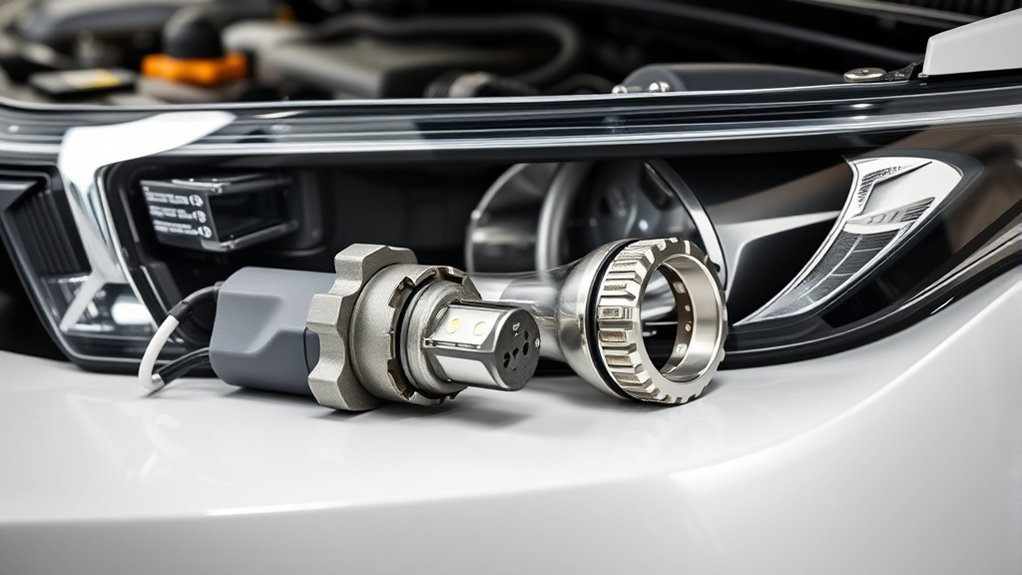
When you replace a Camry bulb, know that OEM sizes are factory-specified to match socket geometry, electrical load, and beam pattern, while aftermarket options can differ in base type, filament position, and overall dimensions, causing fitment or optical issues. You should treat size as a systems parameter: OEM standards guarantee connector clearance, correct filament locus relative to the reflector, and expected electrical draw.
When evaluating aftermarket compatibility, verify these factors against your owner’s manual or a trusted bulb-size guide. Modified headlights further alter requirements; they may force nonstandard dimensions or mounting tolerances, so measure before buying.
- Confirm base type and locking tabs to avoid mechanical mismatch.
- Check filament position and beam aim to preserve beam pattern.
- Compare lumen rating and rated life to estimate bulb performance.
- Validate electrical load and socket temperature limits to prevent failures.
You’ll gain freedom by selecting bulbs that match engineered specifications, ensuring safety, longevity, and consistent optical output without compromise.
Halogen vs LED vs HID: Trade-Offs for Camry Bulbs
If you’re weighing halogen, LED, and HID for a Camry, compare their lumen output, thermal management, lifespan, and installation complexity to match performance to your vehicle’s electrical and optical systems. You’ll see halogen advantages in simplicity and cost analysis: H11 halogens deliver ~1200 lumens with over eight years of usable life and straightforward plug-and-play replacement. For greater visibility, LEDs reach up to 5000 lumens but bring LED disadvantages: active cooling or heatsinks are required, and poor heat management shortens life. HIDs offer peak brightness—up to 6500 lumens—but HID complexity is real: you need ballasts and secure mounting to avoid glare and electrical faults. Brightness comparison should factor beam pattern and reflector compatibility, not just lumen numbers. Lifespan considerations favor LEDs and HIDs but depend on thermal control and ballast reliability. Installation challenges include electrical compatibility and optical alignment. Choose deliberately to liberate yourself from repeat replacements while respecting system limits.
Step-by-Step Replacement Checks: Fit, Heat, Polarity, CAN-Bus
Because proper replacement depends on more than just plug-fit, you should run four quick checks—fit, heat management, polarity, and CAN‑Bus compatibility—before installing new headlight bulbs on your Camry. You’ll confirm safety, longevity, and system harmony while asserting control over your vehicle.
Run four quick checks—fit, heat, polarity, and CAN‑Bus—before installing replacement headlight bulbs on your Camry.
- Fit: Verify the bulb size code (e.g., H11, 9005) against your Camry’s model year and assembly; incorrect size risks poor seal or beam distortion.
- Heat management: Choose bulbs with active cooling or adequate heat sinks; LEDs produce concentrated heat that will shorten life without dissipation.
- Polarity: Test connector orientation; LEDs require correct polarity and may fail or be damaged if reversed.
- CAN‑Bus compatibility: If your Camry uses CAN‑Bus, select compatible bulbs or add resistors/decoders to prevent errors or flicker.
Follow the owner’s manual procedures for safe DIY bulb replacement. These focused checks free you from guesswork and protect electronics while maximizing performance.
Troubleshooting After a Bulb Swap: Flicker, Error Lights, Fit Issues
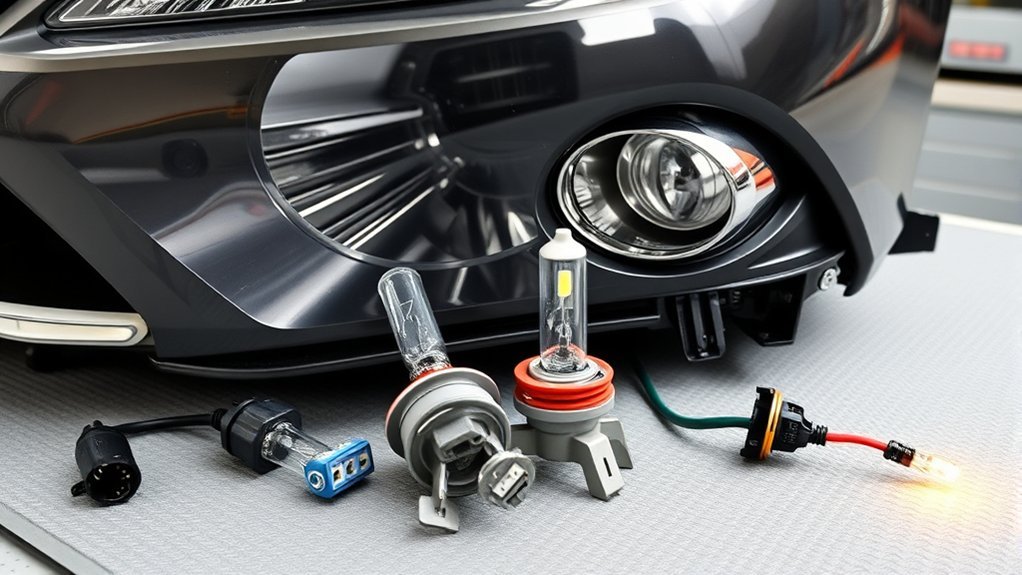
After swapping bulbs, check for flicker, dashboard errors, and fit problems immediately so you can isolate the cause before driving. If headlights flicker, you’re likely facing a poor connection, incorrect seating, or damaged wiring. Re-seat the bulb, inspect the base for debris, and probe the harness for corrosion or broken strands; damaged connectors cause intermittent contact and electrical issues.
If the dash shows error lights, verify that bulb compatibility matches OEM wattage and type—mismatched bulbs create electrical discrepancies the vehicle detects. Avoid assumptions about aftermarket parts; some fittings differ subtly and force the circuit into fault.
When fit issues arise, confirm the bulb’s base and locking tabs align with the socket; don’t grind or modify parts to make them fit. You want secure, reversible fixes that restore function and autonomy. If issues persist after these checks, address wiring or component faults rather than repeatedly swapping bulbs.
When to Check the Manual or Ask the Dealer (Verifying Exact Fit)
When verifying bulb fit, consult your Camry’s owner’s manual first and contact the dealer for any non‑standard or modified assemblies to confirm exact size and type. You’ll perform manual verification to validate OEM sizes (for example, many 2015–2018 Camrys use H11 low beams and 9005 high beams) and to avoid mismatches that cause fit, flicker, or error codes. Use dealer consultation when assemblies are aftermarket, modified, or factory LED systems that aren’t user‑serviceable.
- Check the manual for trim/year-specific bulb codes and record them for future reference.
- If headlights are modified or aftermarket, escalate to dealer consultation to verify socket, ballast, and heat constraints.
- For factory LED modules, rely on dealer service—these units often require replacement rather than bulb swaps.
- Keep a concise spec log (model year, trim, bulb code) to maintain autonomy and speed future maintenance.
Manual verification plus dealer consultation confirms exact fit, safety, and legal compliance.
Frequently Asked Questions
How to Read Headlight Bulb Size?
You read headlight bulb size by decoding the code: letters show bulb types, numbers indicate model and fit, and appended specs reveal brightness ratings and variants; consult your manual or chart to confirm compatibility before replacing.
Is H11 or 9005 Low Beam?
By and by, you’ll find H11 is the low beam. You’ll value H11 advantages for focused cutoff and lesser glare; 9005 compatibility suits high beams’ longer throw. Choose upgrades that free your night visibility.
Will the 9005 Sylvania Headlight Bulb Work for a Toyota Camry 2014?
Yes—you can use a Sylvania 9005 for the 2014 Camry high beam; check bulb compatibility, fitment within housing, and electrical limits. For Camry upgrades, choose correct spec and install safely to maintain visibility and freedom.
Conclusion
Think of your Camry’s bulbs like the right gears in a clock — small changes keep everything running precisely. You’ve learned which bulb codes fit each model year, how H-series and 9000-series codes map to socket and output, plus trade-offs between halogen, LED, and HID. When swapping, verify fit, heat clearance, polarity, and CAN‑Bus compatibility, and consult the manual or dealer if errors or fit doubts persist. Stay exact, stay safe.