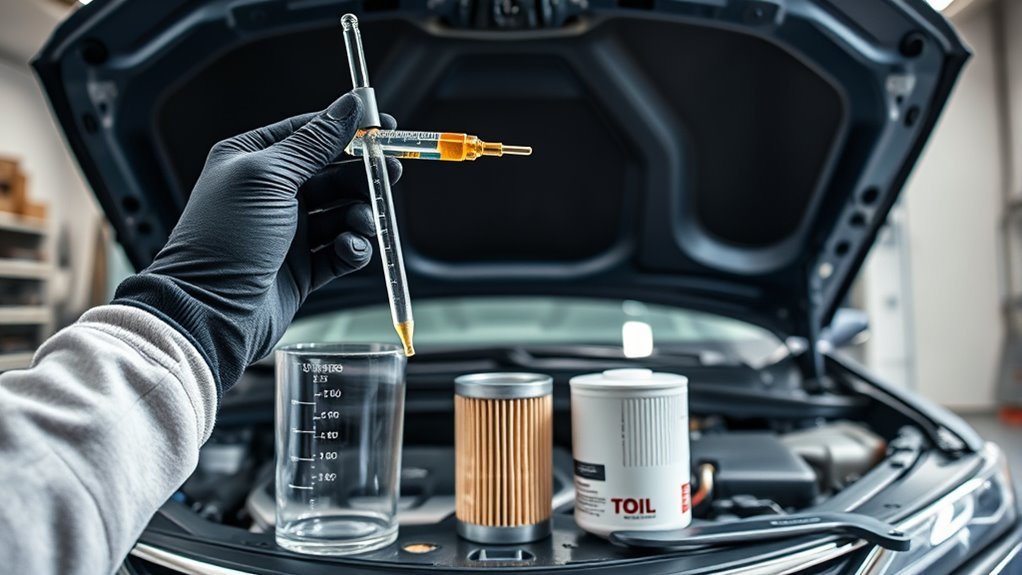
You’ll follow Toyota’s 1,200‑mile oil test: dealer does a baseline tamper‑sealed oil change, you log dipstick readings and mileage, and you drive 1,200 miles without disturbing seals. Check the dipstick every 1–2 weeks, record date, odometer, and level; note drops of a quart or more. Inspect for blue smoke, check PCV, perform compression testing, and document findings for TSB/warranty review. Continue and you’ll find detailed diagnostic and repair options.
Do Toyota’s 1,200‑Mile Oil Test (Step‑by‑Step)
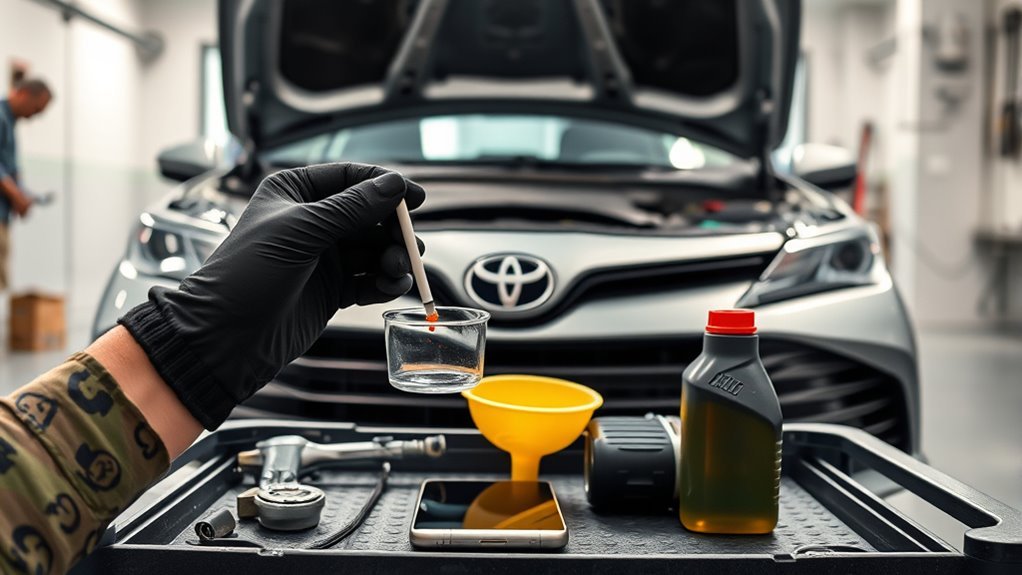
Schedule an appointment with a Toyota dealer to start the 1,200‑mile oil consumption test: the dealer will perform a baseline oil change, install tamper‑proof seals or markings, and note the vehicle’s starting oil level and mileage. You’ll receive documentation and clear instructions; preserve those records and all receipts for warranty support. After the service, you’ll drive the vehicle for 1,200 miles under consistent conditions, applying concise driving tips to avoid skewing results—maintain normal highway and city use, avoid extreme idling or sustained high RPMs, and record trip logs. Monitor oil consumption against the baseline but don’t tamper with seals or markings; doing so invalidates the test. If your Camry uses one quart or more during the interval, you qualify for a warranty repair—submit the documented evidence to the dealer. This methodical procedure is designed to liberate you from uncertainty by producing definitive, documented proof of excessive oil consumption for affected 2006–2011 models.
Track Oil Consumption Weekly : How to Measure Dipstick Use
Start by checking the dipstick every 1–2 weeks to establish a reliable record of oil consumption: you’ll clean the dipstick, insert it fully, remove it, and note the level relative to “full.” Log the date, mileage, and visible level so your observations are reproducible and defensible against warranty scrutiny. Follow your maintenance schedule and perform an oil change when due, but keep these interim checks to detect abnormal loss (≥1 quart per 1,200 miles). Be disciplined, precise, and free from assumptions.
- Always wipe the dipstick clean, then reinsert and remove for the definitive reading.
- Record mileage, date, and distance since last oil change to calculate consumption rate.
- Flag any drop of one quart or more within 1,200 miles for escalation and documentation.
- Store entries in a simple spreadsheet or paper log to preserve evidence and empower your claims.
This methodical routine gives you control and clarity over oil use.
Diagnose Oil Burning, PCV, or External Leaks : Quick Checks
After you’ve tracked oil levels and established a baseline, use a short sequence of checks to determine whether oil is being burned internally, escaping via the PCV system, or leaking externally. First, inspect for blue oil smoke at startup and under acceleration; persistent blue smoke signals oil entering the combustion chamber. Next, perform a compression test on each cylinder to evaluate piston rings and valve sealing; consistent low readings indicate internal wear and potential burning. Remove and inspect the PCV valve for clogging or oil-soaked components; a stuck or collapsed PCV lets crankcase pressure force oil into intake, so replace if compromised. Visually and tactilely examine the oil pan, valve cover gaskets, and seals for wetness, fresh oil trails, or drips—document locations and rate of loss. Combine weekly dipstick tracking with these targeted checks to isolate the failure mode. You’ll act decisively, armed with clear evidence, to choose repair paths that restore control and freedom from consumption issues.
If the Test Shows Excessive Use: TSB/LSC, Warranty & Dealer Steps

If your oil-tracking confirms consumption of about one quart per 1,200 miles or more, document the measurements precisely and bring them to your Toyota dealer to determine eligibility under TSB T-SB-0094-11 or LSC ZE7. You’ll present quantified fill logs, dates, odometer readings, and oil type; the dealer will evaluate warranty coverage and initiate dealer processes. Expect an initial inspection, a tamper-proof oil change, and a mandated 1,200-mile verification drive. If the condition meets campaign/TSB criteria, the dealer will authorize corrective repairs under LSC/TSB terms.
Track and document quart-per-1,200-mile oil use, present signed logs to your Toyota dealer for TSB/LSC evaluation.
- Collect timestamps, odometer, and volumes in a single, signed document for submission.
- Ask the dealer for written confirmation of the tamper-proof procedure and the verification schedule.
- Confirm in writing whether repairs fall under warranty coverage, LSC ZE7, or owner responsibility.
- If approved, get a detailed repair order outlining scope, parts, and estimated downtime.
Proceed methodically; insist on documented decisions to protect your right to remedy.
Temporary Fixes vs. Engine Repairs : Additives, Oil Choices, and Rebuilds
Once the dealer has verified oil consumption and you’ve documented eligibility under TSB/LSC, you’ll need to decide whether to pursue temporary remedies or plan for internal repairs; this section compares additive and oil strategies against diagnostic-driven rebuilds. You can use additives (e.g., Lucas Stop Leak) for immediate reduction in consumption, but additive effectiveness is limited: they mask symptoms without restoring worn piston rings or valve stem seals. Pairing additives with high-quality synthetics can yield better short-term control; follow oil brand comparisons and select proven performers like Quaker State where testing supports reduced consumption. Monitor oil level daily after any change and log results; that’s essential for timely escalation.
If diagnostics (compression/leak-down) confirm internal wear, plan a rebuild—estimated $2,000–$3,000—or targeted repairs. Also check/replace the PCV valve and trial different oil brands as a measured step before committing to a costly engine teardown.
Frequently Asked Questions
How to Perform an Oil Consumption Test?
You visit a dealer, get an oil change, seal components, record mileage and level, then drive 1,200 miles while logging oil level checks; document before/after, follow maintenance tips, and claim warranty if consumption meets criteria.
What Year Did Toyota Camry Have Oil Consumption Problems?
You’ll find the oil consumption problems in Camry models surfaced around 2007–2011, especially with 2AZ-FE engines. You’ll methodically assess Engine issues, reclaiming control and ensuring technical clarity and liberated ownership.
What Is the Oil Consumption Specification for Toyota?
You should expect about 1 quart per 1,200 miles as Toyota’s oil consumption specification; follow your vehicle’s oil capacity and maintenance schedule precisely, and you’ll reclaim control by monitoring levels and documenting consumption methodically.
How to Diagnose Engine Oil Consumption?
Like Sherlock, you systematically diagnose oil consumption: track oil level and mileage, run a 1,200-mile consumption test, inspect for oil leak, check PCV, test compression for engine wear, and note blue smoke or abnormal readings.
Conclusion
You’ve followed the 1,200‑mile test like a checklist under a hood, watched the dipstick like a gauge in a cockpit, and checked PCV valves and seals with the precision of a technician. If oil disappears, you’ll document, compare to TSBs, and push the dealer or warranty process. Temporary additives are stopgaps; engine repair or rebuild is the calibrated solution. Trust measured data over hope — it’s the map that guides your next mechanical step.