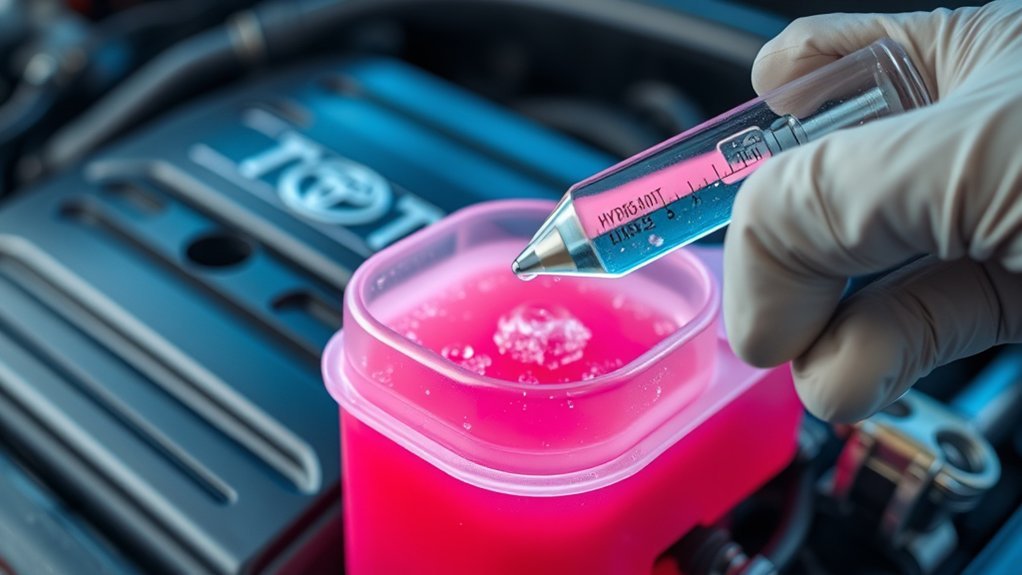
You should use a 50/50 ethylene‑glycol/water mix in your Toyota Camry for balanced freeze protection (~‑40°F) and ideal heat transfer; switch to ~65% concentrate only for extreme cold (~‑60°F) though it reduces heat transfer by ~10% and raises boiling to ~240°F. Measure concentration with a refractometer or hydrometer, calculate concentrate by system volume, and top with distilled water or concentrate as needed. Continue for mixing steps, climate guidance, and maintenance checks.
Quick Answer: Recommended Coolant Mix for a Toyota Camry?
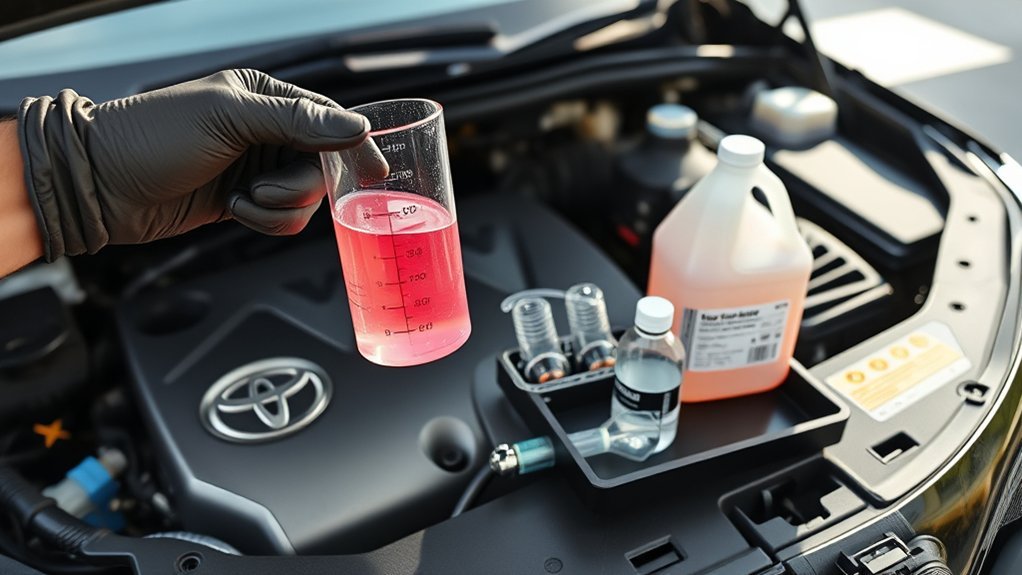
For most Toyota Camry owners, a 50/50 coolant-to-water mix provides the balanced protection you need—freeze protection to about −40°F and a boiling point near 225°F—while in very hot climates like Arizona you should use a higher concentrate (around 65%) to raise boiling point to roughly 240°F and improve overheating resistance; in extreme heat some technicians opt for ~35% if freeze protection isn’t required, but always monitor levels and match mixture to local conditions for peak engine life.
You’re aiming for operational freedom: choose the mix that maximizes coolant longevity and sustains engine efficiency. Use 50/50 for general duty — it stabilizes thermal control and reduces corrosion risk. Switch to 65% in persistent high-heat regions to boost boiling margin and lower cavitation risk; this also helps maintain efficiency under load. If winter freeze isn’t a concern and cooling demand dominates, a 35% solution can simplify maintenance while preserving coolant longevity. Check levels, inspect for contamination, and replace per schedule to keep the Camry running reliably and free from avoidable constraints.
How Mix % Changes Freeze Point and Boiling Point
You’ve seen recommended mixes; now let’s look at how altering concentration shifts freeze and boil points. You’ll use coolant chemistry to diagnose protection needs: a 65% concentration reliably prevents freezing to about -60°F, while the common 50% mix protects to around -40°F. Dropping to 35% reduces freeze protection further, so you’ll only consider it in consistently hot climates.
Concentration effects also raise boiling point: as concentration increases, boiling climbs from roughly 225°F at 50% to about 240°F at 65%. That higher boil margin buys headroom under load, but remember the tradeoff: a 65% mix transfers heat about 10% less effectively than a 50% mix. So you’ll weigh extreme freeze and boil protection against reduced heat-transfer efficiency. Use this diagnostic framing to choose a mix that frees you from cold risk without needlessly compromising cooling performance, aligning coolant chemistry with your climate and driving demands.
50/50 Vs 65%: Protection Vs Heat‑Transfer Tradeoffs
Choose 50% when you need balanced freeze protection and maximum heat removal, and 65% when extreme cold safety matters more than peak cooling efficiency. You’ll weigh freeze protection against coolant efficiency: 65% buys -60°F safety but costs about 10% heat-transfer efficiency versus 50%, and raises boiling point to ~240°F (50% ≈225°F). Diagnose your operating environment and free yourself from avoidable risk by choosing deliberately.
Choose 50% for peak cooling and everyday use; choose 65% when extreme cold protection outweighs cooling efficiency.
- Imagine solid roads at -50°F; 65% keeps your engine fluid.
- Picture a high-load summer climb; 50% sheds heat faster.
- Visualize radiator flow: denser mix, slower heat exchange.
- Recall water’s superior heat transfer—20% better than 65%.
- Consider Arizona’s heat where lower mixes still risk cooling and freeze protection tradeoffs.
You’ll prefer 50% for routine use and peak coolant efficiency, 65% for arctic safety. Decide based on climate, load, and your desire to liberate performance without sacrificing protection.
How Do I Measure and Calculate the Right Coolant Mix?
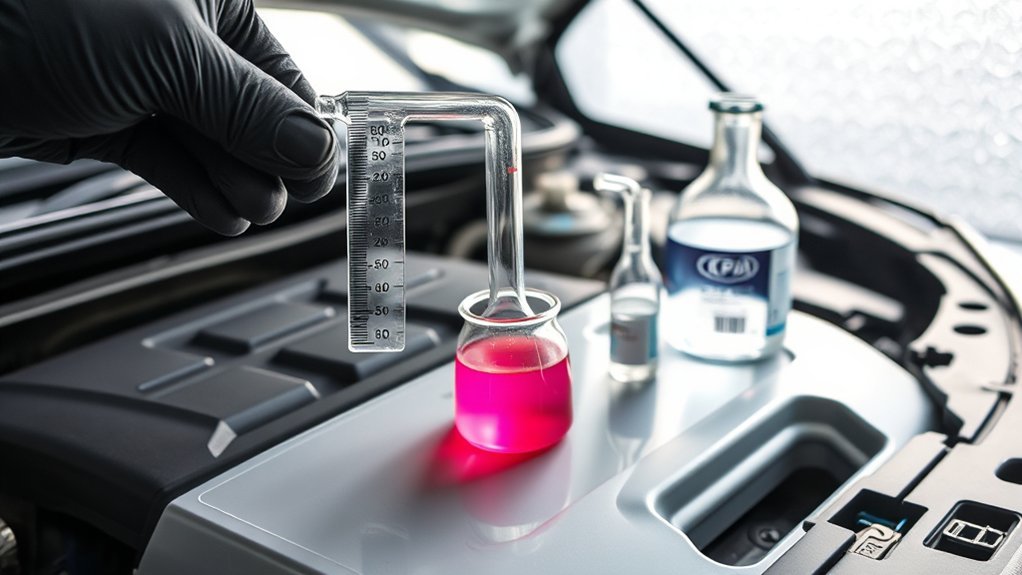
How do you measure and calculate the right coolant mix for your Camry? Use a refractometer or hydrometer for coolant testing; they give a direct reading of freeze-point or percent glycol. Record ambient climate and desired protection: 50/50 yields about -40°F freeze and a 225°F boiling point; 65% (one gallon concentrate + one gallon distilled water?)—note: actually one gallon concentrate with one gallon water gives 65%—protects to ≈-60°F and raises boiling to ≈240°F. For hot regions, target ~35% to retain cooling efficiency. Calculate volumes by desired percent and system capacity: multiply system liters by target fraction to get concentrate volume, then add distilled water to fill. Perform mixture adjustments after testing: if reading is lean, add concentrate; if rich, add distilled water. Re-test until reading matches target. Keep concise records and adjust seasonally to liberate performance and prevent compromise between protection and heat-transfer.
Mixing and Topping Up Your Camry: Step‑By‑Step
Start with the engine cold, then verify the coolant level in the overflow reservoir and radiator cap area to avoid burns and false readings. You’ll use diagnostic observation and controlled action to maintain freedom from breakdowns. Confirm coolant types before adding—OEM or universal—and inspect color and sediment.
- Place a funnel, clean rag, and gloves at the ready.
- Open the reservoir cap slowly; note debris or rust.
- Add distilled water or pre-mixed coolant per needs.
- Seal, run engine briefly, recheck level and leaks.
- Record date, mix ratio, and observations for future checks.
When mixing techniques are required, measure precisely: for general use aim 50/50; for extreme heat consult climate guidance elsewhere. Use a funnel to prevent spills and keep the reservoir clean. Monitor levels regularly—especially during extreme temperatures—to prevent overheating and engine damage. Your hands-on, informed approach lets you control outcomes and avoid dependence on roadside rescue.
Best Mixes by Climate: Arizona, Cold, and Temperate Areas
For Arizona’s high temps, you should run a 65% concentrate to raise the boiling point to about 240°F and maintain freeze protection to roughly -60°F. In temperate climates a 50/50 mix gives balanced freeze protection to -40°F and an elevated boiling point near 225°F. For colder regions use a leaner 35% mix to reduce overheating risk while retaining some freeze protection, and monitor concentrations regularly to adjust for local conditions.
Arizona High-Temp Mix
Because Arizona’s extreme heat and dry conditions push engine cooling systems harder, you should use a higher-concentration coolant mix than the typical 50/50 to reduce boiling risk and improve thermal stability. For liberation-minded drivers, prioritize coolant longevity under extreme conditions: a 65% concentrate raises boiling to ~240°F and protects to about -60°F, cutting overheating risk during sustained high-load driving.
Diagnostics and recommendations:
- Inspect level and color weekly in dry heat
- Consider 65% for maximum thermal margin
- Use 35% if you need better heat transfer with some freeze protection
- Replace or top off with manufacturer-approved fluid for corrosion control
- Monitor for vapor or loss indicating seal or system stress
Act decisively to maintain performance and avoid avoidable engine damage.
Temperate And Cold Mix
Although Arizona calls for heavier protection, temperate and cold climates let you prioritize freeze resistance and heat transfer, so aim for a 50/50 coolant-to-distilled-water mix as a baseline. You’ll get freeze protection to about -40°F and reliable temperature effects for efficient heat transfer. Use approved coolant types and check levels regularly; monitoring prevents overheating and preserves freedom from breakdown.
| Region | Recommended Mix |
|---|---|
| Temperate | 50/50 coolant/distilled water |
| Cold | 50/50 coolant/distilled water |
| Hot alternative | 35% coolant mix |
| Extreme heat (Arizona) | 65% coolant concentrate |
Assess local climate, choose the mix that balances protection and cooling, and liberate yourself from avoidable failures by testing freeze/boil points periodically.
Maintenance That Matters: Radiator Cap, Thermostat, and Flush Intervals
When you keep the radiator cap, thermostat, and scheduled flushes in check, you preserve pressure integrity, coolant flow, and heat-transfer efficiency across the cooling system. You practice radiator maintenance that prevents pressure loss—replace a failing cap to avoid reduced boiling point and diminished coolant performance. You guarantee thermostat efficiency by fitting a reliable unit so coolant circulates at the designed setpoint, preventing hotspots and compromised engine life. Flush intervals at 30,000 miles or every two years remove corrosive deposits and restore system integrity. Aim for a 65% coolant mix in extreme climates to secure freeze protection and maintain boiling-point margins. Monitor levels consistently; small deviations signal broader system issues.
Keep cap, thermostat, and flushes up to spec—preserve pressure, flow, and heat-transfer to avoid costly breakdowns.
- A new cap keeping 15 psi under load
- Thermostat opening at the specified °F
- Clear passages after a timed flush
- 65% mix for subzero resilience
- Visual checks for sediment and leaks
You act decisively—this maintenance frees you from avoidable breakdowns.
Troubleshooting Overheating, Boiling, or Freezing Symptoms
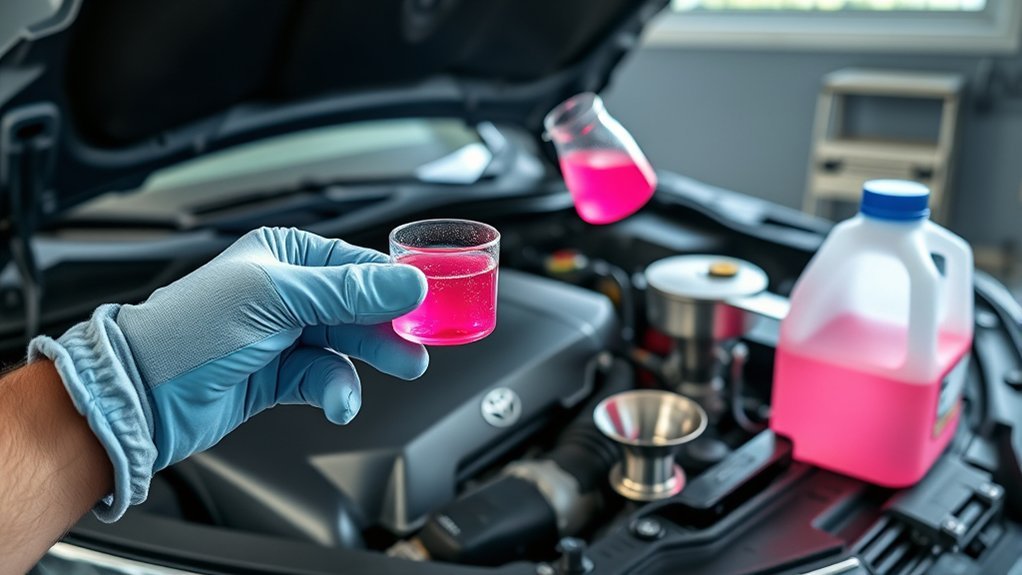
When your Camry shows overheating, boiling, or freezing signs, first verify coolant concentration with a refractometer or test strips to confirm adequate freeze/boil protection. Next, inspect the radiator cap for proper pressure retention and a clean sealing surface, since a failed cap can cause boiling or loss of coolant. If concentration is low or the cap leaks, correct the mix and replace the cap before further diagnosis.
Check Coolant Concentration
How cold is your coolant mix and is it suited to local conditions? You’ll perform coolant testing to confirm concentration impact on freeze and boil protection. Check level, then use a refractometer or hydrometer: 50/50 suits most climates (≈-40°F freeze); 65% is recommended for Arizona (≈-60°F freeze, boiling point ≈240°F). Beware: overly dilute mix risks freezing; overly concentrated mix reduces heat transfer by about 10%.
- Visualize a clear, amber-blue fluid holding steady in the reservoir
- Imagine thin ice forming when concentration is too low in cold climates
- Picture steam or bubbles when boiling risk rises
- See overheating gauges respond to low level or wrong mix
- Envision precise readings from a refractometer guiding your corrective action
Adjust or flush based on measured concentration and local needs.
Inspect Radiator Cap Function
After verifying coolant concentration and level, check the radiator cap next—it’s a small component that controls system pressure and directly affects boiling point and coolant retention. You’ll inspect for seal tears, spring weakness, corrosion, and proper seating. A failed cap reduces pressure, lowers boiling point, allows boil-over, and lets coolant escape — worsening overheating or freezing risk if concentration’s off. Replace any cap showing wear; it’s cheap and restores system integrity and pressure maintenance. Test by comparing rated pressure to actual spring tension or swap with a known-good cap. Keep records and act decisively to free yourself from recurring failures.
| Item inspected | Symptom if bad | Action |
|---|---|---|
| Seal | Leak/escape | Replace |
| Spring | Low pressure | Test/swap |
| Body | Corrosion | Clean/replace |
Safe Mixing, Checking Levels, and Following Toyota Specs
Because Arizona’s heat stresses cooling systems, you should mix and monitor antifreeze precisely to meet Toyota’s specs: use a 65% concentrate (one gallon concentrate + one gallon distilled water yields that target), confirm your Camry’s coolant capacity from the owner’s manual, and check levels frequently to prevent overheating. You’ll select compatible coolant types and apply proven mixing techniques to protect seals, sensors, and head gaskets. Follow Toyota’s service intervals (≈30,000 miles or two years) and record changes.
Mix and monitor 65% coolant per Toyota specs—use equal concentrate and distilled water, confirm capacity, and check often.
- Visualize a full, clear reservoir at the correct mark.
- Picture distilled water and concentrate measured in equal volumes.
- Imagine corrosion-free passages after proper coolant choice.
- See the cap sealing to maintain system pressure.
- Feel confident knowing freeze protection reaches about −60°F.
Inspect levels cold, top with the 65% mix to the recommended capacity, and bleed air per Toyota procedures. If readings or color change, diagnose promptly. You deserve reliable, liberated mobility—maintain specs to keep it.
Frequently Asked Questions
At What Temperature Does Concentrated Antifreeze Freeze?
Concentrated antifreeze typically freezes around -60°F depending on coolant types and antifreeze properties. You’ll diagnose freeze risk, choose blends accordingly, and mix with distilled water so you’re empowered to control protection and system performance.
What Should the Freezing Point of Coolant Be?
Aim for a freeze point below -40°F; that gives robust freeze protection. You’ll evaluate coolant types, balance concentration versus boiling point, and monitor levels regularly so your vehicle stays resilient and you remain free from winter breakdowns.
What Is a Good Coolant Concentration?
Use a 50/50 mix as a baseline; you’ll balance coolant types and dilution methods for most climates. You’ll test concentration, adjust for extreme heat or cold, and choose compatible coolant types to liberate reliable engine protection.
What Is the Best Ratio for Antifreeze Concentrate?
Use a 50/50 mix as the best ratio for most situations; you’ll balance coolant types and antifreeze benefits, maximizing heat transfer and freeze protection while diagnosing system needs, then adjust for extreme climates or manufacturer specs.
Conclusion
Think of coolant as your Camry’s lifeblood—too thin and it freezes, too thick and it won’t cool. Stick with Toyota’s specified ethylene‑ or propylene‑glycol mix, aim for 50/50 for balanced freeze/boil protection, or 60–65% in extreme cold, and verify concentration with a refractometer or hydrometer. Check cap pressure, thermostat function, and flush intervals regularly. Diagnose leaks, airlocks, and thermostat failures early to keep your engine running cool and reliable.