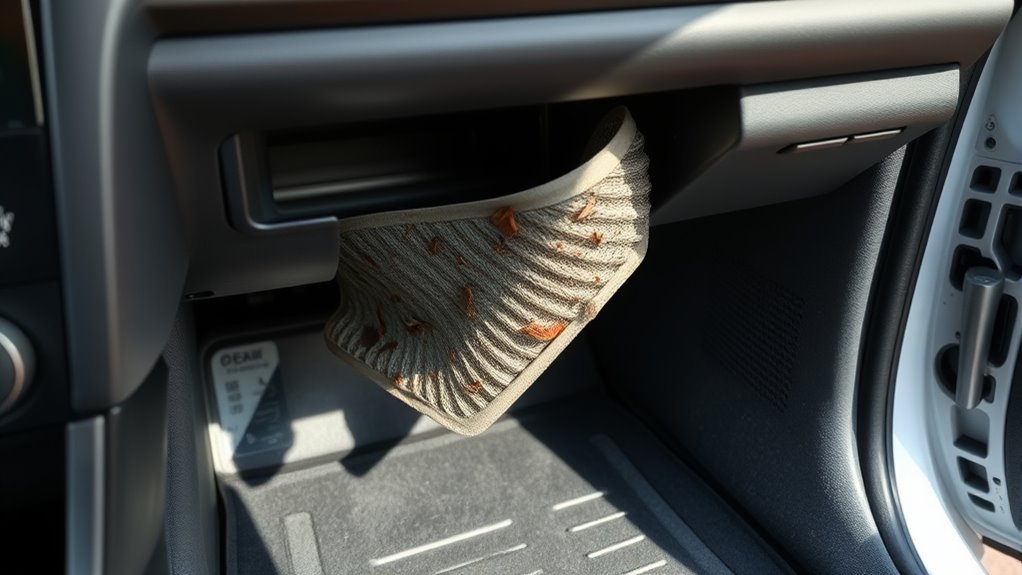
If your Camry’s vents smell musty, you’ve likely got a clogged cabin air filter trapping damp leaves, dust and microbes, or moisture pooling from a blocked A/C drain that’s promoting mold on the evaporator and in ducts. That restricts airflow, reduces HVAC efficiency and sends odors into the cabin. You can inspect and replace the filter behind the glovebox, clear the drain, and disinfect ducts for a fix — keep going to learn practical step‑by‑step checks and repairs.
Quick Diagnostic Guide: Why Your Camry’s Vents Smell
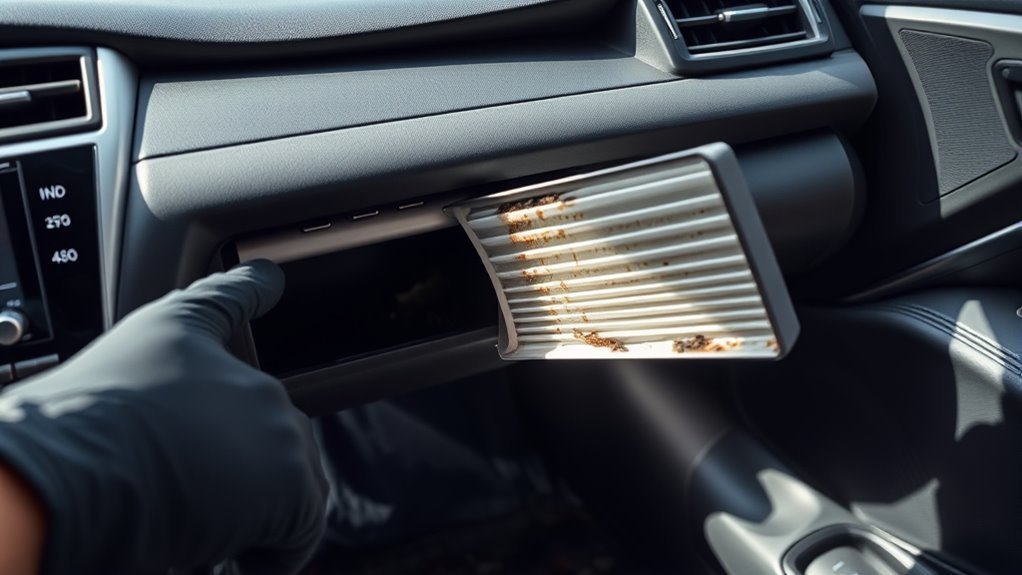
Why does your Camry’s vent smell musty? You likely face ventilation issues driven by trapped moisture and debris. Start by checking common odor sources: a clogged cabin air filter that holds damp leaves and dust, fostering mold; accumulated dust in HVAC ducts that restricts airflow; and a blocked A/C condensation drain that lets water pool and mildew. You’ll test quickly—run the blower and note airflow strength and scent intensity. If airflow is weak and smell concentrates when A/C starts, the filter or ducts are suspect. If smell worsens after A/C use and you find standing water under the car, suspect the drain. Preventive actions are direct: replace the cabin air filter every 12 months or 12,000 miles, clear visible debris, and run the heat briefly after A/C to dry the system. These steps restore fresh airflow and reclaim control over your cabin environment.
How the Cabin Air Filter Works (2000 Toyota Camry)
You’ll find the cabin air filter behind the glovebox, where intake air from outside passes through the media before entering the HVAC plenum. The filter traps dust, pollen and particulates, and when it clogs it restricts airflow and reduces heating/cooling efficiency. Replace it about every 12 months or 12,000 miles to maintain filtration performance and prevent musty odors.
Filter Location Behind Glovebox
Because the cabin air filter sits directly behind the glove compartment, you can access it quickly for inspection and replacement by lowering the glove box and releasing the retaining tabs that hold the filter cover in place. This filter accessibility via glovebox removal keeps routine maintenance simple and empowers you to control cabin air quality without specialist tools. Inspect every 12 months or 12,000 miles, sooner in dusty environments. A clogged filter reduces airflow, produces musty odors, and worsens allergies; replacing it restores ventilation performance and occupant comfort. When you open the compartment, press the tabs, slide out the old element, and fit the replacement with correct orientation. Dispose of the contaminated filter responsibly. Quick, regular action preserves fresh air and your freedom from preventable odors.
Airflow And Filtration Process
When you run the Camry’s HVAC, outside air is drawn through the intake and forced past the cabin air filter behind the glovebox, where fibers capture dust, pollen, and larger particulates while allowing conditioned air to pass into the ventilation ducts. You rely on correct airflow dynamics: the blower creates pressure that pushes air evenly through the filter media, and any restriction alters distribution and performance. Filtration efficiency depends on media composition and MERV rating, so higher-rated filters trap finer particles but can increase flow resistance. You’ll notice reduced HVAC output and potential musty smells when the filter clogs, signifying impaired airflow dynamics and lower filtration efficiency. Act to restore free flow and clean air so you reclaim control of your cabin environment.
Maintenance And Replacement Interval
1 simple maintenance task keeps the Camry’s cabin air clean: replace the filter behind the glovebox on a regular schedule. You’ll access it without special tools, swap the media, and restore airflow. The filter benefits are straightforward: trapping dust, pollen, and contaminants preserves HVAC efficiency and passenger comfort while reducing mold and mildew risk that causes musty odors.
Follow the replacement interval of every 12 months or 12,000 miles, sooner in dusty or polluted areas. Watch for replacement signs: reduced airflow, persistent odors, or visible debris on the element. Replacing the filter is an act of practical liberation—simple, affordable, and preventive. Do it routinely to keep air fresh and systems running efficiently.
Top Causes of Dust and Musty Smells From Camry Vents
If your Camry’s vents smell dusty or musty, the most common culprit is a clogged cabin air filter that can’t trap dust or moisture effectively. You’ll also face ventilation issues when debris accumulates in ducts or the evaporator housing; the obstructed airflow reduces filtration efficiency and prevents odor elimination. Organic matter lodged in the HVAC creates a habitat for mold and mildew, producing persistent musty notes whenever the system runs. Humid conditions or long inactivity let moisture collect in the evaporator core and ductwork, amplifying microbial growth and smells. Using recirculation continuously traps cabin humidity and contaminants, concentrating odors instead of flushing them. Preventive maintenance—scheduled filter changes every 12 months or 12,000 miles and periodic HVAC inspections—breaks the cycle, restores fresh airflow, and supports your freedom from stale cabin air. Act before odors assert control: targeted cleaning and filter upkeep are the practical steps that liberate your driving environment.
How to Check and Replace the Cabin Air Filter (Step‑by‑Step)
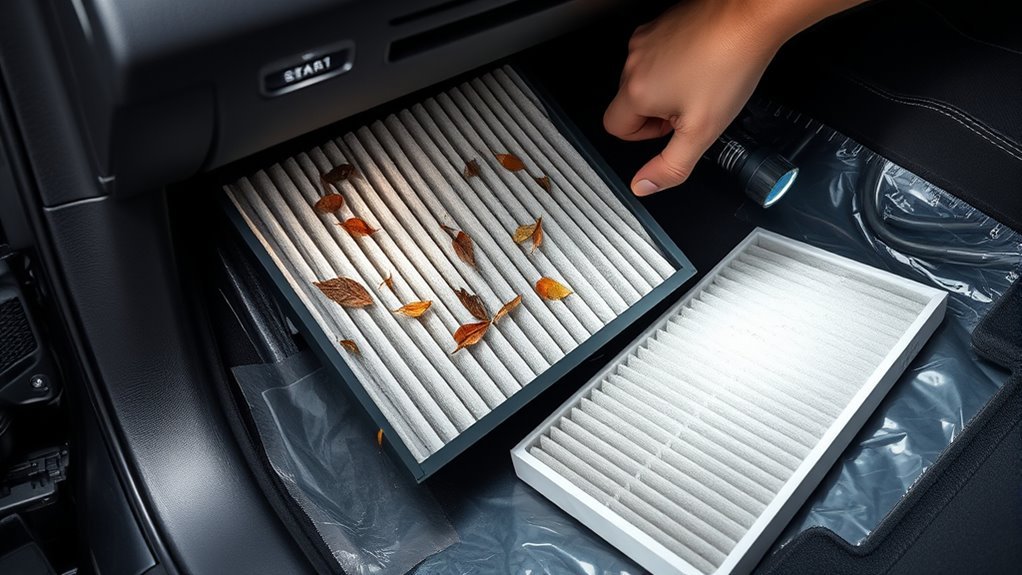
Start by lowering the glove compartment and pressing the retaining tabs to remove the filter cover so you can access the cabin air filter in your 2000 Camry. Inspect the element visually: hold it up to light, look for dense buildup, dampness, or odor. If it’s dirty, slide it out and note the airflow arrow. Buy an inexpensive replacement (under $10) and align the new filter so the airflow direction matches the old one. Reinsert the filter, snap the cover back, and raise the glove compartment.
This quick service delivers clear filter benefits: improved cabin air quality, HVAC efficiency, and reduced odor sources. Follow the replacement timeline — every 12 months or 12,000 miles, sooner in dusty or polluted conditions. The task is simple, affordable, and liberating: you maintain control of your environment without a shop. After replacement, you may choose an HVAC disinfectant spray for ducts, but reserve deep-clean procedures for the next section.
Deep Clean the Evaporator, Drain Tube, and Ducts for Mold
After replacing the cabin filter, check deeper HVAC components for lingering odor sources: mold often hides on the evaporator core, in the drain tube, and along duct surfaces, especially in humid climates or vehicles left idle. You’ll perform targeted evaporator cleaning to remove accumulated dust, biofilm, and spores. Access the evaporator per service manual, spray a compatible HVAC disinfectant into the core and duct openings, let dwell, then flush trapped debris and residue. Inspect and clear the evaporator drain tube with compressed air or flexible wire to restore proper condensate flow; a clogged drain sustains moisture and feeds mold growth.
Work systematically: vacuum accessible ducts, apply disinfectant foam where liquid won’t reach, and verify odor reduction after a full HVAC cycle. Establish a routine inspection cadence to prevent recurrence. This approach gives you control over cabin air quality, combines mold prevention with mechanical remediation, and liberates you from recurring musty odors.
Short‑Term Fixes and Long‑Term Prevention for HVAC Odors
Start with quick remedies like replacing the cabin air filter and running an evaporator cleaner to knock down existing musty odors. After use, run the A/C in heat mode for a few minutes and avoid recirculation before shutdown to dry the system and expel moisture. Schedule annual filter changes, check the condensate drain for blockages, and inspect the evaporator periodically to prevent recurrence.
Quick Odor Remedies
Tackle HVAC odors quickly by combining short-term fixes with routine prevention: use air fresheners or odor neutralizers only as stopgaps while you remove root causes. You want freedom from stale air; act decisively.
- Replace the cabin air filter every 12 months or 12,000 miles to eliminate trapped dust and contaminants.
- Spray an HVAC disinfectant into the intake and ducts to kill mold and mildew that create musty smells.
- Clear the A/C condensation drain to stop moisture accumulation that feeds odors; inspect for blockages regularly.
- Run the A/C on heat for a few minutes after driving and avoid recirculation before shutdown so the evaporator dries and fresh air flushes the system.
These steps free you from persistent HVAC odor control cycles.
Preventive Maintenance Steps
1 practical routine will stop most HVAC odors before they start: replace the cabin air filter every 12 months or 12,000 miles, clear the A/C evaporator drain tube, apply an HVAC disinfectant into the intake and ducts, and run the system on heat briefly after use while avoiding recirculation at shutdown so the evaporator dries and moisture isn’t trapped. You should schedule filter maintenance on your calendar and inspect filters for visible contamination. Periodically clear the drain tube—use compressed air or a flexible brush—to prevent standing water. Spray an approved disinfectant into the intake and run the blower to distribute it, killing mold and mildew. After driving, switch briefly to heat and fresh air to purge moisture; never leave the system in recirculation before shutdown. These steps give reliable odor prevention and operational freedom.
When to Call a Pro: Inspections, Costs, and What to Expect
If odors persist after you’ve swapped the cabin air filter and applied disinfectants, call a professional HVAC technician to inspect the ductwork and evaporator core; they’ll diagnose mold, drainage faults, and component degradation that home remedies can’t fully address. You’re reclaiming control of your cabin air quality by engaging skilled professional services that isolate root causes and prescribe targeted remedies. Expect an inspection fee typically between $75–$150, varying with location and depth of diagnostics.
A technician will:
- Check for mold/mildew growth in the evaporator and ducts.
- Verify A/C drainage to prevent standing water and bacterial proliferation.
- Assess filter efficiency and recommend replacements or upgrades.
- Propose component cleaning or replacement to restore airflow and eliminate odor sources.
Schedule inspections every 12 months or 12,000 miles to catch issues early. You’ll get a clear scope of work, cost estimate, and prioritized actions so you can act decisively and liberate your cabin environment.
Frequently Asked Questions
Can a Cabin Air Filter Cause Smell?
Yes — a clogged cabin filter can cause smells; you’ll trap moisture, mold, and debris that produce odors. You should prioritize cabin filter maintenance and odor prevention, replace filters regularly, and reclaim fresh, liberated cabin air.
What Is the Toyota Smell Lawsuit?
Like a ticking clock, you’re facing the Toyota smell lawsuit: a consumer suit over Toyota odor issues that alleges mold-caused smells, seeks compensation and reforms, and raises legal implications about design defects and health impacts in affected vehicles.
Why Does My Toyota Camry AC Smell Bad?
Your Camry’s AC smells bad because trapped debris, moisture, or mold clog the filter or evaporator; you’ll fix it with AC maintenance tips like regular filter changes, evaporator cleaning and odor elimination methods such as disinfectant sprays.
Can a Bad Cabin Filter Make Your Car Smell Like Gas?
Yes—you can get fuel odors from a bad cabin filter; saturated or clogged media lets fuel vapors and contaminants into the cabin, stresses HVAC, and masks leaks. Prioritize filter maintenance to reclaim fresh, safer airflow.
Conclusion
Think of your Camry’s vents as the lungs of the cabin: clogged filters, moldy evaporators, or blocked drains are like smothered breaths. You’ll breathe easier by inspecting the filter, clearing debris, and flushing the drain—small repairs that restore airflow and stop odors. Use short-term sprays only while you sort the root cause, and schedule routine filter changes and evaporator cleans to keep those lungs healthy and odor-free.