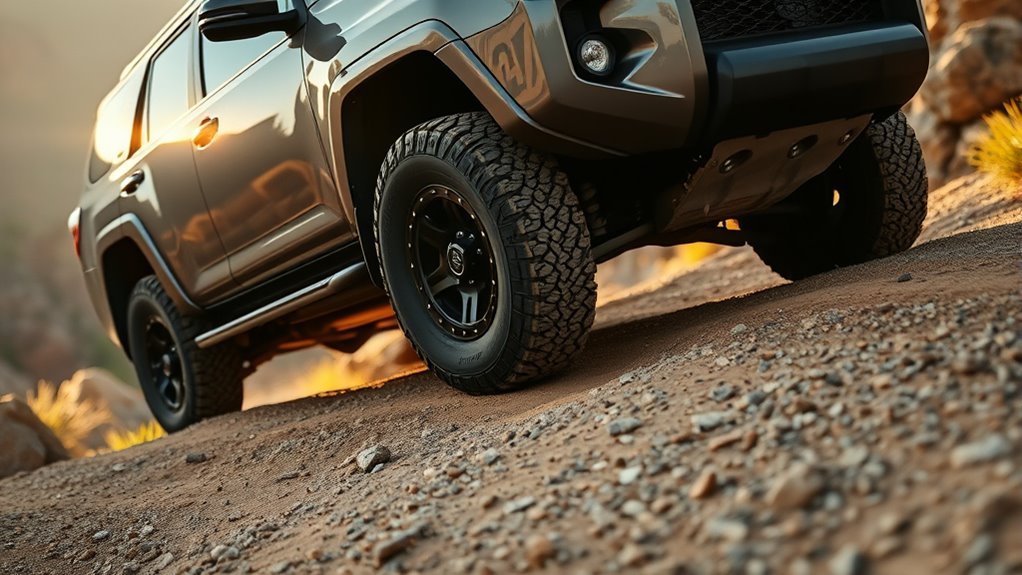
The Toyota 4Runner center differential lock is useful, but only on models that actually have a full-time 4WD transfer case with a lockable center differential. On those 4Runners, the lock is for low-traction surfaces such as snow, mud, loose gravel, sand, ruts, and technical trails—not dry pavement. Use it deliberately, confirm the indicator light is solid, and switch it off before returning to high-grip roads.
Last updated: August 17, 2026
Quick Answer
Lock the 4Runner’s center differential when front-to-rear wheel speed differences are hurting traction, such as on mud, sand, snow, ice, loose gravel, or slow off-road climbs. Leave it unlocked on dry pavement because the driveline needs slip to turn smoothly without binding.
Key Takeaways
- A center differential lock is different from a rear differential lock: it locks the front and rear driveline together, not the left and right rear wheels.
- On 2010–2024 U.S. 4Runners, the lockable Torsen center differential is associated with the Limited full-time 4WD system. For the redesigned 2025–2026 4Runner, Toyota’s own materials describe the system only as a “center locking differential” on specific Limited i-FORCE MAX and Platinum configurations — without using the Torsen name — and Toyota’s November 2025 4Runner materials confirm the same layout continues for 2026. [VERIFY: confirm the 2025–2026 center-differential internal mechanism with Toyota technical documentation]
- Use the locked center diff only where tires can slip slightly, such as off-road, snow-covered, icy, muddy, or sandy surfaces.
- Use low range for slow crawling, steep grades, heavy sand or mud, and controlled descents; use high range only for higher-speed low-traction travel.
- If the center differential lock or 4LO indicator flashes rapidly, stop forcing the system and have the 4WD system inspected.
At a Glance
| Time Required | 10–30 seconds once you know the switch sequence |
| Difficulty | Easy, but the correct mode and surface matter |
| Tools Needed | No tools for normal operation; scan tool only for diagnostics |
| Cost | Free to operate; repair costs vary if an actuator, sensor, or transfer case issue is present |
What the Center Differential Lock Does on a 4Runner
The center differential lock connects the front and rear driveline so the transfer case sends power to both axles together instead of allowing the center differential to vary front-to-rear speed. That helps when one axle starts to lose grip on loose or uneven terrain.
On many full-time 4WD 4Runners, the open or unlocked mode is the normal road-driving mode. Toyota’s 2024 4Runner Limited full-time 4WD system, for example, uses a Torsen center differential with a locking feature. In normal driving, Toyota says that system uses a rear-biased torque split and can vary torque when slippage occurs — roughly 40:60 front-to-rear in typical conditions, shifting to about 30:70 if the front wheels slip in a turn and about 53:47 if the rear wheels slip. When the center differential is locked, the front and rear output shafts are tied together for better traction in low-grip conditions.
Note: Not every 4Runner has a center differential lock. Part-time 4WD models do not use a center differential in the same way. If your switch positions do not include center-lock modes such as H4L or L4L, check your owner’s manual before following center-lock instructions.
A center diff lock is most helpful when you need stable forward movement and predictable front-to-rear pull. It can help in mud, snow, sand, loose rock, washboard climbs, and rutted trails. It is not meant to make a 4Runner turn better on pavement. In fact, locking the center diff on a high-traction surface can make steering heavier and can stress the driveline.
Center Lock vs. Rear Differential Lock
The center differential lock and rear differential lock solve different traction problems. Mixing them up is one of the easiest ways to misuse the system.
| System | What It Locks | Best Use |
|---|---|---|
| Center differential lock | Front driveline to rear driveline | Snow, mud, sand, loose gravel, ruts, and low-traction climbs |
| Rear differential lock | Left rear wheel to right rear wheel | Slow technical obstacles when one rear tire may lift or spin |
| A-TRAC / traction control | Uses braking and power control rather than a mechanical lock | Mixed traction where you want help without fully locking an axle |
Think of the center lock as a front-to-rear traction tool. Think of the rear locker as a side-to-side rear-axle tool. Use the least aggressive system that gets the truck moving cleanly.
Which 4Runner Models Have a Center Differential Lock?
Availability depends on generation, trim, market, and drivetrain. For U.S.-market 5th-generation 4Runners, Toyota described the lockable full-time 4WD system as exclusive to the Limited grade for the 2024 model year. For the redesigned 2025 4Runner, Toyota’s launch information says full-time 4WD with a center locking differential is available on certain Limited i-FORCE MAX models and standard on Platinum grades. Toyota’s November 2025 press materials for the 2026 4Runner confirm this same layout carries forward unchanged.
Center differential lock is not available on every full-time-4WD-adjacent trim. TRD Off-Road, TRD Off-Road Premium, TRD Pro, and Trailhunter models use part-time 4WD instead, paired with an electronic locking rear differential rather than a center differential lock. The table below breaks down current trim availability.
| Trim | 4WD System | Center Differential Lock? |
|---|---|---|
| SR5 / TRD Sport / TRD Sport Premium | 2WD or part-time 4WD | No |
| TRD Off-Road / TRD Off-Road Premium | Part-time 4WD | No — electronic locking rear differential instead |
| TRD Pro / Trailhunter | Part-time 4WD | No — electronic locking rear differential instead |
| Limited (i-FORCE MAX) | Available full-time 4WD | Yes, when equipped |
| Platinum | Standard full-time 4WD | Yes, standard |
Trim availability reflects Toyota’s 2025–2026 4Runner lineup. [VERIFY: confirm current-model-year trim availability before a purchase decision]
Older 4Runner generations and non-U.S. models can differ, so the safest rule is simple: match the switch labels in your vehicle to the owner’s manual for your exact year. Some manuals use labels such as H4F, H4L, and L4L. In that naming system, “F” generally means the center differential is free/unlocked, while “L” means it is locked. For a full walkthrough of what changed across every 4Runner generation, see our 4Runner generations guide.
The most important safety rule is surface choice: lock the center differential where the tires can slip, and unlock it before long dry-pavement driving.
How to Engage and Disengage the Center Locker Safely
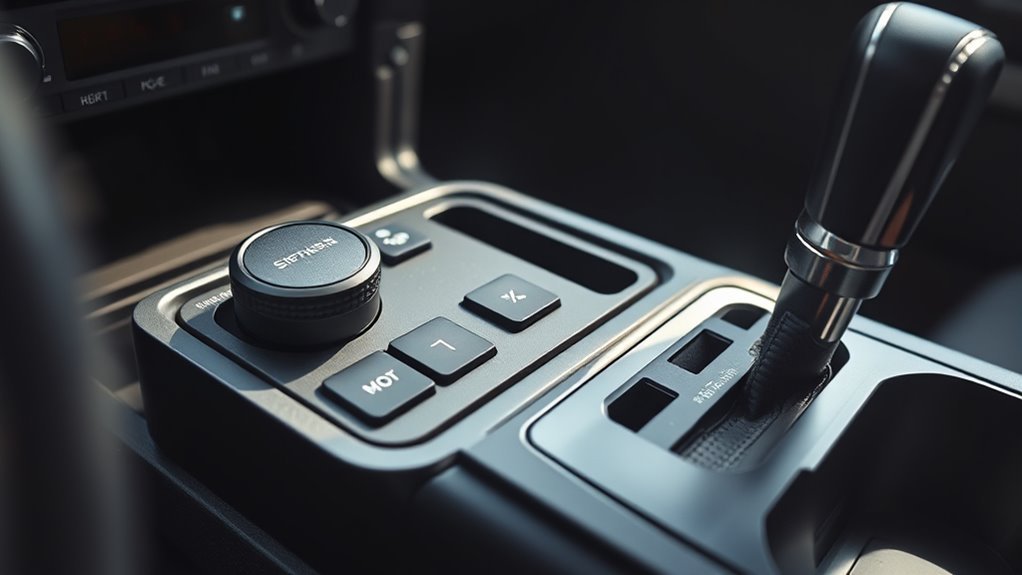
Use your exact owner’s manual first, because Toyota changed switch shapes, labels, and available modes by model year. The general process below applies to many full-time 4WD 4Runners, but the labels may differ.
[Products Worth Considering]

This color coded tire tread depth gauge helps you quickly check tire wear and monitor when replacement is needed. Calibrated in easy-to-read 32nds with clear red, yellow, and green ranges, it offers fast visual results for cars, trucks, motorcycles, and other passenger vehicles. The pocket clip makes it simple to keep on hand for routine maintenance and safety checks.

This smart color coded tire tread depth gauge makes it easy to check tread wear at a glance with clear red, yellow, and green ranges. Calibrated from 0 to 1 inch in 1/32 inch increments, it helps you quickly assess tire condition for safer driving and timely replacements. The pocket clip design makes it convenient to carry and use on trucks, motorcycles, cars, and other passenger vehicles.

This center console latch lock restores a secure, reliable closure for damaged or worn console lids on a wide range of Toyota, Lexus, and Scion vehicles. Made from durable materials for long-lasting use, it helps keep the console locked properly again and is a practical replacement for failing original latches.
Before You Engage the Center Lock
- Confirm you are on a loose, slippery, snowy, icy, muddy, sandy, or off-road surface.
- Straighten the wheels as much as practical.
- Reduce throttle and avoid engaging the lock while the tires are spinning.
- Check the 4WD display or dash indicator after switching modes.
- Do not assume engagement is complete until the indicator stops flashing and stays on.
Engaging High-Range Center Lock
For a high-range locked mode, such as H4L on some Toyota systems, use it when you need extra stability on slippery roads or faster loose surfaces but do not need low-range torque multiplication. Examples include snow-covered roads, icy tracks, wet grass, loose gravel, and moderate sand.
- Slow down and keep steering inputs gentle.
- Operate the 4WD control switch according to your manual.
- Wait for the center differential lock indicator to stop flashing.
- Drive smoothly and avoid sharp turns on high-grip patches.
Engaging Low-Range Center Lock
For low-range locked mode, such as L4L, stop the vehicle completely, keep the brake pressed, shift the transmission to N, and operate the transfer-case switch as your manual directs. Low range is for slow technical driving, steep grades, deep sand, mud, rocks, and controlled crawling. Toyota’s full-time 4WD owner’s manual also notes that Vehicle Stability Control (VSC) is automatically disabled while in L4L, so smooth, deliberate throttle and steering inputs matter even more in this mode.
- Come to a complete stop.
- Keep your foot on the brake.
- Shift the transmission to neutral.
- Turn or push the 4WD control switch to the low-range locked position.
- Wait for the 4LO and center-lock indicators to confirm the change.
- Shift back to drive or reverse and move slowly.
Warning: Do not force the switch, rev the engine, or continue driving hard if the indicator light keeps flashing. Toyota’s owner information says rapid flashing of the center differential lock or 4LO indicator can indicate a malfunction that should be inspected by a Toyota dealer.
Disengaging the Center Lock
Disengage the center lock as soon as you are back on a firm, dry, high-traction surface. If the system feels bound up, do not panic. Ease off the throttle, drive straight, and let the tires unload on a loose patch if available. Sometimes a very slow, gentle roll forward or backward helps driveline tension release.
If the indicator keeps flashing after normal attempts, stop using the system aggressively and schedule an inspection. A stuck indicator can come from driveline windup, switch or sensor faults, actuator problems, wiring issues, or transfer-case wear.
4HI vs 4LO: How the Center Locker Changes Drive Behavior
This section focuses specifically on how the locked center differential changes 4Runner behavior in high range versus low range. If you want a broader explainer of shifting between 4Hi and 4Lo on part-time-4WD 4Runner trims, see our 4Hi vs 4Lo guide.
The center lock changes how power is shared between the front and rear driveline. High range and low range change the gear reduction. You choose the mode based on speed, traction, and how much torque control you need.
- Unlocked full-time 4WD: Best for normal paved-road driving on models equipped with full-time 4WD. The center differential can allow front and rear axles to rotate at different speeds in turns.
- Locked 4HI / H4L: Best for low-traction travel where you still need normal road speed, such as snowy roads, icy tracks, loose gravel, or mild sand.
- Locked 4LO / L4L: Best for slow work where control matters more than speed, such as rocks, steep climbs, descents, deep mud, and heavy sand.
When the center diff is locked, the 4Runner may feel more planted in a straight line but less willing to turn tightly. That is normal. The locked driveline resists the different wheel speeds created during turning.
Pro Tip: Engage the center lock before you are fully stuck. It is easier on the drivetrain to lock early on a loose climb than to wait until the wheels are spinning and the truck is already buried.
Off-Road Scenarios: When to Lock the Center Diff and When Not To

Use the center differential lock as a traction tool, not as a default driving mode. The goal is to reduce front-to-rear slip when the ground is loose enough to let the tires release driveline tension.
| Condition | Recommended Use | Why |
|---|---|---|
| Dry pavement | Do not lock | High grip can cause driveline windup, binding, and hard steering |
| Wet pavement | Usually leave unlocked | Wet pavement still may have enough grip to bind during turns |
| Packed snow or ice | Lock in high range if needed | Helps stabilize front-to-rear traction while tires can slip slightly |
| Loose gravel or dirt | Lock when climbing, descending, or slipping | Improves predictable pull from both axles |
| Mud, sand, deep snow | Lock before momentum drops | Reduces front-to-rear power loss and helps maintain motion |
| Rocks, ledges, steep climbs | Use locked low range | Low range improves throttle control and reduces strain from sudden inputs |
Center Locker Problems, Diagnostics & Fixes
Center locker problems usually show up as flashing indicators, no indicator light, refusal to engage, refusal to disengage, grinding, binding, or warning messages. Start with simple checks before assuming the transfer case has failed.
[Products Worth Considering]

These X-BULL recovery traction tracks help drivers get unstuck from sand, snow, mud, or ice with a stable U-shaped elastic design and a wavy ramp that makes tire entry easier. Built from reinforced nylon, they are flexible, impact-resistant, and designed to perform in extreme temperatures while providing reliable emergency traction for a wide range of vehicles.

This smart tire tread depth gauge provides quick, accurate readings from 0 to 1 inch in 1/32-inch increments, helping drivers assess tire wear with confidence. Its color-coded display makes it easy to see tread condition at a glance, while the pocket clip adds convenient portability for garages, glove boxes, and on-the-go inspections. Designed for use on trucks, motorcycles, automobiles, and other passenger vehicles, it is a simple tool for safer tire maintenance.

This center console lid latch lock is a direct replacement designed to restore secure closing and smooth operation of your vehicle’s armrest box. Compatible with a wide range of Toyota and Lexus models, it matches OEM part 58908-33030 for reliable fit and function. Made from durable ABS plastic, it helps prevent the console from popping open and keeps stored items protected during driving.
Common Symptoms
- Indicator keeps flashing: The shift may not be complete, the wheels may be slipping, or the actuator/sensor feedback may not match the requested mode.
- Center lock will not engage: The vehicle may be moving too fast, the transmission may not be in neutral for low range, or an actuator or electrical fault may be present.
- Center lock will not disengage: Driveline windup may be holding tension in the transfer case, especially after tight turns on a firm surface.
- Grinding or clunking: The mode change may have been attempted under load, or there may be wear in the transfer case, driveline, mounts, or related components.
- Binding in turns: The system may still be locked, or the tires may not be able to slip enough for the selected mode.
Basic Diagnostic Steps
- Confirm the vehicle is on a suitable surface.
- Stop wheelspin before changing modes.
- For low range, stop fully, hold the brake, and shift the transmission to neutral.
- Cycle the switch only as directed by the owner’s manual.
- Drive slowly and straight for a short distance to let the mechanism complete the shift.
- If the indicator flashes rapidly or warnings appear, stop forcing the system and schedule service.
- Have a technician scan for 4WD control codes and inspect actuator wiring, position sensors, transfer-case operation, fluid condition, and driveline components.
Do not keep driving in locked mode on pavement just to “see if it clears.” That can turn a simple driveline windup issue into avoidable wear.
Best Practices to Protect the Drivetrain
Because the center differential lock ties the front and rear driveline together, protecting the drivetrain comes down to timing, surface choice, and smooth inputs.
| Action | Rationale |
|---|---|
| Engage only off-road or on slippery surfaces | Prevents driveline windup on hard, high-grip surfaces |
| Stop and use neutral for low-range shifts | Helps the transfer case complete the mode change cleanly |
| Wait for the indicator to stop flashing | Confirms the requested mode has engaged or disengaged |
| Use smooth throttle and steering | Reduces shock loads on gears, shafts, joints, and mounts |
| Follow Toyota maintenance guidance | Keeps transfer-case and driveline parts inspected and lubricated |
Inspect the transfer case and differential areas for leaks after hard trail use or water crossings. If you tow, drive off-road often, or run through deep water, follow the severe-service guidance in your Toyota maintenance guide rather than relying only on normal-use intervals.
Note: Tire size and tire wear matter. Mismatched tires can create speed differences that make a full-time 4WD system work harder. Keep all four tires the same size, similar tread depth, and properly inflated.
[Products Worth Considering]

This digital tire tread depth gauge helps you check tire wear quickly and accurately with fractional inch, decimal inch, and millimeter readouts. Its large LCD screen, zero reset function, and automatic shutoff make it easy to use for cars, motorcycles, SUVs, trucks, and pickups. Designed for clear readings and dependable measurement, it is a practical tool for routine tire safety checks.

This metal replacement center console latch is designed to restore secure closing performance for a wide range of Toyota and Scion vehicles. Built as an upgraded metal part, it helps solve broken latch issues and provides a more durable alternative to the original component. It is compatible with many popular models and includes the needed screws and screwdriver for installation.

This LUMITECO tire tread depth gauge set makes it easy to monitor tire wear and maintain safer driving performance. The color-coded scale provides quick, easy-to-read measurements, while the compact pocket-size design and included clip make it convenient to keep in your vehicle or toolbox. Suitable for cars, trucks, motorcycles, and more, it offers a simple reusable way to check tread depth whenever needed.
Frequently Asked Questions
When should I use the Toyota 4Runner center differential lock?
Use it when traction is poor and the tires can slip slightly, such as in mud, sand, deep snow, ice, loose gravel, ruts, or slow off-road climbs. Do not use it for normal dry-pavement driving.
Can I drive fast with the center differential locked?
Use locked high range only on low-traction surfaces and drive at a speed that fits the conditions. Avoid high-speed driving, sharp steering, and dry pavement while locked. For technical terrain, use low range and drive slowly.
Is the center differential lock the same as a rear locker?
No. The center lock ties the front and rear driveline together. A rear locker ties the left and right rear wheels together. Some 4Runners have one, both, or neither depending on trim and model year.
Why does my 4Runner feel like it is binding when the center diff is locked?
Binding usually happens when the front and rear axles cannot rotate at the different speeds they need during turns. This is common on high-grip surfaces. Unlock the center diff, drive straight and slowly, and let the driveline unload.
What should I do if the center differential lock light keeps flashing?
Stop wheelspin, drive slowly and straight, and retry the correct switch procedure from the manual. If the center diff lock or 4LO indicator flashes rapidly or will not confirm the mode change, stop forcing it and have the 4WD system inspected.
Does locking the center differential disable Vehicle Stability Control?
Yes, in low range. Toyota’s owner’s manual for full-time 4WD 4Runners states that Vehicle Stability Control (VSC) is automatically disabled while the vehicle is in L4L. Drive smoothly and avoid aggressive throttle or steering inputs in that mode.
Do TRD Off-Road, TRD Pro, or Trailhunter 4Runners have a center differential lock?
No. Those trims use part-time 4WD with an electronic locking rear differential instead. The lockable center differential is only offered on the full-time 4WD system available on Limited i-FORCE MAX models and standard on Platinum.
Conclusion
The 4Runner center differential lock is a serious traction aid, not a pavement toy. Use it when the surface is loose or slippery enough to let the tires release driveline tension. Leave it unlocked for normal road driving, use low range for slow technical work, and pay attention to the indicator lights. Do that, and the center locker can help you keep moving without turning drivetrain stress into an expensive lesson.
Sources
- Toyota USA Newsroom: 2024 Toyota 4Runner Rugged Capability — supports the 2024 Limited full-time 4WD system, Torsen center differential, locking feature, and normal torque-split behavior.
- Toyota USA Newsroom: The All-New 2025 Toyota 4Runner — supports 2025 availability of full-time 4WD with center locking differential on specific Limited and Platinum configurations.
- Toyota Owners: 2025 4Runner Hybrid Full-Time 4WD Interactive Manual — supports center differential lock and 4LO indicator behavior, shifting cautions, VSC-disable behavior in L4L, and malfunction guidance.
- Toyota Owners: 2024 4Runner Manuals and Warranties — official source for owner’s manual and warranty/maintenance documentation by model year.
- NHTSA Vehicle Safety — supports the general safety recommendation to follow manufacturer instructions and address warning lights or drivetrain-related safety concerns promptly.
- Toyota USA Newsroom: The 2026 Toyota 4Runner: Engineered for Exploration — supports the 2026 model-year continuation of the Limited i-FORCE MAX / Platinum full-time 4WD system with center locking differential, and confirms TRD Off-Road/TRD Pro/Trailhunter trims use part-time 4WD with an electronic locking rear differential instead.