You’ll want to measure breakover angle to avoid belly contact when cresting obstacles: measure ground clearance at the lowest belly point, measure wheelbase center-to-center, then compute 2·arctan(2·ground clearance/wheelbase). Different 2025 4Runner trims, tire sizes, lifts and air dam removal change effective clearance, so re-measure after mods. Use the calculated angle as a conservative guide, scout tricky crests on foot, and choose lower-risk lines; continue for trim-specific tips and setup checks.
What the Breakover Angle Is and Why It Matters
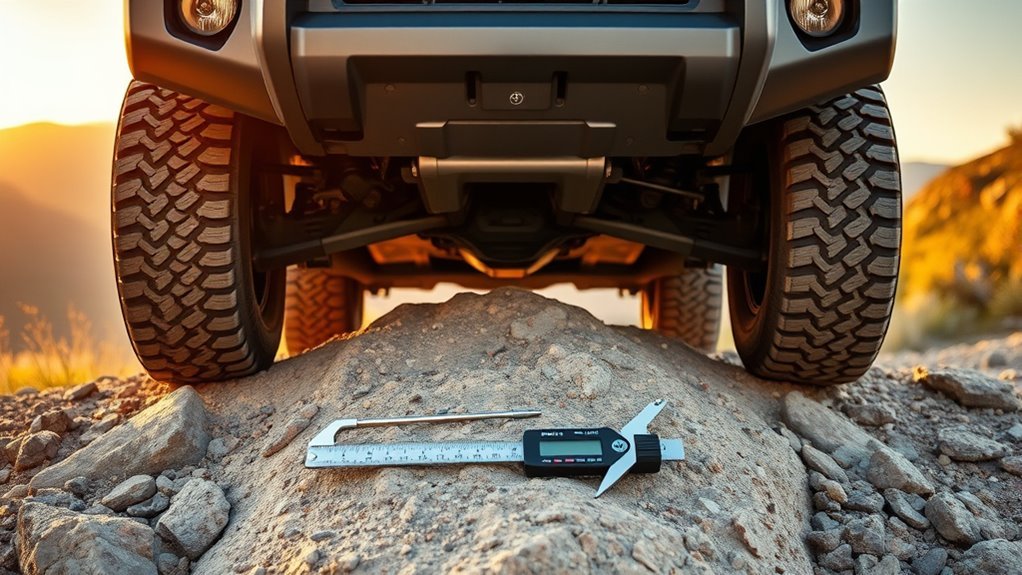
Think of the breakover angle as the sharpest peak your 4Runner can straddle without its belly touching the ridge: it’s the maximum angle a vehicle can pass over a crest without the underside contacting the ground. You’ll see why it matters: breakover angle defines whether you’ll clear a ridge or get hung up. It depends on ground clearance, wheelbase, and tire size; those dimensions set the geometry that lets you summit terrain. The formula 2 × arctan(2 × ground clearance/wheelbase) shows that raising clearance or shortening wheelbase increases the angle. For you, a higher breakover angle means cleaner obstacle navigation and more freedom on high-clearance trails. Understand it, and you’ll choose mods or lines that expand where you can go. Use this metric to assess trail difficulty and vehicle readiness so you won’t be limited by hidden underside contacts. Keep decisions deliberate, practical, and focused on gaining mobility and independence.
Measuring Your 4Runner’s Breakover Angle
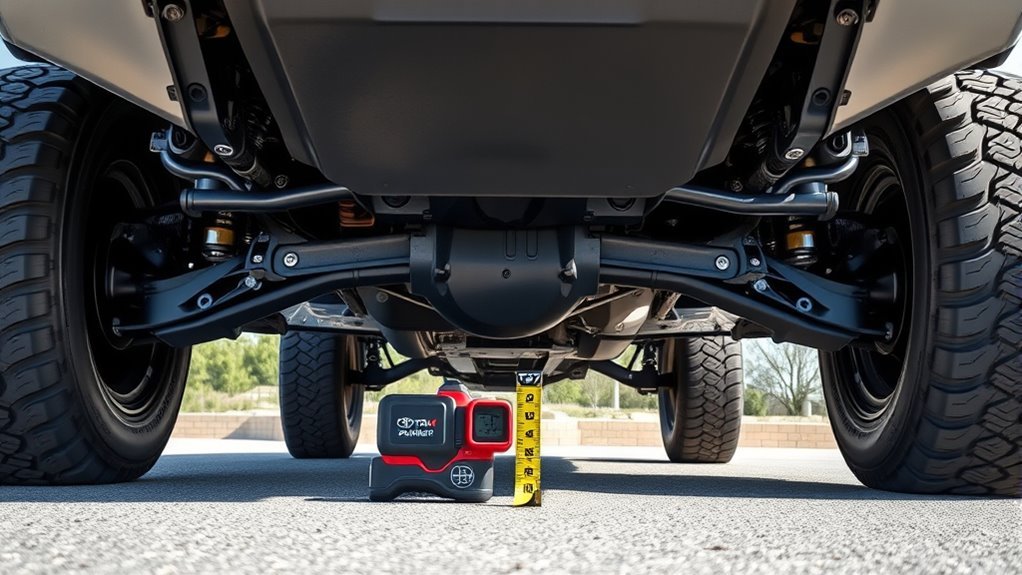
Start by measuring two key dimensions on your 4Runner—ground clearance at the lowest belly point and the wheelbase between the center of the front and rear wheels—because those numbers feed directly into the breakover formula: 2 × arctan(2 × ground clearance / wheelbase). Measure ground clearance with the vehicle on level ground, using a straightedge and tape from the lowest skid or crossmember to the ground. Measure wheelbase from wheel center to wheel center. Plug values into the calculation methods above to compute degrees; a calculator with an arctan function makes this quick.
Record trim-specific numbers—TRD Pro, Trailhunter, TRD Off-Road—since suspension and tire size alter results. Use the computed breakover angle to inform off road strategies: approach angles, line choice, and when to reduce momentum. Recheck measurements after lift kits or tire changes. This process frees you to choose terrain deliberately and minimize risk to the underside of your 4Runner.
Interpreting Breakover Angle: Real‑World Limits on Trails
Now that you’ve measured ground clearance and wheelbase and calculated the breakover angle, use that number to judge what your 4Runner can actually climb on trail. You’ll translate the math into practical limits: higher ground clearance and a shorter wheelbase raise the breakover angle, letting you crest sharper ridges without bellying out. Apply the formula (2·arctan(2·ground clearance / wheelbase)) to compare setups and set realistic expectations.
In trail navigation, treat the breakover angle as a conservative guideline. Combine it with visual obstacle assessment, suspension articulation, tire size, and load—each changes contact points and effective clearance. When approaching a peak, scout on foot, measure or estimate the ramp angles, and pick a line that keeps the vehicle’s midpoint clear. If doubt remains, opt for a lower-risk route or winch/spotter support. Using the breakover angle this way frees you to push limits safely and confidently while protecting your 4Runner and your freedom to explore.
Which 2025 4Runner Trims Affect Breakover Angle

Now you’ll compare how specific 2025 4Runner trims change breakover angle by looking at ride height differences, tire size, and drivetrain/transfer case options. Note that TRD Pro’s +1 inch ride height and TRD Off-Road’s ability to run larger tires or remove the air dam both improve breakover, and the Limited can match that with the same tire and air-dam choices. Also remember drivetrain and transfer‑case configurations (and the 2WD SR5’s lower clearance) affect usable ground clearance and consequently real-world breakover performance.
Trim Ride Height Differences
Because ride height directly changes clearance and breakover, the 2025 4Runner trims with taller suspensions—TRD Pro and Trailhunter (about 1″ higher than TRD Off-Road and 2″ higher than SR5)—give you noticeably better breakover angles, with the TRD Pro offering the best overall capability; the TRD Off-Road also improves over the SR5, especially if you remove its air dam, and only the 2WD SR5 falls short of the high-clearance vehicle criteria that most off-road situations demand. You’ll see clear suspension differences: TRD Pro and Trailhunter trims raise ride height for superior off road performance and tangible clearance benefits. The TRD Off-Road is a practical middle ground, while the SR5 is best for street-first drivers.
Tire Size Impact
Having covered how ride height alters breakover, let’s look at tire size—another simple way to gain clearance. You’ll find larger tires directly improve ground clearance and breakover angle; the TRD Off-Road’s nearly 33″ tires outpace the TRD Sport’s 31.5″ setup. Choose tire selection to match your goals: bigger diameter helps obstacle traversal, while tread and width affect handling.
You can fit 33″ tires on some stock-height trims like the Limited with modest changes, boosting clearance without a lift. The TRD Pro already combines a one-inch lift with compatible tires for superior breakover. Note all 2025 trims except the 2WD SR5 meet high-clearance criteria, so prioritize tire selection for ideal terrain compatibility and liberated off-road performance.
Drivetrain And TransferCase
The drivetrain layout and transfer case gearing play a direct role in how each 2025 4Runner trim translates suspension and wheelbase into usable breakover performance. You’ll find trims with higher suspensions—TRD Pro, Trailhunter, and TRD Off-Road—deliver better breakover angles because their increased ground clearance shortens the effective apex contact. Except for the 2WD SR5, all trims meet high-clearance criteria that enable superior off-road geometry. The low-gear transfer case found on off-road trims multiplies torque and improves drivetrain engagement when negotiating steep, uneven obstacles, letting you maintain momentum without compromising clearance. Practically, choose a trim with lifted suspension and the off-road transfer case to maximize breakover capability and free your trail choices.
Tires, Suspension, and Air Dams: 4Runner Impacts on Breakover
You’ll see tire diameter directly raises effective ground clearance and improves breakover when you fit larger, nearly 33″ tires like on the TRD Off-Road. Lifting the suspension increases angle but can change handling and center of gravity, so weigh off-road gains against on-road tradeoffs. Removing the air dam on TRD models also helps clear the belly and yields a measurable improvement in breakover.
Tire Diameter Effects
Curious how tire size changes what your 4Runner can clear? Bigger tire diameter raises your effective ground clearance, which directly improves breakover angle by lifting the chassis relative to the obstacle midpoint. For the 2025 Toyota 4Runner TRD Off-Road, running nearly 33″ tires already gives you a measurable advantage over smaller stock rubber. When you choose larger tires, the breakover calculation shifts: wheelbase stays fixed, but increased clearance reduces the chance of belly contact on a peak. You can also remove the air dam to further capitalize on the taller tires’ benefit. Focus on combining appropriate tire diameter with conservative mods to preserve reliability while expanding where you can go—maximize liberation from trail limits without compromising safety.
Suspension Lift Tradeoffs
After considering how tire diameter raises your chassis and helps with breakover, think about what a suspension lift adds—and what it costs you. You gain lift benefits: higher ground clearance, improved breakover, and the freedom to run nearly 33″ tires for tougher trails. Those gains let you tackle peaks without scraping the belly.
But weigh suspension compromises. Lifts change center of gravity, steering geometry, and ride quality; they can demand longer driveshafts or re-tuning. The TRD Pro’s FOX setup shows how suspension choice affects breakover, roughly three degrees better than a TRD Off-Road when comparable. You’ll choose between stock simplicity and liberated capability. Make decisions that match your terrain, skill, and willingness to accept mechanical tradeoffs.
Air Dam Removal Impact
Removing the TRD Off-Road’s air dam noticeably improves breakover by letting the front and rear overhangs clear higher crests, so you’re less likely to scrape the belly on steep ridgelines. You’ll feel immediate air dam benefits: reduced underside contact and cleaner approach over ridges. Combine removal with stock nearly 33″ tires and the lifted suspension to maximize gains; wheelbase and ground clearance still govern limits. Consider these breakover modifications priorities:
- Remove air dam first for instant clearance improvement.
- Retain or upgrade to ~33″ (or larger) tires to boost effective angle.
- Use lifted suspension or compare to TRD Pro (≈3° better without air dams) when planning more aggressive terrain.
These steps free you to tackle routes with confidence and fewer compromises.
Pre‑Check: Breakover Angle and Setup Before High‑Clearance Obstacles
Because breakover angle directly limits the maximum crest your 4Runner can clear without scraping the belly, you should measure wheelbase and ground clearance before you tackle high‑clearance obstacles. For vehicle maintenance and obstacle navigation, record stock measurements, then calculate breakover angle using 2 × arctan(2 × ground clearance / wheelbase). A higher ground clearance raises the angle, so trims with high‑clearance standards (all 2025 4Runner trims except 2WD SR5) give you more margin.
Before a run, verify tire size and suspension setup — both change effective ground clearance and therefore the angle. If you’ve lifted the suspension or fitted larger tires, remeasure and recalc. Inspect for damaged components that reduce clearance, and remove low‑hanging items like air dams if applicable.
Plan your line using the measured angle: avoid crests taller than the calculated capability, or approach at angles that reduce risk. These disciplined pre‑checks free you to push trails with confidence and minimize belly contact.
Frequently Asked Questions
What Is the Breakover Angle of a Toyota 4runner?
About 25–26 degrees. You’ll use that breakover angle to judge off road capabilities and vehicle stability; knowing it lets you push trails confidently and free yourself from obstacles without risking underside damage or getting stuck.
How Is Breakover Angle Measured?
You measure breakover angle by using 2×arctan(2×ground‑clearance/wheelbase); you’ll factor suspension setup and tire size, test on varied terrain to confirm real terrain adaptability, and adjust ride height to maximize obstacle clearance.
Is a Higher or Lower Breakover Angle Better?
Bigger’s better. Boldly boosting breakover helps off road performance and frees your driving; you’ll rely on higher clearance and smart suspension design to climb, conquer, and protect the underside while pursuing rugged, liberating adventures.
What Is the Maximum Breakover Angle?
Maximum breakover angle depends on vehicle design, but you’ll typically see around 25–30 degrees; improving off road capabilities relies on suspension design, lift, and wheelbase adjustments so you can conquer tougher terrain.
Conclusion
You’ve now got the tools to judge your 4Runner’s breakover angle and what truly limits you on the trail. Measure carefully, factor in trim, tires, and suspension, and remember that a spec on paper is only part of the picture—real terrain will test everything. Before attempting a high‑center risk, walk the line, visualize the belly meeting the crest, and make adjustments so your rig crosses like a dancer, not a cautionary tale.