A cordless tire inflator is most useful when its battery is charged, healthy, and ready for a roadside emergency. Most rechargeable tire inflators use lithium-ion battery packs, so the best care habits are simple: avoid heat, avoid deep discharge, use the approved charger, store it partly charged, and stop using it if the battery shows signs of damage.
Quick Answer
To extend your tire inflator’s battery life, keep normal charges roughly between 20% and 80%, recharge before it sits empty, unplug it after charging, and store it cool and dry. Use only the manufacturer-approved charger, avoid hot cars, and do not perform full discharge cycles unless the manual recommends gauge calibration.
Key Takeaways
- For everyday use, a 20%–80% charge range reduces battery stress, but charging to 100% is fine before a road trip or emergency kit check.
- Heat is one of the fastest ways to shorten lithium-ion battery life, so avoid storing the inflator in a hot trunk or direct sunlight for long periods.
- Use the charger, USB cable, or battery-pack charger approved by the inflator manufacturer; a charger that fits is not always a safe charger.
- Do not fully drain the battery on purpose every month. Lithium-ion batteries do not need routine full discharge cycles for longevity.
- Stop using the inflator if the battery swells, smells unusual, hisses, smokes, overheats, or will not charge normally.
At a Glance
| Time Required | 5 minutes after each use; 10 minutes for a monthly battery and storage check |
| Difficulty | Easy |
| Tools Needed | Manufacturer-approved charger, dry cloth, soft brush, owner’s manual, and a safe indoor charging spot |
| Cost | Usually $0 unless you need a manufacturer-approved replacement charger or battery pack |
Why Battery Care Is Crucial for Your Tire Inflator
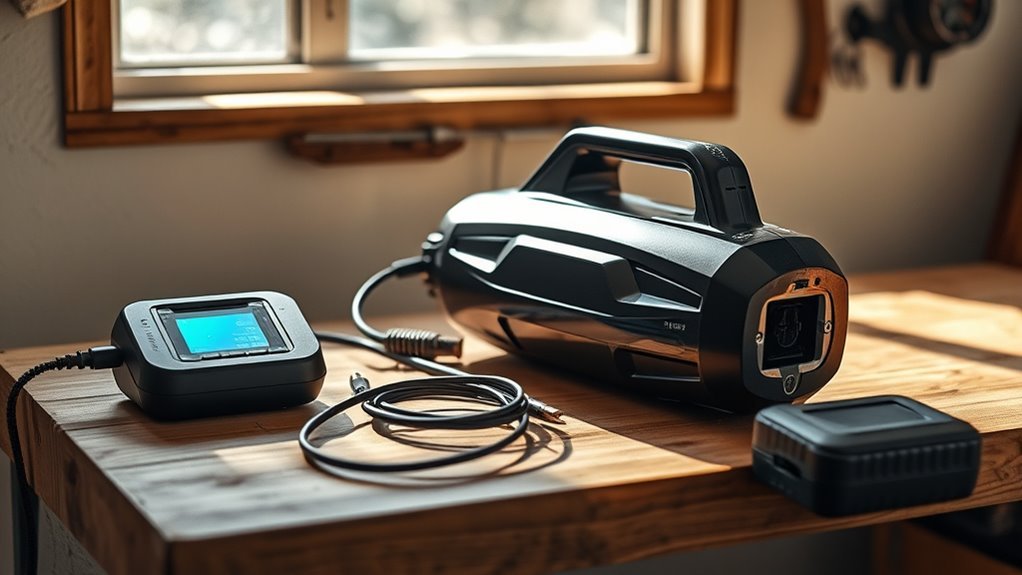
Battery care matters because your tire inflator has to deliver high current to run a small compressor. That workload creates heat, and heat is hard on lithium-ion cells. A weak battery may still light up the display but struggle to inflate a tire quickly, especially in cold weather or after long storage.
The goal is not to baby the inflator so much that it is never ready. The goal is to avoid the worst habits: storing it empty, leaving it hot, using a mismatched charger, blocking the air vents, or repeatedly running it until it shuts itself off.
The most battery-friendly routine is simple: charge before the battery gets very low, unplug after it is full, keep it cool, and store it around a mid-level charge when you will not use it for weeks.
Note: Always follow your inflator’s owner’s manual first. Battery chemistry, charger design, charging temperature, and removable-battery instructions can vary by model.
Essential Charging Tips to Extend Your Tire Inflator’s Battery Life
Good charging habits do more than add runtime. They reduce heat, limit battery stress, and lower the chance of charging problems. These tips apply to most lithium-ion cordless tire inflators, including models with built-in batteries and models that use removable tool-style battery packs.
1. Use the Approved Charger or Cable
Use the charger, USB cable, adapter, or battery-pack charger supplied or approved by the manufacturer. UL Research Institutes explains that lithium-ion chargers and batteries must communicate the correct charging limits; mismatched chargers can create overcharge, overcurrent, overheating, or failure risks.
Warning: Do not use a charger just because the plug fits. If the original charger is lost, buy the exact replacement or one the inflator manufacturer lists as compatible.
2. Keep Normal Charging Between 20% and 80%
For everyday battery life, try to recharge when the battery reaches about 20% and stop around 80% when you do not need maximum runtime. Lithium-ion batteries handle partial charges well, and Battery University notes that partial discharge reduces stress and that lithium-ion batteries do not need periodic full discharge cycles.
That does not mean 100% is forbidden. If you are preparing for a road trip, storing the inflator in an emergency kit for a short period, or planning to inflate several tires, charge it fully. Just avoid letting it sit at 100% in a hot vehicle for days or weeks.
3. Unplug After It Reaches Full Charge
Many modern devices stop charging once full, but it is still smart to unplug the inflator when practical. Apple’s lithium-ion battery guidance explains that reducing time spent fully charged can help battery lifespan, and the same principle is useful for small rechargeable tools.
If your inflator uses an indicator light, remove it from the charger once the light shows full. If the manual gives a maximum charging time, follow that limit.
4. Charge at Room Temperature
Charge the inflator in a dry, room-temperature location. Avoid charging in direct sunlight, inside a hot car, near a heater, or in freezing conditions. The New York State lithium-ion battery consumer safety guide advises following manufacturer instructions and avoiding unsafe charging practices, including using unapproved chargers.
5. Do Not Leave It Charging Unattended Overnight
Charge the inflator when you are awake and nearby. Place it on a hard, flat, dry surface away from bedding, paper, flammable clutter, direct sunlight, and liquids. Once charged, unplug it and store it safely.
Pro Tip: Add a recurring monthly reminder to check the charge. A quick top-up is better than finding the inflator dead when a tire warning light comes on.
Top Maintenance Practices for Optimal Battery Health
Charging is only part of battery care. A tire inflator also needs clean airflow, good storage, and sensible run times. Use this routine to keep both the battery and compressor working well.
- Clean the air vents: Wipe dust from the casing and use a soft brush around vents. Blocked vents trap heat and make the battery work harder.
- Inspect the hose and connector: Air leaks force longer run times, which drains the battery faster.
- Let the compressor cool: If you are inflating multiple tires, follow the manual’s duty cycle and give the motor breaks.
- Keep the battery contacts clean: For removable packs, make sure contacts are dry and free of dirt before charging or installing.
- Store at a mid-level charge: If the inflator will sit unused for a month or longer, store it around 40%–60% if your model shows battery percentage. If it only has bars, aim for about half full.
- Check it monthly: Recharge before the battery gets very low. Do not let it sit empty for weeks.
Avoid routine full charge-discharge cycles. Older nickel-cadmium batteries had memory-effect concerns, but lithium-ion inflator batteries do not need to be drained to zero for maintenance. A full cycle may only be useful as an occasional fuel-gauge calibration if the manual recommends it or if the battery indicator is clearly inaccurate.
Best Storage Practices for a Cordless Tire Inflator
Storage is where many inflator batteries lose capacity. A glove box or trunk may seem convenient, but parked cars can become very hot in summer and very cold in winter. Both extremes reduce performance, and heat can permanently shorten lithium-ion battery life.
For long-term storage, keep the inflator indoors in a cool, dry place. A closet, garage cabinet, or tool drawer is usually better than a vehicle. If you must keep it in the car for roadside readiness, check the charge more often and avoid leaving it in direct sun or high heat.
| Storage Situation | Best Battery Habit |
|---|---|
| Daily or weekly use | Recharge after use and keep it mostly between 20% and 80%. |
| Emergency kit for a few weeks | Charge near full before the trip, then check it monthly. |
| Storage for a month or longer | Store around half charge in a cool, dry place and top up before it gets low. |
| Hot car or direct sunlight | Avoid when possible; heat and high charge together are hard on lithium-ion cells. |
How to Use the Inflator Without Draining the Battery
How you inflate tires also affects battery life. A small cordless inflator can use a lot of power when pushing a car tire from low pressure back to spec, so make each run as efficient as possible.
- Check tire pressure when tires are cold: Cold readings are more reliable, and you avoid unnecessary top-offs.
- Attach the hose firmly: A loose valve connection wastes air and makes the compressor run longer.
- Set the target PSI before starting: Use the pressure listed on the vehicle’s door placard, not the maximum PSI printed on the tire sidewall.
- Inflate one tire at a time: Let the inflator stop automatically if it has auto shutoff.
- Give it cooling breaks: If the unit feels hot or the manual lists a duty cycle, pause before continuing.
- Use 12V backup power when available: If your inflator includes a 12V car adapter, use it for multiple low tires to save battery runtime.
If the inflator slows down, sounds strained, or becomes hot, stop and let it cool. Forcing it to continue can stress the motor and battery.
How to Identify Battery Degradation and Respond Effectively

Battery degradation is normal over time. A rechargeable battery is a consumable part, so it slowly loses capacity with age, heat exposure, heavy use, and repeated deep discharge. The key is knowing the difference between normal aging and a safety problem.
| Sign of Degradation or Trouble | What It Usually Means | Response Action |
|---|---|---|
| Shorter runtime after a full charge | Normal capacity loss or heat-related aging | Clean vents, avoid heat, and plan for battery or inflator replacement if runtime is no longer useful. |
| Battery drains while stored | Self-discharge, parasitic drain, or an aging pack | Recharge monthly and contact support if it drops from full to empty quickly while unused. |
| Slow inflation even when charged | Weak battery, air leak, clogged vent, cold battery, or worn compressor | Warm to room temperature, check hose seal, clean vents, and compare performance after a full charge. |
| Excessive heat, swelling, smoke, odor, hissing, or popping | Possible lithium-ion battery failure | Stop using it immediately, unplug if safe, move away from people and flammable items, and contact the manufacturer or local emergency services if smoke or fire appears. |
| Charging light flashes an error or battery will not charge | Battery too hot, too cold, deeply discharged, damaged, or charger problem | Let it return to room temperature, try the approved charger, and seek service if the warning continues. |
[Products Worth Considering]

This antenna adapter kit is designed to help drivers replace or fit compatible truck and SUV antennas across a wide range of popular makes and models. It includes multiple adapter screws, rubber washers, and adapters for a simple install that requires no special tools and can be completed quickly. Built for broad vehicle compatibility, it is a practical replacement solution for Jeep, Ford, GMC, Chevrolet, Toyota, and other supported vehicles.

Be ready for roadside emergencies with this comprehensive car safety kit designed to help you handle common breakdown situations quickly and confidently. It includes a portable air compressor for fast tire inflation, jumper cables for dead batteries, and a self-contained emergency set with essential tools and first aid supplies. Built for all-weather preparedness, this kit helps keep drivers, passengers, and families safer on the road.

This passenger storage organizer mat is designed to fit the 2026 Toyota RAV4 for a clean, factory-style look with no gaps. It helps protect the original console area from scratches and daily wear while giving you a handy place to store phones, sunglasses, wallets, coins, and cards. Made from durable silicone, it stays in place, reduces rattling, and is easy to remove and clean.
Common Battery Problems With Tire Inflators and How to Fix Them
Battery problems often look like compressor problems, so troubleshoot in a safe order before assuming the inflator is ruined.
[Products Worth Considering]

This car emergency roadside assistance kit helps drivers handle unexpected breakdowns and roadside incidents with confidence. It includes jumper cables and a tire inflator to support quick, practical solutions in emergencies, while the compact bag keeps everything organized in the trunk. Ideal for new drivers, families, road trips, and seasonal travel, it is a thoughtful and useful safety essential for any vehicle.
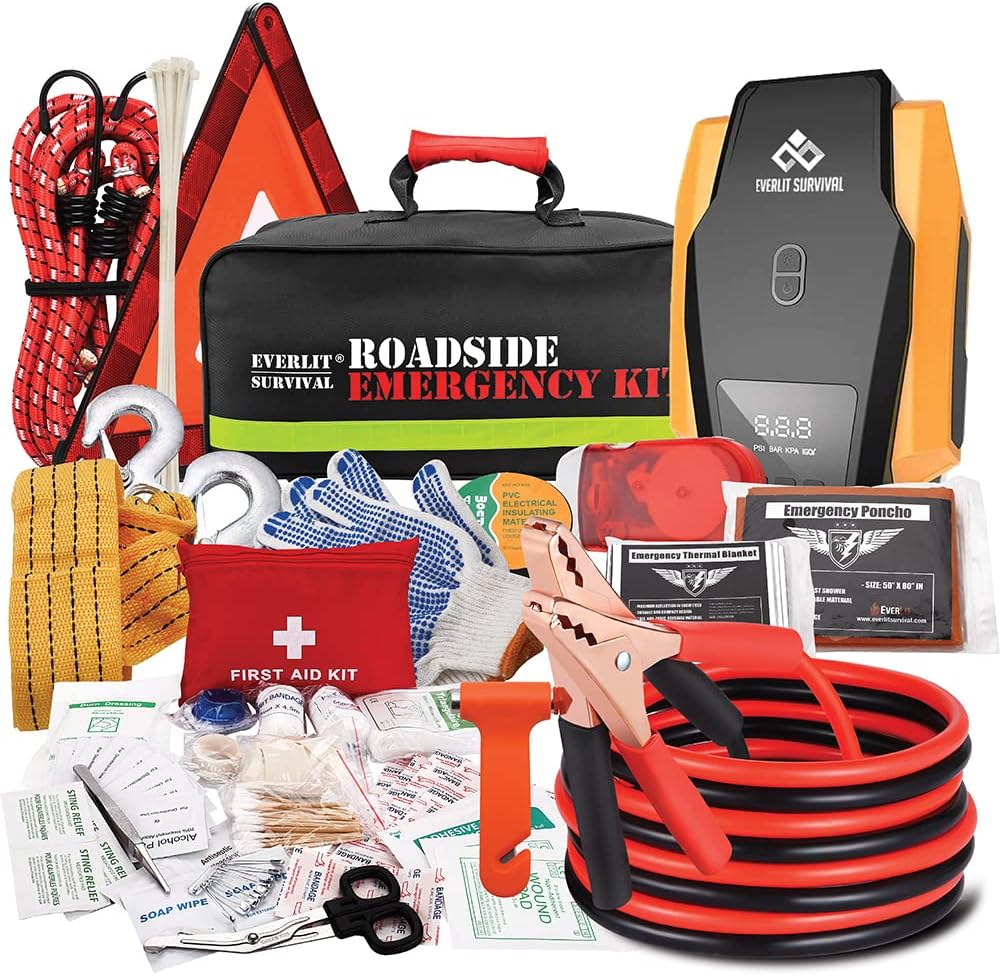
This roadside emergency kit packs essential tools to help drivers handle unexpected breakdowns and stay prepared on the road. It includes a digital tire inflator, jumper cables, first aid supplies, and other safety accessories to support quick, practical roadside response. Designed for everyday drivers and road trips alike, it offers peace of mind for emergencies day or night.

The ANCEL BA101 helps diagnose 12V batteries quickly with clear readings for battery health, charge level, voltage, CCA, cranking, and charging system performance. Designed for a wide range of vehicles and battery types, it offers easy-to-read results, reliable clamp connections, and built-in protection to make testing safer and more convenient.
The Inflator Will Not Charge
Check that the outlet works, the charger is the correct one, and the charging port is clean and dry. If the unit was stored in a freezing car or hot trunk, let it return to room temperature before charging. Do not force charging if the battery case is cracked, swollen, wet, or smells unusual.
The Battery Runs Out Too Quickly
Start with a full charge and inflate one tire from a known pressure. If runtime is much shorter than it used to be, the battery may be aging. Also check for air leaks at the hose, valve connector, or accessory nozzle because leaks make the compressor run longer.
The Inflator Gets Hot
Some warmth is normal, but excessive heat is not. Clean the vents, avoid continuous operation beyond the manual’s duty cycle, and let the unit cool between tires. OSHA’s lithium-ion battery safety fact sheet notes that lithium-ion battery hazards can include thermal runaway, fire, explosions, and chemical byproducts, so stop using any device that overheats abnormally.
The Display Turns On but the Pump Is Weak
A battery can have enough power for lights and the display but not enough current for the compressor. Recharge it, warm it to room temperature, and try again. If it still struggles, the battery or pump may be worn.
The Battery Indicator Seems Inaccurate
Recharge the inflator fully, use it normally, and check whether the indicator behaves more predictably. Do not repeatedly drain it to zero. Only perform a full calibration cycle if the manual recommends it for your model.
When to Replace or Recycle the Battery
Replace the battery pack or inflator when it no longer holds enough charge for your needs, takes much longer than normal to charge, shuts off under light use, or shows charging errors after basic troubleshooting. If your model has a removable pack, buy the exact compatible replacement. If the battery is sealed inside the inflator, contact the manufacturer or a qualified repair service instead of opening the case.
Never throw lithium-ion batteries in household trash. Use a local battery recycling option or a program such as the Call2Recycle drop-off locator. If the battery is swollen, damaged, leaking, recalled, or overheated, do not place it in a standard retail battery bin; ask your local waste authority or the manufacturer for damaged-battery handling instructions.
[Products Worth Considering]

This door handle cover protector is designed to fit select Toyota models, helping guard exterior handles against scratches, dings, and daily wear. Made from durable ABS material, it offers a sleek glossy black look that blends with the vehicle’s original styling while maintaining smart key functionality. Installation is quick and simple, making it an easy upgrade for added protection and a cleaner appearance.

This enhanced OBD2 scanner helps drivers quickly diagnose check engine light issues, read and clear trouble codes, and check emissions readiness before a smog test. It also adds EVAP and O2 sensor testing, live data, freeze frame capture, and a one-click battery health check in a simple plug-and-play tool with a bright color screen.

This all-in-one car emergency kit helps drivers stay prepared for roadside breakdowns, flat tires, and dead batteries with essential tools in one compact package. It includes a portable air compressor, heavy-duty jumper cables, a first aid kit, and other safety items designed for year-round peace of mind. Compact enough for easy trunk storage, it makes a practical safety solution and thoughtful gift for drivers of all ages.
Frequently Asked Questions
How do I prolong battery life when charging a tire inflator?
Use the approved charger, charge at room temperature, unplug after it reaches full, and avoid letting the battery sit empty. For routine use, keeping the battery roughly between 20% and 80% reduces stress, while a full charge is fine before travel or emergencies.
Does charging to 80% help tire inflator battery life?
Yes, for most lithium-ion batteries, stopping around 80% during normal use can reduce time spent at high voltage, which helps limit battery stress. It is still okay to charge to 100% when you need maximum runtime.
Should I fully charge and discharge my tire inflator every month?
No. Lithium-ion batteries do not need monthly full discharge cycles to stay healthy. Avoid deep discharge instead. A full cycle is only worth considering if the battery gauge is inaccurate and the owner’s manual recommends calibration.
Is it bad to leave a tire inflator plugged in overnight?
It is better not to. Many chargers have protection circuits, but unattended overnight charging adds unnecessary risk and keeps the battery full longer than needed. Charge it while you are nearby, then unplug it once full.
Can I store a cordless tire inflator in my car?
You can for short-term roadside readiness, but it is not ideal for long-term battery life. Hot trunks and freezing cabins reduce performance and can speed battery aging. For long storage, keep it indoors in a cool, dry place.
Why does my tire inflator run slowly even after charging?
Common causes include an aging battery, cold battery temperature, clogged vents, an air leak at the hose or valve, or a worn compressor. Charge it fully, let it reach room temperature, check the hose seal, and clean the vents before replacing anything.
What is the best way to store a rechargeable tire inflator battery?
Store it cool, dry, and partly charged. For storage longer than a month, aim for about 40%–60% charge if your inflator shows percentage. Check it monthly and recharge before it gets very low.
Conclusion
Extending your tire inflator’s battery life comes down to a few reliable habits: charge it with the approved charger, avoid heat, keep normal use in the middle of the battery range, store it partly charged, and keep the compressor clean and cool during use. Skip routine full discharges, watch for battery damage, and replace or recycle the battery safely when runtime drops too far. With these habits, your inflator is more likely to be ready when a low tire catches you off guard.
Sources
- Apple Support: Charge and maintain your iPhone battery — backs up lithium-ion guidance on heat, full charge time, and temperature effects.
- Battery University: How to Prolong Lithium-based Batteries — backs up partial-discharge guidance and the correction that lithium-ion batteries do not need routine full discharge cycles.
- UL Research Institutes: Universal Chargers and Safety — backs up charger compatibility and mismatched-charger safety risks.
- New York State: Lithium-Ion Battery Consumer Safety Guide — backs up lithium-ion charging, storage, manufacturer-instruction, and safety cautions.
- OSHA: Lithium-ion Battery Safety Fact Sheet — backs up lithium-ion thermal runaway, fire, explosion, and chemical hazard warnings.
- Call2Recycle Drop-off Locator — provides battery recycling location guidance.