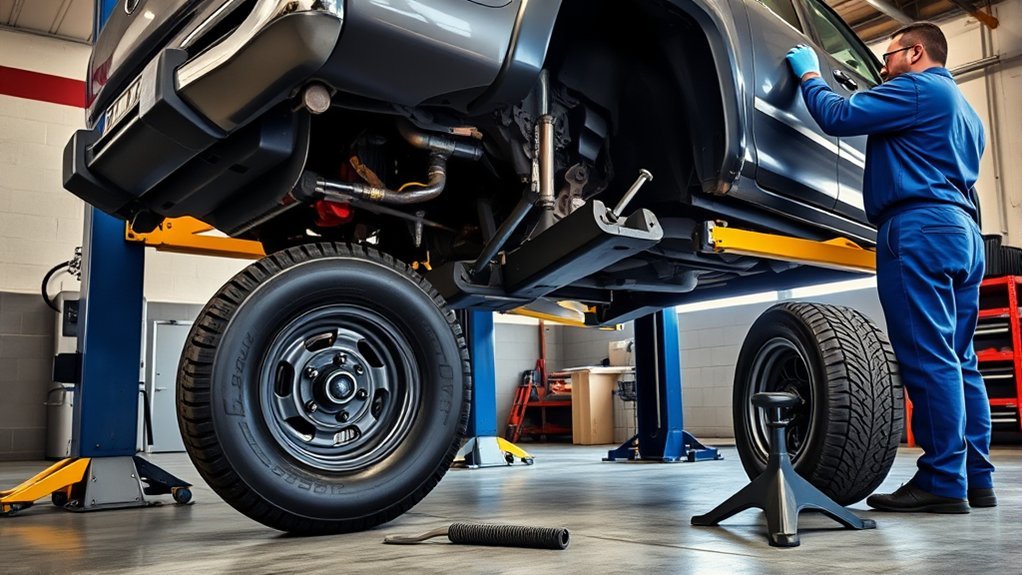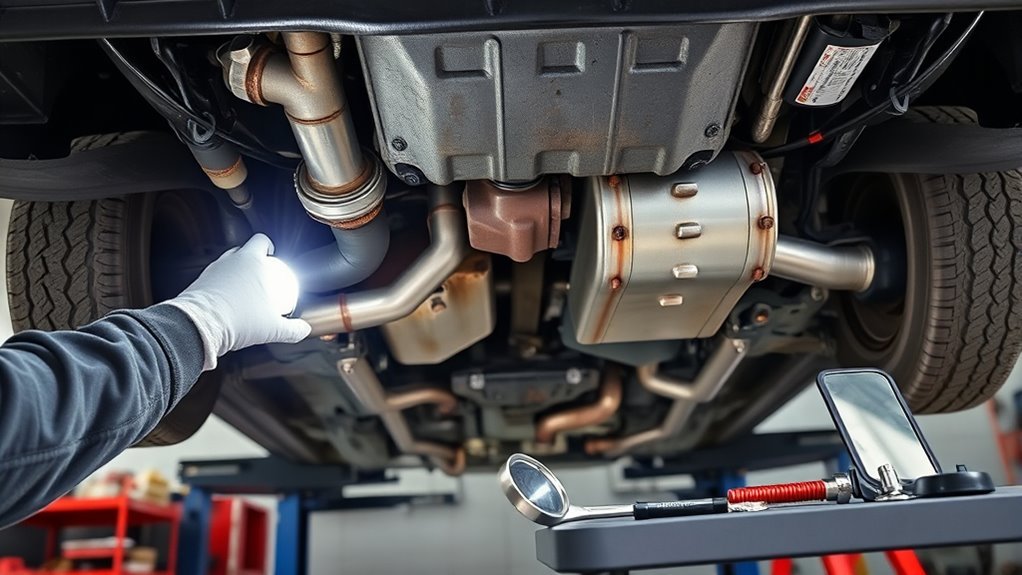
You can diagnose a Tacoma exhaust leak by combining three checks: listen for hissing or ticking, inspect the full exhaust path for soot or rust, and confirm the leak with a cold-start soapy-water or smoke test. Start near the exhaust manifold, flanges, flex sections, catalytic converter, muffler, and tailpipe because these joints and stressed areas fail most often.
Quick Answer
A Tacoma exhaust leak usually shows up as a ticking, tapping, hissing, fuel-like smell, poor acceleration, or black soot around a joint. Let the truck cool, support it safely, inspect the exhaust from front to rear, then use soapy water or smoke to pinpoint the leak before replacing gaskets, clamps, bolts, or damaged pipe sections.
Key Takeaways
- A ticking noise near the engine often points to an exhaust manifold, manifold gasket, or flange leak.
- Black soot, rust holes, cracked welds, loose hangers, and missing bolts are the fastest visual clues.
- Exhaust smell inside the cabin is urgent because exhaust gases can contain carbon monoxide.
- Exhaust tape and epoxy are temporary fixes only; cracked manifolds, damaged catalytic converters, broken flanges, and rusted pipes should be repaired properly.
- After repair, recheck the truck with a cold-start sound test, visual inspection, and soapy-water test before normal driving.
At a Glance
| Time Required | 20–60 minutes for diagnosis; longer if bolts are seized or parts need replacement |
| Difficulty | Beginner for inspection; intermediate for gasket, clamp, or pipe repairs |
| Tools Needed | Wheel chocks, jack stands or ramps, flashlight, gloves, eye protection, spray bottle, soapy water, basic sockets, penetrating oil, torque wrench, and replacement parts |
| Typical Cost | Low for clamps or gaskets; moderate to high for manifold, catalytic converter, welding, or full section replacement |
Quick How-To: Diagnose a Tacoma Exhaust Leak
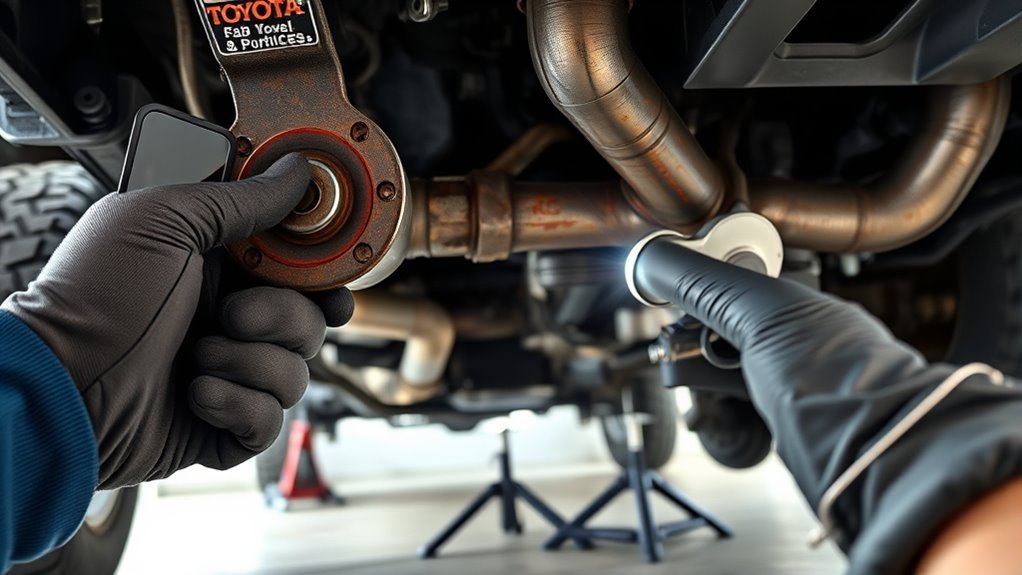
Start with the truck parked on level ground. Let the exhaust cool completely before touching anything, then make your first pass with a flashlight. Look from the engine side of the exhaust system toward the tailpipe. Pay close attention to the manifold area, flanges, gasket joints, flex sections, catalytic converter seams, muffler seams, hanger brackets, clamps, and the tailpipe.
Next, listen during a cold start. A leak near the engine often sounds like a sharp ticking or tapping that gets faster with RPM. A leak farther back may sound like a hiss, rasp, rumble, or louder-than-normal exhaust note. If the sound gets louder under acceleration, the leak may be opening under engine load.
Then confirm the location. Spray soapy water on suspected joints during a brief cold-start idle and watch for bubbles. If the leak is too small to see, use a smoke machine or have a shop smoke-test the system. Mark the leak before the exhaust gets too hot.
Warning: Do not run your Tacoma in a closed garage while diagnosing an exhaust leak. Toyota warns that exhaust gas contains carbon monoxide, and the CDC describes carbon monoxide as colorless, odorless, and potentially deadly. If you smell exhaust inside the cabin, open the windows, shut the truck off when safe, and have it inspected before normal driving.
Spot the Signs: Smells, Noises, and Performance Clues
An exhaust leak rarely starts as a mystery if you know what to watch for. The signs usually fall into four groups: smell, sound, visible evidence, and drivability changes.
Recognizing Exhaust and Fuel-Like Odors
A strong exhaust smell inside or around your Tacoma is a serious warning sign. Exhaust gases can enter through openings, rear-window airflow, floor gaps, damaged seals, or leaks near the cab. On Tacomas with a power rear window, Toyota’s owner information specifically advises keeping the rear window closed when needed and having the vehicle inspected if exhaust odor enters the vehicle.
Do not assume every fuel-like smell is only an exhaust leak. Raw gasoline odor can also come from a fuel system problem, evaporative-emissions leak, or under-hood issue. If the smell is strong, persistent, or worse at idle, stop driving until you know the source.
- Check the exhaust manifold and gasket seams for black soot or ticking noise.
- Inspect pipe joints, flanges, and clamps for dark streaks or burned-looking residue.
- Smell around the outside of the truck, not inside a closed cabin.
- Stop driving if fumes enter the cabin or anyone feels headache, dizziness, nausea, weakness, or confusion.
Hearing Tell-Tale Noises
Sounds often tell you where the leak is. A sharp tick near the engine usually suggests a manifold gasket leak, cracked manifold, broken manifold stud, or flange leak. A hiss may point to a small hole, cracked weld, or gasket gap. A deep rumble usually means the leak is farther downstream, often near the muffler, tailpipe, or a rusted pipe section.
Use engine speed to narrow it down. If the sound speeds up with RPM and is loudest near the front of the engine bay or wheel well, start at the manifold and front pipe. If the sound is louder under the cab or behind the rear axle, inspect the mid-pipe, muffler, hangers, and tailpipe.
Watching Performance and Check-Engine Clues
A small leak behind the muffler may mostly create noise. A leak before or near oxygen sensors can affect sensor readings, fuel trims, emissions performance, and drivability. You may notice poor acceleration, lower fuel economy, exhaust smell, or a check-engine light.
Common related trouble codes may include oxygen-sensor, fuel-trim, or catalyst-efficiency codes, but a scan code alone does not prove the exhaust is leaking. Always pair a scan with a physical inspection.
Safety First: Prepare Your Tacoma and Work Area
Before you crawl under the truck, control the risks. Exhaust parts get hot enough to burn skin, rust flakes can fall into your eyes, and a jack alone is not safe support. Prepare the truck and work area before you start diagnosing.
- Park on level, solid ground and set the parking brake.
- Chock the wheels that stay on the ground.
- Let the exhaust cool before touching pipes, clamps, shields, or the catalytic converter.
- Use ramps or jack stands rated for the Tacoma’s weight. Never rely on a hydraulic jack alone.
- Wear safety glasses, gloves, and long sleeves if you are working around rusted metal.
- Keep the area ventilated any time the engine is running.
- Keep a fire extinguisher nearby if you are using heat, penetrating oil, or power tools.
Note: If your Tacoma is still under warranty or you suspect a factory defect, check your Toyota owner resources and the NHTSA recall lookup before paying for repairs. Exhaust and emissions coverage depends on model year, mileage, part, location, and warranty status.
Inspect Under the Truck: Visual Checklist for the Exhaust System
Start at the front and move rearward. Exhaust leaks are easiest to find when you follow the system in order instead of jumping from noise to noise.
Front Exhaust: Manifold and Gasket Area
Use a flashlight around the exhaust manifold, heat shield, manifold gasket, studs, nuts, and the first flange. Look for black soot, missing hardware, cracked metal, broken studs, and heat-shield rattles. A leaking manifold gasket often leaves a dark trail where hot gas escapes.
Flanges, Donut Gaskets, and Spring Bolts
Flange joints are common leak points because gaskets compress, bolts rust, and movement opens gaps. Inspect for uneven spacing, broken bolts, missing springs, warped flanges, and soot around the joint. Do not simply over-tighten a badly rusted flange; you may snap the bolts or crush a gasket that needs replacement.
Catalytic Converter and Oxygen Sensor Bungs
Check the catalytic converter shell, welds, heat shields, and oxygen-sensor bungs. Look for cracks, impact damage, rattles, or black marks around sensor threads. Do not remove, hollow out, bypass, or disable the catalytic converter. The EPA treats tampering with emissions-control systems and defeat devices as illegal under the Clean Air Act.
Mid-Pipe, Muffler, Tailpipe, and Hangers
Move toward the rear of the Tacoma and inspect pipe bends, welded seams, clamps, muffler seams, rubber hangers, and the tailpipe outlet. Rust holes often start along seams, low points, and areas that trap moisture or road salt. A sagging tailpipe can stress joints and create repeat leaks even after a gasket repair.
- Black soot: Escaping exhaust gas has been leaving residue.
- Orange or flaking rust: Metal may be thinning from the outside in.
- Cracked welds: A clamp or tape patch is usually temporary.
- Loose hangers: Movement can reopen joints and break welds.
- Missing hardware: A gasket cannot seal if the joint is not clamped evenly.
Locate the Leak: Soapy-Water, Smoke, and Listening Tests
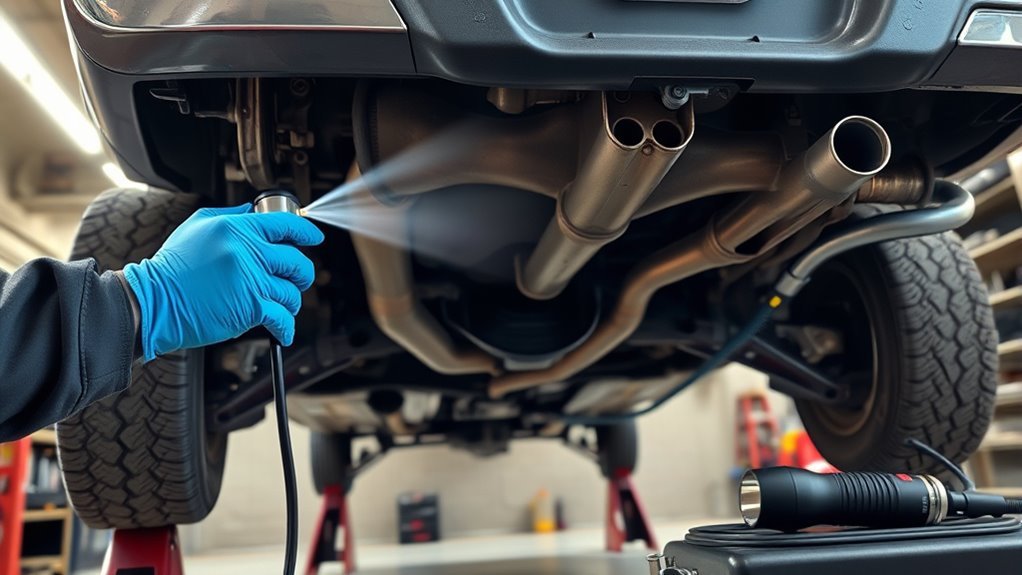
Once you find suspicious spots, confirm the exact leak before buying parts. Many exhaust systems have several rusty or noisy areas, and fixing the wrong joint wastes time.
Soapy Water Inspection
Mix dish soap and water in a spray bottle. Start the engine briefly while the exhaust is still cool, then spray the suspected seams, flanges, welds, and clamps. Sustained bubbles point to escaping exhaust pressure. Work quickly and avoid spraying very hot parts, especially the catalytic converter.
- Visually inspect first so you know where to spray.
- Use the test during a cold start before the pipes become too hot.
- Spray joints, flanges, welds, and pinholes, not electrical connectors.
- Watch for repeated bubbling instead of one-time splashing or steam.
- Mark the leak with chalk or a paint marker once the part cools.
Smoke Test
A smoke test is better for hairline cracks and leaks hidden above shields. With the engine off, a smoke machine pushes visible vapor into the exhaust system. Escaping smoke reveals the leak location without needing to run the engine for long. If you do not have a smoke machine, a muffler shop can usually perform this test quickly.
Listening Test
Use your ears to confirm the area. A mechanic’s stethoscope, length of hose, or careful listening near the wheel well can help isolate ticking. Keep hands, hair, clothing, and tools away from belts, fans, and hot exhaust. Never place your face near an exhaust joint while the engine is running.
Pro Tip: Diagnose on a cold start first. Small manifold and flange leaks are often loudest before the metal expands with heat, then become quieter as the joint warms up.
Simple Home Fixes: Bolts, Gaskets, Epoxy, Tape, and Clamps
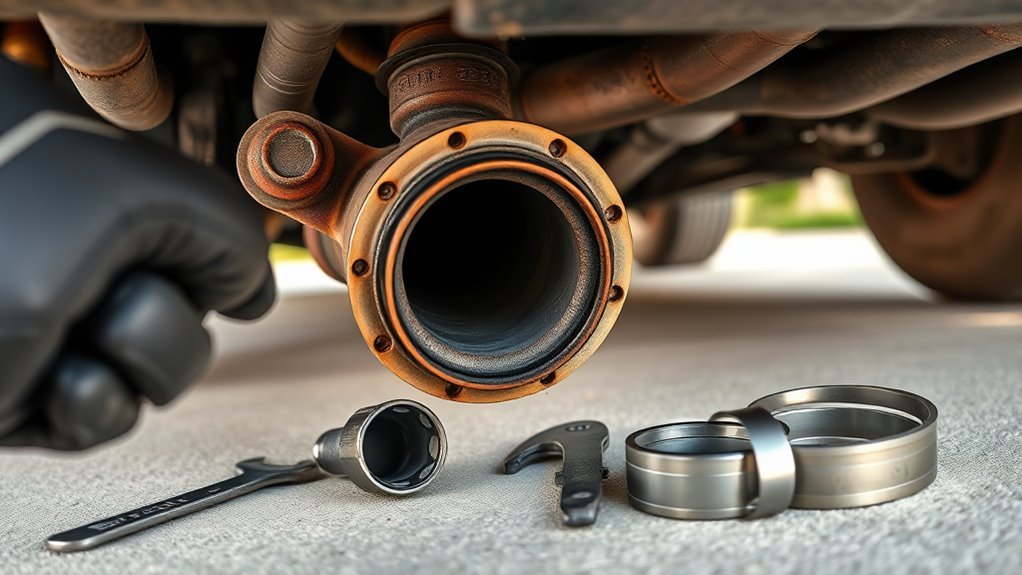
Small exhaust leaks can sometimes be fixed at home, but the right repair depends on the leak type. A loose clamp needs a clamp repair. A crushed gasket needs a gasket. A rust hole needs metal repair or pipe replacement. Matching the repair to the failure is what keeps the leak from coming back.
[Products Worth Considering]

AutoLine Pro HyperSmoke is a professional automotive smoke tester designed to quickly find EVAP, vacuum, intake, boost, exhaust, and other leak sources with thick visible smoke. It features adjustable pressure, built-in air compressor motor, instant warmup, and OEM approved smoke fluid for safe, accurate diagnostics across a wide range of vehicles and systems. The kit includes essential accessories and is backed by a full coverage warranty for dependable shop or garage use.

Walker 36454 is a spring bolt kit designed to help secure exhaust components and maintain a tight, leak-resistant connection. It is made for ball and socket joint applications and uses durable materials for long-lasting performance. This hardware is a practical choice for exhaust repairs and compatible replacement needs on select vehicles.

Walker exhaust pipe flange gasket is designed to help complete exhaust repairs with a reliable seal for compatible vehicles. Built to work with OE exhaust components and Walker replacement parts, it features heat-deflecting construction, durable materials, and slotted bolt holes where applicable for easier installation. Engineered and tested for real-world performance, it supports long-lasting exhaust system service.
Replace Rusted Bolts and Hardware
If a flange is leaking because the hardware is loose, missing, or rusted, replace the bolts, nuts, springs, and washers with the correct grade and style. Use penetrating oil before removal and be patient with seized hardware. If a stud breaks in the manifold or converter flange, stop and decide whether you have the tools to extract it safely.
Replace Gaskets Correctly
Do not reuse a crushed, burned, or split exhaust gasket. Separate the joint, scrape old residue from the mating surfaces, check for warped flanges, install the correct gasket or donut seal, and tighten evenly. Use the service manual or repair information for torque specs because over-tightening can warp flanges or break studs.
Use Clamps for Joint and Section Repairs
Stainless steel band clamps or exhaust clamps can work well for slip joints, replacement pipe sections, and some muffler connections. They are not a cure for a broken manifold or a badly cracked converter flange. After installation, run the truck through a heat cycle and recheck the clamp once everything cools.
Use Epoxy and Tape Only as Temporary Repairs
High-temperature exhaust epoxy or exhaust repair tape can help you get by with a small pinhole or minor seam leak, but it should not be treated as a permanent fix on a structural crack, flexing joint, manifold, catalytic converter, or heavily rusted pipe. Clean the area well, follow the product temperature rating, and schedule a real repair.
A quiet exhaust is not just about comfort. On a Tacoma, a sealed exhaust system helps route fumes away from the cab, protects emissions components, and keeps sensor readings more reliable.
When to Replace Parts: Manifold, Flange, Cat, Muffler, Tailpipe
Patch only what can safely be patched. Replace parts when the metal is cracked, missing, distorted, or too thin to seal. The closer the leak is to the engine or cabin, the more seriously you should treat it.
| Part | Replace When You See | Why It Matters |
|---|---|---|
| Exhaust manifold | Cracks, broken studs, repeated gasket failure, loud cold-start ticking | Front leaks can affect drivability and allow fumes near the engine bay |
| Flange or gasket | Soot around joint, missing hardware, warped flange, crushed gasket | A weak joint will keep reopening under heat and vibration |
| Catalytic converter | Cracked shell, damaged flange, internal rattle, emissions failure, confirmed catalyst fault | It is part of the emissions system and must not be bypassed or hollowed out |
| Muffler | Severe rust, holes, split seams, broken internal baffles, excessive noise | A failing muffler can create noise, back-end leaks, and hanger stress |
| Tailpipe or mid-pipe | Rust holes, cracked bends, crushed pipe, sagging pipe, broken hangers | Loose or leaking pipe can direct fumes toward the cab or melt nearby parts |
[Products Worth Considering]
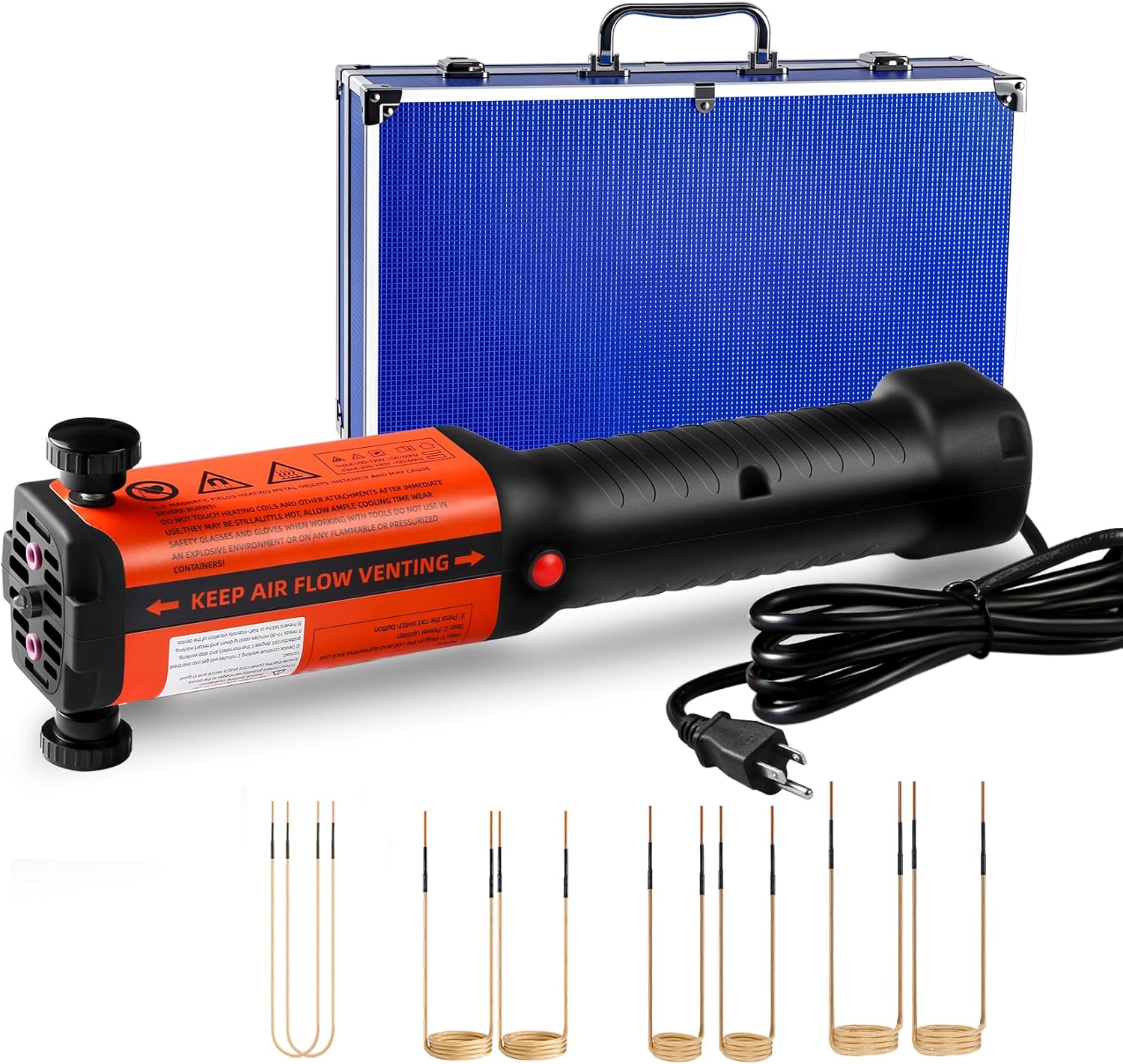
This handheld magnetic induction heater quickly loosens rusted bolts, stuck nuts, and seized fasteners without open flames or sparks. Its focused heating helps protect nearby rubber, paint, wiring, and other sensitive components while built-in cooling and overheat protection support safer use during demanding repair jobs. With multiple coil options for different sizes and shapes, it is a versatile solution for automotive, workshop, and home maintenance tasks.

This 4-piece automotive electrical disconnect pliers set helps safely remove stubborn push-tab connectors from mass air flow sensors, fuel injectors, and ignition coils without damaging delicate tabs. It includes straight and 60-degree angled pliers, a hose clamp plier, and a dual-ended terminal pin remover to handle a wide range of under-hood wiring tasks. Organized in a rugged storage case, it is built for mechanics and DIYers who need reliable access to tight engine bay spaces.

These Amazon Basics steel jack auto stands provide dependable support for vehicle maintenance with a self-locking ratchet design for easy height adjustment. Built from durable steel with a rustproof coating, they meet recognized safety standards and are designed for sedans and urban SUVs. The pair offers a stable, easy-to-read solution for routine garage work and comes backed by a limited warranty.
Repair Cost & Options: DIY, Muffler Shop, OEM vs. Aftermarket
Repair cost depends on the leak location, rust level, model year, engine, drivetrain, emissions configuration, and local labor rates. A clamp or gasket repair is usually the least expensive path. A manifold, catalytic converter, broken-stud repair, or welded pipe section can cost much more because labor and parts add up quickly.
[Products Worth Considering]

The Milwaukee M18 FUEL 1/2" High Torque Impact Wrench delivers powerful fastening and breakaway performance in a compact, easy-to-handle design. Its brushless motor and REDLINK PLUS intelligence help maintain strong output while protecting against overload, overheating, and over-discharge. With multiple control modes, durable all-metal construction, and a friction ring anvil for fast socket changes, this tool is built for demanding automotive and jobsite applications.

This genuine Toyota fuel tank cap assembly is designed for a direct fit and dependable replacement on compatible vehicles. As an OEM factory original part, it helps maintain proper fuel system sealing and supports reliable everyday driving. Built to Toyota quality standards, it offers trusted fitment and long-lasting performance.
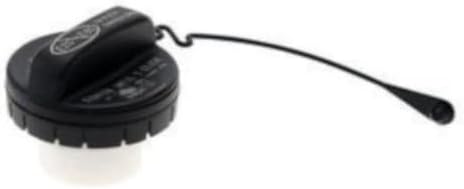
This genuine Toyota fuel tank cap assembly is designed for vehicle-specific fitment and reliable performance. As an OEM part, it delivers Toyota quality assurance and backed manufacturer warranty support, making it a dependable replacement choice for maintaining proper fuel system sealing and function.
DIY Repair
DIY makes sense when the leak is easy to reach, the hardware is not badly seized, and the repair involves a gasket, clamp, hanger, or simple bolt-on section. It is not the best choice if you need welding, oxygen-sensor bung repair, broken-stud extraction, or catalytic converter replacement.
Muffler Shop Repair
A muffler shop is often the best value for rusted pipes, custom sections, welding, or leak testing. Shops have lifts, torches, welders, pipe expanders, and experience with seized exhaust hardware. That can save time and prevent broken bolts.
OEM vs. Aftermarket Parts
OEM parts usually offer the most predictable fit. Aftermarket parts can save money, but confirm the part matches your Tacoma’s exact year, engine, wheelbase, cab, drivetrain, and emissions requirements. If your state follows stricter emissions rules, make sure any catalytic converter or emissions-related part is legal for your location before installation.
Warning: Do not install oxygen-sensor spacers, catalytic-converter delete pipes, hollowed converters, or other defeat devices. The EPA states that tampering with emissions-control systems is illegal under the Clean Air Act.
Post-Repair Checks and Prevention: Testing and Maintenance Tips
After any repair, verify the fix before you consider the job done. Start the Tacoma cold and listen for the same ticking, hissing, or rumbling sound. Inspect the repaired area with a flashlight. If the joint is still cool enough for safe testing, use soapy water again and watch for bubbles.
- Run a cold-start sound check.
- Inspect the repaired area for soot, movement, or gaps.
- Check nearby hangers so the pipe is supported correctly.
- Take a short test drive with the windows down, then recheck after cooling.
- Watch for check-engine lights or returning fuel-economy changes.
- Recheck clamps or accessible hardware after one or two heat cycles.
Prevent future leaks by washing road salt from the undercarriage, replacing broken hangers quickly, fixing rattles before they crack welds, and inspecting exhaust pipes and mountings during routine service. Toyota’s maintenance information points owners to scheduled maintenance resources, and exhaust pipes and mountings are the type of items that should be inspected periodically as the truck ages.
When You Should Stop and Call a Professional
Some exhaust work is not worth forcing in the driveway. Call a qualified technician or muffler shop if you find any of these problems:
- Exhaust smell inside the cabin
- Broken exhaust manifold studs
- A cracked manifold
- A damaged catalytic converter
- Severe rust near multiple joints
- Leaks above the transmission crossmember or in hard-to-reach areas
- Need for welding or pipe fabrication
- Check-engine light after the physical leak is repaired
- Symptoms of carbon monoxide exposure
If anyone in the vehicle feels dizzy, weak, nauseated, confused, or develops a headache while the truck is running, get fresh air immediately and seek medical help. Do not keep driving to “test” the leak.
Frequently Asked Questions
How do I diagnose and fix a Tacoma exhaust leak?
Let the truck cool, support it safely, and inspect the exhaust from the manifold to the tailpipe. Look for soot, rust holes, cracks, missing bolts, loose clamps, and sagging hangers. Confirm the leak with a cold-start listening test, soapy water, or smoke. Fix it by replacing the failed gasket, clamp, bolt, hanger, pipe section, manifold, muffler, or catalytic converter as needed.
What is the most common cause of an exhaust leak?
The most common causes are corrosion, failed gaskets, loose or broken hardware, cracked welds, and movement from worn hangers. On older or salt-belt Tacomas, rusted pipes and flanges are especially common. Near the engine, manifold gaskets and broken studs are frequent suspects when you hear ticking at cold start.
Can I drive my Tacoma with an exhaust leak?
Avoid driving if exhaust odor enters the cab, the leak is near the engine, the pipe is hanging loose, or the truck has a severe noise or drivability problem. A small rear leak may not strand the truck immediately, but it should still be repaired because leaks can worsen, affect emissions, and create fume risks.
How do I diagnose a clogged exhaust on a Tacoma?
A clogged exhaust usually causes weak acceleration, poor high-RPM power, excessive heat, rattling from a damaged converter, or a check-engine light. A technician can confirm restriction with back-pressure testing, temperature checks, scan-tool data, and inspection. Do not confuse a clog with a leak: a leak is escaping gas, while a clog is restricted flow.
Is exhaust tape a permanent repair?
No. Exhaust tape and epoxy are temporary repairs for small pinholes or minor leaks in lower-stress areas. They are not reliable for cracked manifolds, broken flanges, damaged catalytic converters, flexing joints, or heavily rusted pipes. Use them only to buy time until the damaged part can be repaired or replaced.
Sources
- Toyota Owners — Tacoma exhaust gas precautions — supports carbon monoxide and cabin-fume safety guidance
- CDC — Carbon Monoxide Poisoning Basics — supports CO risk and symptom guidance
- OSHA — Carbon Monoxide Poisoning Fact Sheet — supports the point that CO can be present with other exhaust gases you can smell
- EPA — Vehicle and Engine Tampering Policy — supports emissions-control and catalytic-converter tampering warnings
- NHTSA — Vehicle Recall Lookup — supports checking for open safety recalls by VIN
- Toyota Owners — Manuals and Warranties — supports using model-specific Toyota manuals, warranty, and maintenance information
Conclusion
A Tacoma exhaust leak is easiest to fix when you treat it like a step-by-step diagnosis instead of guessing. Listen for ticking or hissing, inspect for soot and rust, confirm the leak with soapy water or smoke, then repair the failed part instead of covering up the symptom. Small gasket and clamp leaks may be DIY-friendly, but cracked manifolds, damaged converters, broken studs, welding, and cabin fumes deserve professional attention. Keep the exhaust supported, sealed, and inspected, and your Tacoma will stay quieter, safer, and more reliable.