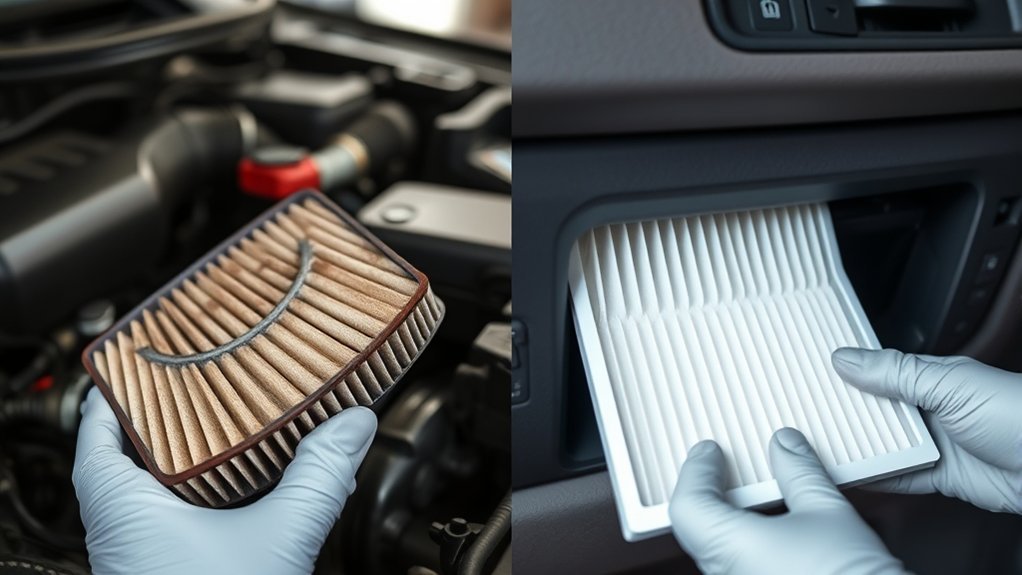
You’ll treat the engine air filter and cabin air filter as two separate systems: the engine filter sits under the hood in the air box and protects the motor by trapping larger debris, replaced about every 15,000 miles; the cabin filter hides behind the glove box and traps pollen and fine dust, usually replaced every two years. Clogged engine filters hurt performance, clogged cabin filters cut airflow and cause odors. Keep records, use proper types, and keep going to learn maintenance steps and choices.
Quick: Replace Tacoma Engine & Cabin Filters
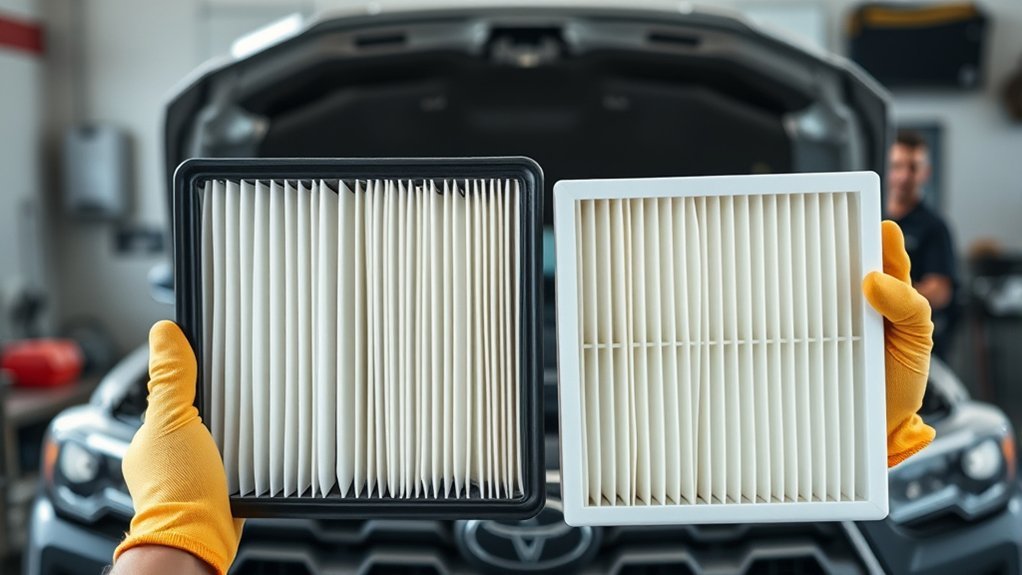
1 simple maintenance task you can do in under an hour is replacing the Tacoma’s engine and cabin air filters. You’ll preserve freedom from avoidable breakdowns by doing this quick service: under-hood access to the engine air filter makes swapouts simple—replace roughly every 15,000 miles or annually to retain fuel efficiency and reduce the performance impact of a clogged element. Behind the glove box sits the cabin air filter; drop the glove compartment and inspect or replace it about every two years to prevent weak airflow and odors that limit comfort and mobility.
Choose parts that balance efficacy and cost: Wix for the engine filter and a Walmart Super Tech for the cabin deliver proper airflow without excess expense. This DIY task requires minimal tools and basic steps, so you can reclaim control over maintenance scheduling. Regular filter maintenance reduces fuel use, restores power delivery, and keeps your cabin breathable—practical steps toward vehicular autonomy.
Engine vs Cabin Filters: What Each Does
Now that you’ve got the basics of swapping the Tacoma’s filters, it’s useful to compare what each one actually does so you know which symptoms point to which component. The engine air filter, under the hood, strips larger particles to protect the intake and preserve ideal airflow for combustion. When it clogs you’ll notice reduced fuel economy and performance—so filter maintenance here directly affects engine output and efficiency. The cabin air filter, inside the passenger compartment, targets finer particulates: dust, pollen, and odors. A clogged cabin filter reduces cabin airflow impact, creates stale smells, and degrades comfort. Replace the engine filter about every 15,000 miles or annually; swap the cabin filter roughly every two years, adjusted for your driving conditions. Engine filters are usually simpler to clean or replace; cabin replacements can be a bit more involved. Inspect both regularly—neglect risks performance loss and compromised comfort. Prioritize maintenance to reclaim control over ride quality and mechanical efficiency.
Where Tacoma (2010–2017) Filters Are Located & Access Tips
You’ll find the engine air filter under the hood in a rectangular air cleaner housing near the engine, and the cabin filter tucked behind the glove compartment—both are designed for straightforward access with basic tools. You’ll pop the air cleaner housing open, lift the old engine filter out, and seat the replacement firmly to preserve airflow efficiency; a snug fit prevents unmetered air and keeps your intake system efficient. For the cabin filter, release and lower the glove box, slide the filter tray out, and swap the element, observing the arrow for correct airflow direction. These service points are intentionally simple so you can reclaim control of routine filter maintenance without a shop visit. Keep tools minimal—screwdriver or simple clips—and work deliberately to avoid damaging tabs. Quick, confident swaps restore breathing room for the engine and cabin, reduce contaminants, and align with the practical autonomy you want from your Tacoma.
When to Inspect and Replace Filters (Miles, Time, Conditions)
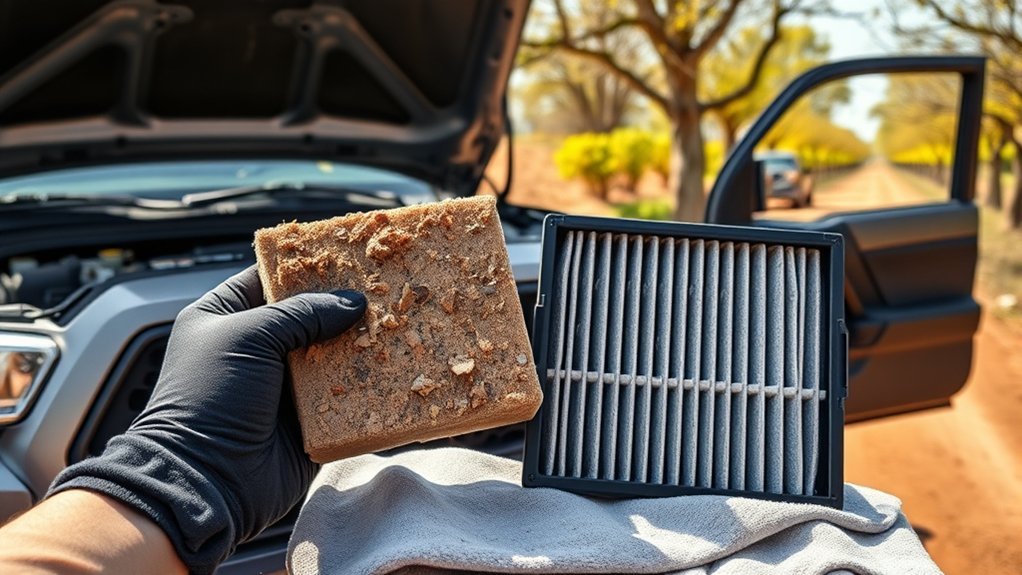
Because filter life depends on use and environment, set a baseline schedule and adjust it: replace the engine air filter every 15,000 miles or annually, inspect it visually at service intervals for heavy soiling, and check the cabin filter roughly every two years while increasing inspection frequency when you drive in dusty, rural, or high-pollen conditions since those situations accelerate clogging and degrade performance. You should track inspection frequency in your maintenance log and tie checks to oil changes or seasonal service. Use replacement indicators: visible dirt, restricted airflow, or persistent odors for the cabin filter, and compacted debris or discoloration for the engine filter. Alter intervals based on driving conditions—frequent off-road, unpaved roads, or high-pollen seasons mean sooner inspections and replacements. Consistent, condition-based maintenance preserves filter longevity, sustains fuel economy and cabin comfort, and frees you from reactive repairs. Adopt a predictable inspection routine so you control outcomes rather than reacting to failures.
Symptoms: Dirty Engine Filter vs Dirty Cabin Filter
If your Tacoma feels sluggish or loses acceleration, a fouled engine air filter is often the culprit and can also hurt fuel economy or trigger misfires. If you notice weak airflow from the vents or persistent odors, the cabin air filter is likely clogged and reducing HVAC effectiveness. Check both filters visually—engine filters show heavy buildup, cabin filters look dark or packed with debris—and replace per the maintenance intervals.
Reduced Engine Performance
Restricted airflow from a clogged engine air filter directly cuts engine performance, so you’ll notice reduced power, slower acceleration, poorer fuel economy and even misfires or popping sounds as the engine struggles for air and the Check Engine Light may come on. You’ll feel the difference immediately: throttle response dulls and acceleration lags because airflow issues starve combustion. Replace the engine filter every 15,000 miles or yearly to reclaim efficiency and avoid damage. A dirty cabin filter won’t cause these engine symptoms; it only impacts HVAC comfort. Maintain both filters to stay free of preventable failures and costs.
| Component | Symptom | Action |
|---|---|---|
| Engine filter | Power loss | Replace annually |
| Cabin filter | Weak HVAC | Inspect biannually |
| Both | Higher costs | Maintain on schedule |
Weak Ventilation Flow
You felt the engine’s performance hit earlier; now check ventilation flow — a clogged cabin air filter will visibly cut airflow through the vents, weakening heating, cooling and defrosting performance and often producing musty odors. You’ll notice ventilation issues: low vent pressure, slow windshield clearing, and trapped odors that signal particle loading in the cabin filter. That contrasts with a dirty engine air filter, which starves the engine, reducing power, fuel economy, and risking misfires or a Check Engine Light. Inspect both filters regularly to reclaim control — replace the cabin filter to restore airflow solutions for comfort and defrosting, and replace the engine filter to preserve performance and avoid higher maintenance costs down the road.
Best Engine Filters for Tacoma : Pros, Cons & Risks
Although engine air filters often go unnoticed, picking the right one for your Tacoma directly affects engine longevity, fuel economy, and sensor health. You want Wix filters benefits: durable, efficient media that traps particulates without restricting flow, preserving horsepower and reducing maintenance frequency. OE paper filters give a reliable middle ground—affordable, effective filtration, and low upkeep that protects MAF and O2 sensors. K&N filter risks are real: increased airflow can help performance, but over-oiling contaminates sensors and triggers drivability issues. Lower-cost options like Fram or Puralator cut expenses while delivering acceptable protection if you replace them on schedule. Replace engine filters every 15,000 miles or yearly; delaying invites restricted airflow, reduced mpg, and accelerated wear. Choose based on your priorities: long-term protection and sensor safety (Wix or OE paper), occasional performance tuning (K&N, with caution), or budget savings (Fram/Puralator with disciplined replacement). Make a deliberate choice that frees you from avoidable failures.
Best Cabin Filters : Cheap Options, Charcoal, K&N Tradeoffs
You can save money with basic cabin filters (Walmart Super Tech, Fram, Puralator, Carquest) that preserve airflow and resist rapid clogging for around $10–13. Activated charcoal filters cut odors but often trap particles faster, so they trade smell control for shorter service life. K&N reusable filters avoid frequent purchases but demand regular cleaning and inspection to prevent reduced filtration or HVAC issues.
Cheap Effective Options
When you’re balancing budget and performance, basic pleated cabin filters—like Walmart’s Super Tech or offerings from Fram, Puralator, and Carquest—give the best tradeoff: they keep debris out of the blower, maintain adequate airflow, and cost about $10–$13. You’ll get straightforward budget maintenance and predictable filter longevity if you inspect and replace every two years. Skip activated charcoal if you want consistent flow; charcoal variants clog faster and can throttle the system. K&N cleanable filters are reusable, but they complicate maintenance and rarely justify upfront cost for liberation-minded drivers who want simplicity. Choose pleated disposables for low cost, minimal fuss, and reliable protection of HVAC components. Replace on schedule and you’ll preserve airflow and cabin air quality efficiently.
Charcoal Filter Tradeoffs
If you’re weighing odor control against airflow, charcoal cabin filters use activated carbon to trap smells and gaseous pollutants but tend to clog faster than plain pleated media, which can cut HVAC efficiency and blower performance. You get clear charcoal benefits: reduced odors and better capture of volatile compounds, improving perceived air quality during commutes. But increased particulate loading accelerates replacement cycles, so filter longevity drops versus basic pleated units. For liberation-minded drivers who value clean cabin air, weigh higher cost and maintenance against real-world gains; in many locales a cheap Super Tech–style filter provides sufficient dust and allergen protection with longer service intervals. Choose based on driving environment, tolerance for scent control, and willingness to replace filters more often.
K&N Pros Cons
A K&N cabin filter offers a reusable alternative to disposable pleated and charcoal units, cutting long‑term purchase costs but demanding regular cleaning and careful handling to avoid tradeoffs in airflow and sensor contamination. You get lower recurring expense and reduced waste, but you must follow K&N maintenance tips: clean on schedule, avoid over‑oiling, and inspect for trapped debris. K&N airflow concerns aren’t theoretical — oil saturation and clogging over time can reduce flow or transfer residue to the MAF sensor, increasing service needs. If you want liberation from recurring buys, choose K&N only if you’re disciplined with care. Otherwise, cheap pleated options or basic Fram/Puralator filters give reliable airflow and low risk at lower upfront cost.
DIY Steps, Tools & Troubleshooting (MAF/O2 Risks, When to Call a Pro)
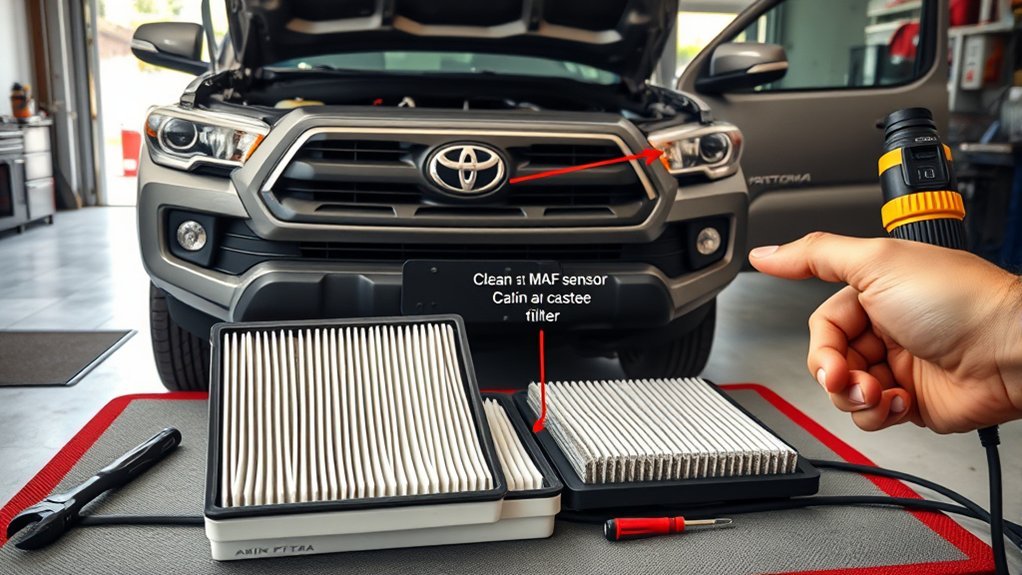
Start by gathering basic tools—flathead screwdriver, pliers, and a flashlight—so you can access both the engine air box and the glove-compartment area for the cabin filter without interruption. For engine maintenance focus on filter quality: visually inspect the engine air filter for dirt, tears, or compaction and replace every 15,000 miles or annually. Secure the air cleaner housing firmly; an imperfect seal alters airflow readings and can trigger the check engine light.
Remove the glove box with your tools to reach the cabin filter, noting orientation and seals. If you use K&N oiled filters, apply sparingly—over-oiling can foul the MAF sensor and mimic O2 issues, degrading performance. After installation, clear codes and road-test; persistent misfires, reduced economy, or warning lights mean stop and consult a pro. Professionals will diagnose MAF/O2 sensor integrity, wiring, or vacuum leaks. DIY when confident; call a technician if symptoms persist or sensor damage is suspected.
Frequently Asked Questions
What’s the Difference Between an Air Filter and a Cabin Air Filter?
The air filter protects your engine by blocking larger debris to preserve performance; the cabin air filter preserves air quality inside the vehicle by trapping fine particles. You’ll want regular filter maintenance to retain efficiency and comfort.
What Is More Important, a Cabin Air Filter or an Engine Air Filter?
The engine air filter’s more critical—you’ll feel engine performance tank without it, while cabin air quality matters for comfort. You’ll prioritize engine performance for safety and efficiency, but don’t ignore cabin air quality’s health benefits.
Is a Pollen Filter and a Cabin Filter the Same Thing?
Yes — a pollen filter is a cabin air filter variant; you’ll use filter types that trap pollen and allergens, keeping cabin air cleaner. Replace them regularly so you’re free from airborne irritants and maintain HVAC performance.
Conclusion
Keep both filters fresh — a clean engine air filter protects performance and fuel economy, while a good cabin filter protects you and your passengers from dust and odors. As the old adage goes, “an ounce of prevention is worth a pound of cure,” so inspect filters every 12 months or 12,000–15,000 miles, sooner in dusty or salty conditions. Swap inexpensive cabin filters more often; choose higher-grade engine filters only if you accept the maintenance tradeoffs.