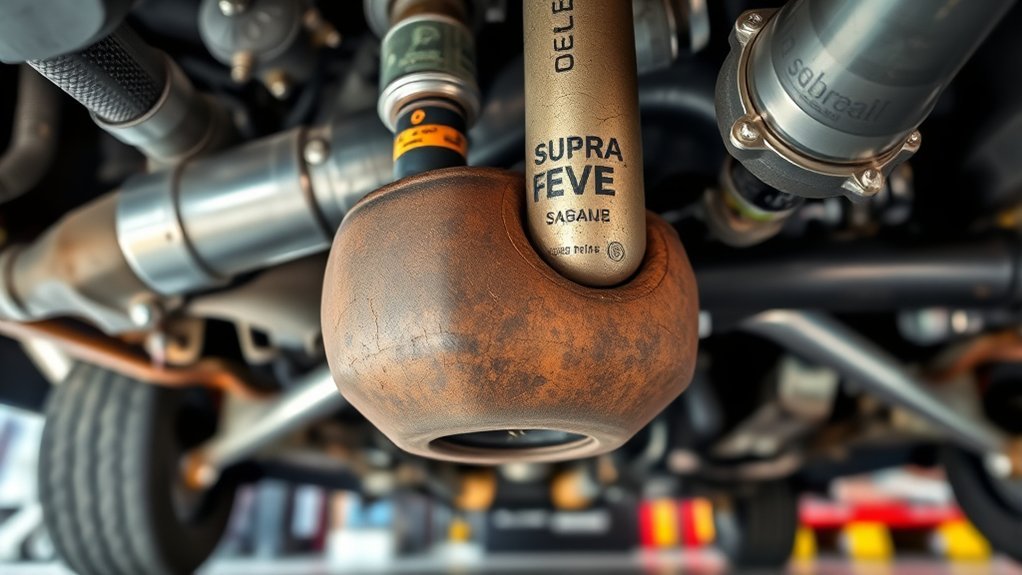
If you notice clunking noises, increased vibrations, or an unstable feel while cornering in your Supra, your suspension bushings might be worn. Look for uneven tire wear, visible cracks, or bulging in the bushings. These signs indicate degradation that can compromise handling and safety. Ignoring these symptoms can lead to higher maintenance costs and further damage. Stay tuned to discover more about the importance of timely bushing replacement and its effects on your vehicle’s performance.
Recognizing Symptoms of Worn Suspension Bushings
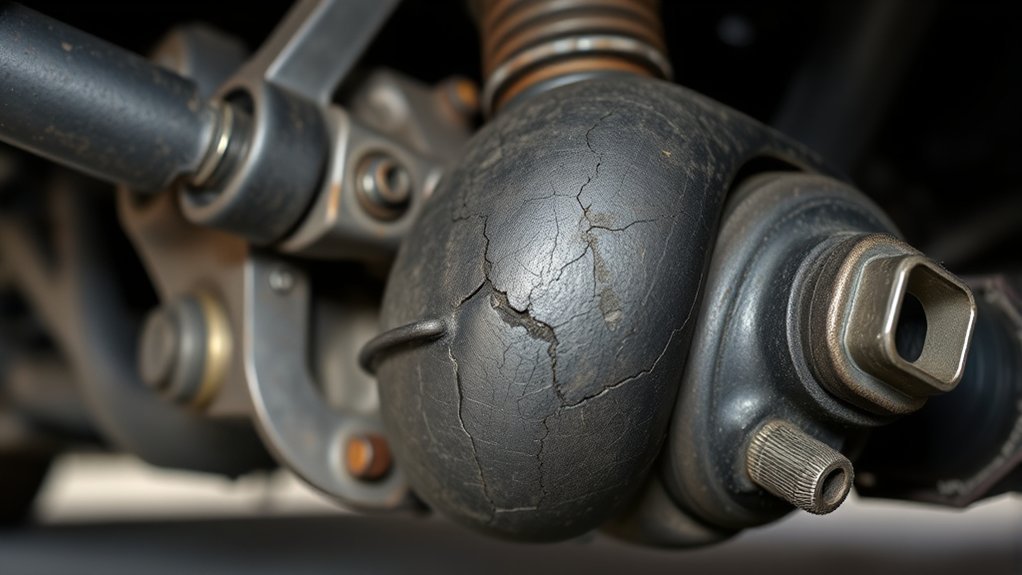
Worn suspension bushings can greatly impact your vehicle’s performance and safety. As the bushing lifespan diminishes, you’ll notice clunking noises or metal-on-metal sounds when traversing bumps, indicating a loss in cushioning ability. Increased vibrations through the steering wheel or chassis signal that the bushing materials are failing to absorb road imperfections effectively. If your vehicle feels unstable or wanders during cornering, that’s a clear sign that degraded bushings are compromising handling. Additionally, keep an eye out for uneven tire wear, especially on the inner or outer edges, as it often results from misaligned geometry due to compromised bushings. Visible damage like cracks or bulging requires immediate attention to avoid further suspension system complications.
Visual Inspection Techniques for Identifying Bushing Wear
To identify bushing wear, start with a thorough visual inspection, looking for common indicators like cracks, bulges, or oil contamination. You’ll need basic inspection tools, such as a pry bar, to assess damage severity by flexing the bushing and listening for unusual sounds. Document any irregularities you find, as this information is essential for determining the need for replacement.
Common Visual Indicators
Visual inspection of suspension bushings is essential for identifying wear symptoms that could lead to performance issues. By regularly checking various bushing types, you can better determine the appropriate replacement frequency. Here are some common visual indicators of wear:
- Cracks, Bulges, or Tears: Look for visible damage on the rubber surface, which signals deterioration.
- Oil Contamination: Check for oil around the bushing area; this weakens the rubber and accelerates wear.
- Abnormal Displacement: Use a pry bar to test if the bushing moves excessively under load, indicating degradation.
Inspection Tools Needed
Proper inspection tools are essential for accurately identifying suspension bushing wear. Start with a flashlight inspection to detect cracks, bulges, or oil contamination on bushings, which indicate deterioration. Next, utilize a pry bar for testing; apply load to check for abnormal displacement or any knocking sounds that suggest internal damage. Conduct a road test by driving over bumps to listen for clunking noises, signaling failing bushings that aren’t cushioning effectively. Additionally, compare tire wear patterns with your visual inspections. Uneven wear, especially on inner or outer edges, can reveal alignment issues linked to bushing problems. Finally, review the four-wheel alignment data post-inspection to confirm stability, as deviations may point to bushing wear affecting your vehicle’s geometry.
Damage Severity Assessment
While inspecting suspension bushings, you’ll want to focus on specific signs of wear that can indicate damage severity. This assessment is essential for maintaining bushing lifespan and ensuring peak vehicle performance. Here are three key inspection techniques:
- Visual Inspection: Check for cracks, bulges, or oil contamination on the bushing surface.
- Pressure Test: Use a pry bar to apply pressure, listening for abnormal displacement or knocking sounds.
- Delamination Check: Look for rubber separation from the metal sleeve, signaling severe wear.
Additionally, inspect for misalignment in suspension components, as uneven positioning can lead to handling issues. Regular alignment checks are important maintenance tips to help you identify bushing wear early and prevent further damage.
Impact of Worn Bushings on Vehicle Performance
When suspension bushings wear down, you may notice a significant decline in your vehicle’s performance. The degradation of bushing materials leads to a loose steering feel, hampering handling and responsiveness during cornering. You’ll also feel increased vibrations through the steering wheel and chassis, as worn bushings fail to absorb road imperfections effectively. This can result in uneven tire wear patterns, particularly on the edges, causing premature replacements and higher maintenance costs. Additionally, clunking or rattling noises during acceleration or braking indicate the need for immediate inspection. Misalignment due to degraded bushings adversely affects your vehicle’s geometry and stability, potentially escalating into more severe suspension issues if left unaddressed.
Signs You Should Replace Your Worn Suspension Bushings
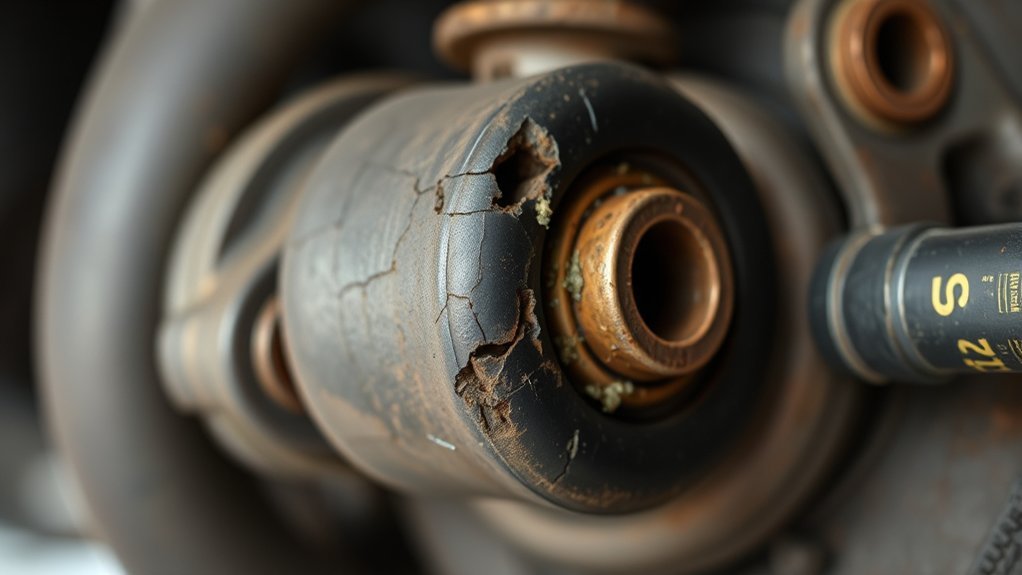
Recognizing the signs that you need to replace your worn suspension bushings is essential for maintaining vehicle safety and performance. Ignoring these symptoms can compromise handling stability and vehicle control, leading to more significant issues. Here are three key signs to watch for:
Recognizing the signs of worn suspension bushings is vital for vehicle safety and performance, preventing further complications on the road.
- Pulling Sensation: If your vehicle pulls when braking or accelerating, it may indicate degraded bushings affecting alignment.
- Clunking Noises: Listen for clunking sounds during acceleration or braking; this suggests that bushings aren’t cushioning the suspension effectively.
- Uneven Tire Wear: Noticeable camber wear on tires is often a clear sign that bushings need replacement to maintain proper suspension geometry.
Addressing these issues promptly can enhance your driving experience and guarantee your safety on the road.
Why Proper Wheel Alignment Matters After Bushing Replacement
After replacing your suspension bushings, proper wheel alignment is crucial to restore suspension geometry, which directly impacts handling and tire wear. Misalignment can lead to uneven tire wear and increased stress on other components, potentially resulting in costly repairs. Regular alignment checks guarantee your vehicle maintains peak performance and safety, especially in high-performance models like the Supra.
Alignment Impact on Handling
Proper wheel alignment is essential for restoring your vehicle’s suspension geometry, especially after replacing bushings. Misalignment can severely impact handling precision, affecting your driving experience. Here are three alignment effects to contemplate:
- Tire Wear: Uneven alignment leads to premature tire wear, compromising performance and safety.
- Steering Response: Proper alignment enhances steering responsiveness, vital for high-performance vehicles like the Supra.
- Driving Stability: A well-aligned suspension improves stability, preventing a wandering feel and ensuring a confident driving experience.
Neglecting alignment adjustments can negate the benefits of new bushings, increasing strain on suspension components. Regular alignment checks help maintain ideal handling and extend the lifespan of both tires and bushings, ensuring your vehicle performs at its best.
Tire Wear Prevention Strategies
Ensuring your wheel alignment is spot-on after replacing bushings is essential for preventing uneven tire wear. Misaligned wheels lead to wear patterns like cupping or excessive edge wear, which can shorten tire lifespan and force premature replacements. Regular alignment checks, especially after suspension work, are vital to restore your vehicle’s geometry, allowing ideal contact with the road. This not only enhances tire performance but also improves handling and safety, preventing your vehicle from pulling to one side. To further protect your investment, adhere to recommended alignment frequency and don’t skip tire rotation. Investing in a professional alignment service post-bushing replacement can save you money in the long run by extending tire life and boosting overall vehicle performance.
Material Choices: Rubber vs. Polyurethane Bushings
When choosing between rubber and polyurethane bushings for your Supra, it’s essential to understand how each material affects performance and comfort. Here are some key performance differences between these bushing materials:
- Ride Comfort: Rubber bushings provide a softer ride, effectively absorbing shocks and vibrations, enhancing comfort on daily drives.
- Durability: Polyurethane bushings are more resistant to wear, UV exposure, and road salt, offering a longer lifespan in challenging conditions.
- Handling: While rubber excels in noise reduction, polyurethane improves handling and responsiveness, making it a favored choice for performance enthusiasts.
Ultimately, your decision will depend on whether you prioritize comfort or enhanced performance characteristics in your Supra.
Common Questions About Suspension Bushings Answered?
Have you ever wondered how suspension bushings impact your vehicle’s performance? These components absorb shocks and vibrations, but wear can lead to issues like clunking noises and loose steering. Common signs of bushing wear include uneven tire patterns and increased vibrations through the steering wheel. If you’re experiencing a wandering sensation while cornering, it’s time to investigate your bushings. Regular inspections are essential; consider implementing bushing maintenance tips like cleaning and lubrication to extend their life. If you’re looking to enhance handling, suspension upgrade options, such as polyurethane bushings, can provide improved performance. Remember, timely replacement of worn bushings not only maintains performance but also prevents further damage to your vehicle’s suspension system.
What Happens if You Don’t Replace Worn Bushings?
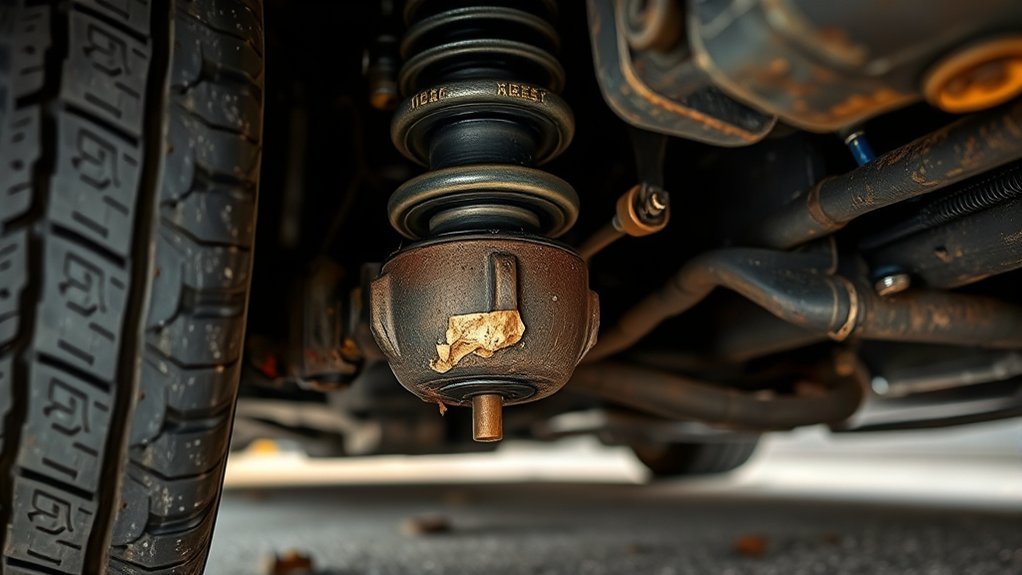
Neglecting worn bushings can greatly compromise your vehicle’s handling and safety. When you ignore this issue, you face several consequences:
- Compromised Control: Degraded bushing materials disrupt suspension geometry, leading to loose steering and difficulty maintaining control during turns.
- Uneven Tire Wear: Prolonged use with worn bushings accelerates uneven tire wear, particularly along the edges, forcing you into premature tire replacements.
- Increased Maintenance Costs: Failing to replace damaged bushings can result in accelerated wear on surrounding components, escalating your long-term repair expenses.
Ultimately, neglecting bushing wear creates alignment drift, heightening safety hazards while driving. Addressing this issue guarantees peak suspension performance and a smoother ride.
Frequently Asked Questions
How to Tell if Suspension Bushings Are Worn Out?
To tell if your suspension bushings are worn out, check for clunking noises, increased vibrations, uneven tire wear, and visible damage. Regular suspension bushing maintenance is essential; follow bushing replacement tips for ideal performance.
What Are the Symptoms of Worn Anti-Roll Bar Bushes?
Worn anti-roll bar bushes can cause significant handling issues, with studies showing a 30% increase in body roll. You might hear anti roll noise, feel vibrations, or notice uneven tire wear as symptoms emerge.
How Long Should Suspension Bushes Last?
Suspension bushes should last between 50,000 to 100,000 miles, depending on bushing materials and driving conditions. Regular maintenance tips, like inspections and timely replacements, can greatly extend their lifespan and enhance performance.
How Do You Know if Your Diff Bushes Are Worn?
You’ll know your diff bushes are worn if you hear differential noise, feel vibrations, or notice clunking when shifting. For ideal performance, consider bush replacement if you experience uneven tire wear or handling instability.
Conclusion
In conclusion, ignoring worn suspension bushings is like driving on a flat tire—both can compromise performance and safety. Regularly inspect your bushings to catch wear early, ensuring a smoother ride and better handling. Replacing them not only enhances your vehicle’s performance but also extends its lifespan. Remember, just as a strong foundation supports a building, sound bushings support your vehicle’s stability. Don’t wait until symptoms escalate; address wear promptly to keep your ride safe and enjoyable.