
Quick Answer
To engage Sport mode on a Toyota GR Supra, press the SPORT button on the center console and confirm that SPORT appears in the instrument cluster. Sport mode changes the car’s powertrain and chassis response; depending on model year and equipment, this can include sharper throttle response, sportier automatic-transmission behavior, firmer adaptive suspension, different steering response, active-differential tuning, and a more pronounced exhaust character. Auto Start/Stop is also disabled while Sport mode is active. Sport mode does not by itself mean Vehicle Stability Control is switched off.
Last updated: September 1, 2026.
This guide covers the MkV Toyota GR Supra. Exact Sport-mode behavior can vary by model year, transmission, trim, and equipment, so your owner’s manual remains the final reference for your car.
The Toyota Supra Sport mode is more than a louder-exhaust setting. Toyota’s GR Supra documentation describes Sport as a driving-dynamics mode that changes how the powertrain and chassis respond. Normal mode is the better everyday default, while Sport is useful when you want a more immediate response on a suitable road or closed course.
How to Engage Sport Mode
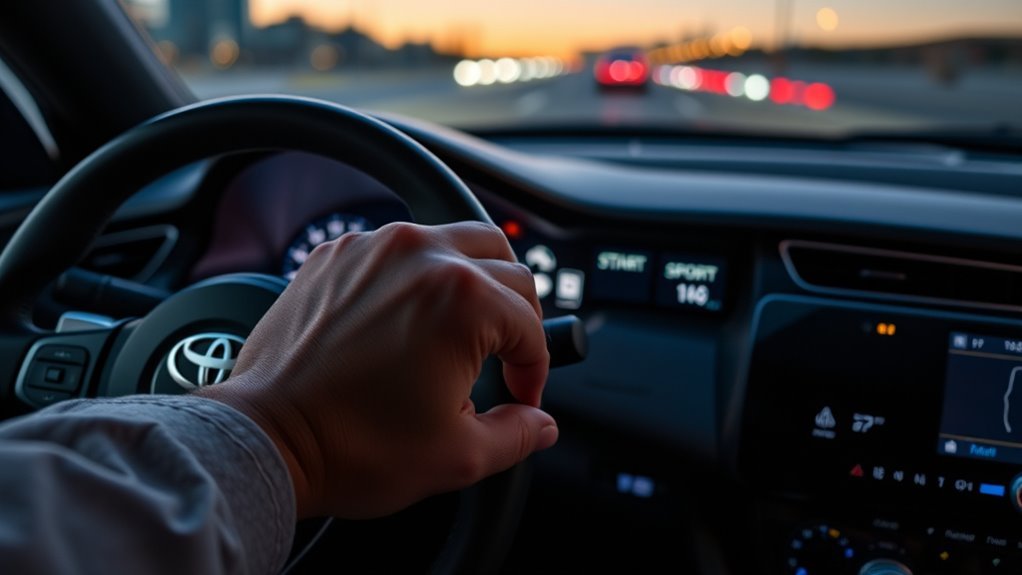
Activating Sport mode takes only a few seconds:
- Switch the car to drive-ready state.
- Locate the SPORT button on the center console.
- Press the SPORT button.
- Confirm that SPORT appears in the instrument cluster.
You do not need to change the transmission to manual mode just to select Sport. On an automatic Supra, the transmission is one of the systems that can respond differently once Sport is selected.
The Supra returns to Normal mode when drive-ready state is started again. In other words, factory operation does not normally leave the car permanently in Sport after you shut it down.
Normal vs. Sport Mode at a Glance
| Setting | Normal Mode | Sport Mode |
|---|---|---|
| Primary purpose | Balanced daily driving and efficiency | More responsive, performance-focused driving |
| Throttle | Progressive response | Sharper response |
| Automatic transmission | Balanced shift behavior | More performance-oriented shift behavior |
| Suspension | More comfort-oriented calibration where adjustable | More performance-oriented AVS response where equipped |
| Steering | Balanced everyday response | More agile performance-oriented response |
| Auto Start/Stop | Available when operating conditions allow | Deactivated while Sport mode is active |
| Best use | Traffic, commuting, poor weather, long trips | Dry open roads or controlled performance driving |
[Products Worth Considering]

Precision Computer Pre-Cut Vinyl Film

Officially Licensed Toyota Apparel for Women - Men; Toyota Motor T-Shirts; Toyota Trucks T-Shirts; Cars; Adventure; Racing; Off-Road; Gazoo Racing; Outdoor; Logo; Land Cruiser;
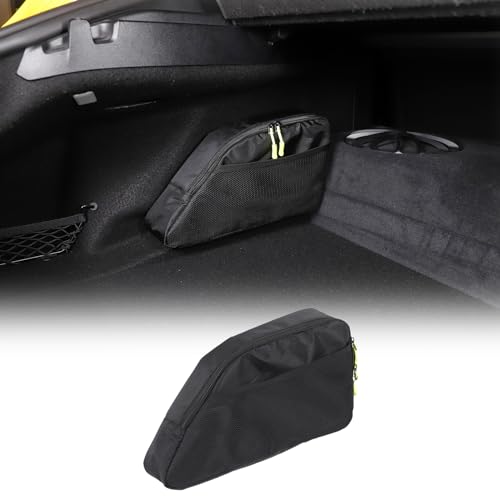
【APPLICABLE MODELS】: The rear trunk storage organizer box compatible with Toyota Supra GR A90 A91 MK5 2019-2026, The size of the original car is customized.
What Does Toyota Supra Sport Mode Change?
Toyota’s owner documentation describes the SPORT button as a control that influences the vehicle’s driving-dynamics properties. The exact combination depends on the Supra’s equipment and model year rather than one universal three-item setting.
[Products Worth Considering]

Direct fit for the 2020+ Toyota GR Supra 3.0T

APPLICABLE MODELS: The dash board trim ring cover compatible with Toyota Supra GR A90 A91 MK5 2019-2026, The size of the original car is customized.

Toyota Supra automotive design. Officially Licensed Toyota Apparel for Women - Men - Boys - Girls - Toddler; Toyota Motor T-Shirts; Toyota Trucks T-Shirts; Cars; Adventure; Racing; Off-Road; Gazoo Racing; Outdoor; Logo; Mk4 Supra;
Engine and Throttle Response
Sport mode gives the accelerator a more performance-focused response. The engine does not need a different physical powertrain for the car to feel more immediate; changing the response between pedal input and power delivery can make acceleration easier to access with smaller pedal movements.
Automatic Transmission Behavior
On automatic-transmission models, Sport changes transmission behavior as part of the powertrain calibration. Toyota has described Sport shifts as crisper and more performance-focused. This distinction does not apply in the same way to a six-speed manual Supra, where you choose the gear yourself.
Adaptive Suspension and Steering
On Supras equipped with Adaptive Variable Suspension, Sport uses a more performance-oriented suspension calibration. Toyota describes the result as a flatter vehicle posture with reduced roll and a more agile steering response. Exact behavior can differ between model years and versions.
Differential and Exhaust Character
Toyota has also described Sport-mode programming that uses more aggressive active-differential tuning on applicable models. MkV Supras use an active exhaust, and Toyota documentation for the generation has described a stronger exhaust character in Sport. Exhaust programming has changed during the MkV model run, so do not assume every year produces the same pops, crackles, or volume.
Auto Start/Stop and Instrument Displays
The factory owner documentation states that Auto Start/Stop is deactivated while SPORT driving mode is active. The instrument cluster also changes to show the selected mode, and some equipment versions use Sport-specific displays or shift indicators.
Does Sport Mode Turn Off Traction Control?
No. Selecting Sport mode and reducing stability-control intervention are separate actions on the GR Supra.
Sport mode changes the car’s performance response. Traction mode and VSC Off are separate stability-control settings. Toyota describes Traction mode as allowing more wheel slip than the normal stability-control setting, while VSC Off reduces the electronic safety net further.
This distinction matters on public roads. You can select Sport without intentionally switching the stability system off. For ordinary road driving, leave VSC active unless your owner’s manual gives a specific reason to use another setting.
[Products Worth Considering]

Designed to deliver trouble-free, consistent performance


GM-recommended replacement part for your GM vehicle’s original factory component
What Is SPORT INDIVIDUAL?
SPORT INDIVIDUAL lets you customize supported Sport-mode settings instead of accepting one fixed factory combination. The available choices depend on the vehicle’s model year and equipment.
In Toyota Supra Command, the documented menu path is:
- Select My Vehicle.
- Select Vehicle settings.
- Select Configure SPORT INDIVIDUAL.
- Choose the available settings for your vehicle.
If you want to undo those custom choices, use Reset to SPORT STANDARD. This command restores the Sport Individual configuration to its standard settings. It is not a repair procedure for a Sport button or drive-mode system that has stopped working.
When to Use Sport Mode Safely
Sport mode is most useful when the road is dry, visibility is good, and you have enough space to use the sharper response without exceeding safe or legal limits. A winding road, controlled performance-driving event, or highway situation that benefits from quicker response may suit Sport better than stop-and-go traffic.
Normal mode is the safer default when traction is limited. Rain, snow, ice, worn tires, standing water, and low temperatures all reduce the margin available at the tires. Sport mode does not create additional tire grip, so the sharper response can make smooth inputs more important.
Before performance driving, also make sure your tires are in good condition and set to the correct Supra tire pressures listed for your vehicle.
Do not confuse selecting Sport with disabling VSC. Keeping the factory stability system active gives you a larger electronic safety net than Traction mode or VSC Off.
Trade-Offs and Impact
Sport mode prioritizes response over the balance of performance, efficiency, and comfort that Toyota associates with Normal mode. On automatic models, the transmission can use a more performance-oriented strategy, and Auto Start/Stop remains disabled while Sport is selected.
That combination can increase fuel use, especially if Sport encourages you to accelerate harder or keep the engine working in a more responsive part of its rev range. There is no single MPG penalty that applies to every driver because traffic, speed, temperature, transmission choice, and driving style have a much larger effect on the final result.
Ride comfort can also change on cars with adaptive suspension. Sport uses a more performance-focused chassis calibration, which may transmit more road texture than Normal mode. That can be useful on a smooth road but unnecessary during a long commute or on broken pavement.
Troubleshooting and Defaults
If Sport mode does not appear to work, start with the factory controls rather than assuming the ECU or software is defective.
- Confirm drive-ready state. The vehicle must be fully started rather than left only in an accessory or standby state.
- Press the SPORT button and watch the instrument cluster. SPORT should appear when the mode is selected.
- Check for vehicle messages or warning indicators. A control-system fault may produce a message in the cluster or Control Display.
- Check SPORT INDIVIDUAL only if the behavior feels incorrectly customized. Use Toyota Supra Command and select Reset to SPORT STANDARD if you want to restore the factory Sport configuration.
- Do not treat SPORT STANDARD reset as a repair. If the SPORT button remains unresponsive or the vehicle reports a malfunction, have the system diagnosed by a qualified Toyota technician.
Normal mode being selected again after you restart the vehicle is expected factory behavior, not a Sport-mode fault.
Frequently Asked Questions
Is it safe to switch modes while driving?
The SPORT button is designed as a driver-selectable vehicle mode, and the factory instructions do not require a full stop before pressing it. Change modes only when you can operate the control without distracting yourself from traffic, steering, or road conditions.
Does Sport mode affect fuel economy?
It can. Sport prioritizes response rather than efficiency, and Auto Start/Stop is disabled while Sport is active. On automatic models, transmission behavior also becomes more performance-oriented. How much fuel consumption changes depends mainly on how and where you drive.
Does Sport mode disable traction control?
No. Sport mode and the Supra’s Traction/VSC controls are separate. Sport changes driving response, while Traction mode or VSC Off changes how strongly the stability and traction systems intervene.
Does Sport mode make the Supra exhaust louder?
MkV GR Supras use an active exhaust, and Toyota has described Sport programming that increases exhaust character. The exact sound and programming vary by model year, so two MkV Supras may not produce identical pops, crackles, or volume.
Does Sport mode change the suspension?
It does on models where Sport controls Adaptive Variable Suspension. Toyota describes Sport as using a more performance-focused chassis calibration with a flatter posture and more agile response. Always check the equipment fitted to your specific model year.
Does the Supra stay in Sport mode after you restart it?
Factory operation selects Normal mode again when drive-ready state is switched on. If your car automatically starts in a different drive mode because of aftermarket coding, that behavior is outside the standard factory configuration described here.
What is SPORT INDIVIDUAL on a Toyota Supra?
SPORT INDIVIDUAL is the customizable Sport configuration. Use Toyota Supra Command under My Vehicle > Vehicle settings > Configure SPORT INDIVIDUAL to adjust the settings available on your car. Reset to SPORT STANDARD restores those customized settings to their standard configuration.
Conclusion
Toyota Supra Sport mode changes more than throttle sensitivity. Depending on model year and equipment, it can alter engine response, automatic-transmission behavior, adaptive suspension, steering, differential behavior, exhaust character, instrument displays, and Auto Start/Stop operation.
Press the SPORT button and confirm SPORT in the cluster when you want the more responsive setup. Use Normal mode when comfort, efficiency, poor weather, or low-grip conditions matter more. Most importantly, remember that Sport mode is not the same as Traction mode or VSC Off: you can enjoy the Supra’s sharper response without deliberately reducing the stability-control safety net.

[…] For detailed activation and configuration steps, see the site’s Toyota Supra Sport mode guide. […]
[…] For technical details on the powertrain architecture, consult our Toyota Supra B58 engine guide. To understand how drive settings alter throttle maps, read the Supra Sport mode guide. […]