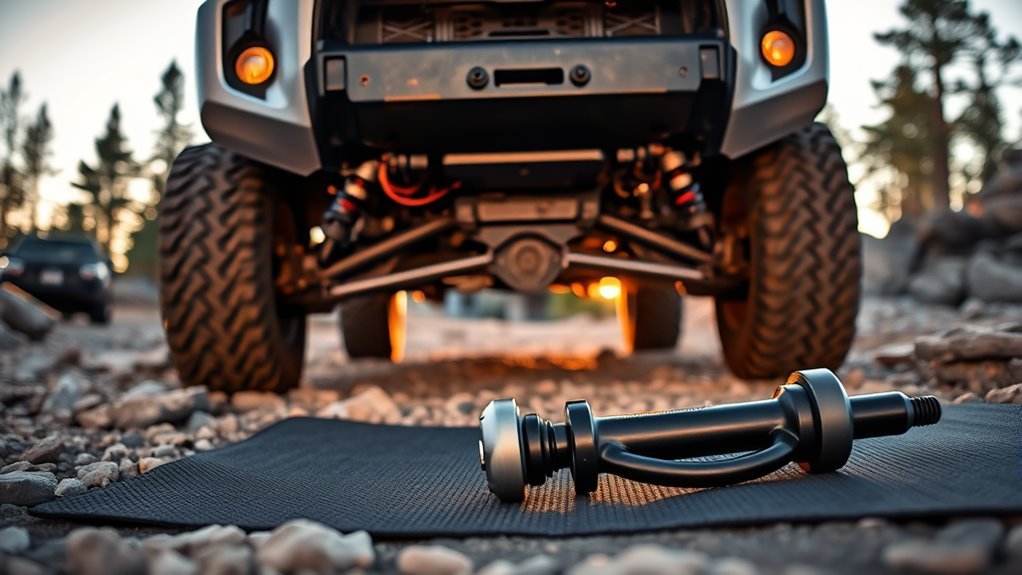
Choosing between 4Runner KDSS vs sway bar disconnect setups comes down to how you split your miles between highway pavement and technical trails. Toyota’s factory Kinetic Dynamic Suspension System (KDSS) and aftermarket mechanical disconnects both fight body roll on the street while freeing up wheel travel in the dirt, but they use completely different hardware to get there. Understanding their lift limits, trim compatibility, and real-world repair costs will save you from expensive suspension mistakes.
Quick Answer
Keep factory KDSS if you drive on pavement daily and plan a mild suspension lift under 2.5 inches; its 1.68-inch front bar delivers unmatched highway stability and automatically loosens below 12 mph. Choose a non-KDSS 4Runner with a mechanical sway-bar disconnect (or a 2025+ model with push-button SDM) for 3-inch lifts, long-travel builds, and maximum rock-crawling articulation.
Last checked: October 17, 2026. Dates and figures were verified against official sources.
Quick Verdict: KDSS vs Sway‑Bar Disconnect for 4Runner Buyers
If you mostly drive on pavement and want a balanced, automatic setup, factory KDSS is the smarter choice; if you plan serious rock crawling, lifts over 2.5 inches, or long-travel suspension builds, a disconnectable sway bar on a non-KDSS rig gives you far more modularity and wheel articulation.
KDSS was a $1,750 factory option on select 5th-generation 4Runners that pairs a massive 1.68-inch (42.7 mm) solid front sway bar with a 1.18-inch (30 mm) rear bar. Compared with the standard 4×4 non-KDSS 1.18-inch front bar, KDSS noticeably flattens highway cornering, reduces nose dive under braking, and operates with zero driver input. However, its thick bars and hydraulic cylinders restrict suspension droop once you lift the truck past 2 to 2.5 inches.
An aftermarket mechanical sway-bar disconnect system frees the front independent suspension completely for technical trails, delivering up to 80% more uninhibited front sway-bar articulation. That trail freedom comes with trade-offs: hardware and professional labor commonly total around $1,100 to $1,500, you must manually unlatch and relatch the links at the wheel wells before and after every trail, and driving at highway speeds while disconnected is unsafe.
How KDSS Works (And Why It Matters for Sway‑Bar Mods)
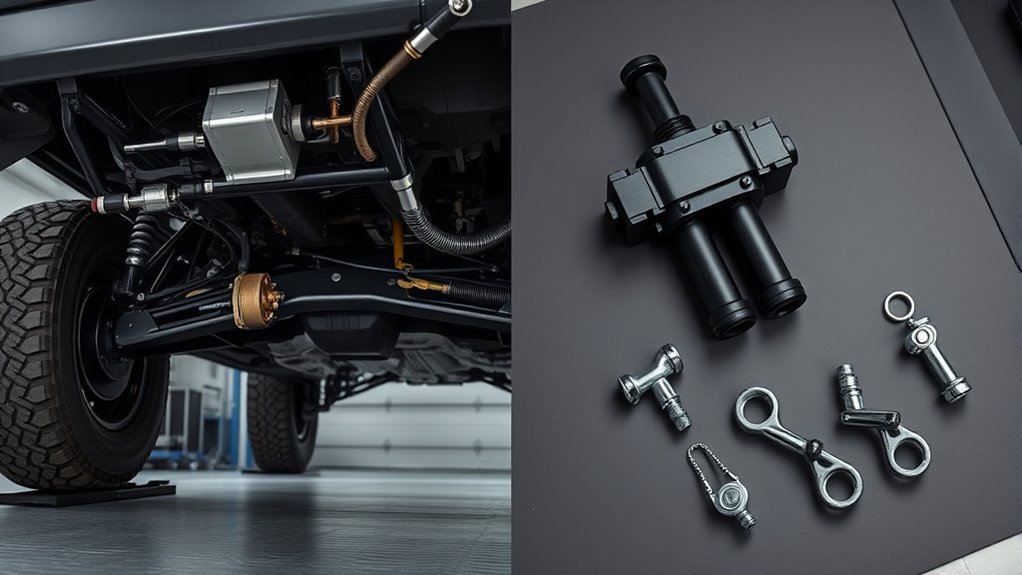
KDSS replaces conventional fixed sway-bar mounts with a closed hydraulic circuit that links the front and rear stabilizer bars through pressurized cylinders and an electronic accumulator assembly. At speeds of 12 mph (20 km/h) and above, the accumulator valves lock hydraulic flow so the oversized 1.68-inch front bar and 1.18-inch rear bar resist body roll; below 12 mph, the valves open so fluid transfers between cylinders and lets the wheels articulate freely over obstacles.
During normal cornering on pavement, both the front and rear outside cylinders compress simultaneously. Because the hydraulic lines connect them and the accumulator solenoids remain closed above 12 mph, fluid cannot move between the cylinders. That hydraulic lock forces the thick stabilizer bars to twist as torsional springs, keeping the 4Runner remarkably flat through highway curves and emergency lane changes.
When one wheel drops into a rut or climbs a boulder below 12 mph, the front and rear cylinders move in opposite directions or at different rates, allowing hydraulic fluid to flow freely through the open valves. Unlike a standard 4Runner sway bar that uses thin end links bolted to the steering spindle, the KDSS front bar bolts directly to the lower control arms (LCAs) and a frame-mounted hydraulic cylinder. Because you are dealing with a sealed, high-pressure hydraulic loop rather than simple mechanical links, you cannot bolt a standard aftermarket disconnect onto a KDSS sway bar, and lifting the truck over 2 inches shifts the bar geometry enough to cause bushing bind or the notorious “KDSS lean.”
| Feature | Effect | Concern |
|---|---|---|
| Hydraulic cylinders & accumulator | Variable roll stiffness without driver input | High dealer replacement cost if corroded or leaking |
| 1.68″ front & 1.18″ rear bars | Flat cornering and reduced brake dive | incompatible with standard aftermarket disconnects |
| Valve opening below 12 mph | Automatic articulation on slow technical trails | Re-engages above 12 mph on rough washboard roads |
| Direct LCA & axle mounting | Predictable on-road steering response | Bushing bind and track-bar contact on lifts over 2.5″ |
| Closed hydraulic circuit | Balances front and rear wheel pressure off-road | Blocks long-travel lower control arm swaps |
Compatibility: Which 4Runners and Years This Affects
Before ordering suspension or sway-bar parts, verify your 4Runner’s exact generation, trim, and stabilizer bar diameter. On 5th-generation 4Runners (2010–2024), factory KDSS was offered only as an option on Trail Edition (2010–2016), TRD Off-Road and TRD Off-Road Premium (2017–2024), and Venture Special Edition (2020–2021) models—never on SR5, Limited, TRD Sport, or TRD Pro trims.
Many shoppers mistakenly assume the flagship 5th-generation TRD Pro or luxury Limited trims include KDSS. In reality, the 5th-gen TRD Pro uses standard non-KDSS sway bars because its factory-tuned 2.5-inch Fox (or Bilstein) remote-reservoir coilovers are incompatible with the thicker KDSS bar mounts. Meanwhile, the 5th-gen Limited and 2022–2024 TRD Sport use Toyota’s X-REAS sport enhancement suspension, which links diagonal shock absorbers rather than the sway bars.
According to official Toyota 5th-Gen 4Runner specifications, factory stabilizer bar diameters break down into three distinct configurations:
- 4×4 with KDSS (Option Code KD): 1.68-inch (42.7 mm) front bar and 1.18-inch (30 mm) rear bar, linked by a hydraulic cylinder on the driver-side front and rear sway bars plus an accumulator housing mounted inside the driver-side frame rail.
- Standard 4×4 without KDSS (SR5, TRD Off-Road base, TRD Pro): 1.18-inch (30 mm) front bar and 0.787-inch (20 mm) rear bar using conventional mechanical end links—the ideal foundation for aftermarket mechanical disconnects.
- 4×2 and Limited / TRD Sport 4×4 (with X-REAS): 1.22-inch (31 mm) front bar and 0.787-inch (20 mm) rear bar with conventional end links.
For the redesigned 6th-generation 4Runner (2025–2026+), Toyota retired hydraulic KDSS on the 4Runner platform in favor of the electronic, push-button Stabilizer Disconnect Mechanism (SDM), which comes standard on TRD Pro and Trailhunter grades and is available as a $1,230 factory option on TRD Off-Road and TRD Off-Road Premium models.
Pro Tip: To confirm whether a used 2010–2024 4Runner has KDSS in seconds, turn the steering wheel to full lock and look behind the driver-side front tire. If you see a thick hydraulic ram attached to the sway bar and a metal accumulator box bolted inside the driver-side frame rail under the front door, the truck has KDSS—inspect both closely for fluid seepage or Road-salt rust.
How a Mechanical Sway‑Bar Disconnect Works
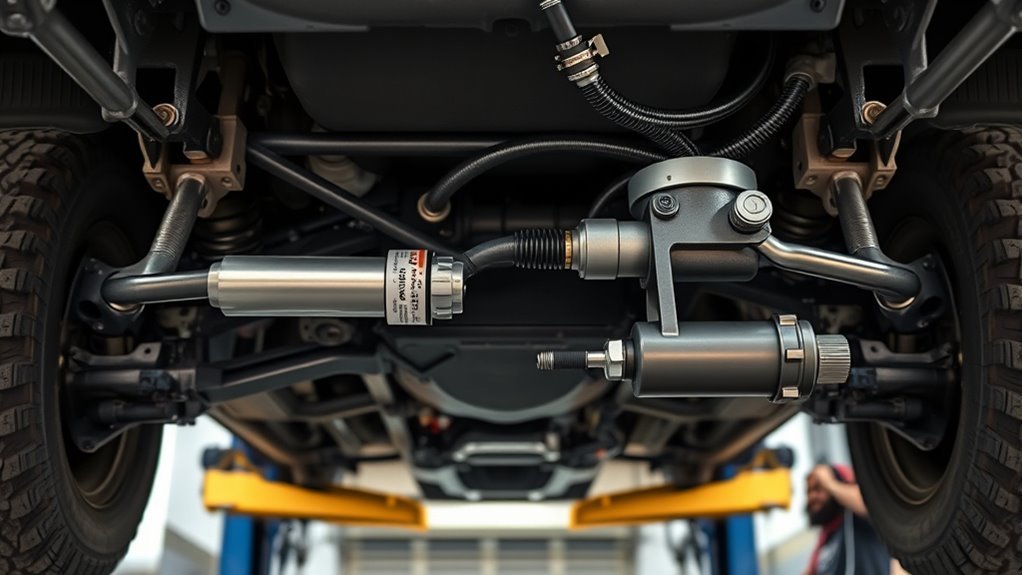
An aftermarket mechanical sway-bar disconnect replaces your 4Runner’s fixed front end links with a two-piece latching mechanism or pneumatic cylinder that decouples the front anti-roll bar at the trailhead. Once unlatched, the left and right front wheels cycle up and down independently without fighting the torsional spring force of the steel sway bar.
On a 4th- or 5th-generation non-KDSS 4Runner (2003–2024), the most widely used mechanical kit is the Apex Performance Products kwikLYNX front disconnect ($750 MSRP). Rather than pulling a cable from the driver’s seat, you reach into the front wheel well on level ground and flip a tool-free, over-center stainless-steel clamp that releases the sway-bar end link in seconds. The sliding link assembly stays captured on the spindle and sway bar, so you do not have to tie up loose sway-bar ends with bungee cords or remove hitch pins covered in mud.
Drivers who want variable sway-bar control without unlatching hardware can opt for pneumatic end links like the Apex airLYNX ($380 MSRP, plus $175 for a remote air-fill manifold), which use an internal air chamber to provide roughly 50% disconnect travel when aired down for high-speed desert trails. By contrast, true driver’s-seat push-button operation is found on Toyota’s 6th-generation Stabilizer Disconnect Mechanism (SDM), which uses an electro-mechanical actuator built directly into the center of the front stabilizer bar.
Performance Trade‑Offs: On‑Road Handling vs Off‑Road Articulation
Although factory KDSS and aftermarket sway-bar disconnects both aim to balance highway stability with trail flex, they excel at opposite ends of the off-road spectrum. KDSS prioritizes seamless on-road cornering and low-speed trail composure at stock or mild lift heights, while mechanical disconnects maximize front independent suspension travel for lifted rigs and technical rock crawling.
On paved mountain switchbacks and highway on-ramps, KDSS wins decisively: its 1.68-inch solid front bar provides more than four times the torsional rigidity of a standard 1.18-inch bar (since torsional stiffness scales with the fourth power of bar diameter). However, because KDSS automatically closes its accumulator valves at 12 mph, driving across washboard forest service roads or desert whoops at 15 to 35 mph forces the thick sway bars to lock up, transmitting harsh side-to-side head toss into the cabin.
A mechanical disconnect on a non-KDSS 4Runner keeps the sway bar fully decoupled at any trail speed you choose, allowing the front coilovers to absorb uneven ruts independently and keeping all four tires planted for traction. It also lets you install 2.5- to 3.5-inch extended-travel coilovers or +2-inch long-travel control arms without fighting hydraulic cylinder clearance or rear track-bar contact.
| System Type | Compatible 4Runner Models | How It Disengages | Max Lift Without Custom Adapters | Typical Cost (Parts + Labor) |
|---|---|---|---|---|
| Factory KDSS | 2010–2024 Trail, TRD Off-Road, Venture | Automatic hydraulic valve below 12 mph | 2.0 to 2.5 inches | $1,750 factory option ($3,000–$4,000+ if actuator fails out of warranty) |
| Mechanical Clamp (Apex kwikLYNX) | 2003–2024 non-KDSS 4Runners | Manual tool-free over-center clamp at wheel well (~80% free travel) | 3.0+ inches | $750 kit + $350–$750 install ($1,100–$1,500 total) |
| Pneumatic Link (Apex airLYNX) | 2003–2024 non-KDSS 4Runners | Schrader air valve adjustment (~50% disconnect at 0 PSI) | 3.0+ inches | $380–$555 kit + $300–$600 install ($680–$1,155 total) |
| Factory SDM (6th-Gen) | 2025–2026+ TRD Pro, Trailhunter, TRD Off-Road (opt.) | Cabin dash button (re-engages above ~18 mph) | 2.5 to 3.0 inches | Standard on Pro/Trailhunter; $1,230 option on TRD Off-Road |
Costs and Time: Kit Prices, Install Rates, and KDSS Repair Ranges
Installing a mechanical front sway-bar disconnect on a non-KDSS 4Runner typically costs between $1,100 and $1,500 total, split between $750 for the hardware kit (such as the Apex kwikLYNX) and $350 to $750 for three-plus hours of shop labor. By comparison, maintaining a lifted KDSS truck requires geometry-correction brackets costing $250 to $600, and out-of-warranty hydraulic repairs can exceed $3,000.
Here is how the real-world costs compare across your main suspension paths:
- Aftermarket Mechanical Disconnect (Non-KDSS): The Apex kwikLYNX kit retails for $750 (plus $28 for the required 13 mm step drill bit), while the pneumatic airLYNX kit runs $380 (or $555 with a remote fill kit). Independent 4×4 shops typically charge 2.5 to 4 hours of labor ($350–$750), especially on older trucks where corroded factory sway-bar mount bolts or broken internal frame weld nuts slow progress.
- Lifting an Existing KDSS 4Runner (2.5–3 Inches): To prevent bushing bind and rear sway-bar contact on a lifted KDSS rig, budget $140 to $250 for billet front sway-bar end adapters, $180 to $250 for rear KDSS drop spacers or an upgraded fixed link, and $160 for a bolt-on rear track bar correction kit (BOTCK).
- KDSS Hydraulic Repair vs Delete Costs: An OEM Toyota stabilizer control accumulator housing (part #48006-60031) costs roughly $750 to $1,030 for the part alone. Because recharging the sealed hydraulic lines requires a dealer-specific high-pressure SST pump and bleed procedure, dealership replacements for a corroded accumulator or leaking ram commonly run $3,000 to $4,000+. Many owners facing out-of-warranty hydraulic failure opt for a “KDSS delete,” swapping in a standard non-KDSS 1.18-inch sway bar and aftermarket disconnects for around $1,000 to $1,500.
- 2025–2026 Toyota SDM Option: On 6th-generation 4Runner TRD Off-Road trims, ticking the factory Stabilizer Disconnect Mechanism option box adds $1,230 to the window sticker—delivering warrantied, push-button sway-bar release for less than a retrofitted aftermarket disconnect plus labor.
Installation Pitfalls and Maintenance (Welding, Stripped Nuts, Bushings)
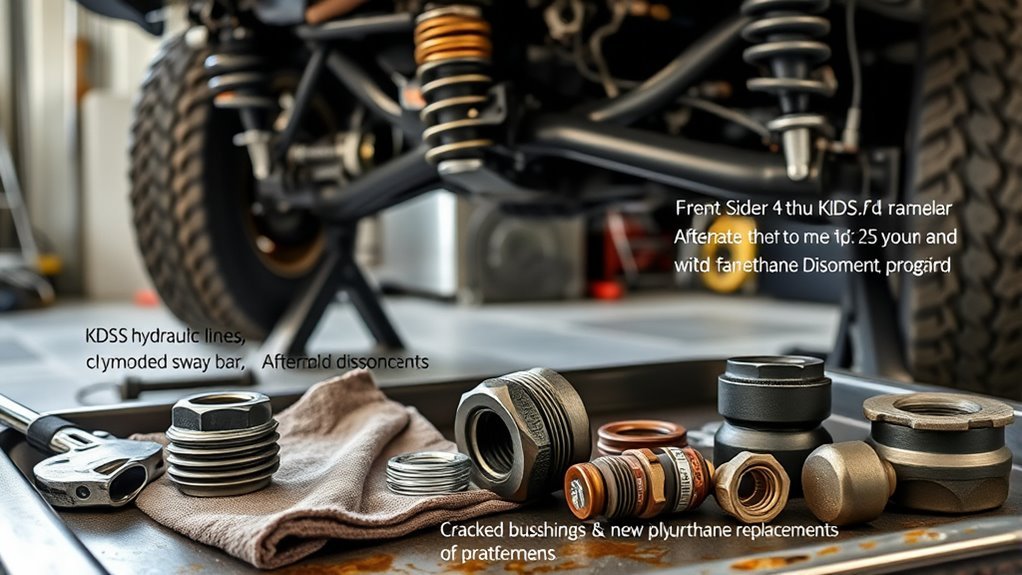
Installing an aftermarket sway-bar disconnect or modifying suspension mounts on a 4Runner often takes over three hours because of seized hardware, spindle-hole drilling, and tight skid-plate tolerances. Rushing bolt removal or skipping geometry checks can turn a bolt-on afternoon project into a fabrication repair.
Warning: Never use an impact wrench on rusty 4Runner front sway-bar frame bracket bolts without soaking them in penetrating oil first. If the internal frame weld nuts snap loose inside the boxed frame rail, you will have to torch the bolt heads off, fish the broken nuts out with a flexible magnet, and weld or rivet new nut plates into the frame.
Keep these critical installation and maintenance checkpoints in mind before turning a wrench:
- Match Thread Pitch and Drill Carefully: Kits like the Apex kwikLYNX require drilling the sway-bar eyelet with a 13 mm step drill bit and selecting the correct upper ball-joint stud pitch—M14x1.5 for factory or uniball upper control arms (using a Grade 10.9 bolt extending no more than 0.900 inches below the spindle boss), or M14x2.0 for Icon Delta Joint arms.
- Check Spindle Gusset and Skid-Plate Clearance: Disconnect cylinders will contact weld-on aftermarket spindle gussets unless you use compatible bolt-on forged gussets. If your 4Runner carries an aluminum TRD Pro front skid plate, expect to trim the outer edge slightly so the disconnect body clears at full steering lock and compression.
- Use Proper Welding Practices on Custom Brackets: When a long-travel or custom sway-bar kit requires welded frame or lower-control-arm tabs, tack-weld the brackets first and cycle the suspension through full bump and droop without the coil spring installed. Complete the final welds only after verifying zero binding across the entire travel arc.
- Replace Worn Sway-Bar D-Bushings: Degraded rubber frame-mount bushings allow slop that ruins disconnect alignment and causes front-end clunking. Upgrade to greased polyurethane bushings while the bar is unbolted, and inspect disconnect pivot pins and latches after muddy or salted winter runs.
Decision Checklist: Family Safety, Resale, and the Right Next Step
Your final choice should weigh three practical factors: how the vehicle behaves during an emergency highway swerve with your family aboard, how your local climate and lift plans affect long-term reliability, and what future buyers value when you sell the truck.
Family Safety Prioritized
Any modification to a high-center-of-gravity SUV’s front stabilizer bar directly alters its rollover resistance and emergency evasive handling. Removing the front sway bar permanently—or forgetting to relatch a manual disconnect before merging onto the highway—causes severe body lean, delayed steering response, and early intervention from Toyota’s Vehicle Stability Control (VSC) system during sudden swerves.
Note: Toyota calibrates the 4Runner’s Electronic Stability Control (VSC) and anti-rollover sensors around a connected front stabilizer bar. Always reconnect mechanical sway-bar links on level pavement before exceeding 15 to 20 mph, and have a certified suspension specialist inspect fastener torque after installation.
| Factor | Practical effect |
|---|---|
| KDSS on-road stability | 1.68″ front bar maximizes lateral control and automatic emergency response above 12 mph |
| Non-KDSS with mechanical disconnect | Full stock safety when latched; requires strict driver discipline to reconnect after every trail |
| Permanent sway-bar removal | High body roll and reduced emergency swerve stability; not recommended for family highway rigs |
Resale And Value Impact
Three clear resale considerations should guide your build: factory option desirability, rust-belt maintenance risk, and enthusiast modification appeal. In dry Western and Southern markets, KDSS-equipped Trail and TRD Off-Road 4Runners with stock or mild 2-inch lifts command a strong resale premium among overland and daily-driver buyers who love the flat cornering manners.
In Northern rust-belt states where road salt corrodes the frame-mounted accumulator housing, savvy second-hand buyers often shy away from older KDSS rigs due to the risk of a $3,000+ hydraulic repair bill. Conversely, if you are building a heavily modified rig with 3-inch coilovers, aftermarket control arms, and 34- or 35-inch tires, starting with a non-KDSS 4Runner and adding a reversible bolt-on disconnect appeals to off-road enthusiasts—provided you keep the original factory end links and document every modification cleanly.
Frequently Asked Questions
Can You Turn Off KDSS on a Toyota 4Runner?
From the factory, you cannot manually turn off KDSS; the system automatically opens its hydraulic valves below 12 mph and locks them at or above 12 mph. However, you can install an aftermarket plug-and-play Dr. KDSS Control Harness kit ($150–$235), which adds a dash switch that keeps the accumulator valves open at higher speeds for a softer ride on washboard trails.
Is a Sway Bar Disconnect Necessary for Off-Roading a 4Runner?
No, a sway-bar disconnect is not necessary for mild fire roads, sand, or moderate overland trails where a locked rear differential and A-TRAC easily maintain forward momentum. A disconnect becomes worthwhile when you tackle deep ruts, ledges, and rock gardens where independent front wheel travel keeps tires planted on the ground and prevents harsh cabin pitching.
How Can You Tell if a 4Runner Has X-REAS Instead of KDSS?
Look underneath the vehicle at the shock absorbers and frame rails: X-REAS links the front and rear shocks diagonally via thin hydraulic lines connected to a central absorber along the frame, and it comes standard on 5th-gen Limited and 2022–2024 TRD Sport trims. KDSS uses thick hydraulic rams attached directly to the front and rear sway bars on Trail, Venture, and optional TRD Off-Road models.
How High Can You Lift a 4Runner With KDSS?
You can lift a KDSS-equipped 5th-gen 4Runner up to 2 to 2.5 inches in the front and 2 inches in the rear without major hydraulic geometry bind. Lifting between 2.5 and 3 inches requires billet front sway-bar end adapters, rear sway-bar drop spacers, and a rear track-bar correction bracket to prevent bushing tear, track-bar contact, and passenger-side “KDSS lean.”
What Is the Difference Between KDSS and the 2025+ 4Runner SDM?
KDSS is a passive hydraulic system on 2010–2024 4Runners that links both front and rear oversized sway bars and unlocks automatically below 12 mph. The 2025+ 6th-gen Stabilizer Disconnect Mechanism (SDM) is an electronic, push-button actuator built into the front sway bar only, letting drivers decouple the front bar on demand at speeds up to roughly 18 mph.
Can You Remove KDSS and Install a Standard Sway Bar Disconnect?
Yes, owners who install long-travel suspension or face an out-of-warranty hydraulic leak can perform a “KDSS delete” by depressurizing and unbolting the hydraulic rams, lines, and 1.68-inch sway bar. You can then bolt on a standard non-KDSS 1.18-inch front sway bar with OEM mounting brackets and pair it with an aftermarket mechanical disconnect.
Conclusion
When weighing KDSS against a mechanical sway-bar disconnect, match the hardware to your honest driving split and lift goals. Factory KDSS delivers effortless, flat cornering for daily-driven 4Runners with lifts under 2.5 inches, whereas a non-KDSS truck fitted with a mechanical disconnect unlocks full independent suspension travel for 3-inch lifts and technical rock crawling.
Before ordering parts, check behind your driver-side front wheel to verify whether your 4Runner carries KDSS hydraulic cylinders or standard end links, measure your target lift height, and decide whether automatic highway composure or manual trail articulation matters most for your build.
Sources
- Toyota Motor Sales, U.S.A. — 5th-Gen 4Runner Product Information Specifications: Factory front and rear stabilizer bar diameters for KDSS (1.68″ front / 1.18″ rear), standard 4×4 (1.18″ front / 0.787″ rear), and 4×2/Limited (1.22″ front) trims.
- Toyota USA Newsroom — 4Runner Suspension & TRD Sport Release: Factory KDSS on-road and off-road operation versus X-REAS cross-linked shock absorber suspension on Limited and TRD Sport grades.
- Apex Performance Products — kwikLYNX Toyota Sway Bar Disconnect: Mechanical over-center clamp design, $750 MSRP, 2003–2024 non-KDSS 4Runner fitment, M14x1.5 vs M14x2.0 thread pitches, and 13 mm drill installation requirements.
- Toyota USA Newsroom — 6th-Generation Toyota 4Runner Release: Stabilizer Disconnect Mechanism (SDM) availability as standard equipment on TRD Pro and Trailhunter and optional on TRD Off-Road Premium.
- Dr. KDSS — KDSS Control Harness Kit: Aftermarket ECU override switch operation allowing manual opening of KDSS hydraulic valves above the factory 12 mph threshold.