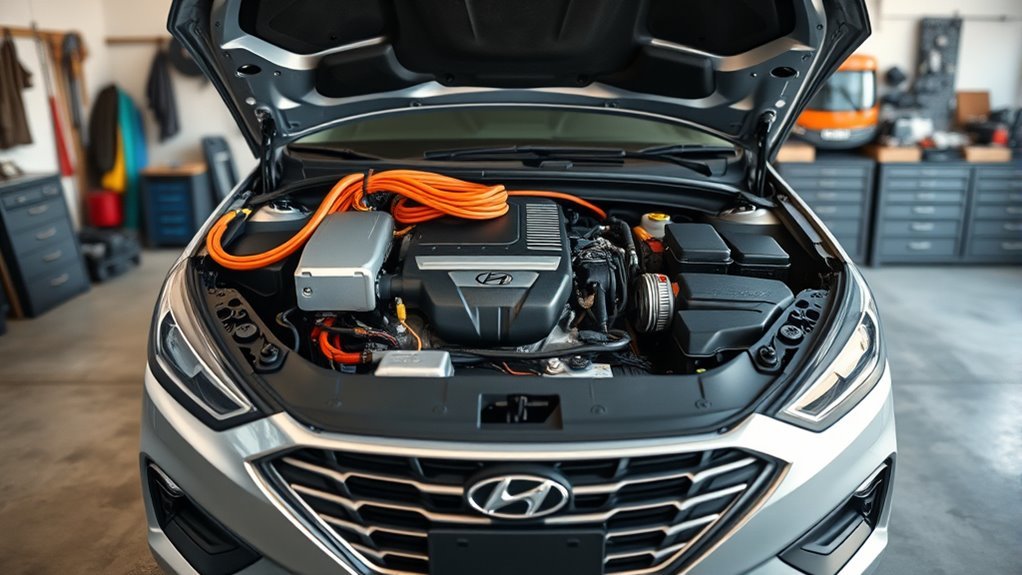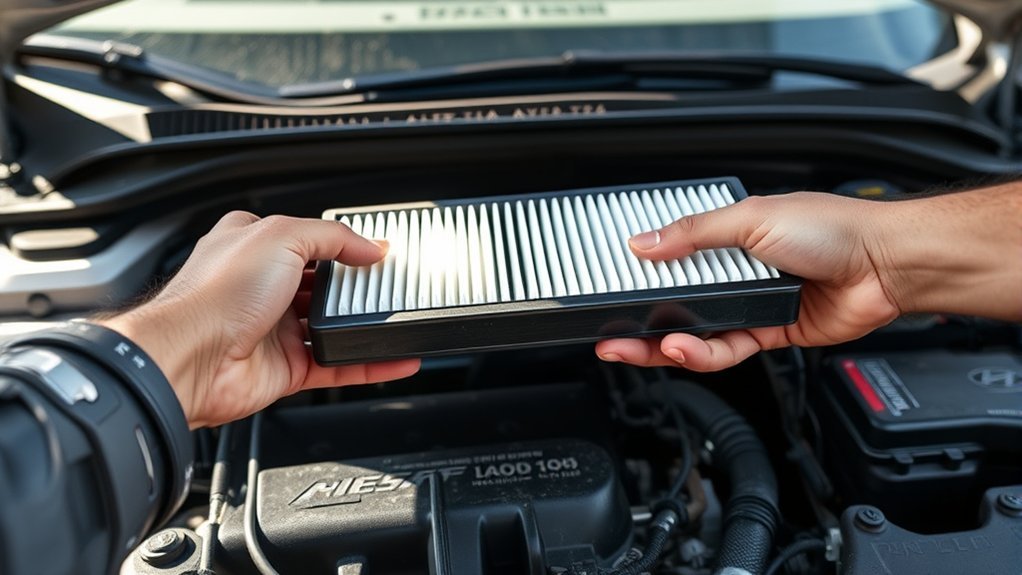
Replacing the engine air filter on a 2019 Hyundai Sonata is a beginner-friendly maintenance job, but the correct replacement interval depends on which engine your Sonata has. The factory procedure is also simpler than many generic guides suggest: the filter housing uses a cover and locking mechanism rather than requiring a collection of special tools. This guide explains the correct schedule, replacement steps, filter choices, safety precautions, and troubleshooting points.
Quick Answer
For a 2019 Hyundai Sonata, check the maintenance schedule for your engine before replacing the engine air filter. Under normal service, the 1.6T and 2.0T schedules call for replacement at 18,000-mile intervals, while the 2.4 GDI schedule uses 22,500-mile intervals. Dusty or sandy driving requires more frequent replacement.
Key Takeaways
- The 2019 Sonata does not have one universal “20,000 miles or once a year” engine-air-filter interval.
- The 1.6 T-GDI and 2.0 T-GDI normal schedule replaces the filter at 18,000-mile intervals; the 2.4 GDI schedule replaces it at 22,500-mile intervals.
- Hyundai says to replace the filter more frequently when the car is regularly driven on rough, dusty, muddy, unpaved, gravel, or sandy roads.
- The factory replacement procedure normally requires no special tools: open the air-cleaner housing, unlock the filter, replace it, relock it, and confirm the cover is secure.
- A clean filter protects the engine and prevents airflow restriction, but replacing a clogged filter on a modern fuel-injected car should not be promoted as a guaranteed MPG increase.
At a Glance
| Time Required | About 5–15 minutes |
| Difficulty | Beginner |
| Tools Needed | No special tools normally required; clean cloth and flashlight are useful |
| Cost | Commonly about $15–$50 for the filter alone; OEM and reusable filters may cost more |
The Importance of Changing Your Engine Air Filter
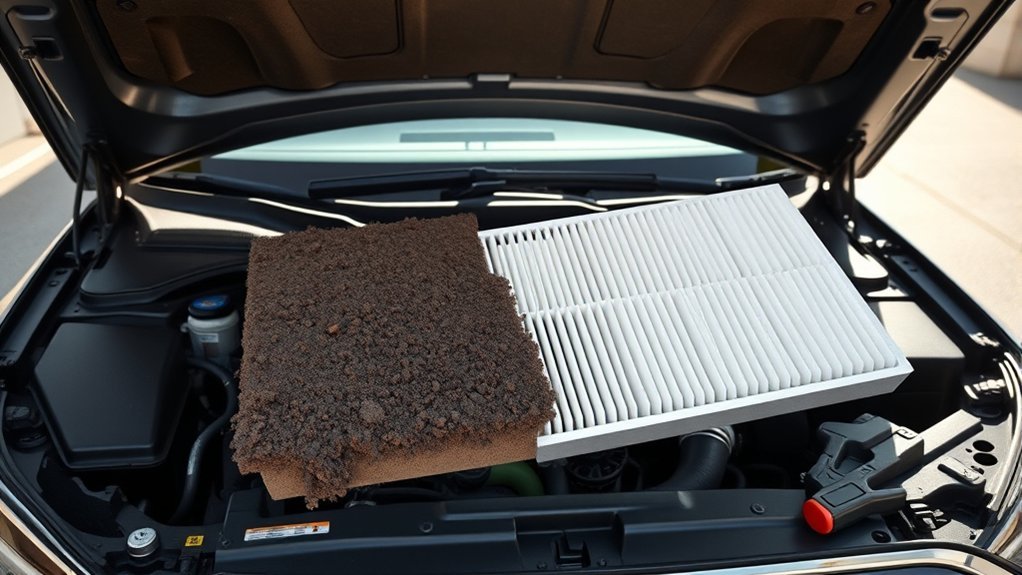
The engine air filter prevents dust, sand, leaves, and other airborne debris from entering the engine’s intake system. It must allow enough air through for the engine to operate properly while trapping contaminants that could accelerate engine or sensor wear.
A heavily restricted filter can reduce available airflow and may hurt acceleration or full-load performance. However, replacing a clogged filter on a modern fuel-injected gasoline vehicle should not be advertised as a guaranteed fuel-economy upgrade. U.S. Department of Energy testing found no measurable fuel-economy effect from clogged filters on the modern gasoline and diesel vehicles it evaluated, although acceleration performance was reduced.
For a modern Sonata, the strongest reasons to maintain the engine air filter are proper airflow, engine protection, and avoiding performance restriction—not a promised 1–3 MPG increase.
Do not confuse the engine air filter with the cabin air filter. The engine filter cleans air entering the engine. The cabin filter cleans outside air entering the heating and air-conditioning system.
When Should You Replace Your Hyundai Sonata’s Air Filter?
The correct interval depends on the engine and how the car is driven. Hyundai’s 2019 Sonata maintenance schedule separates the 1.6 T-GDI/2.0 T-GDI engines from the 2.4 GDI engine rather than giving every Sonata the same mileage interval.
Recommended Change Intervals
| 2019 Sonata engine | Normal-service inspection | Normal-service replacement |
|---|---|---|
| 1.6 T-GDI / 2.0 T-GDI | 6,000 miles / 12 months, then 12,000 miles / 24 months | 18,000 miles / 36 months, then the inspect-inspect-replace pattern repeats |
| 2.4 GDI | 7,500 miles / 12 months, then 15,000 miles / 24 months | 22,500 miles / 36 months, then the inspect-inspect-replace pattern repeats |
Where Hyundai lists both time and mileage, follow the scheduled interval that applies first. Sonata Hybrid and Plug-in Hybrid models use separate maintenance schedules, so owners of those versions should verify the schedule for their exact vehicle rather than applying the gasoline-only table above.
Note: Check your VIN, engine designation, or owner’s manual before ordering a filter. A filter advertised simply for “2019 Sonata” may not fit every powertrain configuration.
Driving Conditions Impact
Your environment can shorten filter life substantially. Hyundai identifies rough, dusty, muddy, unpaved, gravel, salt-spread, and sandy-road operation as conditions that require the air-cleaner filter to be replaced more frequently than the normal schedule.
There is no need to invent a universal 10,000-mile severe-service rule. Inspect the element more often when you regularly drive in these conditions and replace it whenever it becomes heavily contaminated, damaged, wet, deformed, or unable to seal correctly.
Signs of Dirty Filter
A visual inspection is usually more useful than trying to diagnose the filter from fuel economy alone. Check the filter if you notice any of the following:
- Heavy dust, sand, insects, leaves, or other debris embedded in the filter media
- A dark, heavily loaded filter with visibly restricted pleats
- Tears, holes, damaged pleats, or a distorted perimeter seal
- A filter that does not sit flat in the housing
- Reduced high-load acceleration combined with a visibly restricted filter
Rough idle, misfires, black exhaust smoke, hard starting, or a check-engine light can have many causes. If those symptoms remain after the filter and air box are inspected, diagnose the vehicle rather than assuming the air filter is responsible.
Tools You Need for the Replacement Process
For the normal 2019 Hyundai Sonata factory air-cleaner setup, this is a simple service operation. The owner’s manual procedure does not call for a wrench set or a collection of screwdrivers.
[Products Worth Considering]

This activated carbon cabin air filter is designed as a replacement for select Hyundai Sonata gas models and Kia Cadenza vehicles, helping improve in-cabin air quality. It is engineered to capture odors, VOCs, and common pollutants for a fresher driving environment, while matching multiple OE and reference numbers for convenient fitment confirmation.

This cabin and engine air filter kit is designed for compatible Hyundai Sonata gas models from 2015 to 2019 with a 2.4L engine. It helps improve airflow, capture dust and impurities, and support cleaner cabin air and efficient engine performance. The kit is engineered for long service life and simple installation, making routine maintenance easier.

This filter combo is designed for Hyundai Sonata gas models from 2015 to 2019, including non-hybrid 2.4L vehicles, and replaces both the engine and cabin air filters in one convenient set. It helps improve engine airflow while also refreshing the cabin environment with activated carbon odor control and high-efficiency particle filtration for cleaner, quieter driving.
Essential Tools Required
- Correct replacement engine air filter: Confirm fitment using the engine, VIN, or reliable parts catalog.
- Clean microfiber or shop cloth: Useful for wiping loose debris from the housing.
- Flashlight: Optional, but helpful for checking the bottom of the air box and the filter seal.
- Gloves: Optional for keeping dirt off your hands and the clean side of the new filter.
A small vacuum can be used carefully for loose debris in the lower housing, but do not push a nozzle into the intake tract or allow dirt to fall toward the engine.
Filter Options Available
You can choose an OEM Hyundai filter, a reputable OEM-style aftermarket filter, or a compatible reusable performance filter. The most important factors are correct fit, adequate filtration, a sound perimeter seal, and proper maintenance.
Disposable paper-style filters are usually the simplest choice because they require no washing or re-oiling. Reusable filters can last much longer but must be serviced according to the filter manufacturer’s instructions. Service intervals vary with product design and driving conditions, so do not assume every reusable filter uses the same 50,000- or 75,000-mile cleaning interval.
Pro Tip: Before removing the old filter, compare its overall shape, gasket position, height, and locking features with the replacement. Discovering a fitment error before opening the air box saves time and keeps dirt out of the intake.
Safety Precautions Needed
- Park on a level surface, shift into Park, set the parking brake, and switch the engine off.
- Allow hot engine-bay components to cool before reaching around the air-cleaner housing.
- Keep loose dirt, tools, packaging, and cloth fibers away from the open intake.
- Do not start or drive the vehicle with the engine air filter removed.
- Do not wash a disposable paper filter with water.
- Keep the new filter clean and dry before installation.
Warning: Never run the engine with the air-cleaner filter removed. Dirt entering the intake can damage the engine or airflow-related components.
Step-by-Step Guide to Replacing the Air Filter
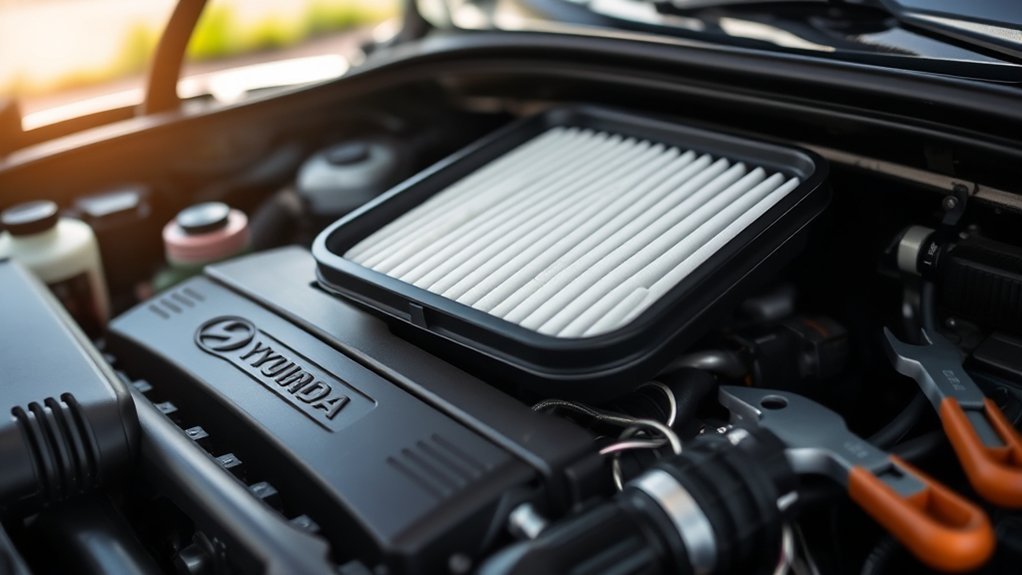
The factory procedure is straightforward and can normally be completed in a few minutes.
- Prepare the car. Park safely, switch off the ignition, set the parking brake, open the hood, and allow the engine compartment to cool if necessary.
- Locate the air cleaner. Find the black air-cleaner housing connected to the engine’s intake duct.
- Clean around the housing. Wipe loose dust from the top and surrounding area before opening it so debris does not fall inside.
- Open the air-cleaner cover. Release and remove or lift the cover as designed. Do not yank on the intake duct, wiring, or nearby components.
- Clean the accessible housing. Wipe loose debris from the air-cleaner housing while keeping dirt away from the clean-air outlet leading toward the engine.
- Move the filter locking lever to UNLOCK. The 2019 Sonata owner’s manual describes pulling the filter lever down to the UNLOCK position.
- Remove the old filter. Pull the filter out carefully without shaking collected dirt into the housing.
- Inspect the housing and old filter. Look for sand, leaves, moisture, damaged seals, or unusual contamination. Correct any obvious debris problem before fitting the new element.
- Install the new filter. Place it in the same orientation and make sure the sealing edge sits evenly in its intended position.
- Lock the filter. Move the locking lever back to the LOCK position.
- Reinstall the cover. Make sure the cover’s locating points/hooks are properly engaged and that the housing closes fully.
- Check the seal. Inspect the perimeter for gaps, a pinched gasket, or a section of filter trapped outside the housing.
After everything is secured, remove tools and packaging from the engine bay and close the hood. No battery disconnect, scan-tool reset, or electronic programming is normally required for a basic engine-air-filter replacement.
Note: If the air-box cover will not close normally, do not force it. Recheck the filter’s part number, orientation, gasket seating, locking lever, and housing tabs.
[Products Worth Considering]

This replacement filter set is designed for a range of Toyota hybrid vehicles, including popular models like RAV4 Hybrid, Camry Hybrid, Highlander Hybrid, Sienna, Venza, and more. It combines cabin and engine filtration to help support cleaner airflow, reduce dust and odors, and protect your HVAC and engine systems. Built for easy installation and extended service life, it offers a convenient maintenance upgrade for compatible hybrid and gas-only Corolla models.

This Bosch Workshop Engine Air Filter is designed to help protect compatible Toyota RAV4 engines from harmful airborne particles while supporting strong performance and efficiency. It uses high-pleat construction, 98% filtration efficiency, and high-velocity cellulose media to reduce air resistance and help maintain clean airflow. The polyurethane foam seal adds reliable sealing against water and heat intrusion for dependable engine protection.

This A-Premium engine air filter is designed to help maintain clean airflow for compatible Lexus and Toyota vehicles, supporting better engine performance and efficiency. It uses fine filtration media to capture debris while minimizing airflow restriction, making it a practical replacement for routine maintenance. With fitment for multiple popular models and a convenient boxed single-pack design, it offers a straightforward solution for keeping your engine protected.
Which Air Filter Should You Pick: OEM or Aftermarket?
Hyundai recommends genuine replacement parts, and an OEM filter is a straightforward way to obtain the intended fit and filtration specification. However, a properly designed aftermarket filter from a reputable manufacturer can also be a reasonable choice when it is specifically listed for your engine and fits the housing correctly.
| Filter type | Advantages | Things to consider |
|---|---|---|
| OEM Hyundai | Known factory fit and straightforward replacement | May cost more than some aftermarket equivalents |
| OEM-style aftermarket | Wide choice of brands and prices | Quality and gasket fit can vary; verify exact application |
| Reusable performance filter | Washable and reusable when properly maintained | Requires correct cleaning and, for oiled designs, correct re-oiling |
Using an aftermarket part does not automatically void a U.S. vehicle warranty. Under federal warranty rules, a manufacturer generally cannot deny unrelated warranty coverage simply because an aftermarket component was used. Coverage can be denied for damage that the warrantor can demonstrate was caused by that component or its installation.
[Products Worth Considering]
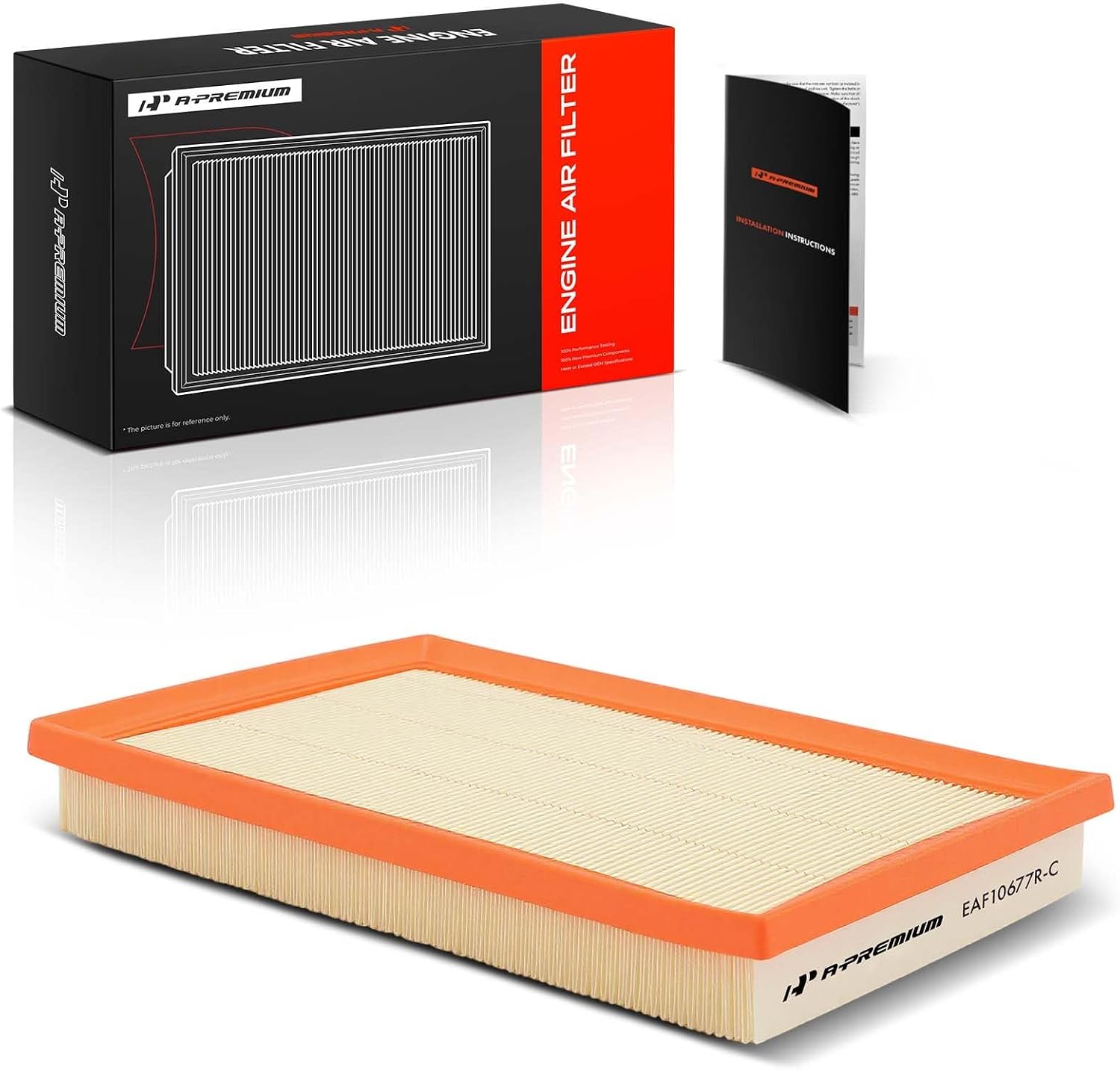
This A-Premium engine air filter is designed to replace the factory filter on select Toyota and Lexus vehicles, helping keep harmful debris out of the engine intake system. Its cellulose filter media supports cleaner airflow, improved engine performance, and longer engine life. Built as a direct-fit replacement, it offers dependable maintenance for compatible models with the recommended service interval.

This cabin air filter is designed to fit a wide range of Hyundai, Kia, and Genesis models for cleaner in-car air. Its multi-layer filtration helps trap dust, hair, and fine airborne particles, while activated carbon and baking soda support fresher cabin conditions. Built for long service life, it is recommended for annual replacement or every 12,000 miles.

This ALLWELL engine air filter is designed to help maintain clean airflow for compatible Toyota, Lexus, and Subaru vehicles, supporting engine performance and efficient operation. It serves as a direct replacement for multiple OE part numbers and fits a wide range of hybrid and standard models across several years. Built for broad compatibility, it is a practical maintenance part for keeping your vehicle’s intake system protected.
Signs Your Air Filter Needs Immediate Attention
Inspect the filter promptly if it is visibly packed with debris, torn, wet, deformed, or unable to seal inside the housing. A noticeable reduction in acceleration at higher engine load can also justify an inspection, particularly if the car is operated in dusty conditions.
Do not use a small change in fuel economy as your only test. Tire pressure, traffic, weather, fuel formulation, driving speed, idling, short trips, mechanical faults, and many other factors can affect MPG.
Likewise, hard starting, misfires, rough idling, black smoke, or a check-engine light deserve proper diagnosis. Inspecting the air filter is reasonable, but replacing it should not be treated as a guaranteed cure for those symptoms.
Engine Maintenance Tips: Beyond the Air Filter
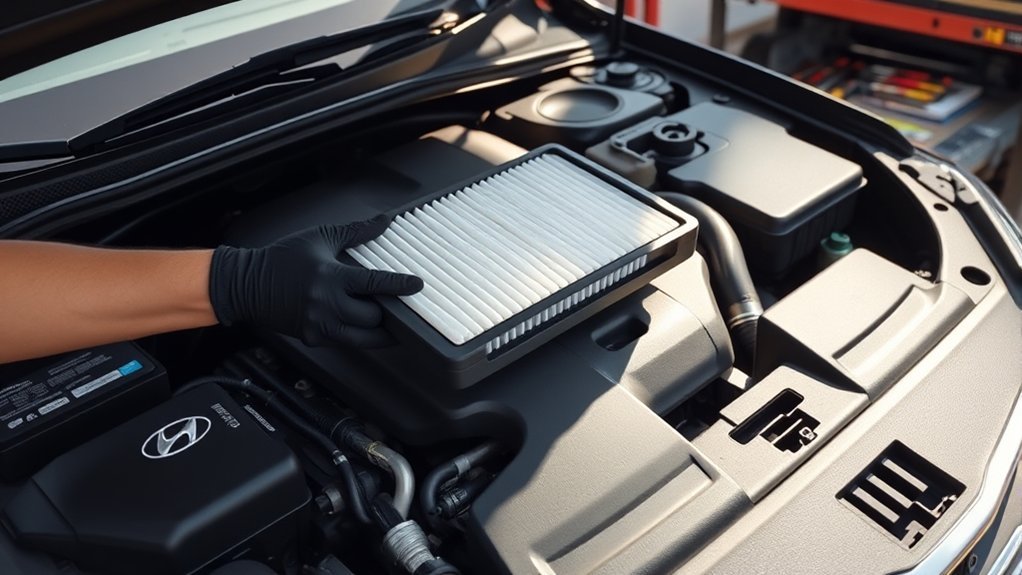
Air-filter replacement is only one part of maintaining a 2019 Sonata. Follow the maintenance schedule for the exact engine and driving conditions instead of applying a universal mileage rule to every service item.
- Engine oil and oil filter: Use the viscosity/specification and service interval listed for your engine. Severe driving conditions may require more frequent service.
- Engine coolant: Check the reservoir when the engine is cool and investigate unexplained coolant loss. Never remove a hot radiator cap.
- Brake fluid: Inspect the level as specified. If the fluid is unexpectedly low, do not simply keep topping it off without determining why; pad wear or a hydraulic leak may need attention.
- Battery: Keep terminals secure and free of excessive corrosion. If starting becomes slow or electrical problems appear, test the battery and charging system.
- Intake system: During air-filter service, check that intake ducts, clamps, and electrical connectors around the air cleaner have not been loosened or damaged.
Keeping maintenance records is useful for tracking service history and can help when diagnosing recurring problems or documenting vehicle care.
What to Do If Your Air Filter Is Dirty?
If the filter is visibly soiled, determine whether it is a disposable or reusable element before doing anything to it. A disposable paper filter should generally be replaced rather than washed. Reusable filters must be cleaned using the manufacturer’s procedure.
| Step | Action | Why It Matters |
|---|---|---|
| 1. Inspect | Check media, gasket, and housing for dirt or damage | Confirms whether replacement or service is needed |
| 2. Identify | Determine whether the filter is disposable or reusable | Prevents damaging a filter with the wrong cleaning method |
| 3. Replace or service | Replace a soiled disposable filter or service a reusable filter exactly as directed | Restores the intended filtration and airflow |
| 4. Clean the housing | Remove loose debris without pushing dirt toward the engine | Prevents contamination around the new filter |
| 5. Verify the seal | Confirm the filter, locking lever, and cover are fully seated | Helps prevent unfiltered air from bypassing the filter |
Frequently Asked Questions
Can I replace my 2019 Hyundai Sonata engine air filter myself?
Yes. It is a beginner-level maintenance job and normally requires no special tools. Work with the engine off, keep dirt out of the intake, and make sure the filter and housing are fully seated when you finish.
How often should I change a 2019 Hyundai Sonata engine air filter?
Under the normal 2019 gasoline Sonata schedule, the 1.6 T-GDI and 2.0 T-GDI filters are replaced at 18,000-mile intervals, while the 2.4 GDI schedule replaces the filter at 22,500-mile intervals. Time-based entries and severe-service conditions also apply.
Should I replace the filter sooner if I drive on dusty roads?
Yes. Hyundai calls for more frequent replacement when the vehicle is regularly driven on rough, dusty, muddy, unpaved, gravel, salt-spread, or sandy roads. Inspect the element frequently and replace it when contamination becomes significant.
Will a new engine air filter improve my MPG?
Do not expect a guaranteed MPG increase. Research on modern fuel-injected vehicles found that a severely clogged filter can reduce acceleration without producing a measurable fuel-economy penalty. Replace the filter for proper filtration, airflow, and maintenance rather than a promised mileage gain.
Does an aftermarket air filter void my Hyundai warranty?
Not automatically. In the United States, simply using an aftermarket component generally is not enough to void unrelated warranty coverage. Damage that can be shown to have resulted from an unsuitable part or improper installation can be excluded from warranty coverage.
What if the air-box cover will not close after installing the new filter?
Do not force it. Confirm that the replacement filter is correct for your engine, check its orientation, make sure the perimeter gasket is seated flat, return the locking lever to the correct position, and verify that all housing locating tabs or hooks are properly engaged.
Conclusion
Replacing the engine air filter on a 2019 Hyundai Sonata is a quick DIY job once you use the correct maintenance schedule and filter for your engine. The 1.6T/2.0T and 2.4 GDI versions use different normal-service intervals, and dusty or sandy operation calls for more frequent attention. Keep debris out of the intake, seat the new filter carefully, lock the housing correctly, and treat drivability problems as diagnostic issues rather than assuming the air filter is always the cause.
Sources
- Hyundai USA — Manuals & Warranties — factory maintenance and owner-documentation reference.
- Hyundai Digital Owner’s Manual — current manufacturer owner’s-manual portal.
- U.S. Department of Energy — Fuel Economy Information Project — research on clogged air filters, fuel economy, and acceleration performance.
- Federal Trade Commission — Magnuson-Moss Warranty Act Interpretations — aftermarket parts and warranty coverage.
- K&N — Filter Service FAQ — manufacturer guidance for servicing reusable K&N filters.