The Hyundai Sonata Hybrid solar roof was a factory-installed charging system, not a substitute for gasoline or plug-in charging. On equipped cars, photovoltaic cells converted sunlight into electricity and automatically sent it to the 12-volt auxiliary battery and the high-voltage hybrid battery. Its benefit was modest but useful: less battery drain while parked and a small amount of extra driving range.
Quick Answer
On 2020–2022 U.S.-market Sonata Hybrid Limited models equipped with the solar roof, a roughly 205-watt panel automatically charged both vehicle batteries. Hyundai estimated about two extra miles after six hours of strong sun, or roughly 700–800 miles per year. Hyundai replaced the U.S. solar roof with a panoramic sunroof for 2023.
Key Takeaways
- The factory solar roof was rated at about 204–205 watts and used 22.8%-efficient cells.
- It automatically supported both the 12-volt auxiliary battery and the high-voltage hybrid battery.
- Hyundai’s range and 7% efficiency figures were estimates based on favorable sunlight, not EPA-rated fuel-economy gains.
- Shade, clouds, dirt, heat, roof racks, and indoor parking reduce output.
- The solar roof is not offered on the current U.S. Sonata Hybrid; recent models use a panoramic sunroof instead.
Which Hyundai Sonata Hybrid Models Had a Solar Roof?
Hyundai introduced the Solar Roof System on the 2020 Sonata Hybrid in North America. In the U.S., it was associated with the Hybrid Limited trim and continued through the 2022 model year. Hyundai’s official 2023 model-year changes show that the solar roof was replaced by a panoramic sunroof.
Availability differed by country, trim, and production date. Check the original window sticker, VIN-specific equipment list, or roof controls before assuming that a used Sonata Hybrid has the system. The 2026 U.S. Sonata Hybrid specifications list conventional or panoramic roof equipment, not the former solar roof.
Note: “Solar control glass” is heat-reducing window glass. It is not the photovoltaic solar roof discussed here.
[Products Worth Considering]

Puroma cabin air filter helps keep your vehicle’s interior air fresher by capturing airborne particles while supporting strong HVAC airflow. Its multi-layer design helps reduce stale odors and promotes a cleaner, healthier driving environment. Designed for easy installation and broad fitment across select Toyota, Lexus, Mazda, and Subaru models, it’s a practical maintenance upgrade for more comfortable everyday driving.

Bosch 6029C HEPA cabin air filter is designed to help keep your vehicle’s passenger compartment filled with clean, fresh, odor-free air. Its dense HEPA media and electrostatic layer are engineered to capture fine particles while the added cotton layer supports higher filtration capacity. Built with structural ribs for stability, it helps maintain filter shape and airflow performance over time.

This POWOXI solar battery maintainer helps keep 12V batteries charged and protected with intelligent charging and built-in safety features. Its durable tempered glass construction, scratch-resistant frame, and easy installation make it a practical solution for cars, motorcycles, boats, tractors, ATVs, and other battery-powered equipment. An LED indicator helps show charging status at a glance, while the waterproof design supports low-maintenance use.
How the Sonata’s Solar Roof Generates and Uses Power
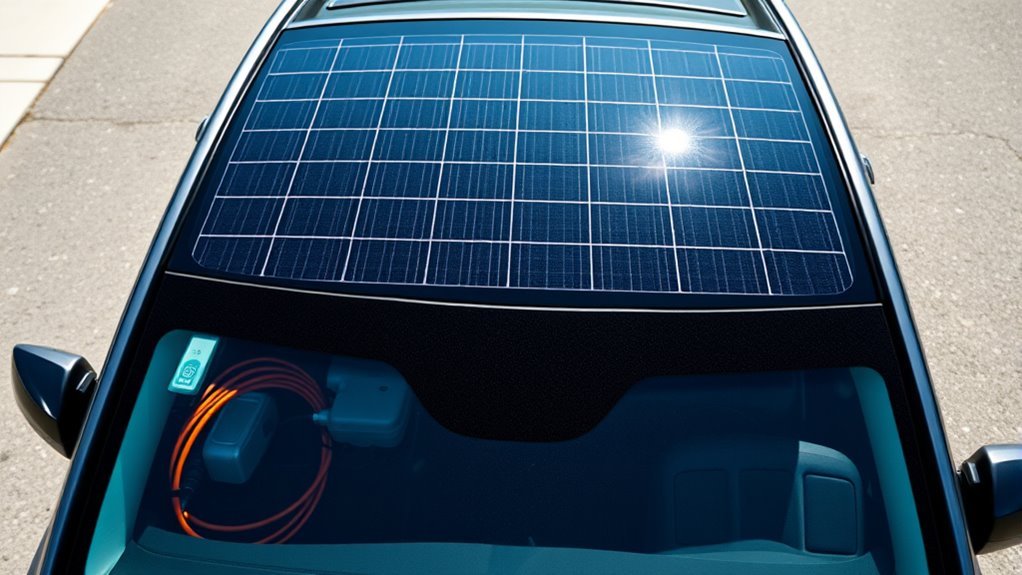
The Sonata Hybrid’s roof contains photovoltaic cells. Sunlight striking those cells produces direct-current electricity. A controller conditions that power and sends it into the vehicle’s electrical system without requiring you to switch the roof on.
Hyundai rated the panel at about 204–205 watts under suitable sunlight. That figure is power at a moment in time, not a guaranteed daily energy total. Actual energy production depends on sunlight intensity, exposure time, cell temperature, shading, surface condition, and the vehicle’s charging needs.
The system was designed to help maintain battery charge and reduce the amount of energy the gasoline engine must provide later. It cannot power the car continuously, fully recharge the hybrid battery from empty, or turn the Sonata into a plug-in hybrid.
How It Charges the 12-Volt and Hybrid Batteries
Hyundai designed the roof to support both the 12-volt auxiliary battery and the high-voltage hybrid battery. The 12-volt system powers controls, computers, locks, lighting, and other low-voltage equipment. The high-voltage battery supplies the electric drive motor and stores energy recovered through regenerative braking.
Dual-Battery Charging
A power controller decides where the available solar electricity can be used. Supporting the 12-volt battery helps offset normal standby loads while the car is parked. Sending energy to the hybrid battery can later reduce the amount of gasoline-derived energy needed for propulsion.
This does not mean both batteries always receive the same current or charge at the same rate. The vehicle manages the flow according to battery condition, system demand, sunlight, and protective limits.
Simultaneous Energy Distribution
Hyundai described the Sonata system as charging the 12-volt and drive batteries directly rather than first filling a separate solar buffer battery. That simplified routing was one of the system’s main design differences from the 2017 Prius PHV solar setup.
The benefit is still small compared with the energy supplied by gasoline and regenerative braking. Think of the roof as an automatic auxiliary charger that works whenever enough light reaches the cells.
Solar Cell Specs and Real-World Energy Output
Panel Efficiency Ratings
According to Hyundai Motor Group’s technical overview, the Sonata’s cells had a rated conversion efficiency of 22.8%. Hyundai compared that with the 15–19% cells commonly used in building panels at the time.
Cell efficiency tells you how effectively the cell converts incoming sunlight into electricity. It does not mean the roof delivers 22.8% more fuel economy. Roof size, sun angle, electrical losses, weather, and vehicle use determine the real benefit.
Daily Energy Yield
The original 200 Wh-per-day claim mixes two different units. Watts measure power, while watt-hours measure energy produced over time. Hyundai rated the roof at about 204–205 watts and said six hours of useful sunlight could add roughly two miles of driving range under its test assumptions.
Hyundai’s Korean calculation put the daily contribution near 3.6 km and the annual contribution at up to about 1,300 km. Its U.S. release used a more conservative figure of up to about 700 miles per year. These are manufacturer estimates, not guaranteed results or EPA range ratings.
Hyundai estimated that about six hours of suitable sunlight could add roughly two miles of range. The roof provides a small daily assist, not continuous solar driving.
Real-World Output Losses
A flat vehicle roof cannot follow the sun or maintain the ideal panel angle. Output falls when the car is under trees, beside tall buildings, in a garage, under snow, or beneath a roof rack. Heavy cloud cover and high panel temperature can also reduce generation.
Hyundai reported 3–10% production losses in its own tests with leaves, dirt, or rain on the roof, but those results came from specific test conditions. A fully shaded or covered panel can lose far more. Keeping the surface reasonably clean and uncovered gives the system its best chance to work.
Pro Tip: Park in an open, sunny location when practical, but do not choose a hotter or less secure parking spot solely for a few extra watt-hours of solar energy.
How Much Driving Range the Solar Roof Adds Annually
Hyundai published two closely related estimates. Its Korean technical article projected up to 1,300 km per year, or about 800 miles, using an average of 5.8 hours of daily sunshine. Hyundai’s U.S. launch material described the benefit as up to roughly 700 miles per year.
Your result can be much lower. A car parked in a garage during the day may gain almost nothing, while an outdoor car in a sunny climate may get closer to Hyundai’s estimate. Driving style, climate-control use, battery state, seasonal daylight, and panel shading all affect how much of the generated energy becomes useful range.
Hyundai also estimated an average fuel-efficiency benefit near 7% under its Korean calculation. That number was not included in the official EPA fuel-economy rating, so it should not be treated as a guaranteed 7% improvement at the pump.
Everyday Benefits: Engine Load, Battery Discharge, and Parking Limits
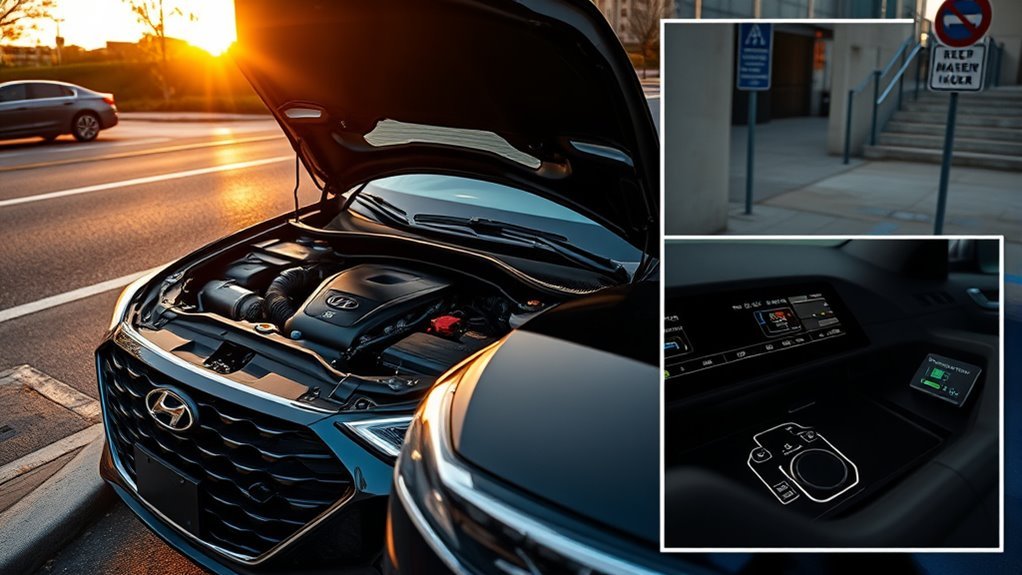
The clearest everyday benefit is automatic background charging. Solar energy can offset some standby use from vehicle electronics and reduce the need for the engine to replenish that energy later. This may lower the chance of a low 12-volt battery when the vehicle receives regular sunlight.
The roof does not guarantee that the 12-volt battery will remain healthy. An old or damaged battery, an aftermarket dash camera, wiring faults, unusually high standby draw, or long indoor storage can still cause discharge. Solar charging also stops or becomes negligible in dark garages and heavily shaded parking.
Avoid claiming that the roof definitely extends battery life. Reducing deep discharge can be helpful, but battery age, temperature, charge management, usage, and defects have a larger effect on service life.
- Outdoor sunlight can support the 12-volt and hybrid batteries.
- Indoor or underground parking prevents meaningful solar generation.
- Shade and roof-mounted accessories can sharply reduce output.
- A weak battery still needs diagnosis or replacement.
Sonata Solar Roof: Environmental Impact and Regulatory Credit Effects
The solar roof can reduce fuel use slightly by replacing a small amount of electricity that would otherwise come from the engine and hybrid system. That can lower operating emissions, but Hyundai did not publish a complete lifecycle study proving a specific lifetime CO2 reduction for each car.
Historically, U.S. rules allowed manufacturers to claim off-cycle greenhouse-gas credits for qualifying technologies that produced benefits outside the standard test cycle. The EPA’s 2022 Automotive Trends Report states that Hyundai claimed a solar-panel credit for a small number of model-year 2021 vehicles.
Those credits were a manufacturer compliance mechanism, not extra range or money for the owner. The federal off-cycle-credit framework changed in 2026, so older credit values should be presented as historical rather than current incentives.
Sonata Solar Roof: Safety, Design, and Durability
The 2020–2023 Sonata received a Good rating in the discontinued IIHS roof-strength test. However, IIHS tested a 2020 Sonata SE, not a solar-roof-equipped Hybrid Limited. The result supports the roof strength of the Sonata platform but does not prove that the photovoltaic panel itself makes the structure stronger.
The original claim that the comparable Prius failed the IIHS roof-strength test is incorrect. IIHS gave the structurally similar 2016–2022 Prius and Prius Prime a Good roof-strength rating.
For durability, treat the solar roof as an integrated electrical component. Do not place heavy objects directly on it, strike it, drill into it, or cover it with equipment that is not approved for the vehicle. Hyundai’s owner guidance also warns that a roof rack can cast shade, reduce operation, and potentially shorten component life.
Warning: The solar roof can produce electricity whenever sunlight reaches it, even when the vehicle is off. Do not touch internal wiring or controllers. Have roof damage, warning lights, leaks, or electrical faults inspected by a qualified Hyundai technician.
How the Sonata’s Solar Roof Compares to the Toyota Prius
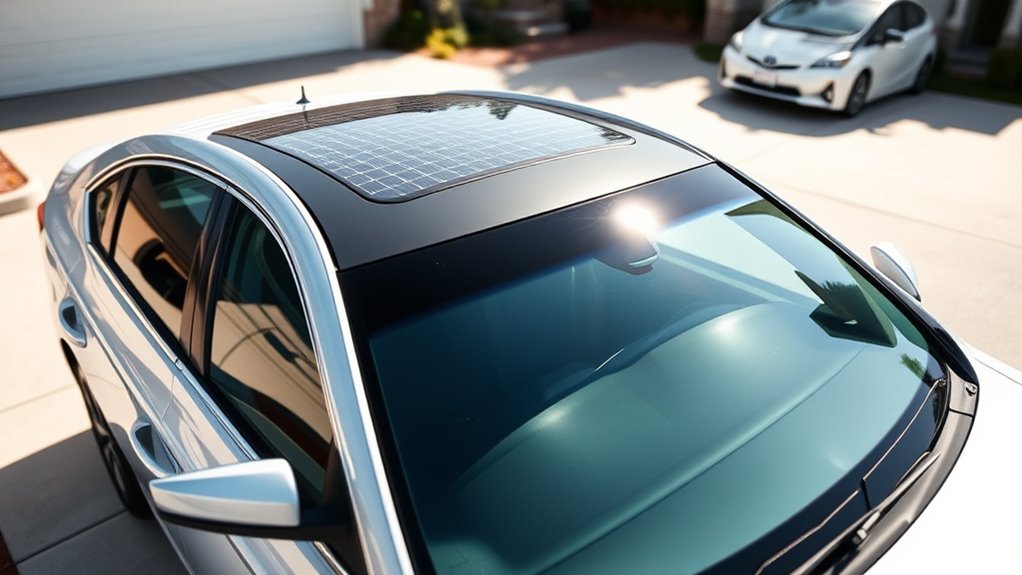
The fairest comparison is with the 2017-generation Toyota Prius PHV solar charging system sold in Japan and Europe, not with every Prius sold worldwide. Toyota rated that system at 180 watts and estimated an average of about 2.9 km of solar driving range per day, with a maximum near 6.1 km under its stated conditions.
Hyundai rated the Sonata roof at about 204–205 watts and estimated around 3.6 km per day under its Korean assumptions. Both figures are manufacturer calculations based on different vehicles, test cycles, climates, and system designs, so they are not a controlled head-to-head test.
| Metric | Hyundai Sonata Hybrid | 2017 Toyota Prius PHV |
|---|---|---|
| Rated output | About 204–205 W | About 180 W |
| Published daily range estimate | About 3.6 km under Hyundai’s Korean assumptions | About 2.9 km average; up to 6.1 km |
| Energy routing | Supports the 12-volt and hybrid batteries through the vehicle controller | Charges the traction battery while parked and supports the auxiliary system while driving |
| U.S. availability | Available on certain 2020–2022 Sonata Hybrid Limited models | The 2017 solar charging option was not offered in the U.S. |
| IIHS roof-strength result | Good for the tested Sonata platform | Good for the structurally similar Prius and Prius Prime |
[Products Worth Considering]
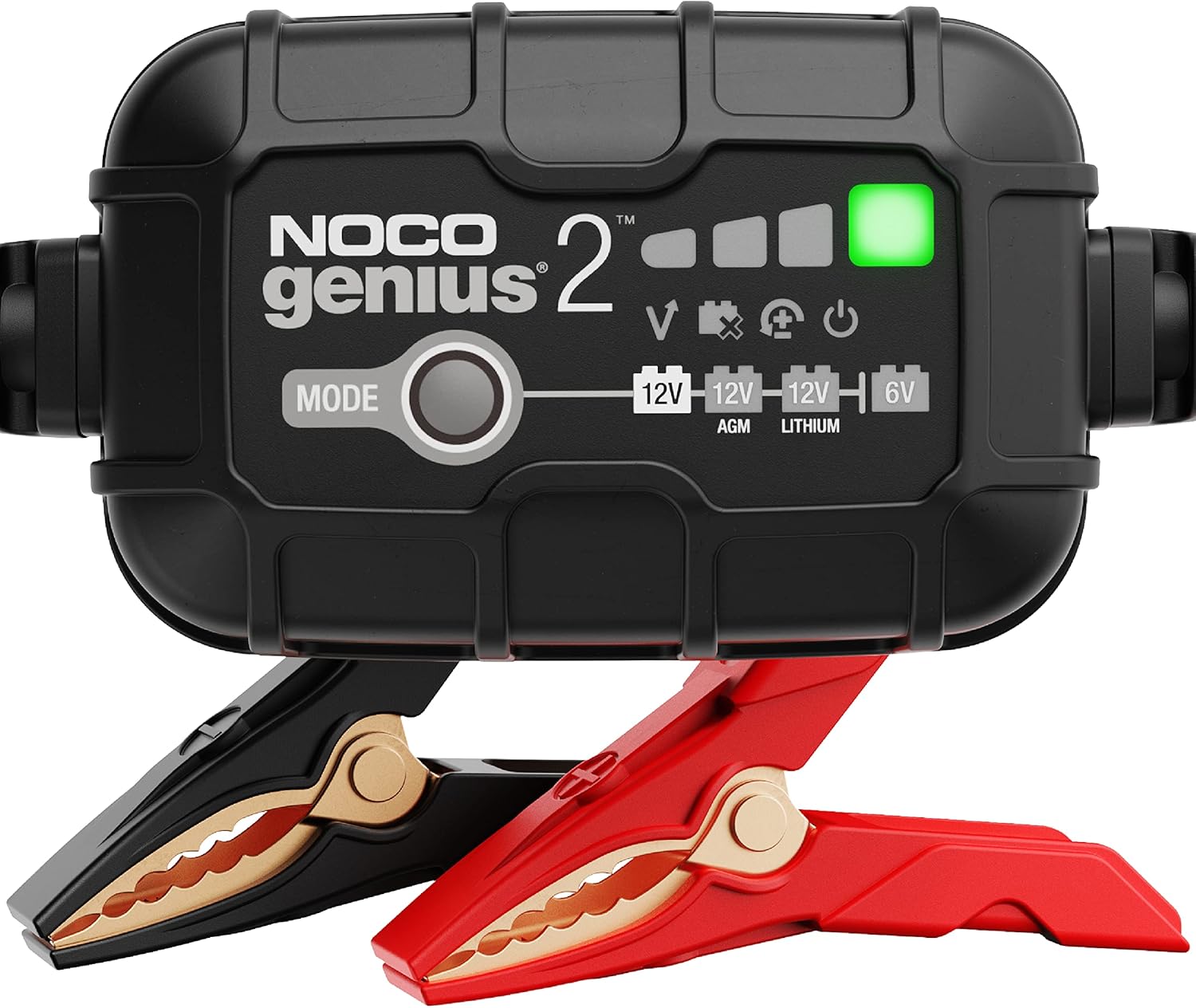
The NOCO GENIUS2 is a compact, all-in-one smart charger that automatically charges, maintains, and restores 6V and 12V lead-acid and lithium batteries. It features temperature compensation, overcharge protection, pulse desulfation, and Force Mode for reviving deeply discharged batteries, making it ideal for long-term battery care across many vehicle types. Designed for safe indefinite connection, it helps extend battery life and keep batteries ready to go.

The AstroAI Portable Tire Inflator delivers fast, reliable inflation with an upgraded TrueGauge display for accurate pressure readings. Its durable metal construction, compact size, and versatile compatibility make it a practical tool for cars, bikes, motorcycles, sports balls, and inflatables. Designed for convenient storage and quick roadside use, it helps keep tires properly inflated for safer driving.
Solar Roof Care and Troubleshooting
The system normally works automatically, so routine ownership is simple. Compatible infotainment systems may show cumulative solar generation under the Hybrid or Energy Flow menus. A low number does not always mean a fault; output can fall because of shade, winter sun angle, clouds, heat, dirt, or battery-management limits.
- Keep it uncovered: Remove snow, leaves, and heavy debris using safe exterior-cleaning methods.
- Avoid abrasion: Do not scrape the panel with metal tools or use harsh products not approved for automotive exterior surfaces.
- Check for shade: Roof racks, cargo, garages, trees, and nearby buildings may block generation.
- Watch for damage: Cracks, impact marks, leaks, warning messages, or an inoperative system need professional inspection.
- Do not repair wiring yourself: The roof is connected to high-voltage components and should be serviced by a trained technician.
Frequently Asked Questions
Does the Sonata solar roof charge while the car is off?
Yes. On an equipped vehicle, the system operates automatically when enough sunlight reaches the roof, including while the car is parked. Charging output changes with sunlight, temperature, battery condition, and system demand.
Can the solar roof fully charge the hybrid battery?
No. Its roughly 205-watt output is too small to function like a plug-in charger. It provides auxiliary energy that helps maintain charge and adds a small amount of range.
How much range can the Sonata solar roof add?
Hyundai estimated about two miles after six hours of useful sunlight. Its annual estimates ranged from roughly 700 miles in U.S. launch material to about 1,300 km, or 800 miles, in its Korean technical calculation. Real results may be much lower.
Does the 2026 Hyundai Sonata Hybrid have a solar roof?
No solar roof is listed for the 2026 U.S. Sonata Hybrid. Depending on trim, current models use a conventional roof or panoramic sunroof.
At what speed does a Sonata Hybrid switch from electric to gas power?
There is no single fixed speed. The hybrid controller can use the motor, engine, or both according to acceleration demand, battery charge, temperature, climate-control use, and driving conditions. The engine may start even at low speed or while stopped.
Can a solar roof be added to a Sonata Hybrid later?
A factory-style retrofit is generally impractical because the roof panel, structural parts, controller, wiring, software, and high-voltage charging system are integrated. An unapproved modification could create leak, electrical, warranty, and safety problems.
Conclusion
The Sonata Hybrid solar roof was a useful auxiliary charging feature on certain 2020–2022 U.S. models. Its 204–205-watt output could help maintain the vehicle’s batteries and add a small amount of range when the car received regular sunlight. It was never a replacement for gasoline, regenerative braking, or external charging, and Hyundai’s annual range and 7% efficiency figures were estimates rather than guaranteed EPA results. For used-car shoppers, the main checks are equipment verification, roof condition, warning messages, and realistic expectations about shade and parking habits.
Sources
- Hyundai Motor Group: Everything About the Sonata Hybrid’s Solar Roof — cell efficiency, output, charging design, range estimates, and environmental context.
- Hyundai Motor America: 2020 Sonata Hybrid North American Debut — 205-watt output, dual-battery charging, and U.S. range estimate.
- Hyundai Motor America: 2023 Model Year Changes — replacement of the Hybrid Limited solar roof with a panoramic sunroof.
- Hyundai USA: 2026 Sonata Hybrid Specifications — current U.S. roof and trim availability.
- IIHS: Hyundai Sonata ratings and IIHS: Toyota Prius ratings — corrected roof-strength comparison.
- Toyota Global Newsroom: 2017 Prius PHV — solar-system output and daily range estimates.