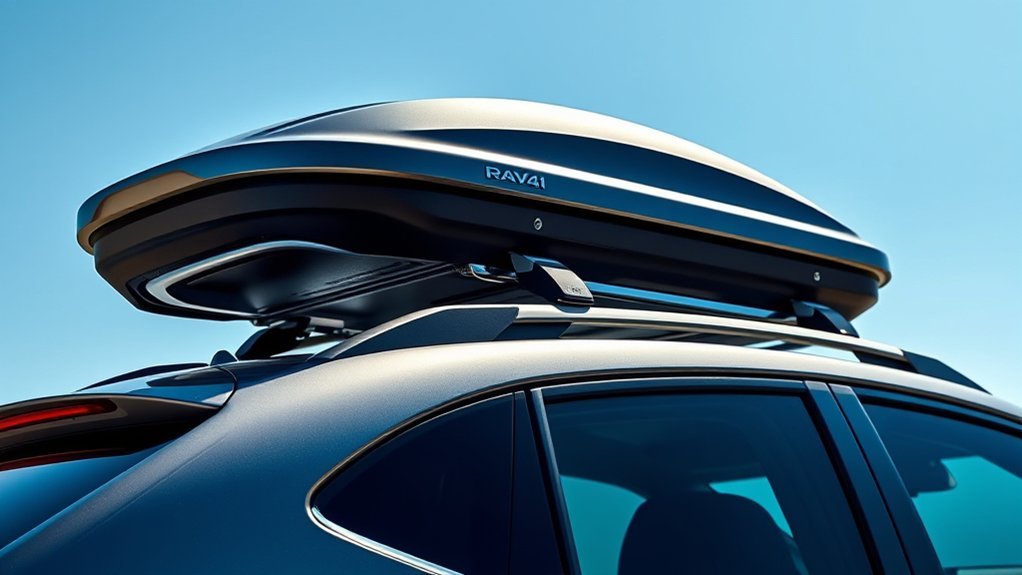
Roof racks can make a Toyota RAV4 more useful, but they also change how the SUV moves through the air, handles weight, and responds in wind or sudden maneuvers. The safest setup is not just the strongest rack; it is the right rack, loaded within the vehicle’s limit, balanced evenly, and removed when you do not need it.
Quick Answer
A roof rack or roof load can reduce a RAV4’s fuel economy, add wind noise, and raise the vehicle’s center of gravity. Toyota’s 2025 RAV4 manual lists a roof luggage carrier limit of 176.4 lb. (80 kg), and cargo should be secured, balanced, and checked during long or rough drives.
Key Takeaways
- Roof racks increase drag, so even empty crossbars can slightly reduce mpg and make highway wind noise more noticeable.
- For newer RAV4 models, Toyota lists a roof luggage carrier limit of 176.4 lb. (80 kg), but you should always confirm the limit for your exact model year and rack system.
- Roof cargo raises the center of gravity, so avoid high speeds, sharp turns, sudden braking, and abrupt maneuvers when loaded.
- Aerodynamic crossbars, tight cargo placement, and removing unused bars are the best ways to reduce noise and fuel loss.
At a Glance
| Best Use | Light, bulky cargo such as skis, kayaks, luggage boxes, or camping gear |
| Main Risk | Higher drag, added wind noise, and a higher center of gravity |
| Check First | Vehicle roof limit, crossbar limit, accessory limit, and total cargo weight |
| Best Habit | Remove unused crossbars and inspect tiedowns during long trips |
How Roof Racks Affect Aerodynamics and Fuel Efficiency
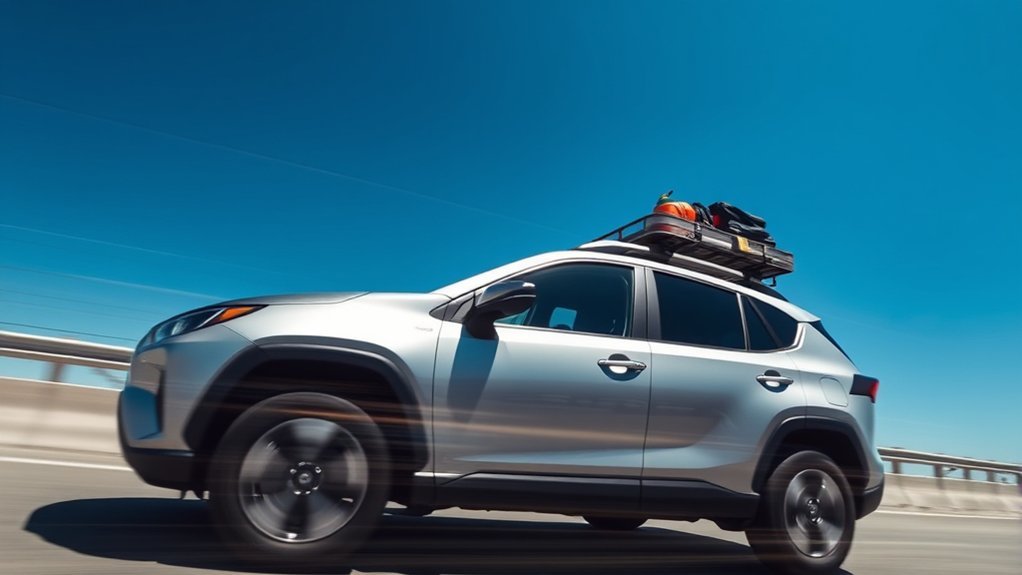
A RAV4 is shaped to move air around the body as smoothly as possible. Crossbars, baskets, cargo boxes, bikes, kayaks, and luggage interrupt that airflow. The result is more aerodynamic drag, which can reduce fuel economy and make the engine or hybrid system work harder at highway speeds.
The exact mpg loss depends on speed, crossbar shape, cargo size, wind direction, and whether the rack is empty or loaded. In a Consumer Reports fuel-economy test, an empty roof rack on a RAV4 lowered mileage from 41 mpg to 40 mpg at 65 mph, while adding a rooftop pod dropped it to 35 mpg. That makes the empty-rack penalty small, but the loaded-roof penalty much more noticeable.
The biggest fuel-economy hit usually comes from large rooftop cargo, not the bare roof rails themselves.
For daily driving, the simplest rule is this: keep roof hardware off when you do not need it. If you use the rack often, choose low-profile, aerodynamic crossbars and mount cargo as low, centered, and streamlined as possible.
How Roof Load Impacts Vehicle Stability and Safety
Roof cargo adds weight above the cabin, which raises the RAV4’s center of gravity. Toyota warns that loading cargo on the roof luggage carrier makes the center of gravity higher and that drivers should avoid high speeds, sudden starts, sharp turns, sudden braking, and abrupt maneuvers when roof cargo is installed. For the 2025 RAV4, Toyota lists a roof luggage carrier cargo limit of 176.4 lb. (80 kg).
Warning: Never treat the roof limit as extra payload outside the vehicle’s total load capacity. Passengers, interior cargo, roof accessories, crossbars, cargo boxes, and roof cargo all matter. Check the owner’s manual and the rack manufacturer’s limit, then follow the lowest rated number.
Uneven loads can also affect braking, steering, and emergency handling. A long kayak that overhangs too far, a box mounted off-center, or a heavy item strapped to one side can make the SUV feel less settled in crosswinds or lane changes.
Safe Roof Load Checklist
- Confirm the roof luggage carrier limit for your exact RAV4 model year.
- Check the limits for the factory rails, crossbars, towers, cargo box, basket, or carrier.
- Count the weight of the crossbars and accessories as part of the roof load.
- Distribute weight evenly between the front and rear axles.
- Keep heavy items inside the cargo area when possible and reserve the roof for lighter, bulky gear.
- Inspect tiedowns after the first few miles, after rough roads, and during long highway trips.
Simple Roof Load Formula
Use this formula before loading the roof:
Available roof cargo weight = roof limit – crossbar weight – carrier weight – tiedown/accessory weight
For example, if your RAV4 roof limit is 176.4 lb., your crossbars weigh 10 lb., and your cargo box weighs 35 lb., your remaining roof cargo capacity is about 131 lb. That does not mean you should load the roof to the maximum every trip; it only tells you the upper limit before adding a safety margin.
Managing Wind Noise: Tips for a Quieter Ride
Wind noise usually becomes more obvious as speed rises. Square bars, exposed T-slots, loose straps, empty baskets, and open sunroofs can all create humming, whistling, or howling. The noise is not just annoying; it can also be a sign that air is hitting the rack in a less efficient way.
[Products Worth Considering]

Upgrade your Toyota 4Runner with these heavy duty roof rack cross bars designed for raised side rails and secure cargo transport. The aluminum construction, anti-theft locking system, and tie-down loops help keep gear stable on the road while the low-profile design helps reduce wind noise. Easy to install with no drilling required, they provide a durable and convenient solution for road trips, hauling, and outdoor adventures.
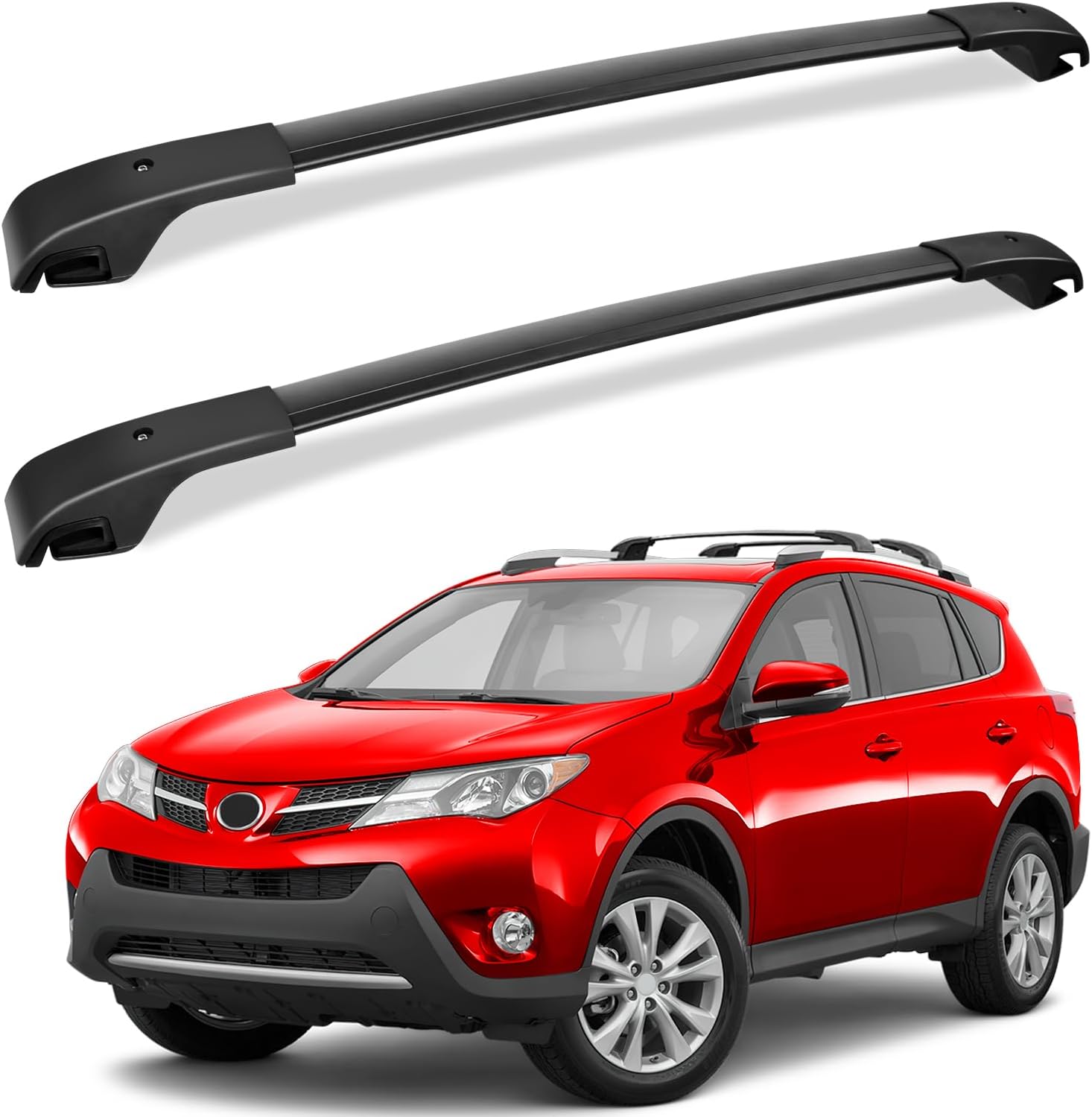
These roof rack cross bars are designed specifically for Toyota RAV4 models from 2013 to 2018 with side rails, offering a secure fit across multiple trims. Built with thickened aluminum, durable clamps, rubber padding, and stainless steel hardware, they provide dependable cargo support for travel and daily hauling. The easy-install design and high load capacity make them a practical upgrade for carrying luggage and other gear.

This windshield sun shade is designed to fit Toyota RAV4 models from 2019 to 2025 and RAV4 Prime models from 2021 to 2024. It helps block UV rays, reduce interior heat buildup, and protect your dashboard, seats, and steering wheel from sun damage. The accordion-folding design makes it easy to set up, store, and carry, while the durable triple-laminate construction adds long-lasting performance.
Optimal Cross Bar Selection
Aerodynamic crossbars are shaped to reduce turbulence compared with older square or round bars. For example, Yakima JetStream bars use a wind-tunnel-tested teardrop shape designed to be quieter and more aerodynamic. Similar aero-style bars from other major rack brands can offer the same basic benefit when properly fitted to the RAV4.
Before buying crossbars, confirm fitment for your RAV4’s year, trim, roof rail style, and roof type. Flush rails, raised rails, panoramic moonroofs, and factory crossbars may require different mounting hardware.
Pro Tip: If your crossbars whistle, check whether the rubber infill strips are fully seated in the top channels. Open channels and loose straps are common noise sources.
Sunroof Usage Strategies
An open moonroof or sunroof can make rack noise seem much louder because it lets turbulent air and sound enter the cabin. If you notice booming or howling above 30 mph, close the sunroof first, then test the rack again. This quick check helps you separate normal rack noise from a fitment or tiedown problem.
Choosing Cross Bars: Noise Levels and Performance
The right crossbars should match your cargo, driving habits, and tolerance for noise. Aerodynamic bars are usually better for everyday use, while heavier-duty bars may make sense for larger accessories if they are approved for your vehicle.
[Products Worth Considering]

This front windshield sunshade is designed to help keep your Toyota RAV4 cooler by reducing heat buildup after parking in direct sunlight. It blocks most UV rays to help protect your dashboard, seats, and steering wheel from sun damage, while the accordion folding design makes it easy to set up, store, and transport. Built with a durable triple-laminate construction and a silver reflective surface, it offers practical everyday sun protection for compatible RAV4 models.

This heavy-duty cargo net helps keep truck bed loads secure and organized during transport. Its expandable bungee mesh design offers flexible coverage for a range of cargo sizes, while the included metal carabiners make installation quick and dependable. Built for pickup owners who need reliable load containment, it is suitable for many popular truck models.

【Attention & Fitment】KINGGERI roof rack crossbars are specifically replacements for Toyota RAV4 2013 2014 2015 2016 2017 2018 with Raised Side Rails. Please make sure it fits your vehicle before purchasing.
Noise Level Comparison
Square crossbars are strong and simple, but they often create more wind noise because their flat edges disturb airflow. Aero bars are shaped more like an airfoil, so they tend to be quieter and more efficient. A fairing can help in some setups, but the cleanest solution is usually a properly fitted aero bar with no loose straps or open channels.
Performance Impact Assessment
| Setup | Noise Level | Fuel Economy Impact | Best For |
|---|---|---|---|
| No crossbars | Lowest | Best efficiency | Daily driving with no roof cargo |
| Aerodynamic crossbars | Low to moderate | Small loss when empty | Frequent rack users |
| Square crossbars | Moderate to high | Usually more drag than aero bars | Budget setups or older accessories |
| Cargo box or basket | Moderate to high | Can be significant at highway speed | Bulky gear that will not fit inside |
Best Ways to Secure Cargo on Your RAV4
Securing cargo on your RAV4 is essential for safe travel and predictable vehicle performance. Good cargo placement reduces shifting, protects the roof hardware, and helps keep the SUV stable during braking, turns, and crosswinds.
- Place weight evenly: Keep cargo centered from left to right and balanced between the front and rear crossbars.
- Use the right tiedowns: Choose quality cam straps, ratchet straps, bow and stern lines for long boats, or a fitted cargo net for baskets.
- Protect the roof and cargo: Use pads where needed, and keep straps from rubbing painted surfaces, moonroof glass, or sharp cargo edges.
- Remove loose ends: Tie off strap tails so they do not flap, whistle, or damage paint.
- Stop and recheck: After loading, drive a short distance and inspect everything again before continuing.
Note: Long cargo should not exceed the vehicle’s legal or safe overall length and width. Follow local overhang rules and use flags or lights when required.
[Products Worth Considering]

SILICONE-COVERED CAM BUCKLE LASHING STRAPS - Protective Silicone Housing Guards Vehicle Paint and Gear From Scratches. Cam Buckle Cinch Straps Tighten and Release Quickly Without Ratchet Tools.

Cartman 12-foot long-by-1-inch wide lashing strap in 6-pack

LIGHTWEIGHT BUT STURDY. Made from unique cam buckles and strong brine yarn webbing, these lashing tie down straps are lightweight for easy carry & storage, and super sturdy to offer a long-term performance
User Experiences: Insights on Roof Rack Performance
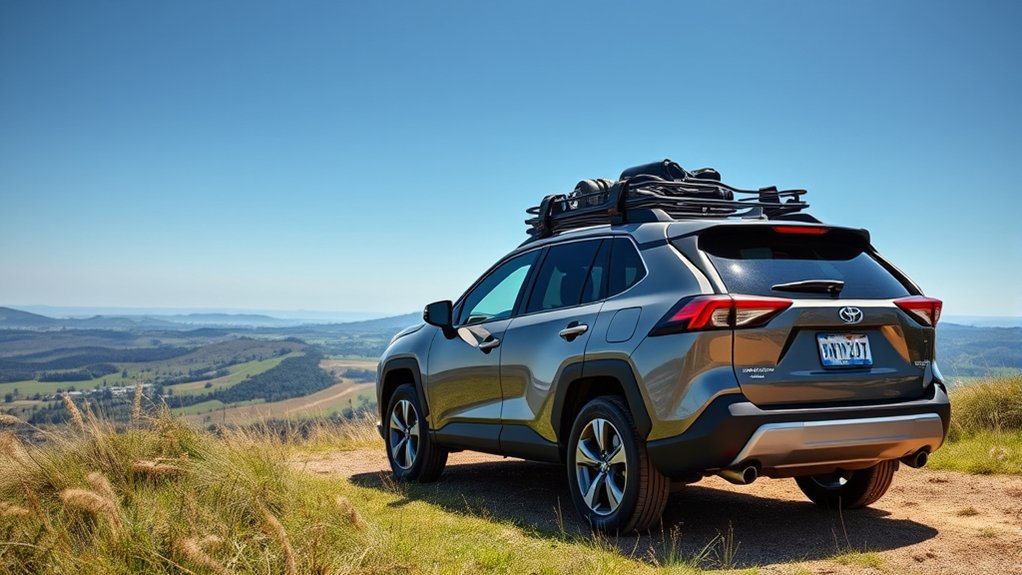
RAV4 owners often report the same pattern: factory rails alone are usually quiet, empty crossbars add some noise, and large rooftop cargo has the biggest effect on mpg and sound. Some drivers accept the trade-off because they need the extra space. Others remove the crossbars between trips to keep the cabin quieter and recover a little fuel economy.
| User Experience | What It Usually Means | Best Fix |
|---|---|---|
| Whistling at highway speed | Open channel, loose strap, or blunt bar shape | Seat rubber strips, tie off straps, or switch to aero bars |
| Lower mpg on trips | Extra drag from crossbars, box, basket, or cargo | Remove unused hardware and use a streamlined box |
| More movement in crosswinds | Tall or heavy roof cargo catching side wind | Slow down, rebalance cargo, or move weight inside |
| Rattling or shifting | Loose mount, low strap tension, or uneven load | Stop, retighten, and inspect all mounting points |
When You Should Remove the Roof Rack
Remove crossbars or rooftop accessories when they are not needed for weeks at a time. This is especially helpful if you do mostly highway driving, park in a garage with low clearance, use an automatic car wash, or notice constant wind noise. Removing unused bars also reduces weather exposure on the rack hardware.
Keep the roof rails if they are factory-installed and not meant to be removed. Focus on removable crossbars, baskets, boxes, bike trays, kayak carriers, and strap hardware.
Frequently Asked Questions
How much weight can a RAV4 roof handle?
For the 2025 Toyota RAV4, Toyota lists a roof luggage carrier cargo limit of 176.4 lb. (80 kg). Limits can vary by model year, market, roof type, and rack system, so check your owner’s manual and the rack manufacturer’s instructions before loading.
Does a roof rack cause wind resistance on a car?
Yes. Roof racks and rooftop cargo interrupt airflow, which increases aerodynamic drag. The effect is usually small with empty aerodynamic crossbars and much larger with cargo boxes, baskets, bikes, kayaks, or luggage mounted on the roof.
Will removing RAV4 crossbars improve mpg?
It can. The improvement may be small, but removing unused crossbars reduces drag and often makes the cabin quieter. The biggest mpg improvement comes from removing large rooftop cargo such as boxes, baskets, and bike racks when they are not in use.
Are aerodynamic crossbars worth it for a RAV4?
Aerodynamic crossbars are usually worth it if you keep bars installed often. They tend to create less wind noise than square bars and may reduce drag. Make sure the bars are approved for your RAV4’s roof style and the cargo you plan to carry.
Can roof cargo increase rollover risk?
Roof cargo raises the vehicle’s center of gravity, which can make handling less stable during high-speed turns, sudden braking, abrupt steering, or strong crosswinds. Toyota specifically warns drivers to avoid abrupt maneuvers when cargo is loaded on the roof luggage carrier.
Should heavy cargo go on the roof or inside the RAV4?
Heavy cargo is usually safer inside the vehicle, low and close to the center of the cargo area. Use the roof for lighter, bulky items that do not fit inside, and always secure them to the rack according to the rack and accessory instructions.
Conclusion
A roof rack can make your RAV4 far more practical, but it comes with real trade-offs. Expect more drag, possible wind noise, and different handling when the roof is loaded. For the best mix of safety and comfort, stay within the lowest rated load limit, keep weight centered, secure cargo carefully, slow down in wind or rough conditions, and remove unused crossbars or accessories when the trip is over.
Sources
- Toyota Owners: 2025 RAV4 Cargo and Luggage — roof luggage carrier limit, load distribution, securement, and driving precautions.
- Toyota Owners: 2026 RAV4 Hybrid Utility Vehicle Precautions — center-of-gravity, rollover, and crosswind safety guidance.
- Consumer Reports: How Rooftop Carriers Affect Fuel Economy — measured mpg changes with empty racks and rooftop cargo.
- Yakima JetStream Crossbars — aerodynamic crossbar design and wind-noise claims from the manufacturer.
- NHTSA Rollover Research — rollover research background and vehicle dynamics context.