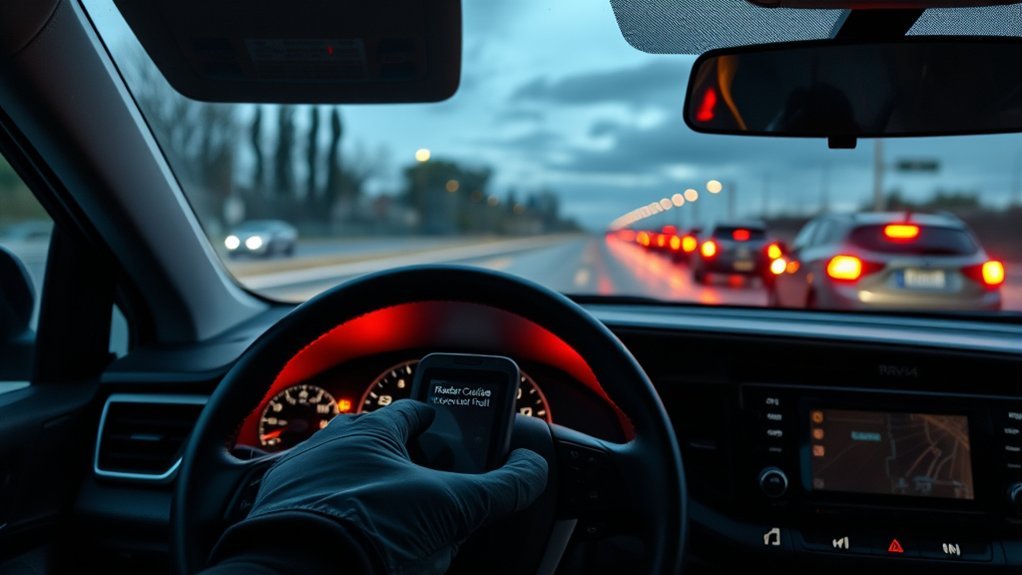
If your RAV4 shows a Radar Cruise Control malfunction, first stop safely and inspect the front radar and windshield camera for dirt, ice, or debris and gently clean them with a microfiber cloth; then verify battery voltage and terminal tightness, shut the car down for 5–10 minutes to reboot ADAS, and drive briefly to let systems recalibrate. If warnings persist, check connectors and wiring for corrosion or looseness and scan OBD-II codes, and continue below for detailed steps and when to see a pro.
How to Tell If the Radar Cruise Control Warning Is Dirt or a Real Fault
If your RAV4 displays a radar cruise control warning, start by treating obstruction as the likely culprit and inspect the front radar (behind the bumper or grille) and the windshield camera near the rearview mirror for dirt, ice, or debris—clean both with a microfiber cloth, then restart the vehicle to see if the alert clears. After that, note the behavior of warning indicators: do they vanish immediately, recur intermittently, or persist? If the alert clears and stays off, you’ve likely resolved an obstruction issue. If it returns or never goes away, check battery connections for tightness and cleanliness—low voltage can mimic sensor faults. For persistent alerts you can’t fix, scan for OBD-II fault codes to pinpoint sensor calibration errors or module faults. Act deliberately and safely: don’t drive relying on a compromised system. You’re reclaiming control by diagnosing systematically, prioritizing simple fixes before accepting costly repairs or sensor recalibration.
Clean the Front Radar and Windshield Camera (Step-by-Step)
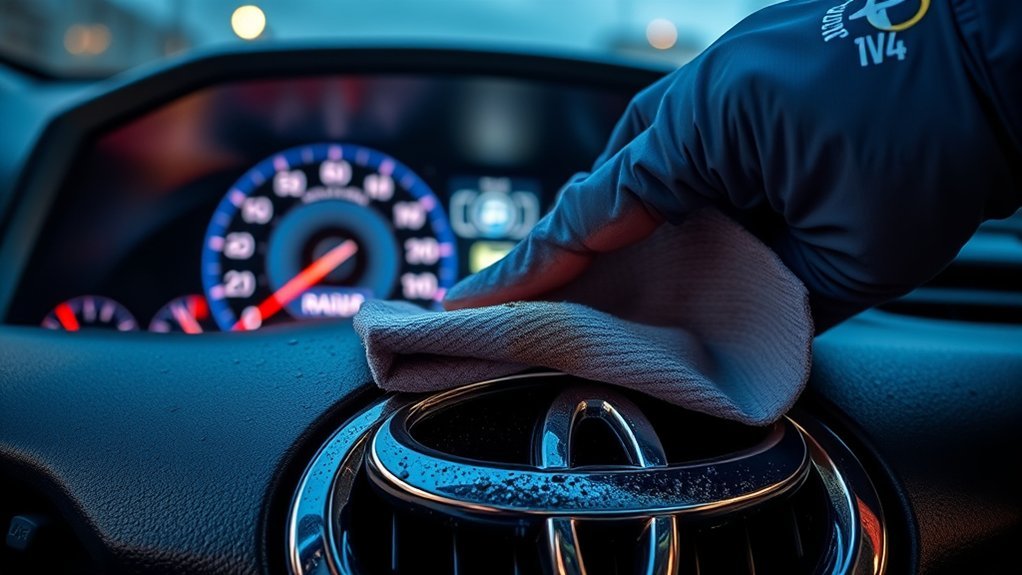
Start by locating the front radar behind the grille or bumper and the windshield camera near the rearview mirror. You’ll perform deliberate sensor maintenance: gently wipe the radar with a microfiber cloth to remove dirt or obstructions, using light, controlled motions to avoid pressure. Identify the camera and apply a gentle cleaner to a soft, damp cloth; never spray directly onto the lens. Use proven cleaning techniques—soft cloth, mild cleaner, minimal moisture—to remove smudges and debris without scratching surfaces.
Inspect both components for grime buildup regularly; freedom from preventable faults comes from routine attention. After cleaning, secure any removed trim, then take a short drive so the ADAS can recalibrate and the radar cruise control warning can clear if cleaning solved it. If the warning persists, stop and reassess rather than forcing the system. You’re reclaiming control through methodical, safety-focused maintenance—precise actions that keep sensors reliable and your vehicle dependable.
Check the Battery and Restart the ADAS
One straightforward step is to verify the battery and perform a controlled restart of the vehicle’s electronics, since low voltage or loose terminals can trigger radar cruise control faults. You’ll inspect terminals for corrosion, tighten connections, and confirm voltage levels. If readings are low, perform battery maintenance or replace the battery to prevent repeat faults. After addressing power issues, do a timed shutdown: turn the car off for 5–10 minutes or disconnect the negative terminal for 10–15 minutes to achieve a system reset. Then start the vehicle and drive for several minutes to allow ADAS recalibration.
| Action | Time | Purpose |
|---|---|---|
| Visual terminal check | 2–5 min | Detect corrosion/looseness |
| Neg. terminal disconnect | 10–15 min | Reset control modules |
| Drive post-restart | 5–10 min | Recalibrate ADAS systems |
Work methodically and safely: wear gloves, secure vehicle, and free yourself from recurring alerts by confirming stable power before resuming normal driving.
Check Radar/Camera Connectors and Visible Wiring (What to Look For)
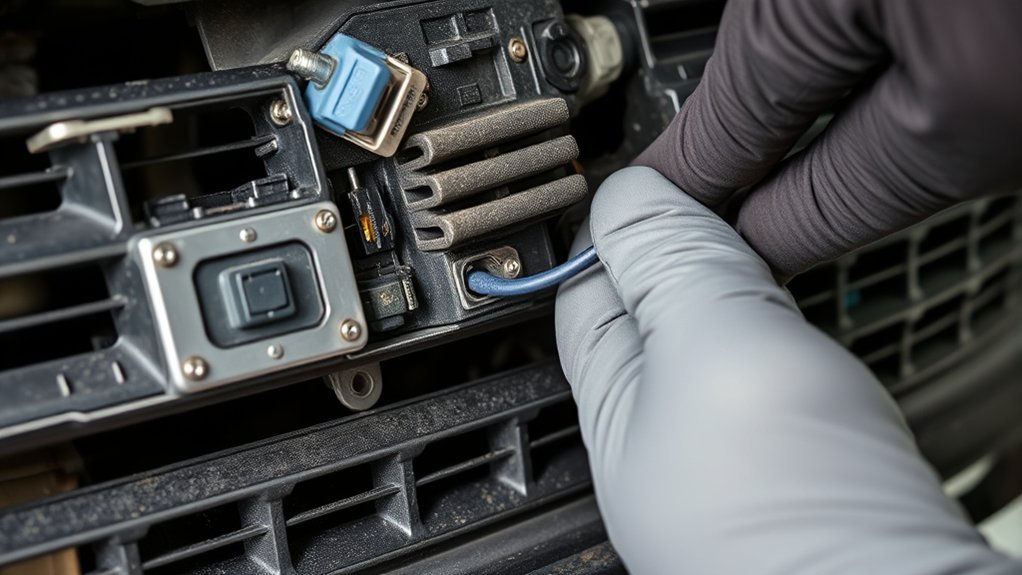
Inspect the radar sensor and camera connectors closely, looking for corrosion, loose pins, dirt, moisture, frayed insulation, or exposed conductors that can interrupt signals. You’ll perform a focused wiring inspection: park safely, cut power, and visually trace harnesses from the radar module and windshield camera. Look for connector corrosion at mating faces and on terminal ends; green or white deposits mean cleaning or replacement is needed. Confirm the camera connector behind the windshield sits tight and free of debris that could impede its view or electrical contact. Check for chafed or pinched sections where insulation is worn; exposed conductors invite shorting and must be insulated or replaced. Remove light moisture with electronics-safe contact cleaner and let components dry fully. Re-seat connectors firmly and secure loose cables with ties to prevent future wear. These deliberate steps free you from avoidable faults and restore reliable sensor communication without unnecessary parts swaps.
Scan Trouble Codes and When to See a Mechanic
Although some issues can be spotted visually, scanning trouble codes gives you a targeted starting point: plug an OBD-II scanner into the RAV4’s diagnostic port (many auto parts stores will do this free), read and record any codes related to radar, camera, or ADAS systems, and note freeze-frame data or pending codes that recur. Use diagnostic tools to identify faulty sensors, wiring faults, or module errors so you can act decisively.
- Note codes and timestamps — this documents recurring sensor issues and shows patterns.
- Clear non-permanent codes after fixes, then re-scan; persistent codes signal deeper faults.
- Compare codes to service information or reputable forums before DIY repairs.
- Bring recorded codes and freeze-frame data to a mechanic if warnings persist, if multiple systems report errors, or if safety-critical functions remain impaired.
You’re aiming for freedom from uncertainty: precise data from diagnostic tools helps you decide when a professional inspection is necessary for safe, reliable operation.
Frequently Asked Questions
Why Is My Cruise Control Not Working on My Toyota RAV4?
Your cruise control likely fails due to common causes: dirty/obstructed radar, low battery voltage, loose sensor connectors, or electronic glitches; troubleshooting tips include inspecting/cleaning sensors, tightening connections, restarting the vehicle, and scanning for trouble codes.
What to Do if Cruise Control Malfunctions?
Start by following cruise control tips: clean radar and camera, check battery, restart car, inspect connectors, use troubleshooting steps like a code scan. You’ll regain control safely and confidently, freeing yourself from uncertainty.
Conclusion
When the radar cruise control warning lights up, treat it like a smoke alarm—don’t ignore it. Start with a careful visual check for dirt, ice, or lens damage, then clean the radar and windshield camera per the steps above. Verify battery charge, restart the ADAS, and inspect connectors and wiring for loose or corroded joints. If codes persist or you see structural damage, get a qualified technician to diagnose and repair it promptly to keep you safe.