Last updated: July 14, 2026
Editorial basis: This guide compares Toyota-published charging specifications with federal home-charging guidance. It does not claim a controlled hands-on charging test. Always confirm specifications in the owner’s manual for your exact model year and grade.
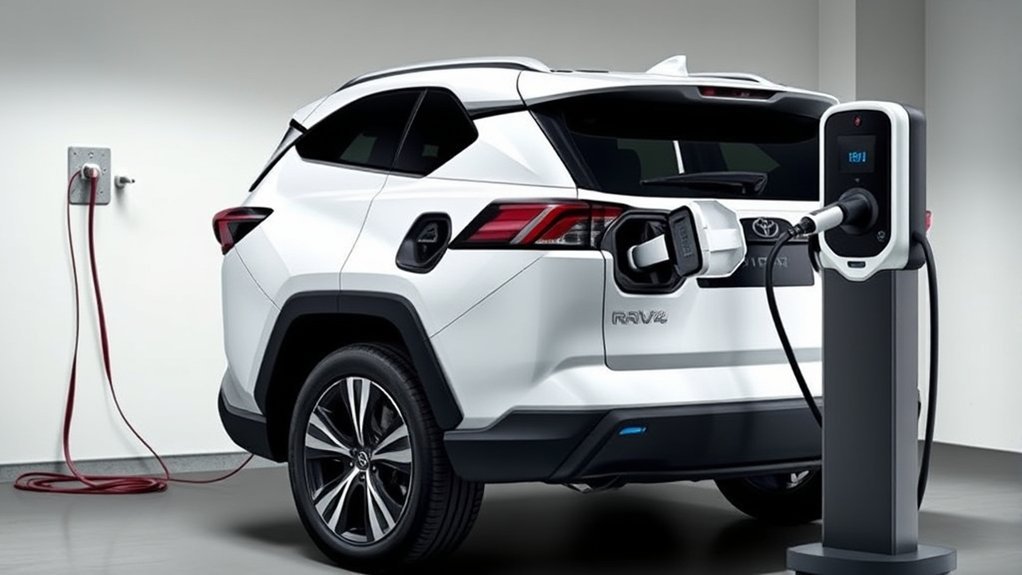
For a 2021–2025 Toyota RAV4 Prime or RAV4 Plug-in Hybrid, Level 1 is the low-cost overnight option, while Level 2 is the faster choice for same-day recharging. A 2023–2025 model can recharge in about 12 hours on Level 1 or 2.5 hours on compatible Level 2 equipment under ideal conditions. The redesigned 2026 RAV4 Plug-in Hybrid uses different 7-kW or 11-kW onboard chargers, depending on grade, so you must check the model year before choosing home equipment.
Quick Answer
Choose Level 1 if your RAV4 normally stays parked overnight and you replace only one day of electric driving. Choose Level 2 if you often deplete the battery, need another EV-mode trip within a few hours, or want a more flexible home setup. A 32-amp EVSE is sufficient for older 6.6-kW models and the 2026 7-kW grades. The 2026 XSE and Woodland can use up to 11 kW on AC equipment and also support CCS1 DC fast charging.
Key Takeaways
- Level 1 uses 120-volt AC power and works best when the vehicle can remain plugged in overnight.
- Some 2021–2022 configurations have a lower-rate onboard charger, while 2023–2025 models use a 6.6-kW charger.
- For 2023–2025 models, Toyota lists about 12 hours on Level 1 and about 2.5 hours on Level 2 under ideal conditions.
- The 2026 SE and GR SPORT use 7-kW onboard chargers; the 2026 XSE and Woodland use 11-kW onboard chargers.
- Only the 2026 XSE and Woodland support CCS1 DC fast charging. Earlier RAV4 Prime models and the 2026 SE/GR SPORT do not.
RAV4 Prime Level 1 vs Level 2 Charging by Model Year
Start with your model year and grade. The wall-mounted EVSE supplies electricity, but the vehicle’s onboard charger determines how much AC power the battery can accept. A higher-rated EVSE does not force excess current into the vehicle. It simply offers capacity that the vehicle may or may not use.
| Model | Onboard AC Charger | AC Connector | Published Charging Guidance | Practical Home EVSE |
|---|---|---|---|---|
| Some 2021–2022 RAV4 Prime configurations | 3.3 kW | J1772 | About 12 hours on Level 1; roughly 4.5 hours on compatible Level 2 equipment | A 16-amp or higher Level 2 EVSE can supply the vehicle’s approximate maximum AC rate |
| 2021–2022 configurations equipped with 6.6 kW | 6.6 kW | J1772 | About 2.5 hours on suitable Level 2 equipment under ideal conditions | 32-amp Level 2 EVSE |
| 2023–2025 RAV4 Prime / Plug-in Hybrid | 6.6 kW | J1772 | About 12 hours on 120V Level 1 or 2.5 hours on Level 2 under ideal conditions | 32-amp Level 2 EVSE |
| 2026 SE and GR SPORT | 7 kW | J1772 | Toyota estimates around 4 hours from 10% to 80% on Level 2 under ideal conditions | 32-amp Level 2 EVSE |
| 2026 XSE and Woodland | 11 kW | CCS1 inlet, including J1772-compatible AC pins | Up to 11-kW AC; CCS1 DC charging from 10% to 80% in about 30 minutes under ideal conditions | A higher-capacity EVSE can approach 11 kW; have an electrician size the circuit and equipment |
Important: Toyota’s 2021–2025 figures commonly describe an empty-to-full charge. Some 2026 figures describe 10% to 80%. Do not compare those time windows as though they measure the same amount of charging.
Which Charging System Does Your RAV4 Have?
Check the model year, grade, original window sticker, vehicle specifications, and owner’s manual before buying equipment. The RAV4 Prime name applies mainly to 2021–2024 U.S. models. Toyota renamed it RAV4 Plug-in Hybrid for 2025, but that model retained the outgoing 6.6-kW charging system.
The redesigned 2026 model needs separate guidance. Its SE and GR SPORT grades use 7-kW AC chargers and J1772 ports. Its XSE and Woodland grades use 11-kW AC chargers and CCS1 ports that also accept ordinary J1772 AC connectors.
What You Need to Know About Level 1 Charging
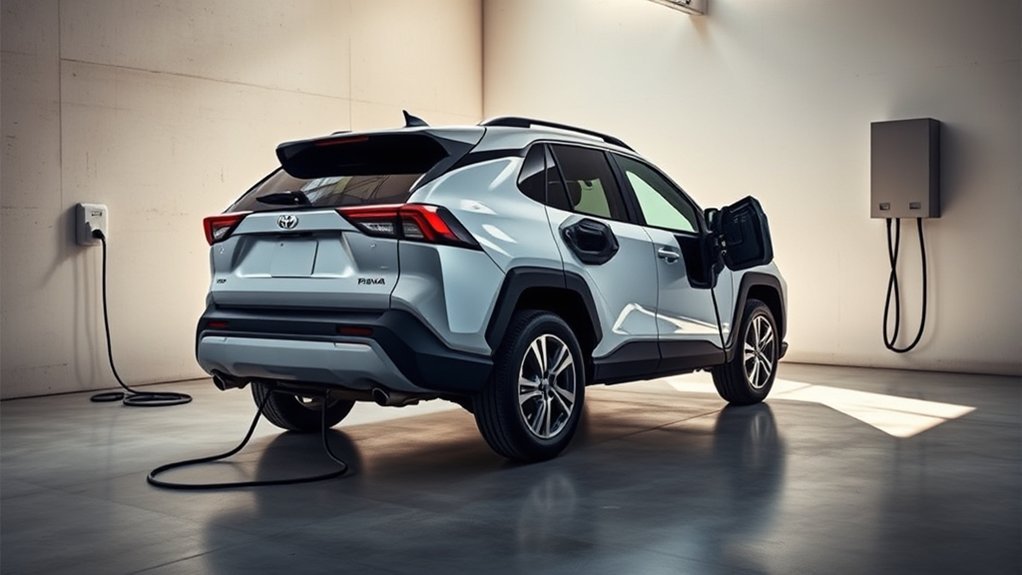
Level 1 charging uses a standard 120-volt household power source. The U.S. Department of Transportation defines Level 1 as 120V AC charging, while Level 2 normally uses 208V or 240V AC service.
For 2023–2025 models, Toyota lists about 12 hours for a full recharge on a suitable 120V outlet under ideal conditions. Level 1 can be enough when you drive within the vehicle’s electric range and leave it parked overnight.
The 2026 lineup includes a dual-voltage 120V/240V charging cable. Toyota does not publish one universal empty-to-full Level 1 time for every 2026 grade in the cited launch specifications, so use the vehicle’s displayed estimate and exact owner’s manual for planning.
Level 1 is most practical when:
- Your vehicle remains parked for about 10 to 12 hours most nights.
- You usually replace one day of local EV driving rather than needing several full charges per day.
- You rent or cannot obtain approval for a permanent 240V installation.
- You already have a suitable outlet on a dedicated branch circuit near the parking location.
Note: For outgoing-generation RAV4 Prime and Plug-in Hybrid models, Toyota recommends a dedicated grounded 15-amp GFI/GFCI-protected outlet for standard household charging. Have a qualified electrician inspect an old, loose, discolored, or frequently tripping outlet before using it for a continuous charging load.
What Are the Benefits of Level 2 Charging?
Level 2 charging is most valuable when parking time is shorter than the vehicle’s Level 1 charging time. It can also help you complete a morning trip, recharge at home, and make another trip in EV mode later the same day.
Faster Charging Times
Charging speed depends on both the EVSE and the vehicle’s onboard charger. A 48-amp wall unit will not make a 6.6-kW RAV4 accept 11 kW. The vehicle communicates with the EVSE and draws no more than the compatible limit.
- Some 2021–2022 lower-rate configurations: roughly 4.5 hours on Level 2.
- 2021–2022 models equipped with 6.6 kW: about 2.5 hours under ideal conditions.
- 2023–2025 models: about 2.5 hours under ideal conditions.
- 2026 SE and GR SPORT: Toyota estimates around 4 hours from 10% to 80% on Level 2.
- 2026 XSE and Woodland: up to 11-kW AC charging, subject to station, circuit, temperature, and battery conditions.
Enhanced Daily Convenience
Level 2 reduces the amount of planning required between trips. You can recover a larger share of the battery while working from home, eating dinner, or stopping for several hours at a workplace or hotel.
A lower-capacity Level 2 EVSE remains compatible with a higher-capacity vehicle, but the vehicle will charge only at the power available. This means a 2026 XSE can use a 32-amp J1772 Level 2 station, although it will not receive the full potential 11-kW AC rate.
Battery Longevity and Charging Habits
Level 1 and Level 2 are normal AC charging methods supported by the vehicle. For routine battery care, follow the owner’s manual for your model year on charging schedules, storage, connector condition, and temperature-related limitations.
Toyota’s outgoing-generation owner information recommends using the charging schedule so charging can finish near the planned departure time. For a detailed walkthrough, see the site’s RAV4 Prime charging schedule guide.
Pro Tip: If your utility has time-of-use rates, schedule charging for the lower-cost period while still allowing it to finish close to departure.
Comparing Charging Speeds: How Long Will It Take?
Published times are planning estimates, not guarantees. Charging time changes with the initial battery level, battery temperature, power supplied by the station, charging settings, cabin-conditioning use, and the vehicle’s normal power reduction near the end of a session.
| Charging Option | Typical Power Source | Best For | Planning Estimate |
|---|---|---|---|
| Level 1 | 120V household outlet | Overnight charging and modest daily use | About 12 hours for 2023–2025 models under ideal conditions; check the exact manual for other configurations |
| Level 2 with 3.3-kW onboard charger | 208V/240V EVSE | Some earlier RAV4 Prime configurations | Roughly 4.5 hours from depleted to full |
| Level 2 with 6.6-kW onboard charger | 240V, 32-amp EVSE | Equipped 2021–2022 models and 2023–2025 models | About 2.5 hours under ideal conditions |
| 2026 Level 2 with 7-kW onboard charger | 240V Level 2 EVSE | 2026 SE and GR SPORT | Around 4 hours from 10% to 80% under ideal conditions |
| 2026 Level 2 with 11-kW onboard charger | Higher-capacity 240V Level 2 EVSE | 2026 XSE and Woodland | Up to 11-kW AC; use the vehicle estimate for the actual session |
| 2026 CCS1 DC fast charging | Compatible public DC fast charger | 2026 XSE and Woodland only | About 30 minutes from 10% to 80% under ideal conditions |
How Do You Decide Whether Level 2 Is Worth It?
Use this four-step test rather than buying the fastest EVSE by default:
- Identify the onboard charger. Confirm the model year, grade, and original specifications.
- Record your normal EV miles. Focus on a typical week rather than your longest annual trip.
- Measure parking time. Level 1 may be sufficient when the vehicle is parked overnight every day.
- Count same-day turnarounds. Level 2 adds the most value when you want substantial electric range before a second trip.
Level 1 is often workable for a 10-to-25-mile daily routine with dependable overnight parking. Level 2 becomes more useful when you regularly use most of the available electric range, share the vehicle, have irregular work hours, or need another trip after only a few hours at home.
The 2025 RAV4 Plug-in Hybrid has a manufacturer-estimated 42 miles of electric range. For 2026, Toyota lists 52 miles for the SE and XSE, 49 miles for the Woodland, and 48 miles for the GR SPORT. Your actual range will vary with temperature, speed, climate use, terrain, and driving conditions.
How Do Charging Levels Affect Battery Health?
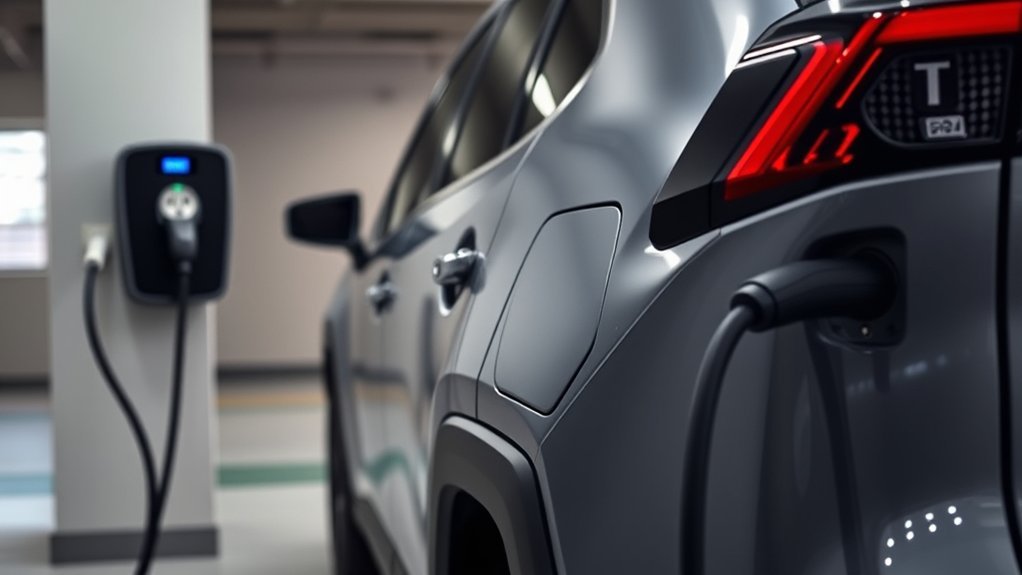
Level 1 and Level 2 both deliver AC power through charging systems designed for the vehicle. The vehicle controls the accepted power and battery-charging process. Use compatible equipment and follow the instructions for your exact model year.
DC compatibility depends on the vehicle. RAV4 Prime and 2025 RAV4 Plug-in Hybrid models cannot use DC fast charging. For 2026, the XSE and Woodland can use compatible CCS1 DC fast chargers, while the SE and GR SPORT remain limited to Level 1 and Level 2.
For practical battery and charging care:
- Use the charging schedule when it suits your departure time and utility rate.
- Follow the owner’s manual before storing the vehicle for an extended period.
- Keep the charging inlet and connector clean, dry, and free of ice or debris.
- Do not use damaged outlets, plugs, connectors, or cables.
- Do not tightly coil or bundle a cable while it is carrying a charging load.
- Expect charging time and available power to change in very hot or cold conditions.
Warning: Do not use a loose, damaged, overheated, or discolored outlet. Avoid extension cords unless the owner’s manual explicitly approves the exact setup. Have charging circuits and permanent Level 2 equipment inspected or installed by a qualified electrician.
What Does RAV4 Prime Charging Cost?
The most dependable calculation uses the energy recorded by your EVSE, utility submeter, or other suitable meter:
Charging-session cost = measured kWh delivered × electricity price per kWh.
For example, if your EVSE records 15 kWh for a session and your electricity rate is $0.15 per kWh, that session costs $2.25. This is a math example, not a claim that every RAV4 session uses 15 kWh.
Level 2 does not automatically reduce the electricity price per kWh. Its financial benefit usually comes from convenience, access to off-peak rates, and the ability to complete charging inside a cheaper rate window. Public stations may charge by kWh, time, session, or parking duration.
Before installing Level 2 equipment, check your electric utility, state programs, and local authorities for current incentives or permit requirements. Installation cost varies with panel capacity, circuit length, trenching, outlet or hardwired design, labor, and required upgrades.
[Products Worth Considering]

This Rhino USA recovery tow strap is built for reliable vehicle pulling and towing in flat recovery situations. Made from durable polyester with reinforced loop ends, it is designed to help secure safe connection points while resisting wear, abrasion, and stress during recovery use. It is a practical choice for off-road recovery, roadside assistance, and general towing needs.

This compact car charger delivers fast, simultaneous charging for USB-C and USB-A devices with a powerful multiport design. Built with intelligent protection and an all-metal housing, it helps keep phones, tablets, and other travel essentials charged safely on daily commutes, road trips, and family travel. Its wide vehicle compatibility makes it a practical accessory for cars, trucks, SUVs, and more.

These all-weather car floor mats combine durable rubber with metallic aluminum film for a sporty look and reliable interior protection. Deep ridge channels help trap mud, water, snow, and debris, while the trimmable universal design offers a flexible fit for many cars, SUVs, and vans. They are waterproof and easy to clean, making them a practical upgrade for everyday driving in any season.
Which Charging Setup Fits Your Routine?
- Choose Level 1 when the vehicle stays parked overnight, daily electric mileage is modest, and the existing outlet is suitable for continuous charging.
- Choose 32-amp Level 2 for a 6.6-kW RAV4 Prime, a 2025 Plug-in Hybrid, or a 2026 SE/GR SPORT.
- Consider higher-capacity Level 2 for a 2026 XSE or Woodland when you want to approach its 11-kW AC capability and the electrical system supports it.
- Use workplace or public Level 2 when you rent, lack assigned home parking, or cannot obtain permission for a home installation.
- Use CCS1 DC fast charging only with a compatible 2026 XSE or Woodland and a compatible public station.
- Use scheduled charging to coordinate departure time and off-peak utility rates.
[Products Worth Considering]
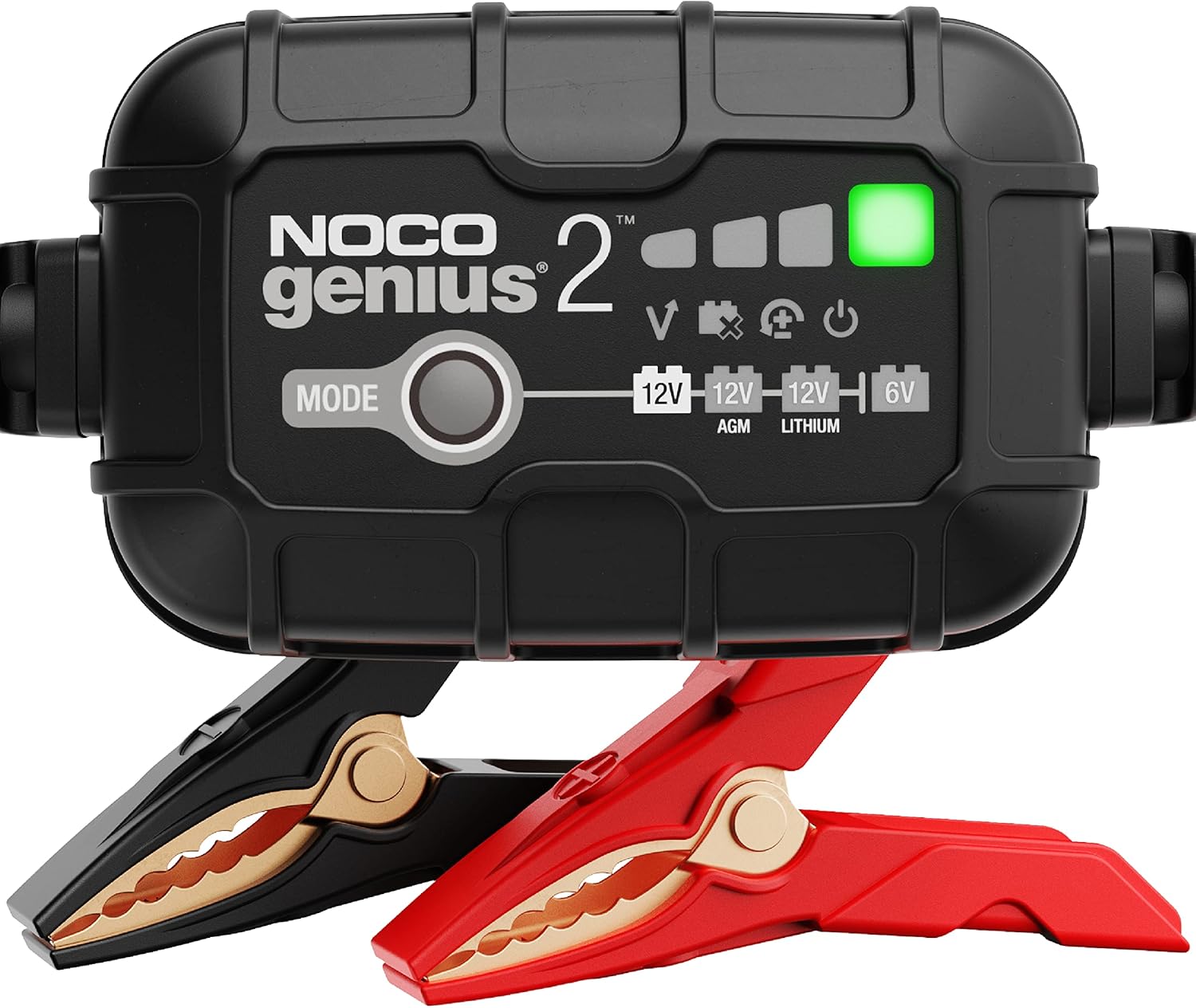
The NOCO GENIUS2 is a compact, all-in-one smart charger that automatically charges, maintains, and restores 6V and 12V lead-acid and lithium batteries. It features temperature compensation, overcharge protection, pulse desulfation, and Force Mode for reviving deeply discharged batteries, making it ideal for long-term battery care across many vehicle types. Designed for safe indefinite connection, it helps extend battery life and keep batteries ready to go.

The NOCO GENIUS5 is an all-in-one battery charging and maintenance solution for 6V and 12V lead-acid and lithium batteries. It features temperature compensation, dead-battery recovery, desulfation, and safe long-term maintenance to help extend battery life and performance. Compact and versatile, it works with a wide range of vehicles and comes with mounting accessories and a warranty.

High Charging Speed: The Seguma 32amp Level 2 EV charger equipped with NEMA 14-50 plug, provides faster charging (approx. 6 times faster) compared to standard Level 1 EV chargers, allowing you to charge your electric vehicle more quickly
How Do You Set Up Home Charging?
At a Glance
| Time Required | A few minutes to connect approved Level 1 equipment; installation time varies for a new Level 2 circuit |
| Difficulty | Simple vehicle connection; professional electrical assessment recommended for new Level 2 service |
| Equipment | Toyota charging cable or compatible safety-certified AC EVSE |
| Installation Cost | Depends on EVSE, wiring distance, panel capacity, permits, outlet or hardwired design, and labor |
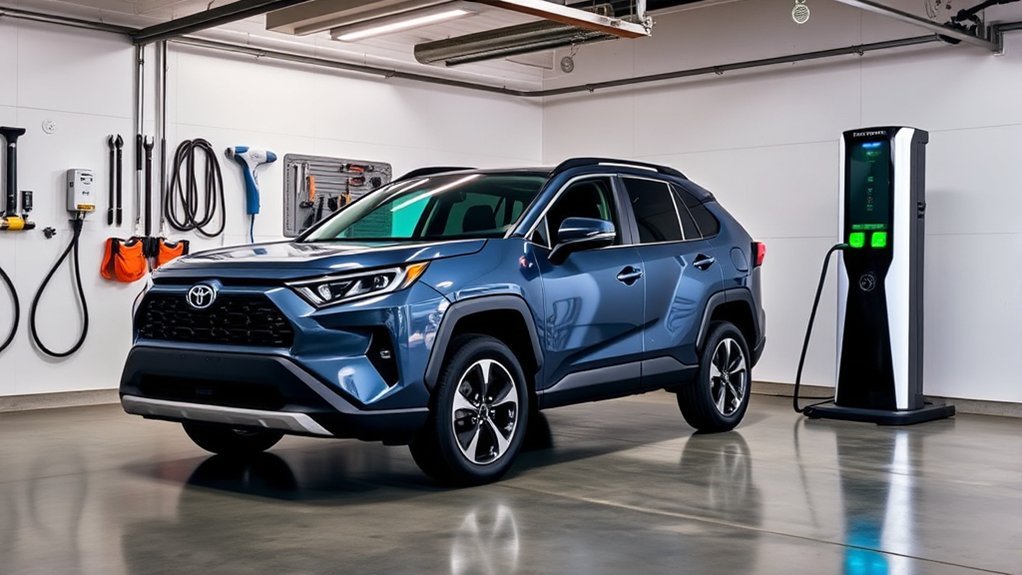
For Level 1, use the supplied or approved cable with a suitable 120V outlet that follows Toyota’s instructions. The outlet should be grounded, in good condition, and located so the cable does not create a trip hazard or place strain on the plug.
For a new Level 2 setup, ask a qualified electrician to evaluate:
- Available electrical-panel and service capacity.
- The EVSE’s continuous current requirement.
- Required breaker, conductor, receptacle, and disconnect specifications.
- Hardwired versus plug-in installation.
- Indoor or outdoor equipment rating.
- Cable length and charging-port location.
- Local electrical code, inspection, and permit requirements.
- Whether load-management equipment could avoid a larger service upgrade.
[Products Worth Considering]

Flex Level 1 EV Charger - The EVDANCE Level 1 electric car charger is compatible with J1772 electric vehicles and plug-in hybrid vehicles (North American Standard). *Tesla requires a SAE J1772 adapter.

[Up to 9x Faster Charging Speed]: Provides up to 46 miles/hour charging speed via hardwired connection (48 amp - up to 9x faster than a standard wall outlet) or up to 38 miles/hour via the NEMA 14-50 plug (40 amp). Professional installation recommended for optimal safety and performance. [Install The Power Outlet Cord]: No smaller than 8AWG if charge 40-48A, we suggest 6AWG cord.(1.The input side is belongs to the electrician electric automobile regulation scope, need to use three 6AWG cable wires for 48A; 2.The charging cable belongs to the automotive connector certification standard, so the 8AWG cable can meet the 48A.)
What Amperage Level 2 Charger Do You Need?
| Vehicle Capacity | Approximate AC Current at 240V | EVSE Guidance |
|---|---|---|
| 3.3 kW | About 14 amps | A 16-amp or higher Level 2 EVSE can cover the approximate vehicle limit |
| 6.6 kW | About 28 amps | 32-amp Level 2 EVSE is sufficient |
| 7 kW | About 29 amps | 32-amp Level 2 EVSE is sufficient |
| 11 kW | About 46 amps | Higher-capacity equipment, commonly around 48 amps, can approach the vehicle limit when the circuit supports it |
These current figures are approximate power calculations, not circuit-sizing instructions. EV charging is treated as a continuous electrical load, and the required circuit rating is higher than the EVSE’s continuous output. Let a qualified electrician apply the current code and equipment instructions.
Common Questions Regarding RAV4 Prime Charging Options
A higher-rated EVSE does not automatically make every RAV4 charge faster. The EVSE advertises available current, and the vehicle draws only a compatible amount. Buying more EVSE capacity can still make sense when you own a 2026 11-kW grade or plan to buy a higher-rate battery-electric vehicle later.
The RAV4 Prime name and RAV4 Plug-in Hybrid name also cover different charging generations. Toyota renamed the vehicle for 2025 without replacing the outgoing 6.6-kW charging system. The redesigned 2026 model added new 7-kW and 11-kW chargers, a dual-voltage cable, and grade-specific DC capability.
If the vehicle does not begin charging, check the charging schedule, breaker, outlet, connector seating, and dashboard message. The separate RAV4 Prime not-charging guide covers fault isolation and troubleshooting in more detail.
Frequently Asked Questions
Should I use Level 1 or Level 2 charging for a RAV4 Prime?
Use Level 1 when the vehicle normally remains parked overnight and you do not need rapid same-day recharging. Choose Level 2 when you often use most of the electric range, have irregular parking time, share the vehicle, or want another EV-mode trip within a few hours.
How long does a RAV4 Prime take to charge on Level 1 and Level 2?
For 2023–2025 models, Toyota lists about 12 hours on a standard 120V outlet and about 2.5 hours on compatible Level 2 equipment under ideal conditions. Some 2021–2022 configurations charge more slowly on Level 2. The redesigned 2026 model uses different 7-kW or 11-kW chargers, depending on grade.
Do I need a 40-amp or 48-amp charger for a RAV4 Prime?
Not for an older 6.6-kW RAV4 Prime or a 2026 model with the 7-kW charger. A 32-amp EVSE is sufficient for those vehicles. A higher-capacity EVSE can benefit a 2026 XSE or Woodland because those grades support up to 11-kW AC charging.
Can the 2026 RAV4 Plug-in Hybrid use DC fast charging?
The 2026 XSE and Woodland can use compatible CCS1 DC fast chargers. Toyota estimates about 30 minutes from 10% to 80% under ideal conditions. The 2026 SE and GR SPORT do not support DC fast charging, and neither do earlier RAV4 Prime or 2025 Plug-in Hybrid models.
Does Level 2 charging damage the RAV4 Prime battery?
Level 2 is a normal AC charging method supported by the vehicle. The onboard system controls the power accepted and the battery-charging process. Use compatible equipment and follow the owner’s manual for charging schedules, storage, temperature limits, and connector care.
Does the 2026 RAV4 Plug-in Hybrid include a 120V and 240V cable?
Toyota states that all 2026 RAV4 Plug-in Hybrid grades include a dual-voltage cable capable of 120V or 240V home charging. The outlet, circuit, wiring, and installation must still meet the equipment instructions and applicable electrical code.
Conclusion
Level 1 remains a practical choice when your RAV4 stays parked overnight and your daily electric mileage is modest. Level 2 is the better choice when you need shorter turnarounds or want to recover more electric range between trips.
Match the EVSE to the vehicle rather than buying by amperage alone. A 32-amp unit is sufficient for 6.6-kW models and the 2026 7-kW grades. A 2026 XSE or Woodland can benefit from higher-capacity Level 2 equipment and can also use compatible CCS1 DC fast charging. Confirm the exact model year and grade before purchasing equipment or approving electrical work.
Sources
- Toyota USA Newsroom: 2026 RAV4 Specifications — 7-kW and 11-kW onboard chargers, grade-specific connectors, dual-voltage cable, EV range, and DC charging information.
- Toyota USA Newsroom: 2025 RAV4 Plug-in Hybrid — Name change, 6.6-kW onboard charger, 120V and Level 2 charging times, and electric range.
- Toyota USA Newsroom: 2024 RAV4 Prime — 6.6-kW onboard charger, dedicated outlet guidance, and charging-time estimates.
- Toyota 2023 RAV4 Brochure — Standard 6.6-kW onboard charger specifications for the 2023 RAV4 Prime.
- Toyota 2021 RAV4 Brochure — Earlier RAV4 Prime equipment and available 6.6-kW charger configuration.
- Toyota Owner’s Manual: Things to Know Before Charging — Charging schedules and battery-capacity guidance for the outgoing-generation RAV4 Prime.
- Toyota Owner’s Manual: How to Charge — Charging operation and safety precautions.
- U.S. Department of Energy Alternative Fuels Data Center: Home Charging — Dedicated circuits, safety-certified equipment, permits, electrical capacity, and installation guidance.
- U.S. Department of Transportation: Charging Speeds — Level 1, Level 2, and DC charging definitions.