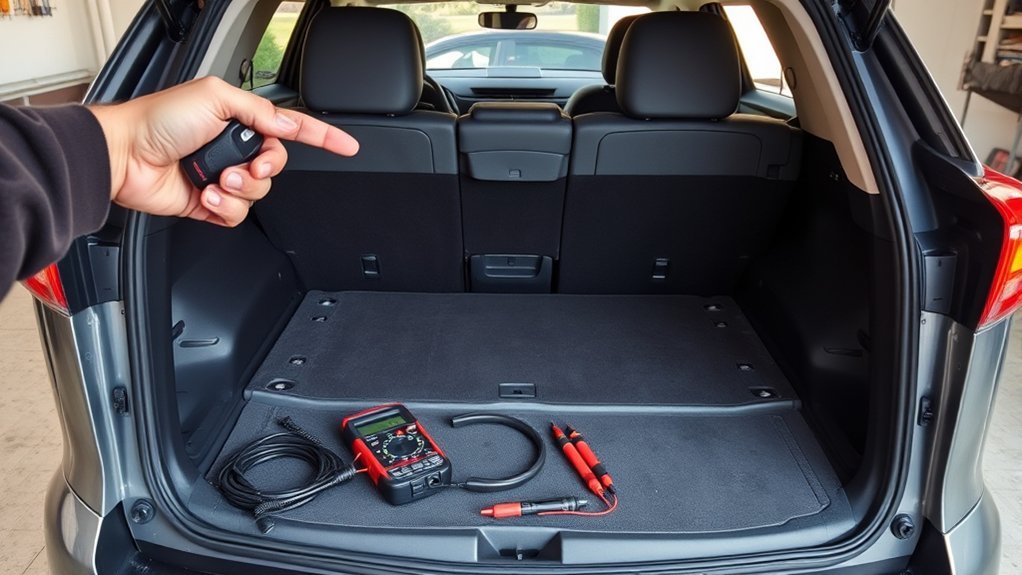
If your RAV4 power liftgate won’t open or stops mid-travel, start by setting the Power Back Door height to level 5 via the steering-wheel menu, then test operation. Verify the battery, fuses, connectors, and power-module voltage with a multimeter. Inspect actuators and linkages for binding, listen for abnormal motors sounds, and reseat or clean corroded plugs. Relearn travel limits by holding the interior switch as specified. Continue for step-by-step checks and repair options.
Quick Fix: Set RAV4 Power Liftgate to Level 5

Start the vehicle, use the steering-wheel arrow keys to open the display, and navigate to Settings → Power Back Door; you’ll likely see the trunk height set at level 3, so change it to level 5 for maximum clearance, then operate the liftgate to verify it reaches the new height—if it doesn’t, recheck the Power Back Door options and confirm all related settings are activated. You’ll confirm aggressive clearance and reduce head‑bump risk. Use a methodical sequence: set ignition on, access menu, toggle to level 5, save, then command the liftgate open/close. If it fails to reach level 5, re-enter the menu and verify all Power Back Door toggles are enabled; a disabled option can block the command. These troubleshooting tips align with basic liftgate maintenance—periodically cycle the lift to detect resistance and verify settings after battery changes. This approach gives you control and freedom from guesswork, restoring consistent, predictable liftgate operation without unnecessary service visits.
How the 2017 RAV4 Power Liftgate Works
You already adjusted the liftgate height; now let’s look at how the 2017 RAV4 power liftgate actually operates so you can troubleshoot and interpret its behavior. The system combines electric actuators, sensors, and an electronic control unit to automate opening and closing. You trigger it with the key fob, the driver’s door button, or the liftgate-mounted switch; the ECU sequences motor torque and speed according to selected power settings and the stored height position.
Liftgate features include a five-level height memory, audible/visual feedback during travel, and an obstruction-detection routine that halts and reverses movement on contact. Sensors monitor position, motor load, and obstacle presence; the ECU responds within milliseconds to protect you and the vehicle.
When diagnosing, observe activation source, travel profile, and reversal behavior. Consistent faults point to sensor, actuator, or control-module issues; intermittent faults suggest wiring or connector problems. Regular sensor checks maintain reliable function and your freedom to operate the liftgate with confidence.
Safety Checks Before You Adjust the Liftgate
Before you adjust the liftgate, make sure the surrounding area is clear of people, pets, and cargo that could be struck by movement. Park the vehicle on a level surface, put the transmission in Park, and keep the engine running so you can access power liftgate settings safely. Consult the owner’s manual for model‑specific warnings and inspect the liftgate for obstructions or damage before proceeding.
Check Surrounding Area
1. You’ll perform liftgate maintenance with clear safety precautions. Before adjusting anything, scan the trunk perimeter: remove objects, call pets/children away, and note visible damage or obstructions that could bind the mechanism. Park level to prevent unintended movement and verify the battery shows adequate charge.
| Checkpoint | Action |
|---|---|
| Perimeter | Remove cargo, tools, bags |
| People/Pets | Confirm no one is nearby |
| Liftgate condition | Inspect for dents, loose trim |
| Surface & power | Level ground; check battery |
Proceed methodically: clear the area, document issues, and only then attempt adjustments. This preserves your freedom to work without interruption and minimizes risk. If damage or low power exists, address those before further liftgate maintenance.
Secure Vehicle Power
Start by putting the vehicle in Park and confirming the ignition is off so the liftgate won’t move while you work. Next, verify the liftgate settings in the vehicle display are enabled; disable/enable toggles reset control logic. Inspect the area for obstructions that could bind the mechanism. Check the fuse box for a blown liftgate fuse and replace with the specified amp rating if needed.
Assess battery maintenance: test voltage and charging rate, because weak batteries degrade power management and can prevent actuator operation. If voltage is marginal, charge or replace the battery before further adjustments. Perform checks methodically, document findings, and only resume mechanical or electronic adjustments after confirming stable power and cleared obstructions.
Access RAV4 Power Back Door Settings From the Steering Wheel
Start the vehicle and use the steering wheel arrow keys to navigate to the Settings menu. Select the entry labeled “Power Back Door” to enable the system and set trunk height between levels 3 and 5. After saving changes, test the liftgate to confirm it operates at the chosen height.
Accessing Settings Menu
How do you access the Power Back Door settings from the steering wheel display? Start the vehicle, use the steering wheel arrow keys to enter the main menu, and navigate to the settings section labeled “Power Back Door.” This is a deliberate, controlled procedure useful for power liftgate maintenance and troubleshooting techniques.
Once inside, confirm each power back door option is enabled to restore functionality. Select trunk height and methodically adjust to level 5 for maximum lift. Save changes if prompted. Exit the menu and perform an immediate test of the lift to verify the door reaches the desired height and operates correctly. This approach puts control in your hands, removes uncertainty, and lets you liberate the back door from faulty or disabled settings.
Setting Power Back Door
When you power the 2017 RAV4 and use the steering-wheel arrow keys to enter the display’s settings, navigate to “Power Back Door” to verify each option is enabled and to set trunk height; adjust the height between levels 3–5 (5 = maximum), save if prompted, then immediately test the liftgate to confirm it reaches the selected position. Use the menu to confirm auto open/close and obstruction detection are active; these systemic toggles affect liftgate troubleshooting outcomes. Select a height, apply, and exit the menu. Test the back door cycle and observe travel, speed, and stop position. If it fails to reach the chosen height, re-enter settings, repeat height adjustments, and reassess prior changes or mechanical constraints. Empower yourself to restore reliable operation through disciplined verification.
Set the Liftgate Height to Level 5 : Step-by-Step
Begin with the vehicle running and use the steering-wheel arrow keys to open the display menu for “Power Back Door” so you can view the current trunk height setting; if it reads level 3, change it to level 5, then close the menu and test the liftgate to confirm it reaches the new maximum without obstruction. You’ll perform straightforward liftgate adjustments to claim usable space and move freely.
Step 1: Start engine and access the instrument-panel menu via steering-wheel arrows.
Start the engine, then use the steering-wheel arrow keys to open the instrument-panel menu.
Step 2: Select “Power Back Door” and read the trunk height level.
Step 3: If level 3, increment to level 5; confirm selection and exit menu.
Step 4: Use the key fob or interior switch to open the liftgate; observe travel and stop points.
Step 5: Verify clearance above the fully open gate and make sure hands and head are clear.
Test after each change. If it still won’t reach level 5, recheck settings and then proceed to deeper troubleshooting.
Troubleshoot: Liftgate Still Won’t Reach Full Height
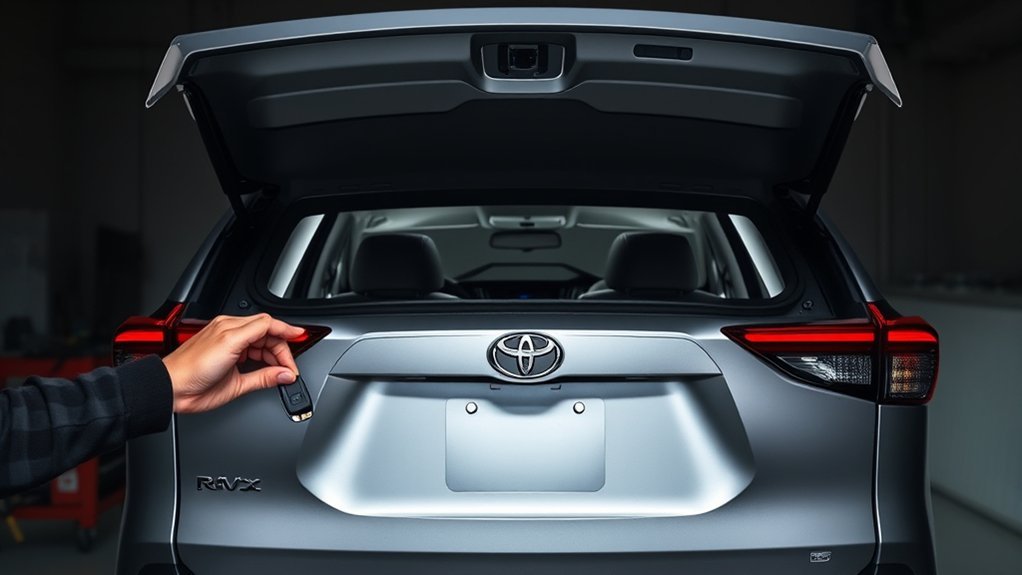
If the liftgate still won’t reach full height after you’ve set “Power Back Door” to level 5, systematically verify the software setting, then inspect for mechanical or electrical causes; start by confirming the display still shows level 5 and the feature is enabled, then test operation while watching for soft stops, unusual noises, or intermittent movement that indicate interference, binding, or failing actuators. Next, repeat liftgate adjustments and run one controlled cycle: close fully, wait five seconds, then reopen while observing travel and listening for friction or stall points. Use basic troubleshooting techniques: swap user profiles if available, cycle ignition power, and perform a manual reposition to confirm the physical stop. Log any changes or reversion to previous settings. If the liftgate behavior remains inconsistent after these focused checks, avoid extensive DIY disassembly; seek a technician who can diagnose actuator health, sensor feedback, and control-module faults. These steps preserve your autonomy while moving toward a safe, professional resolution.
Mechanical & Electrical Checks for RAV4 Liftgates
Start by inspecting the power module and related fuses in the fuse box to confirm proper power supply and rule out a blown fuse. Then examine the liftgate motor and actuators for wear, damage, or abnormal noises during operation. Finally, trace the wiring harness for corrosion or breaks and test continuity to verify signal integrity.
Power Module Inspection
Inspect the power module and its associated wiring systematically: check connectors for corrosion or physical damage, verify the liftgate fuse and relay, and use a multimeter to confirm proper voltage at the module while actuating the liftgate. You’ll perform liftgate diagnostics to isolate electrical failures versus mechanical ones. Inspect connectors, clean corrosion, and reseat plugs. Test the fuse and relay; replace if continuity fails. Measure voltage under load; readings below spec point to wiring faults or a failing power module. Avoid assuming motor failure—this belongs to the motor section. Remove obstructions before concluding electrical causes.
| Item inspected | Action required |
|---|---|
| Connectors | Clean, reseat, inspect |
| Fuse/Relay | Continuity test, replace |
| Module voltage | Multimeter under load |
| Obstructions | Clear pathway |
Motor And Actuator Check
While checking the motor and actuator, listen and observe for signs of mechanical failure—grinding, humming without movement, or intermittent engagement—because those noises point to worn brushes, seized gears, or a failing actuator rather than an electrical fault. You’ll inspect the actuator for visible damage, bent links, or play at pivots; loose or corroded terminals at the motor and actuator must be cleaned and tightened to restore reliable power delivery. If motion is weak or erratic, perform a controlled actuator adjustment to eliminate binding and verify range of travel. When the motor fails to respond despite good connections and correct voltage, plan motor replacement using OEM-equivalent units and follow torque and alignment specs. Test operation after service to confirm liberated, consistent liftgate function.
Wiring And Fuse Diagnostics
Wiring and fuse diagnostics focus on verifying that the liftgate’s electrical path is intact and delivering power when commanded, so begin by visually tracing the harness for chafes, pinched sections, or loose connectors at the strut, latch, and body harness junctions. Perform a wiring inspection: look for exposed conductors, corrosion, or broken insulation; flex the harness while watching connectors for intermittent faults. Test the power liftgate switch with a diagnostic tool to rule out control-side failures. Locate and inspect the liftgate fuse in the under-dash or engine bay fuse box; perform fuse replacement if blown, using the correct amp rating. Use a multimeter to measure voltage at the liftgate motor while activating the gate; no or low voltage indicates wiring, switch, or fuse faults needing focused repair.
Resetting and Relearning Liftgate Travel Limits
If the RAV4’s power liftgate isn’t stopping where you want, start by fully closing the trunk and press-and-hold the liftgate button on the key fob until you hear a beep to initiate a travel-limit reset. Once you hear the beep, open the liftgate to the exact position you prefer; this is where your liftgate adjustments and height calibration happen. Press and hold the interior liftgate switch for at least three seconds to save that position. Confirm by closing and reopening the liftgate; repeat the sequence if the new limit isn’t recognized. Check the vehicle display to verify power back door settings are enabled before troubleshooting further. Expect to attempt relearning several times to guarantee reliable recognition. If the liftgate remains unresponsive to resets or won’t store the height, consult the manual or a professional — persistent failures suggest underlying mechanical or electrical faults that manual relearning won’t resolve.
DIY Vs Dealer: Repair Costs and Options
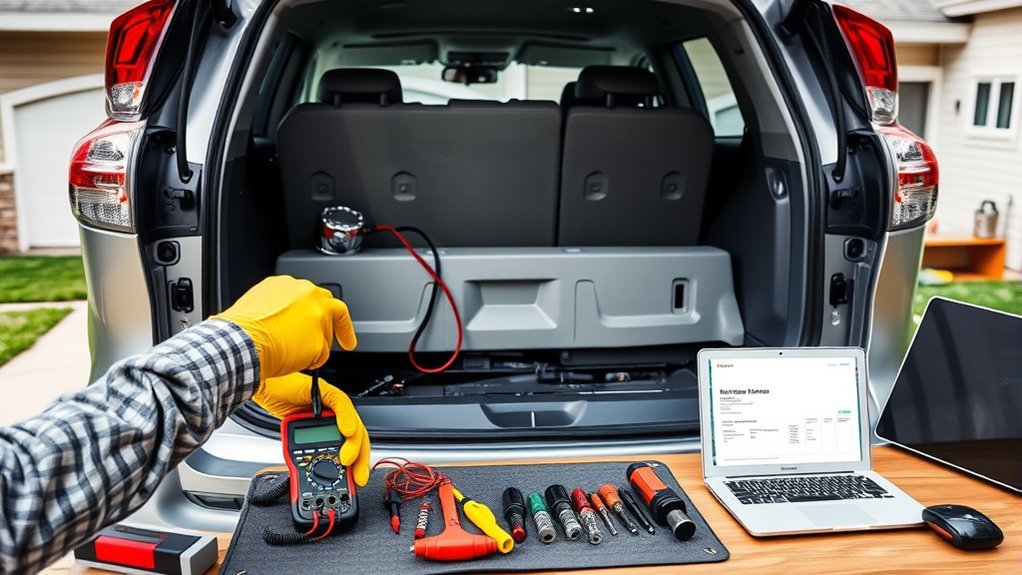
When deciding between DIY and dealer service for a malfunctioning RAV4 power liftgate, compare parts-and-tool costs, time, and warranty implications. You’ll weigh a clear cost comparison: DIY parts run about $50–$150 for struts or switches; dealer bills typically hit $300–$600 after labor and diagnostics. If you’re competent with basic tools, you’ll liberate money and time. If the issue is trunk-height calibration, you might fix it free; a dealer may still charge for diagnostics. Check repair warranties and your vehicle’s warranty status before altering components—dealer work can preserve coverage and limit out-of-pocket risk.
- DIY: parts $50–$150, basic tools, self-timed, no dealer repair warranties
- Dealer: $300–$600, professional diagnostics, labor included
- Calibration-only: often no-cost DIY; dealer may charge
- Warranty check: dealer work may be covered; DIY could void claims
- Skill assessment: choose DIY only if you accept responsibility and risk
Decide methodically to maximize savings while protecting warranty rights.
User Tips, Reporting Persistent Issues, and Community Advice
Although it’s tempting to assume a mechanical fault, start by verifying and adjusting your Power Back Door settings and trunk-height level (set to 5 for maximum lift) via the vehicle display, then test the lift after each change. You’ll confirm whether configuration, not hardware, limits travel. Enable Power Back Door, record each setting, and retest systematically. If the gate still underperforms, reassess recent changes and repeat tests.
| Step | Action | Feeling |
|---|---|---|
| 1 | Set height to 5 | Relief |
| 2 | Enable Power Back Door | Control |
| 3 | Test after change | Confidence |
| 4 | Reassess if needed | Resolve |
| 5 | Share outcome | Solidarity |
Report persistent issues with clear notes: settings tried, timestamps, and symptoms. Share user experiences in forums and ask focused questions to elicit practical community solutions. Use concise logs when contacting dealers; liberation comes from documented, repeatable troubleshooting that shifts power to you.
Frequently Asked Questions
Why Is My Toyota Power Tailgate Not Working?
Your tailgate malfunctions often from settings, obstructions, wiring, or actuator faults; you’ll test power liftgate solutions by checking “Power Back Door” settings, clearing obstructions, inspecting connectors, and running diagnostics to reclaim reliable, liberated function.
Conclusion
You’ve got a systematic solution set: set the RAV4’s power liftgate to level 5, scan settings from the steering wheel, and safeguard with simple safety checks. Swiftly spot sensor or strut stress,seguing into mechanical or electrical diagnosis if needed. Reset and relearn travel limits before costly dealer calls. Decide DIY or dealer by cost, capability and confidence. Share stubborn symptoms with forums or pros—collective counsel often clarifies complex, chronic concerns.