
If your RAV4 shows a “Hybrid System Malfunction” message, don’t keep driving—you’ll risk overheating, electrical faults, or limp mode. Stop safely, check the 12V battery (12.4–12.8V resting), inspect hybrid/system fuses and HV/low-voltage connectors, and verify inverter coolant level and for leaks. Use an OBD-II or Carista tool to pull DTCs but don’t just clear codes. If symptoms persist or you’re unsure, get a hybrid-trained technician; more actionable checks and repair options follow.
Can I Drive a RAV4 With a Hybrid System Malfunction?

Can you safely drive a RAV4 after a hybrid system malfunction? You shouldn’t. A hybrid system malfunction warning signals potential overheating or electrical faults that compromise hybrid efficiency and drivetrain control. If you drive, you risk activating limp mode, which limits power and can strand you; you also increase the likelihood of cascading damage that raises repair costs. Expect symptoms like poor acceleration, reduced fuel economy, or the engine running on fuel alone—each indicating the hybrid components aren’t functioning at their best. Your objective is liberation from uncertainty: secure the vehicle, avoid further stress on components, and pursue definitive electrical diagnostics. A professional technician will perform targeted tests—scanning fault codes, evaluating battery and inverter status, and confirming cooling integrity—to determine if short-term movement is safe. Don’t improvise repairs or continue normal driving. Prioritize inspection and repair so you regain reliable hybrid efficiency and control without risking safety or expensive secondary failures.
Quick Hybrid Checks to Do Now (Fuse, 12V, Inverter Coolant, Warning Behavior)
After you stop driving and secure the vehicle, perform a set of rapid checks that can identify common, fixable causes of a hybrid system malfunction. Begin with a focused fuse inspection: locate the hybrid/system fuse box, visually and with a meter confirm continuity, and replace any blown fuses to eliminate shorts or overloads. Next measure the 12V battery voltage at the terminals; you need 12.4–12.8 volts for stable control-module operation—replace or charge the battery if below range. Then inspect inverter coolant: check level against low/high markers, top with manufacturer coolant only, and look for leaks or contamination that can produce overheating faults. Concurrently monitor warning behavior—note abnormal noises, reduced acceleration, or sudden fuel-economy loss—and document conditions and times. These checks don’t require deep teardown, they isolate simple failures, and they empower you to act decisively or provide precise data to a technician for swift repair.
Read and Clear Hybrid Codes (OBD, Carista): What Will Actually Reset the Light
When you see a hybrid-system warning, start by pulling diagnostic trouble codes (DTCs) with an OBD-II reader or the Carista app to identify the exact fault and its freeze-frame data. You’ll use code readers and diagnostic tools to record codes, note occurrence conditions, and verify whether the fault is active or historic. Carista gives a guided, user-friendly interface; dedicated OBD-II tools often expose raw PID data and status bits you can’t get from generic scans. Ask auto parts stores whether they’ll clear codes—many scan free but won’t erase due to liability. Clearing a code without fixing the root cause only silences the indicator temporarily; persistent faults will re-trigger the light. If codes indicate a transient event, clearing via Carista or an OBD-II tool will reset the lamp. As a last resort, battery disconnection can clear persistent warnings but use caution: you’ll reset learned parameters. Track codes after reset to confirm the issue is resolved and regain control of your vehicle’s performance.
DIY Fixes You Can Safely Try at Home (Battery, Fuses, Connectors, Coolant)
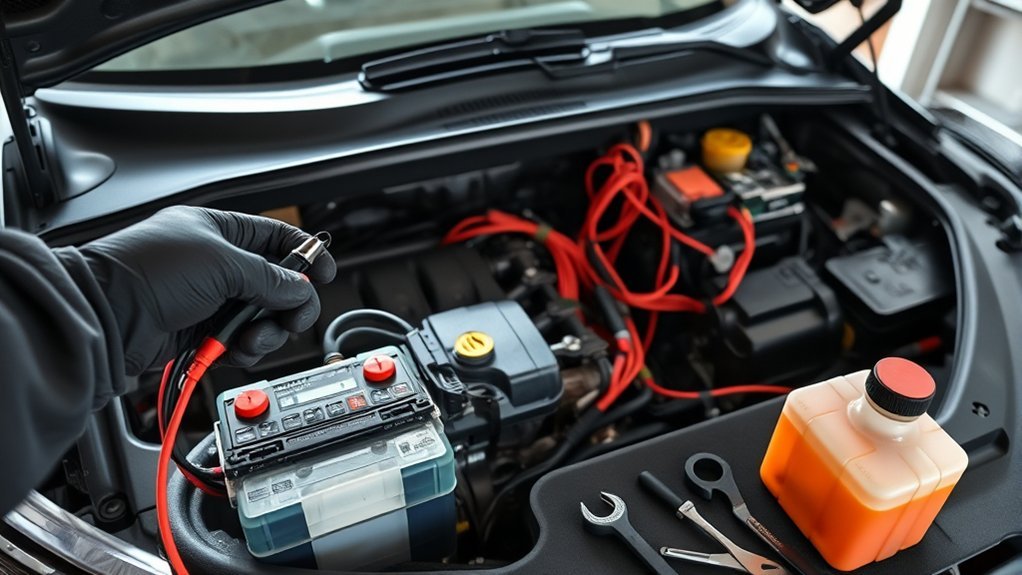
Although hybrid-system warnings can stem from complex failures, several straightforward checks you can do at home often reveal and resolve the problem: measure the 12V battery voltage with a multimeter; it should sit between 12.4 and 12.8 volts. If lower, perform basic battery maintenance—clean terminals, tighten clamps, and recharge or replace the battery as needed. Next, perform a systematic fuse inspection: remove and visually check hybrid-system fuses for continuity or damage, swapping with identical spare fuses only when the ignition is off. Inspect hybrid coolant level against low/high marks; top with specified coolant to restore proper thermal control. Finally, examine all high- and low-voltage connectors for corrosion, bent pins, or looseness; clean contacts with contact cleaner and reseat securely. After these steps, use an OBD-II reader or the Carista app to read and clear fault codes, confirming whether the warning clears or further diagnostics are required.
When to Stop Driving and Call for Professional Hybrid Diagnostics
If your RAV4 displays a hybrid system malfunction, stop driving immediately and shift the vehicle to a safe, level location; continuing to drive risks worsening damage to the high-voltage battery, inverter, or associated cooling systems. You’ll call for professional hybrid diagnostics when warning lights persist, acceleration drops, unusual noises appear, or fuel economy declines—these malfunction symptoms indicate failures beyond basic DIY fixes. Don’t attempt extended operation: overheating, limp mode, and cascading component damage follow. Arrange transport or roadside assistance to a certified hybrid technician who uses factory-grade diagnostic tools and follows methodical test sequences: battery state-of-charge and insulation checks, inverter error-code analysis, cooling-system pressure and flow verification, and live-data logging under load. That specialist isolation of fault codes liberates you from guesswork and prevents unnecessary part replacement. Prioritize technicians with hybrid training and the proper diagnostic tools so the service is accurate, reproducible, and restores safe, efficient operation without compromising your control or freedom.
Costs and Service Choices: Dealer vs Independent vs Mobile Tech
Choosing where to get hybrid repairs hinges on balancing expertise, tooling, and cost: dealerships offer factory-trained technicians and full hybrid diagnostic suites but bill $100–$200/hour (with diagnostics often $100–$150), independents can be 20–30% cheaper yet vary widely in hybrid experience, and mobile techs provide convenience and flat-rate services but may lack dealer-grade tools.
| Option | Trade-offs |
|---|---|
| Dealer | Highest Service Quality, warranty alignment, higher Cost Comparison |
| Independent | Lower rates, variable hybrid competence |
| Mobile Tech | Convenient, flat-rate, limited tooling |
| Warranty Impact | Dealer work often covered; independents/mobile may not be |
| Diagnostics | Dealer fees $100–$150; independents often lower or free |
You’ll evaluate Cost Comparison against Service Quality and your need for warranty protection. Prioritize dealer service for complex hybrid faults or active warranties; choose a vetted independent for routine, budget-conscious repairs; opt for a mobile tech for simple, time-sensitive fixes when tooling needs are low. Make choices that free you from uncertainty and lock you into reliable outcomes.
Preventing Future Hybrid System Malfunction (Maintenance Checklist and Parts to Avoid)
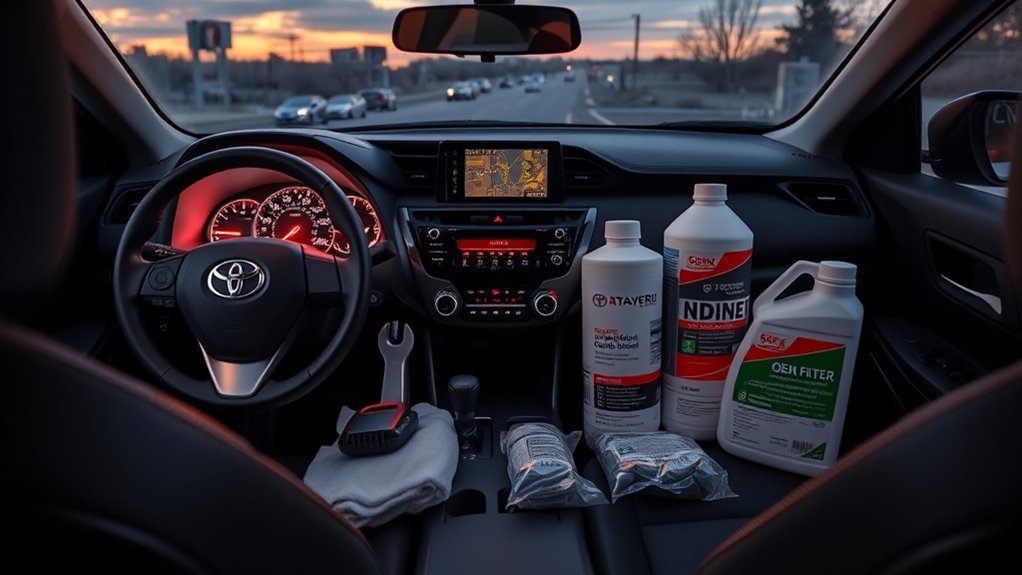
Start by scheduling routine checks of the hybrid battery filter, 12V battery voltage (maintain 12.4–12.8 V), and inverter coolant level to prevent overheating and system warnings. Inspect the hybrid cooling fan operation and clean or replace the battery filter as needed to preserve thermal management. For repairs, use only high‑quality OEM or equivalent parts and avoid low‑grade components that commonly cause repeat failures.
Regular Battery And Coolant Checks
When you maintain the RAV4’s hybrid electrical system, routinely verify the 12V battery voltage (12.4–12.8 V nominal) and inspect hybrid and inverter coolant levels against their low/high marks, since voltage sag or low coolant are common precursors to inverter shutdowns and battery overheating. You’ll perform battery maintenance by measuring resting and loaded voltages, checking terminals for corrosion, and confirming secure mounts to prevent vibration-induced faults. For coolant monitoring, open reservoirs only when cold, confirm level between marks, and inspect hoses and fittings for leaks or swelling. Also examine the hybrid battery cooling fan for blockages or blade damage to guarantee airflow. Log readings and intervals so you can act decisively—freedom from breakdowns comes from disciplined, regular checks.
Use Quality Replacement Parts
One clear rule: fit only high-quality, compatible replacement parts—prefer OEM or certified equivalents—for hybrid system work to guarantee correct electrical characteristics, mechanical fit, and thermal performance. You’ll reduce failures by insisting on OEM Parts and suppliers that meet formal Reliability Standards and documented Quality Assurance procedures. Inspect and replace worn fans, inverter coolant lines, filters, connectors, batteries, and wiring harnesses on schedule to maintain Component Compatibility and prevent overheating or corrosion-induced faults. Use certified service providers who validate parts with test reports and torque/spec checks, and reject cheap substitutes lacking traceability. That disciplined approach liberates you from recurring warnings and unplanned downtime by preserving system integrity, extending service intervals, and ensuring predictable hybrid-system behavior under load.
Frequently Asked Questions
How to Fix Hybrid System Malfunction?
Check fuses, test 12V and hybrid batteries, and replace weak battery replacement promptly; inspect cooling fan and inverter coolant, run diagnostic tools to read codes, clear faults, and call a hybrid-trained mechanic if problems persist.
Is It Safe to Drive With Hybrid System Malfunction?
No, you shouldn’t drive with a hybrid system malfunction; hybrid safety’s compromised. If warning lights appear, stop safely, avoid long trips, and get professional diagnostics to prevent overheating, further damage, or becoming stranded.
What Is the Most Common Problem With a Toyota RAV4 Hybrid?
About 60% of failures trace to hybrid battery issues; you’ll see degraded engine performance, inverter faults or blown fuses. You should diagnose battery state, inspect inverter cooling, and address wiring systematically to reclaim reliable, liberated mobility.
Conclusion
So you can keep driving—until you can’t. Check the 12V, fuses, coolant and connectors methodically, read hybrid codes, clear nothing except after real repair, and don’t pretend a reset is a fix. DIY simple parts swaps only if you follow torque, polarity and isolation procedures; otherwise stop and get professional diagnostics. Ironically, the hybrid system won’t thank you for optimism—mechanical rigor, not wishful thinking, prevents expensive failures.