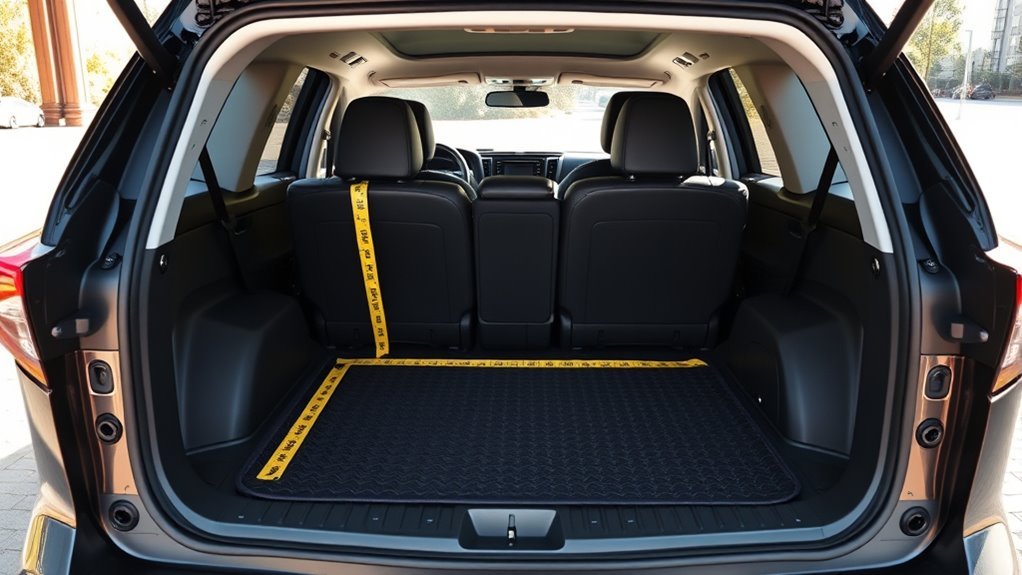
You’ll get clear, model-specific cargo figures: the RAV4 and RAV4 Hybrid offer 69.8 cu ft with rear seats folded, the RAV4 Prime (plug‑in) provides 63.2 cu ft, and seat‑up volumes are 37.6 cu ft (RAV4/Hybrid) and 33.5 cu ft (Prime). Seats fold 60/40 for flexible layouts, the load floor is low and flat, and battery placement reduces Prime capacity. Keep dimensions and tie‑down points in mind — continue for practical packing and fit guidance.
RAV4 Cargo Quick Specs (Seats Folded)
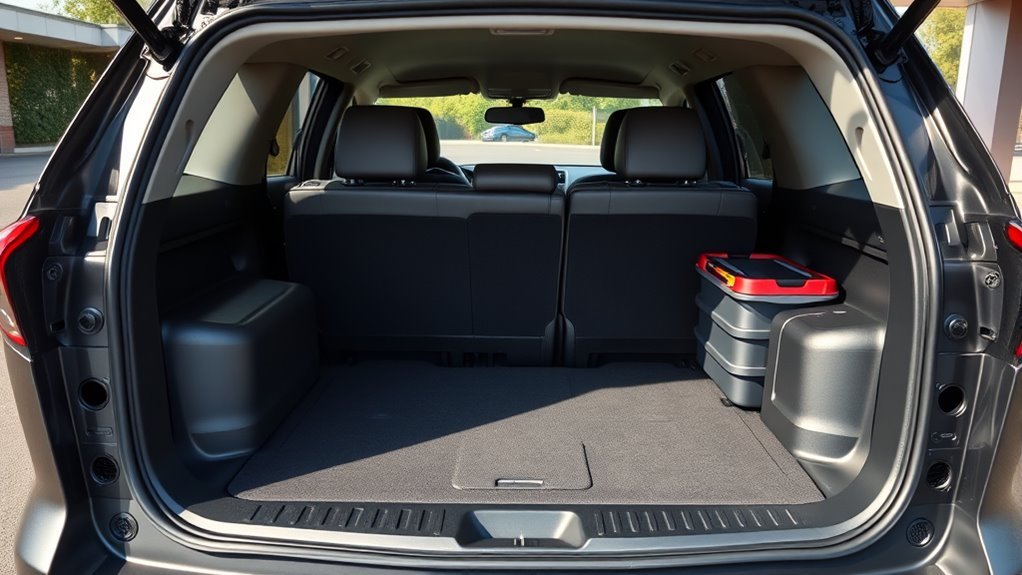
The RAV4 gives you up to 69.8 cubic feet of cargo space with the rear seats folded, and 63.2 cubic feet on the Plug‑in Hybrid model, providing substantial room for large loads. You’ll use the 60/40 split-folding seats to tailor capacity: fold a section to carry long items while preserving a passenger seat, or fold both for full cargo breadth. The flat cargo area and low load floor reduce lift height and minimize tilt, so you’ll position heavy gear with less strain. These attributes emphasize RAV4 versatility, letting you convert passenger volume into utility quickly and predictably. For efficient loading techniques, slide bulky objects in parallel to the load floor, distribute weight evenly over the axle line, and secure items using tie-downs to prevent shift. With rear seats up, you still get 37.6 cubic feet for daily needs. The result is a system that frees you from cargo compromises, enabling pragmatic decisions and confident hauling without unnecessary effort.
Cargo Volume by Model & Seat Config
While model choice changes a few cubic feet, cargo flexibility stays clear: the RAV4 and RAV4 Hybrid deliver up to 69.8 cu ft with the rear seats folded and 37.6 cu ft with them up, whereas the Plug‑in Hybrid tops out at 63.2 cu ft folded. You’ll use those figures to plan load capacity and spatial arrangements within the vehicle envelope. The RAV4’s 60/40 split-folding rear seats let you tailor passenger vs. cargo needs without compromise; fold one side for long items and keep the other for a passenger. Low load floor geometry reduces lift height and increases usable space, so real-world RAV4 dimensions feel larger than raw numbers imply. For liberation-focused drivers, that means fewer constraints and more spontaneous utility. Apply systematic cargo organization: choose seat combinations that match item length and volume, exploit the flat folded surface, and leverage the low threshold for efficient loading. The result is predictable capacity and adaptable interior geometry across models.
What Fits in RAV4 Cargo (Luggage, Bikes, Boards)
Cargo capacity numbers translate directly to real items: with up to 69.8 cu ft folded you can load a full-size bike (front wheel removed) or three to four large suitcases, while 37.6 cu ft behind the seats handles several medium duffels or weekend gear. You’ll fit varied luggage types—carry-ons, checked bags, soft duffels—within the 38.5-inch width and 32.5-inch depth, stacking efficiently with minimal wasted space. For bike sizes, full-size mountain and road frames fit when you remove the front wheel; XL frames may need diagonal placement. Use the 60/40 split-folding seats to accept long board lengths—short surfboards, snowboards, and most skateboards—while keeping a passenger. The low load floor eases heavy lifts and reduces strain when loading camping gear or furniture. Prioritize cargo organization by grouping soft items to fill gaps, securing bikes and boards to prevent shift, and using one folded seat section for awkward lengths. You’ll free yourself to carry diverse gear without compromise.
How Hybrid & Plug‑In Models Change Cargo Space
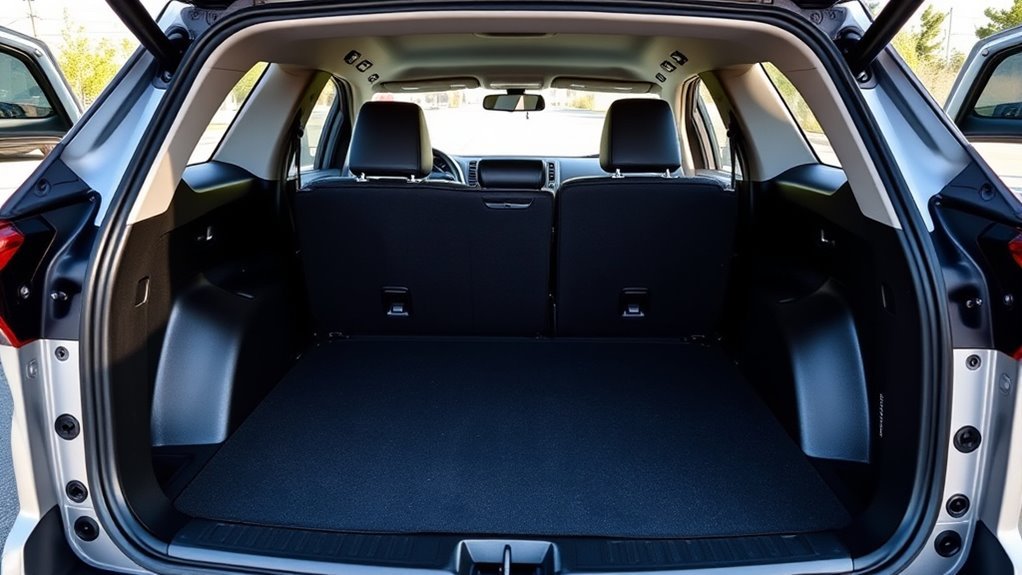
If you opt for the plug‑in hybrid, expect a measurable but modest drop in usable space: the RAV4 and RAV4 Hybrid provide up to 69.8 cu ft with the rear seats folded and 37.6 cu ft behind the seats, while the RAV4 Prime (plug‑in) offers 63.2 cu ft folded and 33.5 cu ft behind the seats due to battery placement that encroaches on the cargo bay. You’ll trade a bit of volume for hybrid efficiency and lower emissions. The Prime’s underfloor and rear battery packaging reduces both maximum and behind‑seat volume compared with standard and hybrid models, but usable dimensions remain substantial for daily needs. If you prioritize liberated mobility and lower fuel use, the RAV4 Hybrid and Prime still deliver practical cargo versatility despite the Prime’s slight deficit. Assess your regular load patterns: if you frequently haul oversized items, the non‑plug RAV4 variants retain the largest capacity; if you value electrified range and efficiency, accept a modest cargo compromise.
Maximizing RAV4 Cargo Space: Seat Folds, Floor & Tie‑Downs
Folded flat, the RAV4 gives you up to 69.8 cu ft of usable space and a mostly flat load floor that makes loading heavy or bulky items straightforward. You’ll use the 60/40 split-folding seats to configure passenger and freight space, sliding long items alongside remaining seating. The low load floor reduces lifting height and risk, improving your loading techniques for dense loads. Fixed tie-down points let you restrain gear and prevent shifting, contributing to efficient cargo organization and safer transit.
- Imagine a flat platform for boxes, furniture, or bikes secured at four points.
- Visualize a long surfboard angled through a folded 60% seat with a passenger seated behind.
- Picture heavy crates slid onto the low floor and fastened to tie-down anchors.
- Envision staggered stacks that use the full 69.8 cu ft while leaving a clear walkway.
You’ll gain predictable space, simple restraint options, and adaptable layouts that free you to carry more with control.
Quick Packing Checklist & How to Measure Your Items
Measure the cargo depth (≈32.5 in), width (≈38.5 in), and height (≈34–34.5 in) to confirm item fit before loading. Prioritize items by size and fragility—place large, low items first, then stack smaller or softer goods, using the 60/40 split seats as needed. You can fold one side for long items while retaining passenger space on the other.
Measure Key Dimensions
Start by noting the RAV4’s key cargo dimensions so you can confidently plan what fits: maximum cargo capacity is 69.8 cu ft with rear seats down, depth from the ledge to the back is about 32.5 in, width measures roughly 38.5 in, and height reaches approximately 34–34.5 in with the cargo floor lowered. Use simple measuring techniques and cargo organization tips to free yourself from guesswork. Measure your items’ length, width, and height, then compare to RAV4 limits. Think modular packing and use the 60/40 split to retain a passenger while expanding cargo. Visualize placements:
- Long items along the depth (32.5 in) with padding
- Wide items centered within 38.5 in
- Tall objects under 34–34.5 in
- Odd shapes nested or tilted to optimize volume
Packing Priority List
Because space is finite, prioritize items that affect safety and balance first: place heavy gear low and toward the front of the cargo area, then layer medium-weight boxes, and finish with light, compressible items on top or in gaps. Use the RAV4’s 69.8 cu ft with seats folded and the 32.5-inch depth to plan fits. Measure length, width, height for each item, note 60/40 seat options for mixed loads, and secure with tie-down points. Focus on cargo organization and weight distribution to reduce sway and maintain control.
| Priority | Placement | Examples |
|---|---|---|
| High | Front, low | Toolbox, batteries |
| Medium | Mid-level | Boxes, soft cases |
| Low | Top/gaps | Clothing, pillows |
Frequently Asked Questions
Is RAV4 Cargo Space Bigger With Seats Down?
Yes—you’ll get more space with folded seats; this expands storage options to a maximum 69.8 cubic feet, giving a low load floor and flexible 60/40 configurations so you can carry larger items and free yourself.
Which RAV4 Model Has the Most Cargo Space?
You’ll get the most cargo space with the RAV4 and RAV4 Hybrid; imagine a roomy vault swallowing gear. Your RAV4 comparisons show superior cargo efficiency, freeing you to load, adapt, and move without compromise.
Conclusion
You’ve got the numbers and techniques to treat your RAV4’s cargo area like a precision tool: fold the seats flat, lower the floor where available, and use tie‑downs to secure loads. Measure gear against listed cubic feet and the flat load length before you pack. Whether hauling suitcases, bikes or boards, apply these specs and steps and you’ll fit more reliably—every inch accounted for, every trip engineered for efficiency.