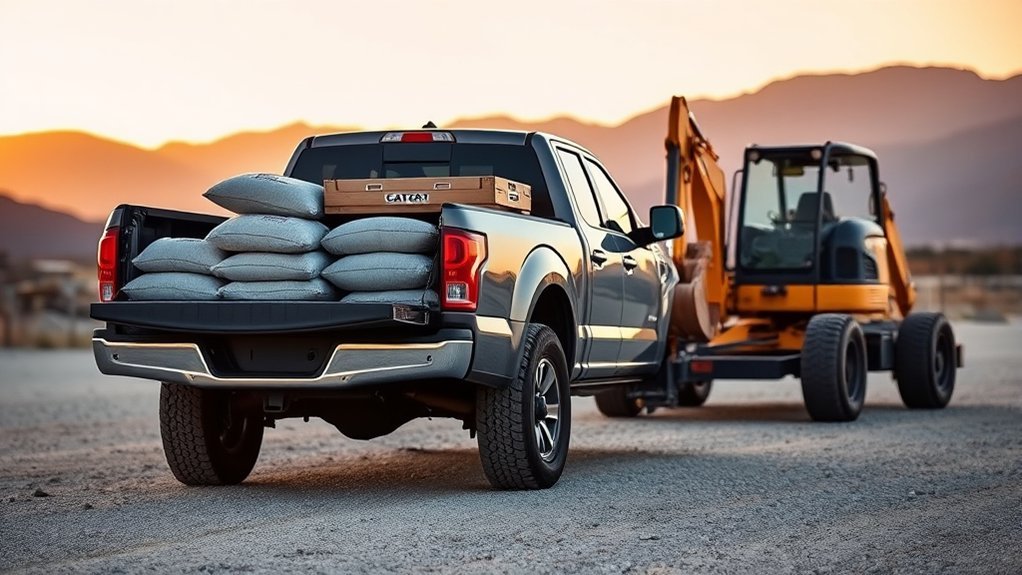
Quick answer: You need to treat payload and towing capacity as separate limits. Payload is what you can carry inside the cab and bed (GVWR minus curb weight) and includes passengers, tools, and cargo. Towing capacity is what you can pull behind the vehicle and depends on hitch, drivetrain, and GCVWR; tongue weight is about 10–15% of trailer weight. Exceeding either risks brakes, handling, or warranty issues, and the next sections explain how to calculate and apply them.
Quick Answer: Which Capacity Matters?
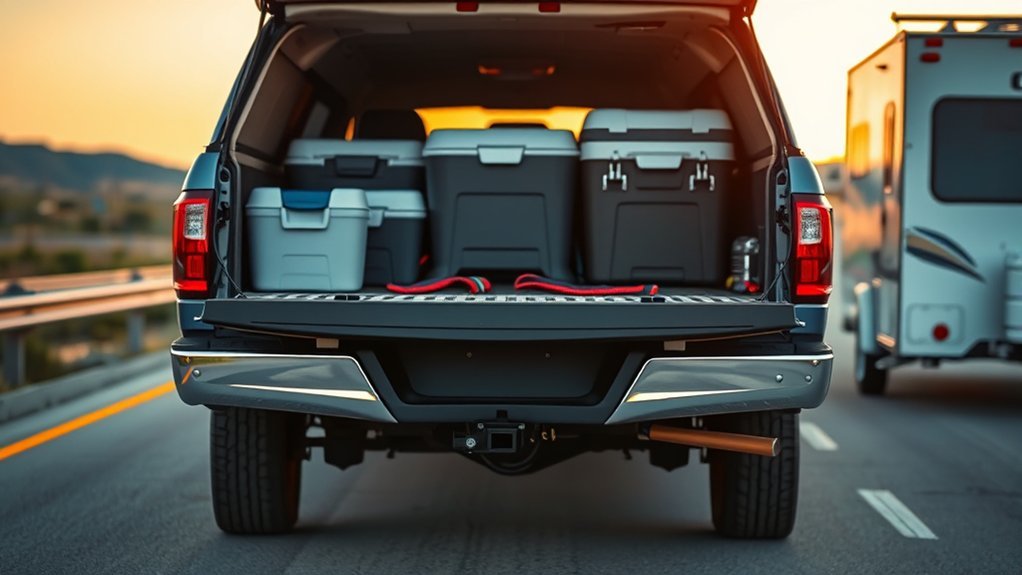
Which matters more: payload or towing capacity? You decide based on mission: payload governs the weight you carry in the bed and passengers; towing capacity governs the mass you pull behind, often larger because trailer types place much of their weight onto their own axles, reducing load on the truck. You’ll prioritize payload when you need to transport people, tools, or concentrated cargo that sits on the chassis; exceed it and you risk suspension, brake, and steering failures. You’ll prioritize towing capacity for trailers, RVs, or heavy equipment where gross trailer weight and tongue load interact with the truck’s hitch rating. Consult the owner’s manual for both ratings and respect weight distribution principles—proper tongue weight and hitch setup move forces correctly between vehicle and trailer axles. For liberation, use these technical limits to expand capability safely: match equipment to ratings, adjust load placement, and never substitute optimism for measured capacity.
What Is Payload Capacity?
When you’re deciding whether to prioritize payload or towing capacity, you also need to understand what payload capacity actually measures: it’s the maximum weight your vehicle can carry in the cab and bed, including passengers and cargo, as set by the manufacturer. You’ll use payload definitions to interpret vehicle labels and compute capacity: Payload = GVWR – Curb Weight. That calculation gives you the legal, engineered limit; exceeding it risks brake failure, loss of control, and accelerated wear.
| Item | Approx Weight | Note |
|---|---|---|
| 1/4 cord wood | 1,250 lbs | Typical payload example |
| 0.5 yd sand | 1,300–1,500 lbs | Dense load |
| Passengers | Variable | Include in total |
| Cargo | Variable | Distribute evenly |
| Vehicle manual | N/A | Consult for exact value |
You’ll assess capacity implications before loading: check the owner’s manual, add passenger weight, and stay within the rated payload to preserve safety and vehicle freedom.
What Is Towing Capacity?
Towing capacity is the maximum weight your vehicle can safely pull behind it—including trailers loaded with boats, campers, or cargo—and it’s set by the manufacturer to prevent drivetrain, brake, and handling failures. You’ll find that rating in the owner’s manual or on the door jamb sticker; it reflects engineering limits, not bravado. Manufacturers set towing capacity using design margins; respect that limit to avoid transmission failure, brake compromise, and loss of control.
Don’t let towing myths convince you heavier is harmless. Your effective towing limit changes with passengers and cargo, because added weight reduces the margin between Gross Combined Vehicle Weight Rating (GCVWR) and curb weight. Exceeding capacity strains components and endangers you and others. Embrace towing safety: verify the published rating before hitching, account for all onboard weight, and choose equipment rated to match. Doing so frees you to tow confidently and responsibly, asserting control rather than risking mechanical breakdown or unsafe handling.
Calculate & Compare: Formulas, Tongue Weight, Example
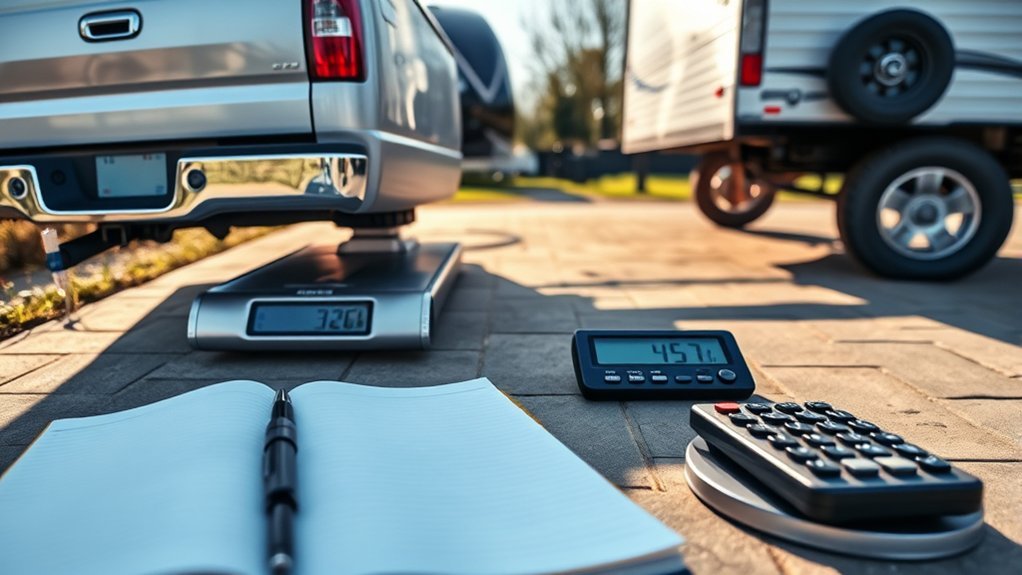
Because accurate numbers determine safe limits, you should calculate payload and towing capacities with simple subtraction: payload = GVWR − curb weight, and towing capacity = GCVWR − curb weight. Use those formulas to see payload implications clearly: payload is what you can carry in the vehicle, towing capacity is what you can pull. Remember tongue weight — typically 10–15% of trailer weight — and include it in your towing considerations for stability.
| Parameter | Formula/Value | Note |
|---|---|---|
| Curb weight | 5,000 lbs | Base vehicle mass |
| GVWR | 10,000 lbs | Max vehicle + payload |
| Payload capacity | 5,000 lbs | GVWR − curb weight |
| Tongue weight | 10–15% | Of trailer weight; affects handling |
| Towing capacity | GCVWR − curb weight | Varies; up to ~22,000 lbs on some trucks |
Account for aftermarket additions, which raise curb weight and reduce both capacities. Calculate before loading to stay safe and free to move.
When to Haul vs Tow: Rules, Common Mistakes, Safety Checklist
If you plan to move heavy loads, decide whether to haul them in the bed or tow them on a trailer by comparing payload to towing capacity and accounting for tongue weight and added equipment; exceed either limit and you compromise safety, handling, and component life. You’ll choose hauling when cargo fits the bed and stays under payload capacity; use hauling techniques that centralize mass, secure loads, and avoid overhangs that shift center of gravity. Opt for towing when total cargo exceeds payload or needs trailer containment—verify towing capacity, hitch rating, and that trailer weight plus tongue weight stay within limits. Common mistakes include ignoring tongue weight (should be 10–15% of trailer mass), mismatched hitch size, and neglected tire pressures. Use this safety checklist before departure: confirm payload/towing numbers, check hitch and coupler, verify tongue weight, inspect tires and lights, and distribute weight to prevent sway. Follow towing essentials to preserve control, reduce wear, and keep your freedom on the road.
Frequently Asked Questions
What Does a 4000 Lb Payload Mean?
A 4000 lb payload means you can legally carry four thousand pounds total inside the truck; you’ll respect payload limitations, gain payload benefits like maximized utility, and avoid safety issues by calculating passengers, cargo, and equipment precisely.
What Does It Mean When It Says Payload Capacity?
Payload definition: it’s the max weight your vehicle can carry (cargo, passengers, accessories). You’ll respect Importance factors like GVWR minus curb weight, axle limits, and safety margins to maintain control, longevity, and freedom on the road.
Conclusion
You’ve seen that payload and towing capacity serve different jobs: payload covers what’s in or on your vehicle, towing covers what’s behind it. When you load the bed and hitch a trailer at the same time, those limits coincide—both matter. Always calculate payload (passengers + cargo + tongue weight) and compare to towing limits before you hitch. Stay within both numbers, use proper hitching and weight distribution, and you’ll keep control, brakes and suspension working safely.