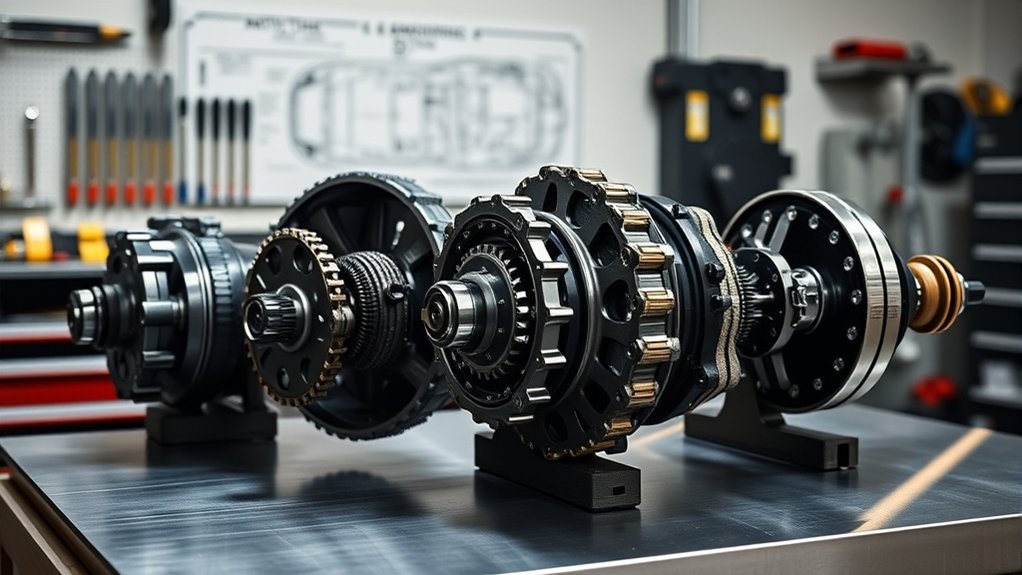
An open differential and a locked differential solve the same basic problem in very different ways. An open differential lets the left and right wheels on an axle rotate at different speeds, which makes normal turning smooth and predictable. A locked differential forces both wheels on that axle to rotate together, which can greatly improve traction off-road but can hurt handling on pavement.
Quick Answer
For daily driving, an open differential is usually better because it corners smoothly, reduces tire scrub, and feels predictable on paved roads. For slow off-road driving, deep mud, snow, rocks, or uneven trails, a locked differential is better because it keeps both wheels on the axle pulling together.
Key Takeaways
- Open differentials are best for normal street driving, smooth turns, and predictable handling.
- Locked differentials are best for low-speed, low-traction situations where one tire may lift or spin.
- A locked differential can cause tire scrub, hopping, understeer, or driveline stress if used on high-traction pavement.
- Limited-slip and electronic locking differentials sit between the two extremes, giving added traction with better road manners.
- The right choice depends on how you drive: commuting, towing, racing, overlanding, rock crawling, snow, or mixed use.
What Is an Open Differential and How Does It Work?
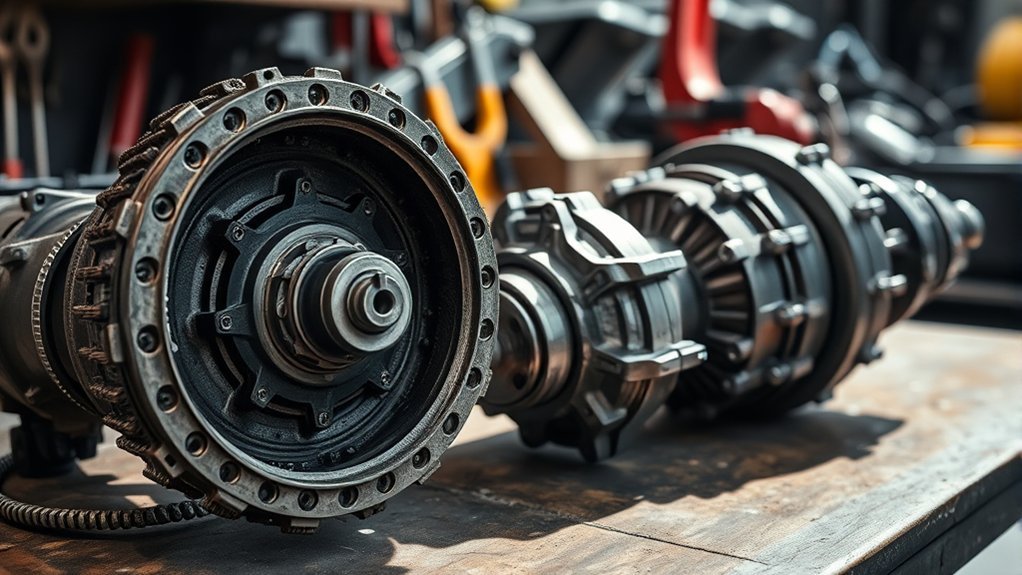
An open differential is the standard differential design found in many passenger cars, crossovers, and light trucks. Its job is to let the two wheels on the same axle rotate at different speeds while still receiving engine power. This matters because the outside tire travels farther than the inside tire during a turn.
In normal cornering, that speed difference is helpful. It reduces tire scrub, improves stability, and keeps the vehicle easier to control. That is why open differentials are common on vehicles built mainly for paved-road use.
The drawback appears when one tire has much less grip than the other. Because an open differential sends the same usable torque through both axle shafts, the low-traction wheel can spin while the tire with grip receives too little torque to move the vehicle. This is why a vehicle with an open differential may get stuck with one wheel spinning in mud, snow, loose gravel, or when a tire is lifted off the ground.
Note: A common misconception is that an open differential “sends power to the wheel with more traction.” In a stuck situation, the opposite is usually what the driver feels: the wheel with the least grip spins, and the vehicle may not move.
Benefits of Open Differentials for Everyday Driving
Open differentials are not designed for maximum off-road traction, but they offer real advantages for regular road use. Their biggest strength is smooth, predictable handling.
Stability During Turns
When you turn, the inside and outside wheels need to rotate at different speeds. An open differential allows that difference naturally, which helps the vehicle corner without binding the drivetrain. On dry pavement, wet roads, and everyday city streets, this makes the vehicle feel smoother and easier to control.
For inexperienced drivers, this predictable behavior can be safer than a fully locked axle because the vehicle is less likely to hop, push wide, or scrub the tires during tight turns.
Smooth Handling on Roads
Open differentials also support a quieter, more comfortable ride. They reduce stress on tires and drivetrain parts during parking-lot turns, highway ramps, and normal cornering. Compared with locking differentials, they are mechanically simpler and usually less expensive to service.
For commuters, family vehicles, and drivers who rarely leave paved roads, an open differential is often the most practical choice.
Key Features of Locking Differentials
A locking differential connects both axle shafts so the two wheels rotate at the same speed. This can be done mechanically, automatically, electronically, or through an air-actuated system. ARB, for example, describes its selectable Air Locker as a system that delivers drive to both wheels on an axle when activated, giving the driver more control in low-traction terrain.
The major benefit is simple: when one wheel loses traction, the other wheel can still help move the vehicle. This is why locking differentials are popular in off-road trucks, rock crawlers, overlanding builds, work trucks, and some performance vehicles.
Warning: Do not use a locked differential on high-traction pavement unless your vehicle’s owner’s manual specifically allows it. A locked axle can cause tire scrub, poor steering response, driveline binding, and loss of control during tight turns.
Common Types of Locking Differentials
- Selectable locker: The driver turns the locker on or off with a switch, air system, cable, or electronic control. This gives the best balance for vehicles that drive both on-road and off-road.
- Automatic locker: The differential locks and unlocks based on torque, wheel speed, or internal mechanical action. It can be strong off-road but may feel abrupt on pavement.
- Electronic locking differential: A factory or aftermarket system that locks the axle through an electric actuator, often limited to certain drive modes or speeds.
- Spool or welded differential: Both axle shafts are permanently locked together. This is usually for dedicated racing or off-road use, not normal street driving.
How Locking Differentials Enhance Off-Road Performance
Locking differentials are most useful when traction is uneven from side to side. This often happens when one tire is on rock and the other is in mud, when one tire drops into a rut, or when suspension flex lifts one wheel off the ground.
Improved Traction in Low-Grip Conditions
When the differential is locked, both wheels on the axle keep turning together. That means the wheel with grip can continue pushing or pulling even if the other wheel is slipping. This is especially helpful in mud, snow, sand, loose dirt, and rocky trails.
Chevrolet describes locking differentials as a feature that locks the wheels of an axle together and forces them to turn at the same rate. That is exactly why they can help a truck maintain movement when one side of the axle has poor traction.
Enhanced Obstacle Navigation
Off-road driving often requires slow, controlled movement. A locked differential helps the vehicle crawl over uneven surfaces without relying on wheelspin. This improves control when climbing rocks, crossing ruts, or easing through deep mud.
With a selectable locker, the best practice is to engage it before the obstacle, drive slowly and smoothly, then disengage it once normal traction returns. That approach gives maximum traction when needed without making road handling worse after the obstacle is cleared.
A locked differential is not automatically “better.” It is better only when both wheels need to pull together and smooth cornering is less important than traction.
Open vs. Locked Differential: Side-by-Side Comparison
| Feature | Open Differential | Locked Differential |
|---|---|---|
| Best Use | Daily driving, paved roads, normal turns | Off-road, mud, snow, rocks, uneven terrain |
| Wheel Speed | Wheels can rotate at different speeds | Both wheels rotate at the same speed when locked |
| Cornering Feel | Smooth and predictable | Can bind, hop, or scrub on pavement |
| Traction When One Tire Slips | Weak; spinning tire can limit movement | Strong; wheel with grip can still drive |
| Maintenance | Usually simpler and cheaper | Can require more checks, fluid attention, and actuator service |
| Driver Skill Needed | Low | Moderate to high, especially off-road |
[Products Worth Considering]

These off-road traction boards are designed to help vehicles recover from mud, sand, and snow with reliable grip and easier ramp-up. Their double-sided diamond construction, cross-shaped teeth, and contoured ramps improve traction while the durable polypropylene build stays flexible in harsh conditions. Convenient mounting points, ergonomic handles, and a visible leash make them practical to carry, store, and retrieve when recovery is needed.

These foldable emergency tire traction pads help give your vehicle the grip it needs to get unstuck from snow, ice, mud, or sand. Each lightweight pad is easy to carry and designed with a honeycomb surface and adjustable angle to improve traction across different road conditions. Built to support heavy loads, they make a practical roadside recovery tool for unexpected driving emergencies.
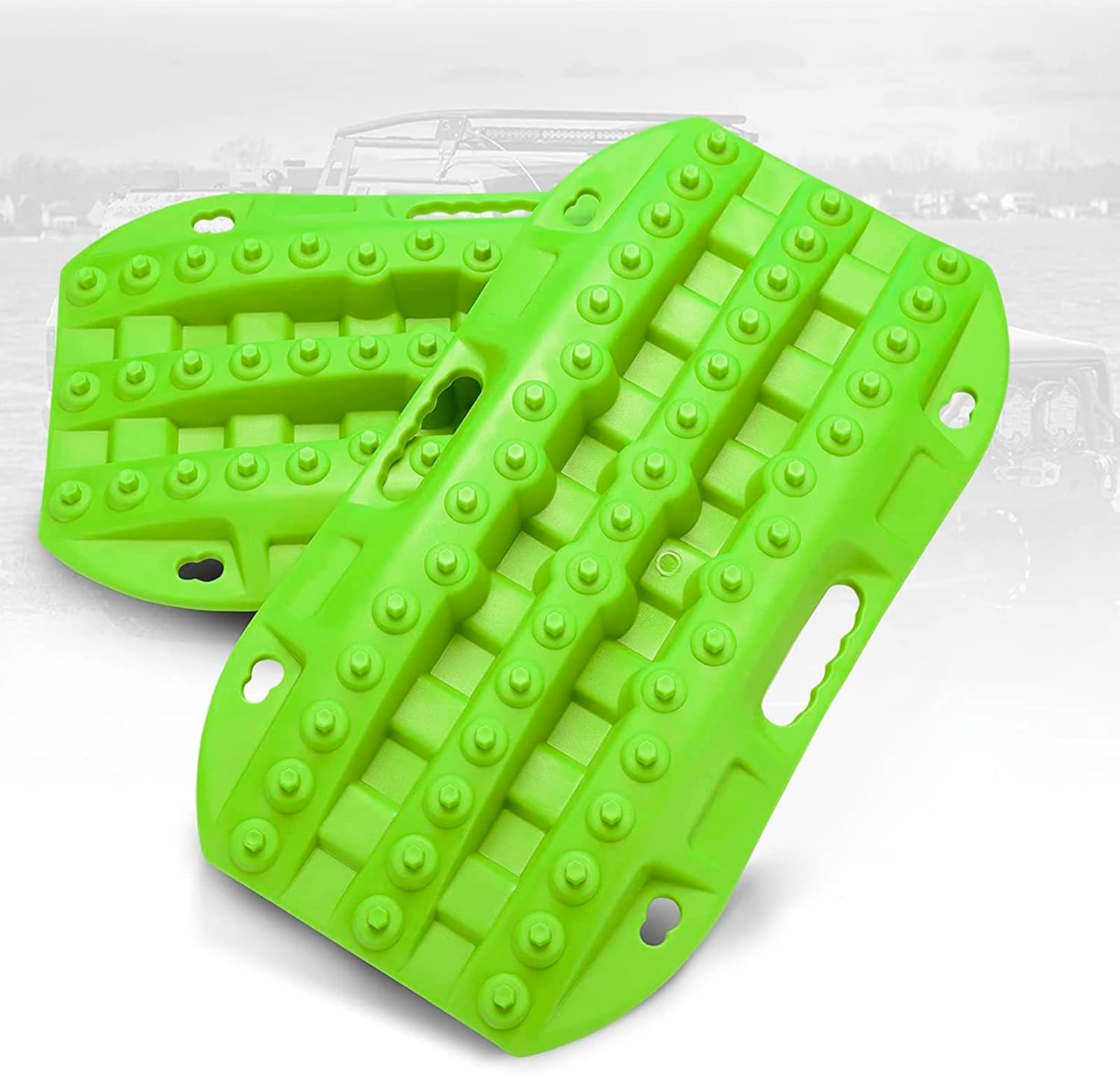
These short recovery traction boards are designed to help ATVs, UTVs, and other off-road vehicles regain grip in mud, sand, and snow. Built with strengthened teeth and a durable polypropylene construction, they provide reliable traction, easy handling, and year-round performance in tough conditions. Their nested, space-saving design and integrated shovels make them practical for carrying and using on remote adventures.
Comparing Posi-Traction and Limited-Slip Differentials
Posi-Traction is General Motors’ well-known trade name for a type of limited-slip differential. In everyday use, people often say “posi” to mean any limited-slip rear end, but technically it refers to GM’s branded design.
A limited-slip differential sits between an open differential and a locked differential. It still allows some speed difference during turns, but it can transfer more torque to the tire with better grip when one wheel begins to slip. Ford describes limited-slip axles as systems that provide added traction on slippery surfaces, particularly when one wheel is on a poor-traction surface.
Limited-slip designs can use clutch packs, cones, helical gears, viscous couplings, or electronic controls. Eaton’s Suretrac limited-slip differential, for example, is described as behaving like an open differential under normal conditions while transferring torque when conditions require it.
[Products Worth Considering]

This soft TPU key fob cover is designed to fit select Hyundai smart keys and helps protect against scratches, dust, and everyday wear while preserving signal performance. Its full-coverage design, stylish gold-rimmed look, and included leather keychain make it a practical and attractive upgrade for compatible Hyundai models.

This low profile racing floor jack combines aluminum and steel construction with dual piston quick lift performance to raise a wide range of vehicles with less effort. Its compact design helps reach low-clearance cars and SUVs, while the large rubber saddle and easy-maneuvering casters support safer, smoother operation. Built for durability and tested to meet safety standards, it is a practical garage essential for routine lifting tasks.

Specially formulated to reduce differential temperature, prevent rust, and extend the life of clutches and gears
Limited-Slip vs. Locker: Which One Is Better?
A limited-slip differential is usually better for mixed street use because it improves traction without fully locking the axle. A locker is better for demanding off-road use because it can force both wheels to turn together even when one tire has almost no grip.
For daily driving with occasional snow or gravel, limited-slip is often the easier choice. For rock crawling, deep mud, trail recovery, or serious overlanding, a selectable locker gives more capability.
Pro Tip: If your vehicle sees both pavement and trails, a selectable locker is usually easier to live with than an automatic locker because you can leave it open on the street and lock it only when traction demands it.
How to Select the Right Differential for Your Vehicle
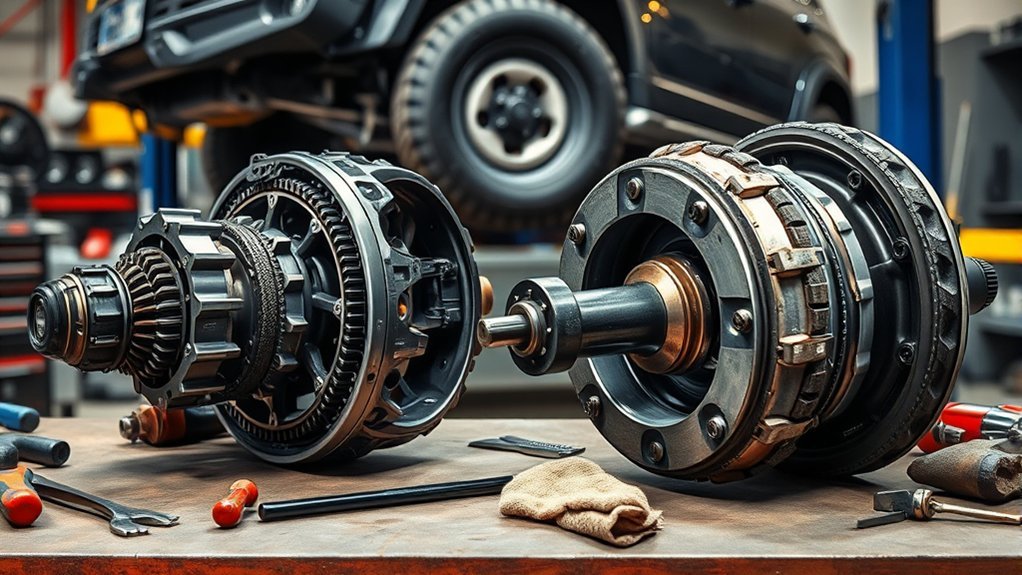
Choosing the right differential starts with how and where you drive. The best setup for a commuter car is not the best setup for a trail truck, and the best setup for a rock crawler may be frustrating on city streets.
| Driving Need | Best Differential Choice | Why It Fits |
|---|---|---|
| Daily commuting | Open differential | Smooth, quiet, predictable, and low maintenance |
| Rain and light snow | Limited-slip or traction-control-assisted open differential | Improves grip without harsh locking behavior |
| Towing or work truck use | Limited-slip or selectable locker | Adds traction when loaded or on loose surfaces |
| Trail riding and overlanding | Selectable locking differential | Strong off-road traction while preserving on-road manners |
| Rock crawling | Front and/or rear lockers | Maximum control when wheels lift or traction is uneven |
| Street performance | Limited-slip differential | Improves acceleration grip while still allowing cornering |
[Products Worth Considering]
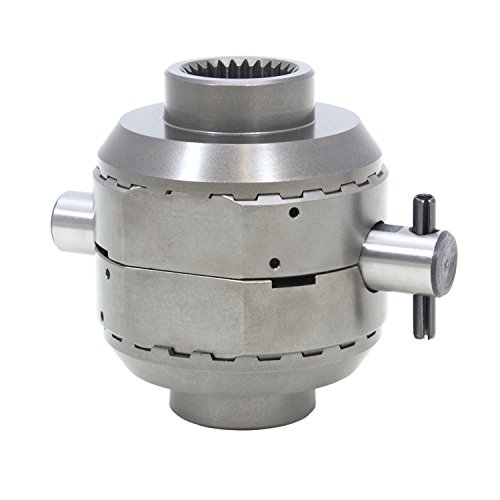
Fits Dana Spicer 30 with 27 spline axles.Material:steel

Dana 44 Rear, Non-Rubicon JK Yukon Zip locker for Dana 44, non-Rubicon JK, 30 spline. YZLD44-3-30-JK
Front Locker vs. Rear Locker
If you are adding only one locker to a 4×4, a rear locker is usually the first choice. It improves climbing and straight-line traction while keeping steering more manageable. A front locker can be very effective off-road, but it can make steering heavier and less predictable when engaged.
Many experienced off-road drivers prefer a rear selectable locker first, then add a front locker later if the vehicle regularly tackles rocks, deep ruts, or technical trails.
Driving Scenarios: Open vs. Locked Differentials in Action
Different driving conditions expose the strengths and weaknesses of each differential type.
City and Highway Driving
An open differential is usually the best choice for city and highway use. It allows smooth lane changes, parking-lot turns, roundabouts, and highway ramps without axle bind. A locked differential is unnecessary here and can make the vehicle harder to control if used incorrectly.
Snow and Ice
Snow and ice are tricky because more traction is helpful, but abrupt locking can also make the vehicle slide. An open differential with modern traction control may be easier for many drivers. A limited-slip differential can help in moderate snow. A locker can help at low speed when stuck, but it should be used carefully because both tires spinning together can make the rear of the vehicle step sideways.
Mud, Sand, and Loose Gravel
A locked differential performs well in mud, sand, and loose gravel because it keeps both wheels on the axle working together. The key is to use smooth throttle. Too much wheelspin can dig holes, bury the tires, or damage drivetrain parts.
Rocks, Ruts, and Wheel Lift
This is where a locker shines. If one tire lifts into the air, an open differential may send the available torque to the lifted tire, leaving the grounded tire unable to move the vehicle. A locked differential keeps both wheels turning, so the tire still touching the ground can keep pulling.
Maintenance Considerations for Differentials
All differentials need proper lubricant, clean fluid, and regular inspection. The exact service interval depends on the vehicle, axle type, use case, fluid specification, and manufacturer schedule. Toyota advises owners to refer to the vehicle’s Warranty and Maintenance Guide for differential fluid inspection and replacement requirements.
Common Maintenance Tasks
- Check for leaks around the differential cover, pinion seal, axle seals, and drain or fill plugs.
- Use the correct fluid listed in the owner’s manual or service manual.
- Inspect fluid condition if the axle has been submerged in water, overheated, or used heavily off-road.
- Listen for noise such as whining, grinding, clunking, or chatter during turns.
- Test locker engagement in a safe low-speed area if your vehicle has a selectable locker.
- Use friction modifier when required for some clutch-type limited-slip differentials.
Fluid Change Intervals
There is no single universal fluid-change interval that applies to every differential. Some vehicles specify regular replacement under severe service. Others use long-life synthetic gear oil and may not require replacement unless the axle is submerged, contaminated, leaking, repaired, or used in severe conditions.
As a practical rule, inspect the owner’s manual first. If you tow, off-road, drive through water, race, or carry heavy loads, the differential fluid may need attention sooner than a lightly driven commuter vehicle.
| Use Case | Service Priority | Why It Matters |
|---|---|---|
| Normal commuting | Follow owner’s manual | Many street vehicles have long service intervals |
| Towing or hauling | Inspect more often | Heat and load can break down lubricant faster |
| Off-roading | Inspect after hard trips | Water, mud, and shock loads increase wear risk |
| Water crossings | Inspect immediately | Contaminated fluid can damage bearings and gears |
| Locked or limited-slip differential | Use exact fluid specification | Wrong lubricant can cause chatter, wear, or poor operation |
Wear and Tear Signs
Watch for whining under acceleration, clunking when shifting from drive to reverse, fluid leaks, metal particles in the oil, vibration, or chatter during turns. For selectable lockers, delayed engagement, blinking indicator lights, or failure to unlock can point to an actuator, wiring, air-line, or internal problem.
If you notice these symptoms, inspect the differential before continuing hard use. A small leak or incorrect fluid can become a much more expensive gear, bearing, or axle repair if ignored.
Safety Implications of Using Open and Locking Differentials
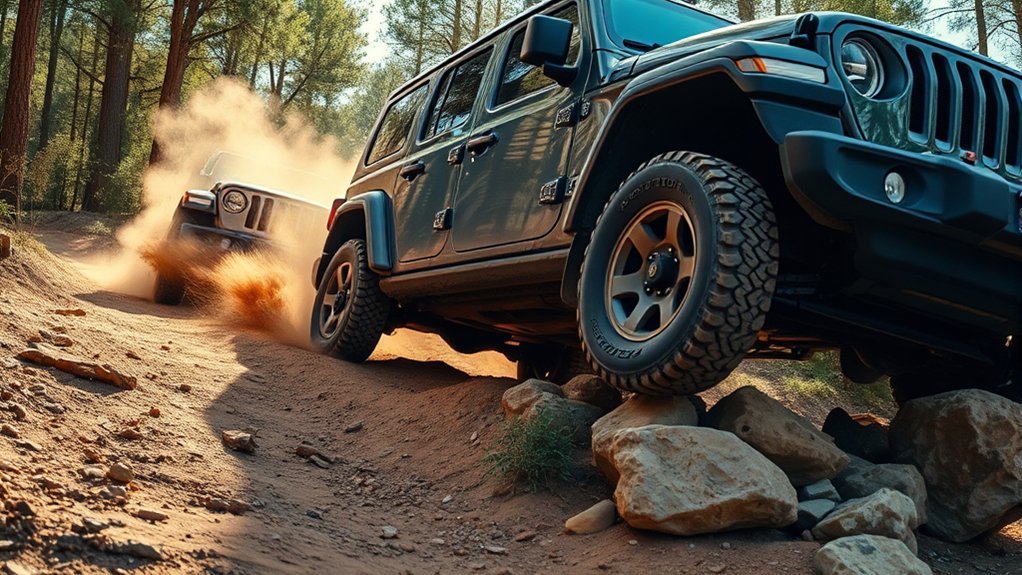
Safety depends on using the right differential behavior for the surface. Open differentials are safer and smoother for normal turning on pavement. Locked differentials are safer in certain off-road situations because they reduce the chance of getting stuck in dangerous terrain.
Problems happen when a locked axle is used in the wrong place. On high-traction surfaces, both wheels cannot naturally follow different turning paths. That can cause the tires to scrub, the axle to bind, and the vehicle to resist turning. At higher speeds, this can reduce control.
Toyota’s owner information for vehicles with rear differential lock systems includes operating conditions and warnings, including checking that the differential lock indicator turns off after unlocking and having the vehicle inspected if the indicator continues blinking. That kind of model-specific guidance matters because locker behavior varies by vehicle.
What Are the Drawbacks of Locking Differentials?
Locking differentials are powerful tools, but they are not ideal for every driver or every road. The main drawbacks include:
- Poor pavement manners: A locked axle can hop, chirp, bind, or push wide in turns.
- Increased tire wear: Because both wheels are forced to rotate together, one tire may scrub during cornering.
- More driver responsibility: The driver needs to know when to engage and disengage the locker.
- Extra maintenance: Selectable lockers may add switches, wiring, air lines, solenoids, seals, or actuators.
- Potential drivetrain stress: Using a locker with too much throttle can increase stress on axle shafts, gears, U-joints, and tires.
- Reduced steering control: A front locker can make the vehicle harder to steer when engaged.
For those reasons, a locker is best treated as a traction tool, not something to leave engaged all the time.
Best Choice by Driver Type
If you still are not sure which differential fits your vehicle, match the setup to your main use case:
- Daily driver: Open differential or factory traction control is usually enough.
- Daily driver in snow country: Limited-slip differential, winter tires, and traction control are often more useful than a full locker.
- Work truck: Limited-slip or selectable locker can help on job sites, gravel, wet grass, and loose dirt.
- Weekend off-roader: Rear selectable locker gives strong trail performance without ruining street manners.
- Serious rock crawler: Front and rear lockers offer the most control in technical terrain.
- Street performance build: Limited-slip differential is usually preferred because it improves acceleration traction while still allowing cornering.
Frequently Asked Questions
Is an open or locked differential better?
An open differential is better for normal road driving because it allows smooth turns and predictable handling. A locked differential is better for low-speed off-road driving where one tire may slip, lift, or lose traction.
What is the problem with an open differential?
The main problem with an open differential is poor performance when one wheel has much less traction than the other. The low-traction wheel can spin while the wheel with grip receives too little usable torque to move the vehicle.
Can you drive on the road with a locked differential?
You can drive on the road with a selectable locker only when it is unlocked. Driving with the differential locked on high-traction pavement can cause tire scrub, binding, handling problems, and drivetrain stress unless the vehicle manufacturer specifically allows it.
Is limited-slip the same as a locking differential?
No. A limited-slip differential allows some difference in wheel speed while helping transfer torque when one tire slips. A locking differential forces both wheels on the axle to rotate together when locked, giving stronger traction but worse pavement manners.
Should I lock the front or rear differential first?
For most 4×4 owners adding one locker, the rear differential is usually locked first. A rear locker improves traction while keeping steering more manageable. A front locker can be very capable off-road, but it can make steering harder when engaged.
Do locking differentials need more maintenance?
Often, yes. The gear oil still needs to match the manufacturer specification, and selectable lockers may also have actuators, wiring, air lines, seals, switches, or indicator systems that need inspection. Always follow the owner’s manual or locker manufacturer’s service instructions.
Conclusion
The best differential depends on your driving conditions. For paved roads, daily commuting, and predictable cornering, an open differential is usually the better choice. For slow off-road driving, deep mud, rocks, snow recovery, and uneven trails, a locked differential can provide the traction an open differential cannot.
If you want a balanced middle ground, consider a limited-slip differential or a selectable locker. A limited-slip differential improves traction without fully locking the axle, while a selectable locker gives you open-differential manners on the street and full locked traction when the trail demands it.
Sources
- Eaton Original Equipment Differentials — backs up the difference between automatic limited-slip, automatic locking, and electronic selectable locking differential applications.
- Eaton Suretrac Limited-Slip Differential — supports the explanation of limited-slip behavior under normal and low-traction conditions.
- ARB Air Lockers — supports the description of selectable locking differentials and off-road traction benefits.
- Chevrolet: How to Use Locking Differentials — supports the definition of a locking differential forcing axle wheels to turn at the same rate.
- Ford Owner’s Manual: Limited-Slip Differential — supports limited-slip traction guidance on slippery surfaces.
- Toyota Support: Differential Fluid Inspection and Replacement — supports the recommendation to follow the vehicle-specific maintenance guide for differential fluid service.