
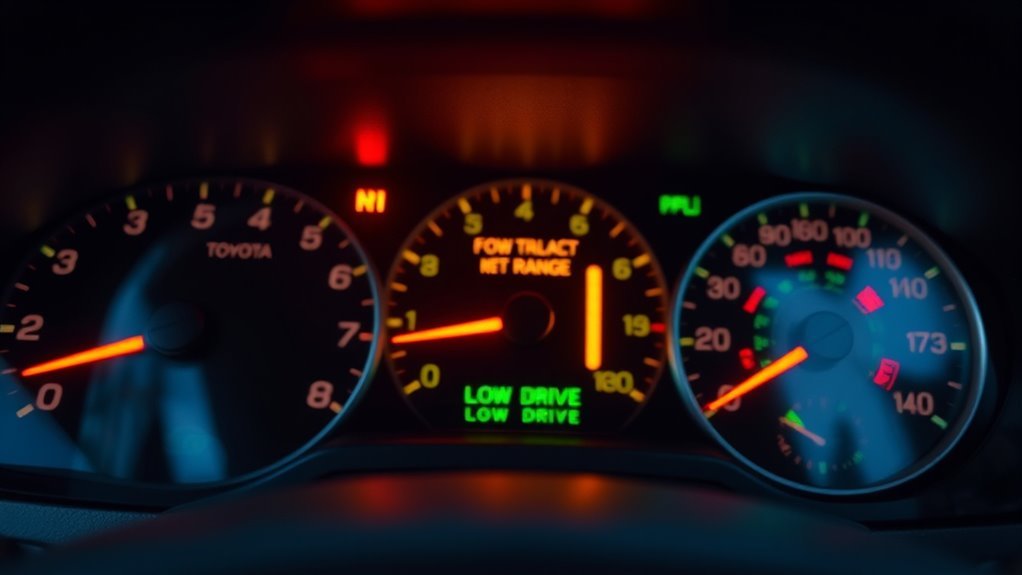
· Reviewed for accuracy · Last updated: July 15, 2026
If the Toyota Land Cruiser 4LO light is steady after you intentionally selected low range, the transfer case has usually completed the shift. If the 4LO or L4 light keeps blinking, the shift may be incomplete or the four-wheel-drive system may have stored a fault. Stop in a safe place, avoid relying on low range, and follow the exact shift procedure in the owner’s manual for your model year.
Many Land Cruisers use a stop-and-Neutral sequence, but the switch design and rules vary by generation and market. Do not keep cycling the switch or assume the vehicle has returned to high range until the indicator and vehicle behavior confirm it.
Quick Answer
A steady 4LO or L4 light usually means low range is engaged. A light that blinks briefly can mean the transfer case is shifting. If it keeps blinking, stop safely and use the year-specific procedure in your owner’s manual. Do not force the switch, drive fast, or depend on 4LO until the shift completes.
Key Takeaways
- 4LO, called L4 in some Toyota manuals, is low-range four-wheel drive for controlled, low-speed use.
- Brief blinking can be normal during a commanded shift. Continuous blinking means the shift is not confirmed.
- Shift instructions vary by generation and market. Check the manual before using a stop, Neutral, switch, or lever sequence.
- Likely fault areas include the transfer actuator, position feedback circuit, connectors, low system voltage, and internal transfer-case binding.
- Persistent blinking, harsh drivetrain symptoms, or additional ABS/VSC warnings call for a multi-module diagnostic scan.
At a Glance
| Time Required | A few minutes for procedure checks; diagnostic time varies |
| Difficulty | Easy for manual-based checks; advanced for electrical or transfer-case testing |
| Tools Needed | Year-specific owner’s manual; scanner that reads Toyota ABS, chassis, and 4WD modules; multimeter for qualified testing |
| Cost | Basic checks cost nothing; diagnosis and repair vary by model, fault, parts, and labor |
What Does the 4LO Light Mean on a Toyota Land Cruiser?
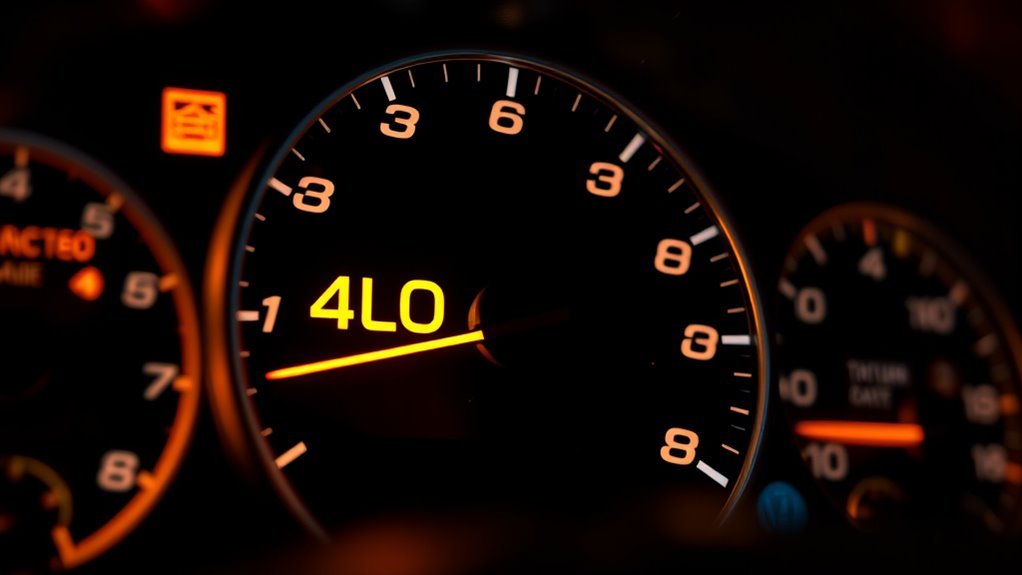
The 4LO indicator light reports the transfer case’s low-range status. A steady light normally means low range is selected and confirmed. A blinking light normally means the system is moving between ranges or cannot confirm the requested position.
Low range changes the transfer-case gearing so the Land Cruiser can move slowly with greater wheel torque and control. It is intended for conditions such as steep grades, rocks, deep sand, or mud, not routine road or highway driving.
Toyota uses 4LO on some models and L4 on others. The linked Toyota Land Cruiser four-wheel-drive system guide is for the 2025 U.S. model. Older Land Cruisers and vehicles sold in other markets can use different controls and shift conditions.
Before you retry the shift:
- Confirm the model year, market, transmission type, and whether the control says 4LO, L4, or uses a lever.
- Read the exact owner’s-manual sequence before operating the switch again.
- Do not assume one Land Cruiser generation’s procedure applies to another.
| Indicator Behavior | Likely Meaning | What To Do |
|---|---|---|
| Steady 4LO/L4 light | Low range is engaged | Drive slowly and use it only where low range is appropriate. |
| Blinking during a shift | The transfer case is moving between H4 and L4 | Follow the year-specific procedure and wait for the shift to finish. |
| Blinking that continues | The shift did not complete or the system sees a fault | Stop, retry the correct procedure, then scan for codes if it persists. |
| Light stays on after exiting 4LO | The system may still be in low range, or the position feedback may be wrong | Treat high range as unconfirmed until the indicator and vehicle behavior agree. |
Note: The exact switch design, indicator name, and shift rules vary by Land Cruiser generation and market. Always check the manual for your year and trim before diagnosing a 4LO warning.
[Products Worth Considering]

This preset torque screwdriver set delivers accurate, repeatable fastening with an easy-to-read display and a clear click signal when the preset torque is reached. The magnetic bit holder and included S2 bits make bit changes quick and reliable, while the durable storage case keeps everything organized for workshop, bike, firearm, and precision maintenance tasks.

Part Numbers: 36410-71010, 600423, 600-423, 3641071010
Is It Safe to Drive? Stop Now or Continue
A steady 4LO light is not automatically a warning. It usually means low range is engaged. The bigger concern is a 4LO light that keeps blinking, appears with ABS/VSC warnings, or will not turn off after you try to return to high range.
Immediate Risk Assessment
If the light is blinking and you are on a road, trail, ramp, or slippery surface where traction is critical, slow down and stop in a safe place. Do not continue into harder terrain assuming 4LO will engage. A blinking light can mean the vehicle has not completed the low-range shift, so you may not have the gearing or control you expected.
You should also stop and reassess if the vehicle feels like it is binding, jerking, clunking, refusing to accelerate normally, or showing other warning lights. These symptoms can point to an incomplete transfer-case shift, drivetrain wind-up on high-traction pavement, or an electrical fault that needs diagnosis.
Warning: Do not force the 4LO switch, repeatedly shift between modes, or drive fast in low range. 4LO is for low-speed control, not normal highway driving.
When You Can Continue
You can usually continue carefully if the light becomes steady after a normal 4LO shift, or if it turns off after you correctly return to H4. Stay at low speeds while in 4LO and avoid tight turns on dry pavement, because low-range four-wheel drive can increase drivetrain stress on high-grip surfaces.
If the indicator briefly blinks and then clears after a proper restart or shift attempt, the issue may have been a temporary incomplete shift. Still, make a note of when it happened. If it returns, scan the vehicle before depending on 4LO off-road.
| Condition | Action | Urgency |
|---|---|---|
| Light turns steady after intentional 4LO selection | Use low range only where the manual permits | Routine caution |
| Light turns off after a confirmed return to high range | Confirm normal drivetrain behavior and monitor | Monitor |
| Light keeps blinking | Stop safely; retry once by the manual; scan if unresolved | Prompt diagnosis |
| 4LO plus ABS/VSC warnings or harsh drivetrain symptoms | Stop if control is affected; scan all relevant modules | Urgent |
Safe Driving Precautions
Use these precautions when the 4LO light is acting abnormally:
- Move to a safe, flat place before trying to shift the transfer case again.
- Keep your foot on the brake while shifting between H4 and 4LO/L4.
- Shift the transmission to N before operating the transfer switch if your manual calls for it.
- Avoid towing, steep grades, deep mud, deep sand, or rock crawling until the system works normally.
- Take a photo of the dashboard and write down when the light appeared; this helps diagnosis later.
Quick Checks and Resets to Try First
If the 4LO indicator is blinking, use this order. Stop when the light becomes steady or turns off as expected. Repeated cycling can hide the original symptom or add drivetrain stress.
- Move to a safe, level place. Keep the vehicle away from traffic and obstacles.
- Check the owner’s manual for your exact year. Confirm whether the vehicle must be stopped, in Neutral, or moving slowly.
- Follow the listed shift sequence once. Keep your foot on the brake when the manual requires it.
- Wait for confirmation. A completed low-range shift should produce the indicator state described in the manual.
- Restart only when safely parked. If the light clears, note the event and test the system cautiously before off-road use.
- Check for low-voltage clues. Slow cranking, recent battery work, or several unrelated warnings justify testing the battery and charging system.
- Scan before clearing codes. Save current, pending, and history codes from the ABS, stability, chassis, and 4WD modules.
Pro Tip: Test 4LO only where the owner’s manual permits, on a safe surface, and at low speed. Confirm that the indicator completes its change before depending on low range on a trail.
Do not treat a battery disconnect as a repair. It may clear the light temporarily, but it can also erase useful diagnostic information. If the 4LO light returns, the vehicle needs a proper scan and inspection.
Why Does the Land Cruiser 4LO Light Keep Blinking?
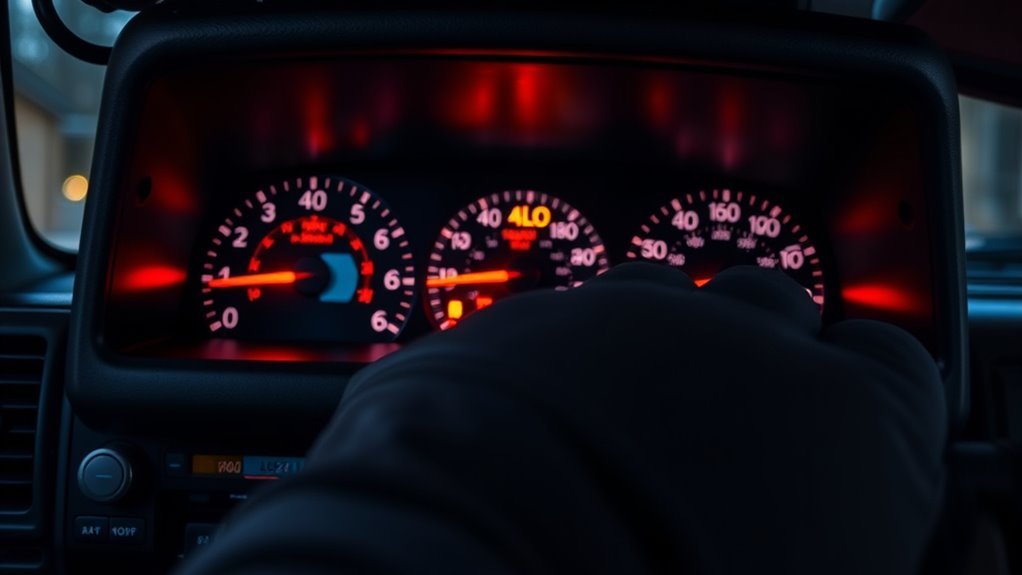
A persistent blinking 4LO light usually points to one of four areas: the shift conditions were not met, the actuator did not reach position, the feedback circuit did not confirm position, or the transfer case could not move mechanically. Use symptoms and scan data to narrow the fault before replacing parts.
[Products Worth Considering]

AISIN OE matched door latch assemblies, with integrated actuator, are designed for efficient, consistent performance and manufactured using only the highest quality materials

[Vehicle Fitment]: Compatible with Lexus LX450 1996-1997 Sport Utility; Compatible with Toyota Land Cruiser 1991-1998 Sport Utility

Higher Quality: This core motor is made of high quality carbon brush,rotor made of pure copper wire, the quality and service life are almost the same as the original
Shift Procedure or Range Mismatch
The first cause to rule out is an incomplete command. The required speed, transmission position, brake input, and switch or lever action depend on the Land Cruiser generation. Use the exact sequence in the owner’s manual rather than applying a universal procedure.
If the indicator continues blinking after the correct sequence, the control system may not be receiving a valid position signal, or the actuator may not be moving the transfer case fully.
| What You Notice | More Likely Area | Next Check |
|---|---|---|
| Blinking starts only after an attempted range change | Shift conditions or incomplete movement | Repeat the manual procedure once and watch live range data |
| No actuator sound or movement | Power, ground, command, wiring, or actuator motor | Check codes and model-specific electrical tests |
| Actuator operates but the light never confirms | Position switch, range sensor, adjustment, or binding | Compare commanded and actual range data |
| Grinding, clunking, or a stuck-between-ranges feel | Mechanical transfer-case or linkage problem | Stop driving and arrange mechanical inspection |
Transfer Case Faults
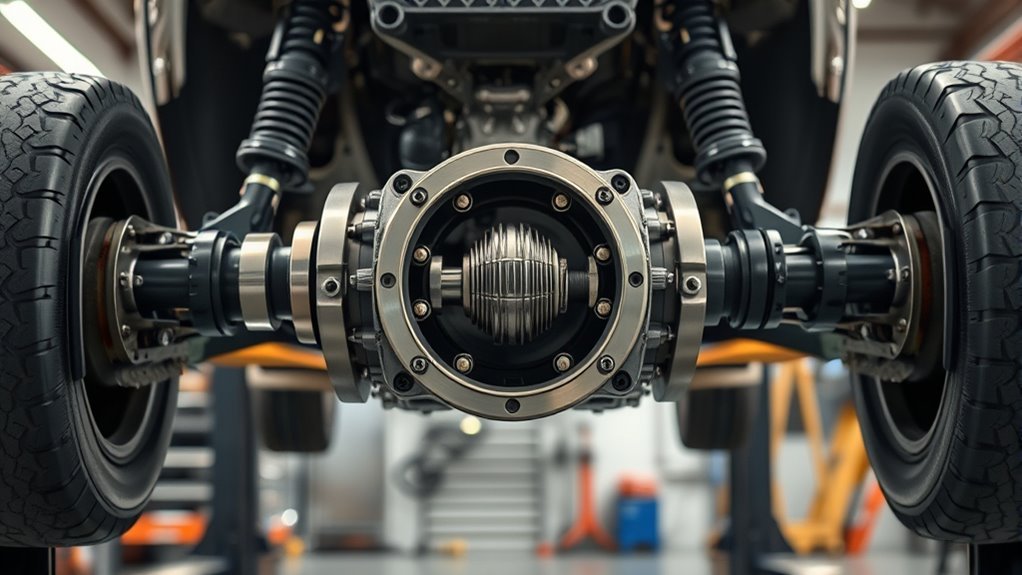
The transfer case contains the gearing and shift mechanism that move the vehicle between high range and low range. Internal wear, binding, damaged gears, contaminated fluid, or a jammed shift mechanism can stop the system from completing the shift. Symptoms may include clunking, grinding, delayed engagement, or a vehicle that feels stuck between ranges.
Check the transfer-case fluid level and condition only if you can do so safely and your model provides service access. Dark, burnt, contaminated, or low fluid is not proof of a failed transfer case by itself, but it is a reason to inspect further.
Actuator And Wiring
Many modern Land Cruisers use an electrically controlled transfer actuator. If the actuator motor is weak, seized, corroded, out of position, or unable to report its position correctly, the 4LO indicator may continue blinking. Wiring issues can create the same symptom because the control module may not know whether the transfer case reached the commanded position.
Inspect the harness and connectors around the transfer case for:
- Corrosion or water intrusion
- Loose connectors
- Damaged insulation
- Poor grounds
- Oil contamination inside connectors
- Previous repair work or stretched wiring
A multimeter can help verify voltage, ground, continuity, and switch feedback, but the exact pins and expected values depend on the model year. Use official repair information or a qualified technician for pin-level testing.
Position Switch or Feedback Sensor Faults
The 4WD control system needs confirmation that the transfer case is in the selected range. A faulty transfer L4 position switch, range sensor, or related circuit can make the dashboard show a blinking or incorrect 4LO status even when the mechanical parts are close to the right position.
Toyota diagnostic-code definitions can change by model year and control system. Record the full code and any information or sub-code, then confirm its definition in the repair manual for that exact vehicle. Do not replace the actuator from a generic code list alone.
Which OBD Codes and Scan Data Matter for a 4LO Fault?
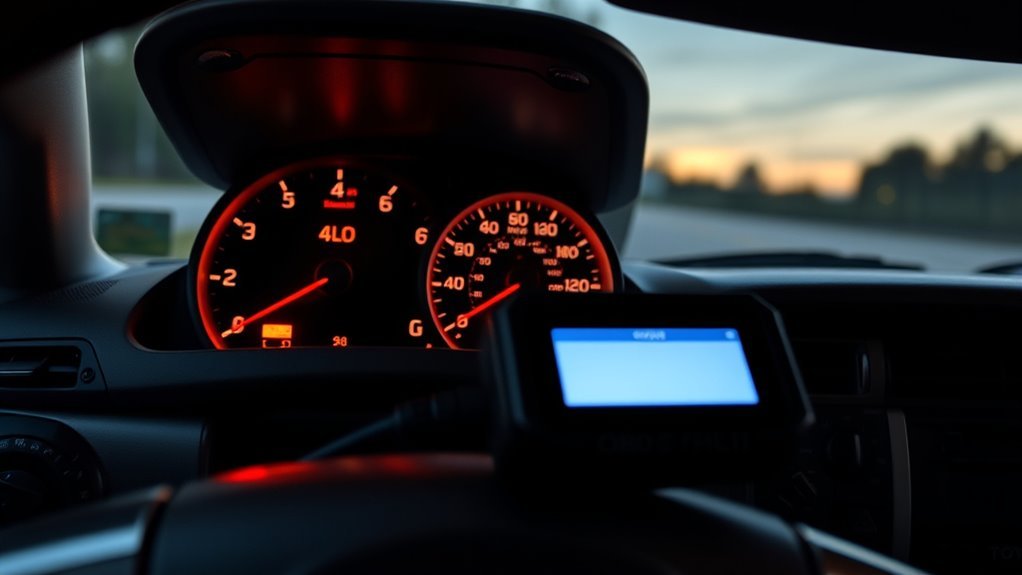
A basic engine-code reader may show no fault even when the 4LO light is blinking. The relevant diagnostic code may sit in the ABS, stability, chassis, transfer, or four-wheel-drive control module. Use a scanner that can access those Toyota systems, or have the vehicle checked with Toyota Techstream or equivalent professional equipment.
When scanning, write down the exact code, sub-code, freeze-frame data, and whether the code is current or history. Useful information includes vehicle speed, selected gear, transfer range command, transfer range position, battery voltage, and any ABS/VSC codes that appeared at the same time.
| Code or Data Type | Why It Matters |
|---|---|
| Transfer/L4 position switch code | Points toward switch feedback, wiring, or the transfer control circuit. |
| Actuator or motor code | Suggests the actuator may be stuck, weak, mis-timed, or not receiving proper power/ground. |
| ABS/VSC code | May appear because these systems use transfer-range information to adjust stability control logic. |
| Low voltage or communication code | Can cause misleading symptoms and should be fixed before deeper transfer-case diagnosis. |
Note: Clear codes only after documenting them. If the light comes back, the recorded codes and freeze-frame data can save diagnostic time.
When Should You See a Toyota Dealer or 4WD Specialist?
Treat the 4LO lamp as both a mode indicator and a diagnostic clue. If it is steady and the vehicle is truly in low range, use it correctly and return to H4 when you are done. If it flashes, will not engage, or will not turn off, move from basic shift checks to targeted diagnosis.
Use this repair path:
- Confirm the correct shift procedure. Use the owner’s manual for the exact model year and market.
- Check for obvious electrical issues. Look for weak battery voltage, loose grounds, damaged connectors, and water intrusion near the transfer case.
- Read all relevant modules. Do not rely only on generic engine codes.
- Inspect transfer-case fluid and mechanical operation. Look for leaks, contamination, noise, binding, or signs of incomplete engagement.
- Test the actuator and position switch. Use model-specific wiring diagrams and service procedures.
- Escalate to a Toyota dealer or 4WD specialist. Do this if the light persists, the vehicle is stuck in low range, multiple warning lights appear, or the scan data points to actuator timing or internal transfer-case work.
Keep transfer-case fluid serviced according to the model-specific maintenance schedule and repair leaks promptly. If you check 4LO operation, use only the conditions and procedure allowed by the owner’s manual.
A blinking 4LO light is not a part-replacement diagnosis. It is a signal to confirm the shift procedure, scan the right modules, and test the actuator, switch, wiring, and transfer case in order.
Frequently Asked Questions
What does 4LO mean in a Toyota Land Cruiser?
4LO means low-range four-wheel drive. It changes the transfer-case ratio for greater control and wheel torque at low speed. Some Toyota manuals label the same range L4.
Why is my Land Cruiser 4LO light flashing?
The light can flash while the transfer case is changing range. If it keeps flashing, the requested position is not confirmed. Possible causes include unmet shift conditions, actuator trouble, a position-feedback fault, wiring damage, low voltage, or mechanical binding.
Can I drive with the 4LO light on?
You can drive slowly when the light is steady, you intentionally selected low range, and the conditions are suitable. Do not use 4LO for normal highway driving. If the light is blinking or the vehicle binds, clunks, or loses normal control, stop safely and diagnose the fault.
How do I shift a Land Cruiser into 4LO or L4?
Use the procedure in the owner’s manual for your exact model year. Many modern models require the vehicle to be stopped with the transmission in Neutral, but older generations and different markets can use another sequence or a transfer lever.
Why will my Land Cruiser not come out of 4LO?
The high-range shift may not meet the required conditions, or the actuator, position circuit, wiring, or transfer case may be stuck. Follow the manual once, avoid forcing the control, and arrange a scan if the indicator does not confirm high range.
What causes 4LO, ABS, and VSC lights to appear together?
A shared voltage, communication, wheel-speed, stability-control, or transfer-range problem can trigger several warnings. Read every relevant module before assuming the transfer case is the only fault.
Will disconnecting the battery reset a blinking 4LO light?
A battery disconnect may clear a warning temporarily, but it does not repair the cause and can erase useful diagnostic information. Scan and record codes before disconnecting power unless a model-specific service procedure requires it.
Conclusion
A steady Land Cruiser 4LO light usually confirms low range. A light that keeps blinking means the selected range is not confirmed, so do not rely on 4LO or assume the vehicle is back in high range.
Check the owner’s manual for the exact year, follow the listed sequence once, and record all relevant diagnostic codes before clearing them. Persistent blinking, additional ABS/VSC warnings, grinding, clunking, or a stuck-between-ranges feel should be diagnosed by a Toyota dealer or qualified 4WD specialist.
Sources
- Toyota Owners — 2025 Land Cruiser Four-Wheel Drive System — backs up L4 purpose, shift procedure, and blinking indicator behavior.
- Toyota Owners — Manuals and Warranties — official source for year-specific Toyota owner’s manuals.
- Toyota Technical Information System — official Toyota service information source for repair manuals, wiring diagrams, service bulletins, and diagnostics.
- NHTSA Recalls — official U.S. recall lookup for checking open safety recalls by VIN.



ITS VERRY HELPUL, CONCLUSION