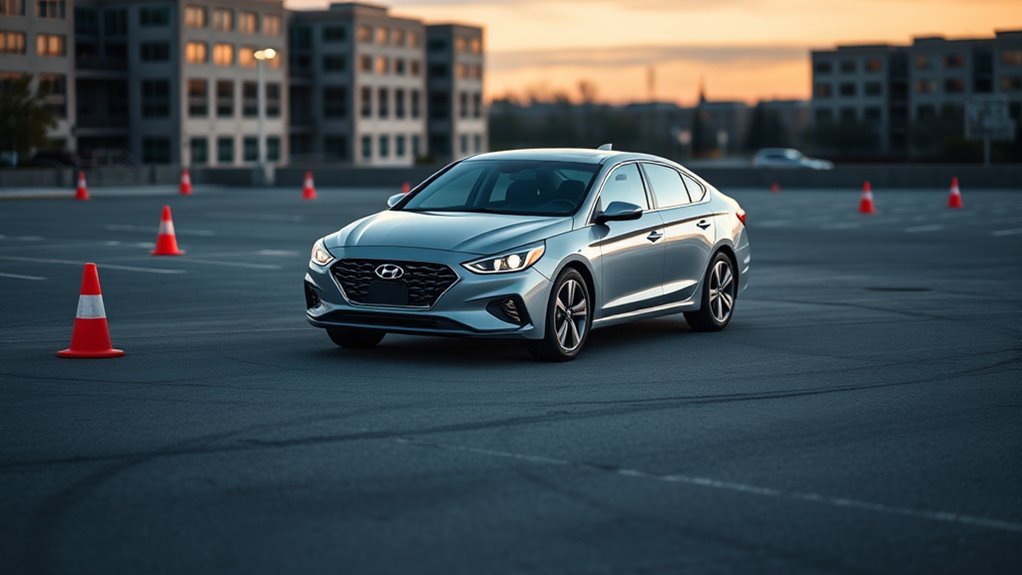
Hyundai’s specifications list a 35.9-foot turning diameter for the 2025 Sonata, the diameter of the smallest circle the car can trace at full steering lock. Turning diameter depends mainly on wheelbase and how far the front wheels can steer, so it is usually the same across trims that share a platform and wheelbase; check the spec sheet for your exact trim.
Sonata Turning Radius : The Number and Quick Takeaway
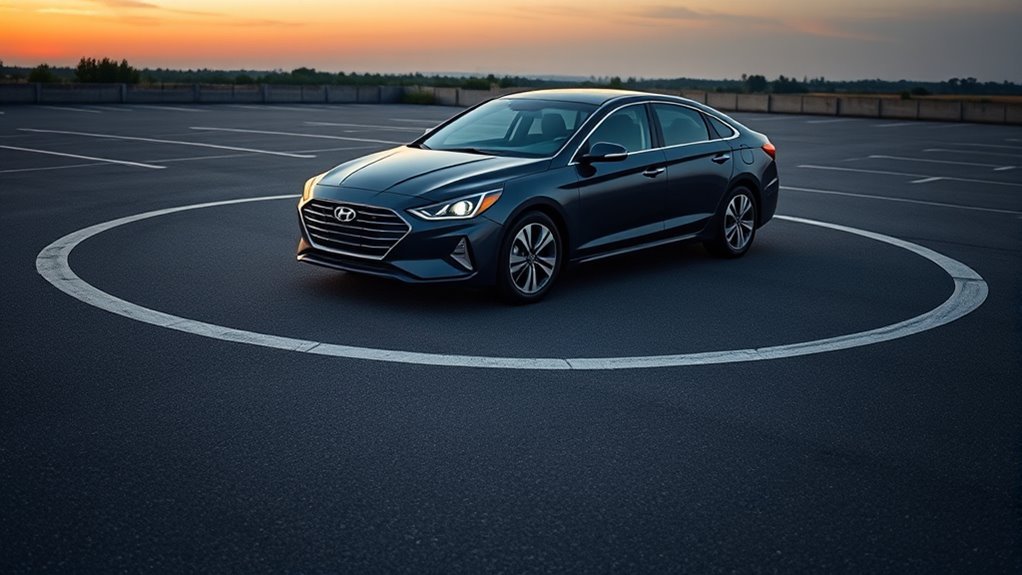
The 2025 Sonata’s 35.9-foot turning diameter is typical for a midsize sedan, and you notice it mainly in tight parking lots and U-turns. A smaller turning diameter means fewer multi-point turns in tight spaces. The figure is listed as the same across the 2025 trims, so choose a trim based on power, efficiency and features rather than turning room.
How Turning Radius Is Measured (What “Turning Circle” Means)
The turning circle (turning diameter) is the diameter of the smallest circle the vehicle traces at full steering lock. Manufacturers quote it either curb-to-curb (the path of the outside front tire) or wall-to-wall (including body overhang), and the wall-to-wall figure is larger, so compare like with like.
Turning Circle Defined
The turning circle is the minimum circular path a vehicle can trace at full lock, and the quoted figure is its diameter; for the 2025 Sonata the listed figure is 35.9 feet. Wheelbase, front overhang and the maximum steering angle set how tight it can be. Knowing it helps you judge U-turns and tight parking spots.
Measurement Methods
Turning diameter is measured with the steering at full lock and the car driven in a circle, recording the diameter of the path the outside front tire traces. For the Sonata the stated figure is 35.9 ft. Wheelbase, steering geometry and the steering angle all affect it.
Turning Radius by Trim
Hyundai’s 2025 specs list the same 35.9-foot turning diameter for the gas, N Line and hybrid trims. Choose based on power, efficiency and features, not turning room.
Sonata Turning Radius vs Honda Accord, Camry, Altima
Midsize rivals such as the Accord, Camry and Altima have turning diameters in a similar range, so turning room rarely decides the choice. Compare the published figures for the exact model years you are considering, and check whether each maker quotes curb-to-curb or wall-to-wall.
How Wheelbase, Tires, and Steering Change Sonata’s Turning Radius
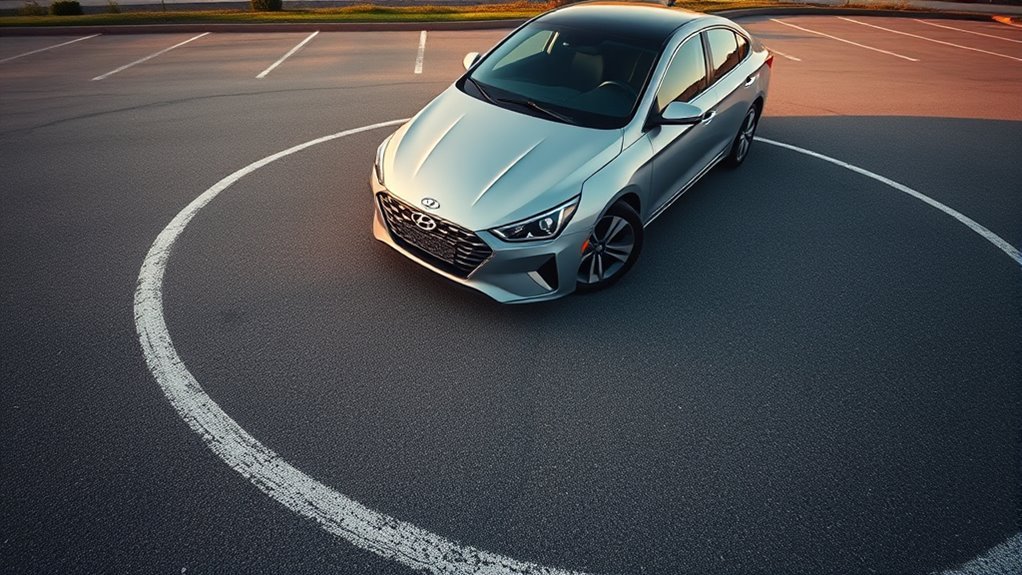
The Sonata’s wheelbase is about 111.8 inches. In general a longer wheelbase improves straight-line stability but increases the minimum turning circle, and the maximum steering angle of the front wheels also matters. Tire width can matter slightly where a tire limits steering lock, but the published figure is what to rely on.
Wheelbase Impact On Turning
A shorter wheelbase generally yields a tighter turning circle. The Sonata’s 111.8-inch wheelbase balances stability with maneuverability, and Hyundai lists a 35.9-foot turning diameter.
Tire Width And Grip
Tires have little effect on the published turning diameter, which is set mainly by geometry, but grip affects how the car feels in tight low-speed turns. Use the tire size listed on your door placard.
Steering Ratio And Response
Steering ratio affects how much you turn the wheel for a given amount of front-wheel angle, so it changes the feel of low-speed maneuvers but not the published turning diameter. Take a test drive in a parking lot to judge how the steering feels.
Will the Sonata Fit My Parking Spot or Driveway?
To judge whether the Sonata will fit your parking spot or driveway, use these figures: 35.9 ft turning diameter, about 193 in. length and 111.8 in. wheelbase. Measure your space and compare.
- Compare your driveway dimensions to the Sonata’s length and turning diameter.
- Account for wheelbase: 111.8 in aids stability but requires predictable swing in tight gates.
- Standard parking spots typically accommodate a midsize sedan like the Sonata.
Tips to Reduce Required Turning Space in a Sonata
You can’t reduce the car’s turning diameter, but you can make tight turns easier: approach at a low, controlled speed, steer smoothly, use full steering lock only when needed, and use the 360-degree camera and parking sensors if your trim has them. Practice in an open lot to learn how much room you need.
What to Test on a Drive: Steering Feel, Turning Lock, and Visibility
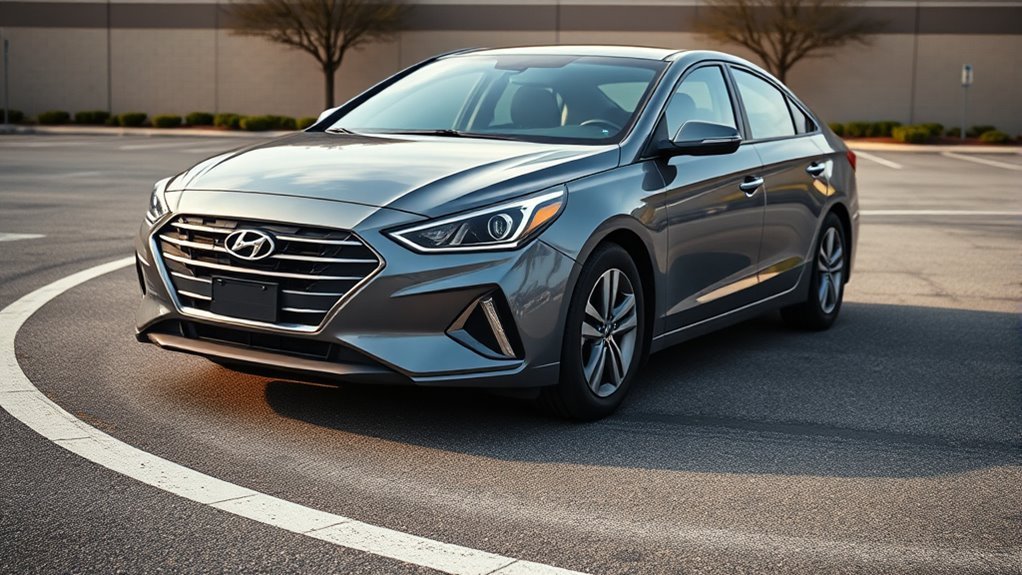
On a test drive, check steering feel (weight and center return), try tight U-turns and multi-point turns in a parking lot, and check visibility and blind spots. Use the camera and parking assistance, if equipped, to confirm clearance.
- Steering feedback: weight, response, precision
- Turning lock: required angle, ease
- Visibility: sightlines, obstructions
- Parking assistance: camera utility, confidence
Frequently Asked Questions
What Is the Most Common Problem With Hyundai Sonata?
Common complaints vary by generation and engine, so check recalls and complaints for the model year you are considering on NHTSA.gov.
What Is the Turning Radius of a Vehicle?
Turning radius is half the turning diameter: the radius of the smallest circle a vehicle can trace at full steering lock. It is governed mainly by wheelbase and steering geometry.
What Year to Stay Away From Hyundai Sonata?
Reliability varies by model year, and some years had well-known engine problems and recalls. Check NHTSA recalls and complaints for the specific year and VIN, and have a used car inspected before you buy.
Conclusion
Hyundai lists a 35.9-foot turning diameter for the 2025 Sonata, which is typical for a midsize sedan. Check the spec sheet for your trim, and test tight turns and visibility on a drive before you buy.