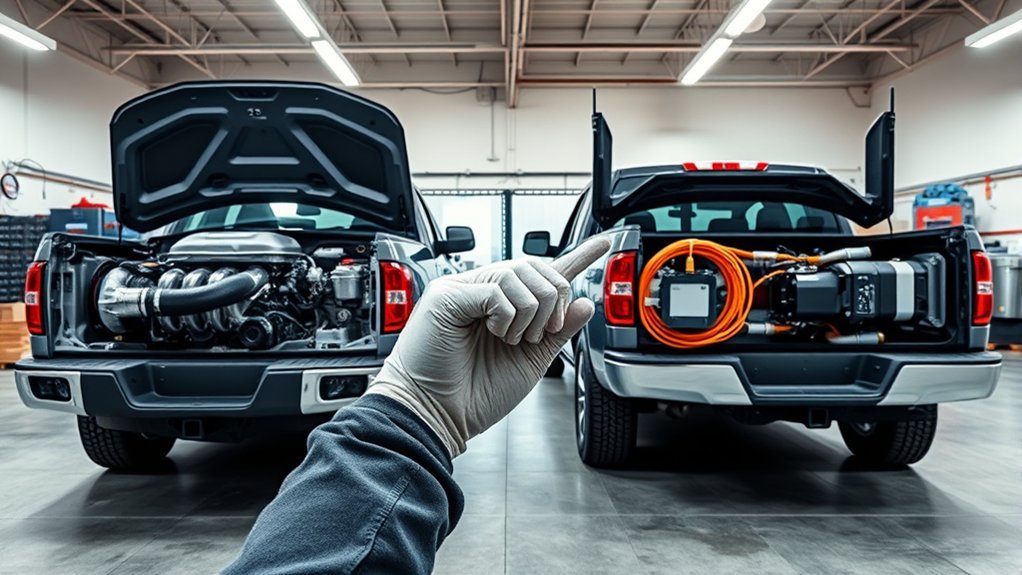
You should pick a hybrid F‑150 PowerBoost when you need maximum towing torque and better city fuel economy, and choose gasoline when lower upfront cost and simpler maintenance matter more. Hybrids pair a 3.5L EcoBoost with an electric motor for up to 430 hp, 570 lb‑ft and about 24 mpg combined, plus regenerative braking that cuts brake wear. Gas models cost less initially and hold steady highway efficiency. Keep going to see detailed tradeoffs and model fits.
Quick Recommendation: Which Ford Pickup Powertrain Fits You?
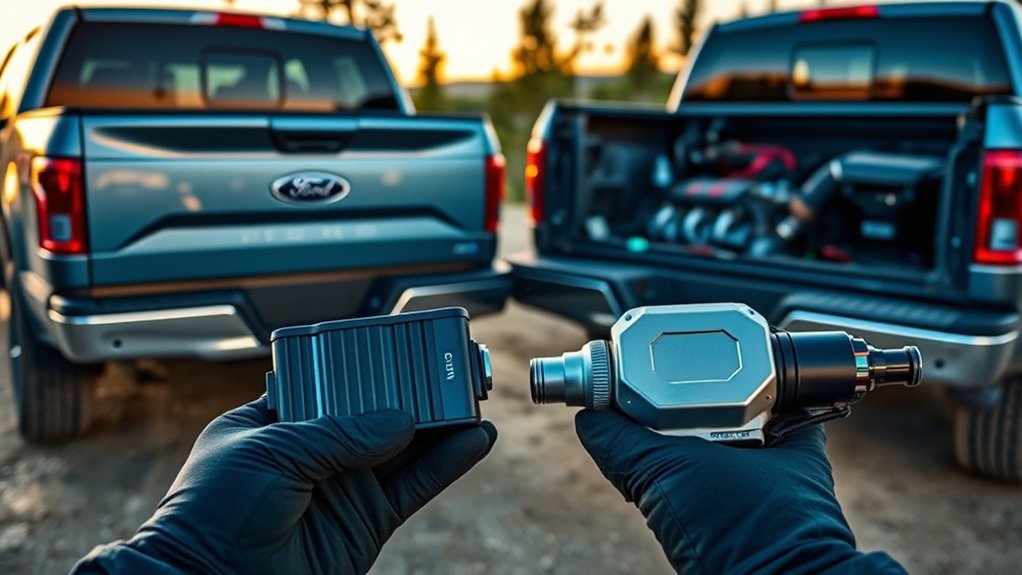
Wondering which Ford pickup powertrain fits you best? You’ll choose hybrids if you prioritize efficiency and long-term autonomy: hybrid advantages include up to 24 mpg combined, regenerative braking that recovers energy in stop-and-go use, and a combined 430 hp from the 3.5L EcoBoost plus electric motor. That setup delivers strong day-to-day power while lowering fuel consumption and brake wear, freeing you from frequent stops at the pump. Opt for gas when upfront cost and simplicity matter; gas benefits are a lower entry price—around $28,000 for the base model—and proven, familiar servicing. You’ll still get capable performance for routine tasks without the higher initial outlay of hybrid models near $39,000. Choose hybrid if you cover high miles or want system-level efficiency and towing flexibility; choose gas if budget constraints and minimal complexity keep you moving. Both let you reclaim independence on the road; pick the one that aligns with your operational priorities.
How Hybrid and Gas Ford Pickups Compare for Performance and Towing
You’ve already weighed cost and efficiency; now compare how each powertrain performs when hauling and accelerating. You’ll find Ford’s PowerBoost hybrid delivers up to 430 hp and 570 lb-ft, with instant electric torque aiding rapid launches and heavy starts—key hybrid advantages for towing from standstill. Properly equipped, it tows up to 12,700 lb, matching many gas variants while offering about 24 mpg city/highway, which challenges traditional gas efficiency in real-world use. Regenerative braking reduces brake wear in stop-and-go work, extending component life and improving operational resilience.
| Metric | Hybrid F-150 | Gas F-150 |
|---|---|---|
| Peak torque/hp | 570 lb-ft / 430 hp | Comparable peak power |
| Towing capacity | Up to 12,700 lb | Similar max tow (trim-dependent) |
| Acceleration/takeoff | Instant torque, quicker | Strong, less immediate torque |
You’ll choose hybrid when you want liberated, efficient performance under load; choose gas if you prioritize conventional simplicity.
True Ownership Costs: Fuel, Maintenance, and Resale for Ford Pickups
While purchase price often favors gas F-150s by roughly $1,000–$5,000, true ownership costs hinge on fuel, maintenance, and resale—areas where the PowerBoost hybrid can change the equation. You’ll model lifetime cost by combining fuel efficiency, maintenance comparison, and projected resale. With PowerBoost achieving up to 24 mpg combined versus ~20 mpg for gas models, your fuel outlay falls materially, especially if you operate in urban, stop-and-go conditions where hybrids excel.
Maintenance comparison shows regenerative braking reduces brake wear, lowering routine-service frequency and parts replacement costs. Hybrid systems introduce complexity, but long-term hybrid reliability and fewer brake jobs often offset higher initial service rates. Resale trends favor hybrids as buyer demand for fuel efficiency grows, supporting stronger retained value. If you drive high annual miles or prioritize liberation from volatile fuel expense, the PowerBoost typically yields lower total cost of ownership despite higher upfront price—quantify with your mileage profile and local resale data to confirm.
Everyday Efficiency for Ford Pickups: MPG, Regenerative Braking, City vs Highway
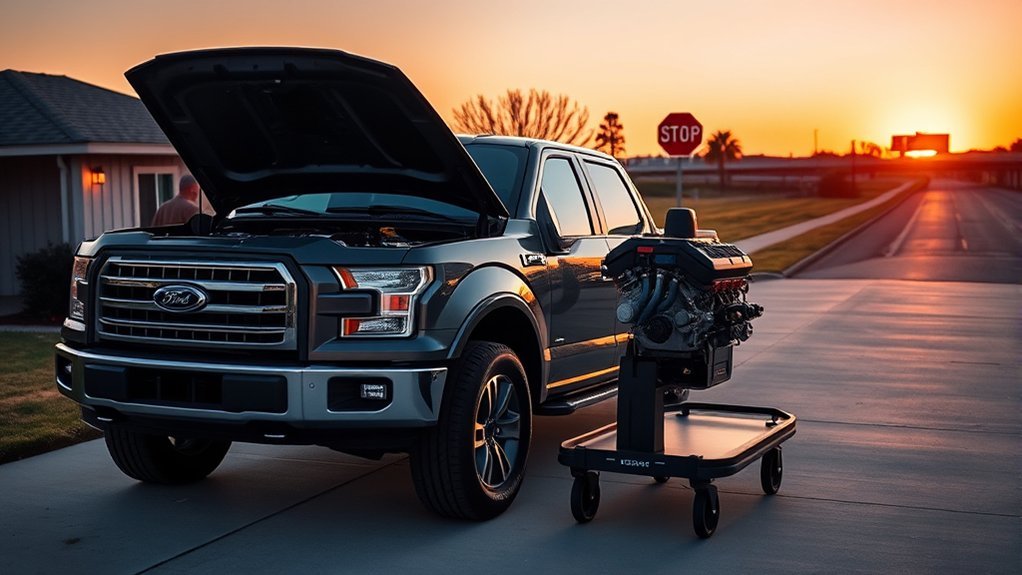
Start with a clear metric: the F-150 PowerBoost delivers up to 24 mpg combined (24 city/24 highway), which materially narrows the efficiency gap between urban and highway use compared with gas-only F-150s that typically drop to ~20 mpg combined. You’ll see tangible fuel savings when you switch to hybrid tech, especially if your routes include heavy urban driving and frequent stop-start cycles. Regenerative braking recovers kinetic energy during deceleration, charging the battery and reducing engine load; that process optimizes brake wear and raises real-world mpg in city conditions. On highways, pure-gas pickups maintain steady efficiency at cruising speeds, but hybrids sustain competitive highway mpg while offering superior urban performance. Your driving habits remain decisive: high-mileage commuters extract the most value from hybrid systems. The PowerBoost also preserves capability—towing up to 12,700 pounds—so you’re not sacrificing utility for efficiency. In short, hybrids deliver liberated operating costs and consistent everyday efficiency across mixed driving profiles.
Which Ford Pickup to Buy: Best Models for Commuting, Towing, Work, and Family
For commuting, towing, work, and family use, pick the Ford pickup that matches your dominant mission profile rather than chasing a one-size-fits-all model. If your primary need is towing and heavy hauling, choose the Ford F 150 with PowerBoost Hybrid: the 3.5L EcoBoost V6 plus electric motor yields up to 430 hp and 570 lb-ft, and 24 mpg combined city/highway—power with efficiency for liberating capability. For dense city routes and low operating cost, the Ford Maverick Hybrid targets Urban Driving: compact footprint and an EPA-estimated 42 mpg city make it the efficient commuter and versatile light-duty work truck. If you prioritize traditional work reliability and simpler maintenance, the Ford Ranger’s gas engines balance performance and utility without hybrid complexity. For Family Needs that combine space and economy, the F-150 SuperCrew accommodates six while retaining hybrid efficiency. Match mission to model, minimize compromise, and free yourself from excess.
Frequently Asked Questions
Is Hybrid Powertrain Better Than Gas?
Yes—if you value fuel efficiency and lower long-term maintenance costs; you’ll save fuel in stop-and-go driving, benefit from regenerative braking, and accept a higher upfront price for greater torque, towing, and reduced emissions over time.
What Are the Disadvantages of a Hybrid Engine?
Like a locked gate, hybrid engines limit you: they offer mixed fuel efficiency gains, higher maintenance costs, complex repairs, lower towing, pricey battery replacement, and cold‑weather performance hits, forcing you to weigh freedom against tradeoffs.
What Is the Difference Between a Powertrain and a Hybrid?
A powertrain is the full set of Powertrain components that generate and deliver propulsion; a hybrid combines that with electric systems to boost Hybrid efficiency, so you gain regenerative energy, instant torque, and improved fuel economy.
Conclusion
You’ll pick the Ford pickup powertrain that matches how you work and live: choose hybrid if you want better city efficiency and smoother torque, or gas if you need simpler serviceability and long-distance range. Compare towing charts and real-world MPGs, factor in regenerative braking and total ownership costs, and weigh resale trends. Think of this as a toolbox—select the right bit for the job—and you’ll optimize performance, economy, and durability.