You’ll set your Tundra’s trailer brake gain to match trailer weight and load for controlled, safe stops. Secure the hitch, chains, and electrical plug, note tongue and gross weight, then perform an idle-roll and brake-controller test at low speed. Start low and raise gain until the trailer stops smoothly without locking wheels. Recheck after loading changes and inspect wiring or brakes if response is weak. Continue and you’ll find specific gain ranges, tests, and troubleshooting steps.
Why Correct Trailer Brake Gain Matters for Your Tundra
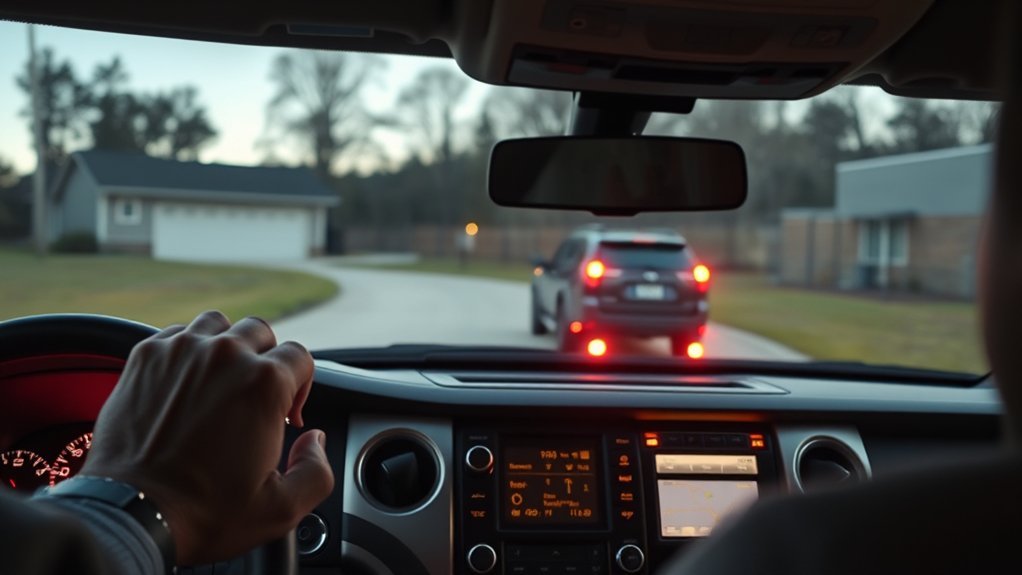
Safety depends on correct trailer brake gain, and you’ll want it dialed in for every towing situation. You’ll set gain so brake performance matches trailer mass: heavier loads need higher gain to avoid long stops, lighter loads need lower gain to prevent abrupt, destabilizing braking. You’ll adjust gain whenever load changes; neglecting that degrades braking efficiency and increases risk. After each change, you’ll test brake performance—aiming to stop the truck at idle without excessive force—so you confirm the ideal setting under real conditions. Proper gain tuning gives you predictable control, reduces trailer sway potential, and tightens stopping distances, all of which strengthen towing safety. You’re not just following procedure; you’re claiming freedom to tow confidently, knowing the system responds the way you intend. Stay methodical, recheck after hitching or loading, and prioritize measured tests over guesswork so your Tundra and trailer operate in sync.
Confirm Tundra and Trailer Setup Before Adjusting Gain
Before you adjust gain, make sure the trailer is securely attached to your Tundra and the hitch, safety chains, and electrical connections are properly seated. Verify the brake controller is connected and operational, then roll the truck forward slightly without throttle to perform an initial brake test and observe trailer response. Only proceed to adjust gain if the setup is correct and the initial test shows predictable braking behavior.
Attach Trailer Securely
Hook the trailer to your Tundra and verify the connection is solid before you touch the brake controller: confirm the hitch and coupler are properly latched, the trailer’s tongue weight and gross load fall within the Tundra’s towing capacity, and the wiring harness is plugged in and secure so the controller can communicate with the trailer brakes. Inspect attachment methods—pin, lock, safety chains—and guarantee trailer security by using rated hardware and torque specs. Check electrical pins for corrosion and confirm compatible controller wiring and brake type. Scan the trailer for visible damage to lights, frame, axle, and brakes that could skew gain calibration. Document tongue weight and gross trailer weight; these inputs guide gain range. Secure, inspected attachment lets you adjust gain confidently and reclaim control over towing safety.
Perform Initial Brake Test
Begin by confirming the trailer is securely attached, then move to a flat, traffic-free area and roll the Tundra slowly without accelerating to evaluate the trailer brake response. You’ll squeeze the brake controller to check responsiveness; a firm, complete stop shows the system is functioning. Note how the trailer reacts—hesitation or lag indicates low brake sensitivity, while abrupt locking suggests excessive sensitivity. Compare behavior to the trailer weight and its load; heavier trailers need higher gain. If stopping isn’t smooth, prepare to adjust the gain incrementally and repeat tests. Document each change and result. This controlled verification affirms setup integrity and informs precise gain tuning so you can liberate yourself from uncertainty and guarantee predictable, safe braking performance.
Perform the Idle-Roll Test and Read the Brake Controller
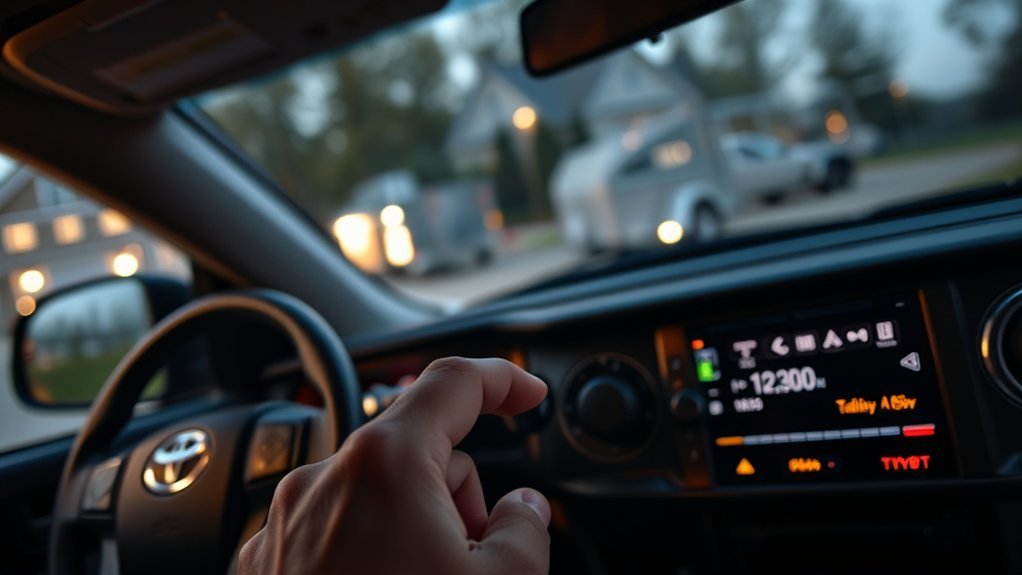
Secure the trailer to your Tundra, put the truck in neutral, and gently roll forward without applying the gas to perform the idle-roll test; squeeze the brake controller while coasting and a full stop indicates the gain is set correctly. You’ll read the controller display and feel the actuator response—confirm the indicated brake controller settings match the stop you observed. If the trailer drifts or stops short of a full halt, the display will suggest a lower-than-needed output.
Repeat the idle-roll test immediately after any adjustment to verify results. Log the effective settings for different loads so you can quickly apply trailer weight adjustments later. Stay methodical: secure surroundings, use a flat, low-traffic area, and keep bystanders clear. This procedure frees you from guesswork, giving precise, replicable feedback on braking balance. Regularly recheck whenever cargo or trailer configuration changes to maintain safe, controlled towing.
Increase or Decrease Gain on a Tundra Brake Controller
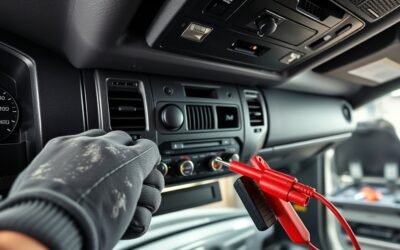
Start by locating the brake controller in your Tundra—usually mounted under the dash—and identify the gain dial or plus/minus buttons; press the plus to increase gain for heavier loads or the minus to decrease it for lighter loads, making small adjustments and retesting with the idle-roll method after each change to confirm safe, controlled stops. You’ll use basic adjustment techniques and systematic gain calibration: begin low, raise incrementally, and verify response. Make adjustments whenever trailer weight changes to preserve braking efficiency and safety. Roll slowly, apply the controller, observe trailer braking, then tweak again.
- Begin with a conservative setting
- Increase gain for heavier trailers
- Decrease gain for light or empty trailers
- Test after every change using idle-roll
- Repeat calibration whenever load varies
Stay deliberate and precise; your aim is control and freedom from fear on the road. These steps let you assert control over towing performance while protecting you, your trailer, and others.
Fine-Tune Gain to Stop at Idle Without Locking Wheels
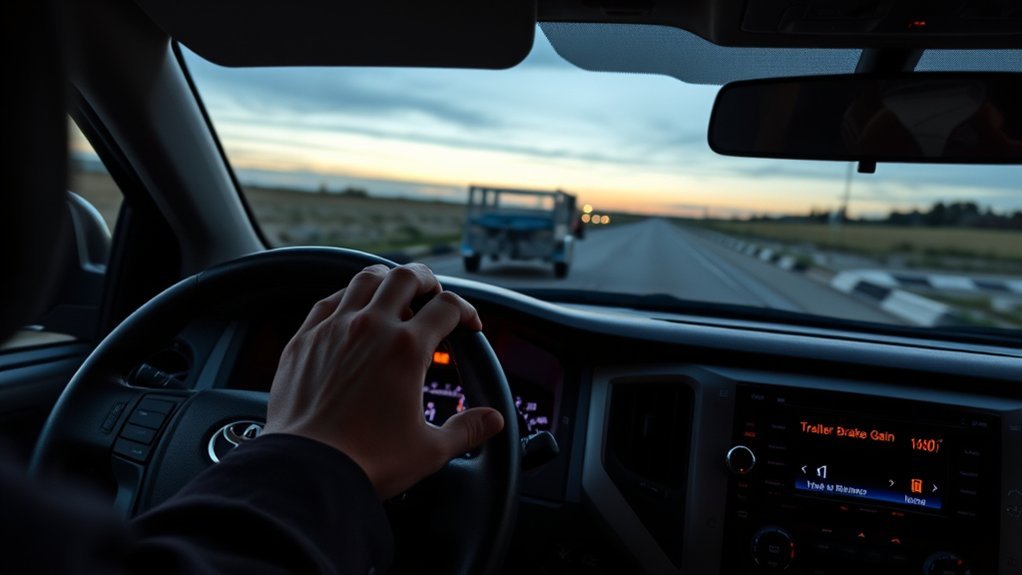
Start with a low gain and increase it in small increments while you test stops at idle to find the minimum setting that brings the trailer to a smooth stop. After each adjustment, roll the truck slowly in a flat, open area and verify the trailer brakes engage without causing wheel lockup or sudden jerks. If the trailer feels grabby or the wheels skid, reduce the gain slightly and retest until stops are consistent and controlled.
Set Gain Incrementally
- You’ll set gain incrementally to achieve a controlled stop at idle without locking wheels. Understand brake controller types and factor in trailer weight adjustments before you begin. Attach the trailer, roll the Tundra slightly without gas, and prepare the controller.
- Gradually squeeze the controller while observing vehicle response.
- Press the controller’s “plus” button in small steps to raise gain.
- Test stopping from idle repeatedly after each increment.
- Fine-tune until the truck stops smoothly and the trailer brakes engage effectively.
- Re-check gain any time trailer weight changes or you switch brake controller types.
Stay methodical and safety-focused: small adjustments prevent skidding, preserve control, and keep you liberated on the road.
Prevent Wheel Locking
With the coarse gain set, shift your attention to preventing wheel lock by fine-tuning until the truck stops at idle without skidding. Roll the truck forward slightly, apply the brake controller, and observe wheel response and wheel sensitivity. Use the “plus” button to raise gain incrementally; small steps prevent overshoot that causes locking. You’re aiming for a complete stop at idle speed with no skid marks or ABS intervention. Always secure the trailer to guarantee the load reflects real braking needs. Monitor stopping distance and repeat tests after loading changes or hitch adjustments. Maintain a routine check schedule and recalibrate if braking feels grabby or delayed. This disciplined approach frees you from unsafe braking and keeps control under varying loads.
What Gain to Use for Different Trailer Weights and Loads

When you match gain to trailer weight, you’ll get predictable, safer braking: set base ranges and fine-tune for conditions. For trailer weight up to 3,500 lbs, start 2.0–4.0 for balanced brake performance. For 3,500–6,000 lbs, increase to 4.0–6.0 to maintain control. Over 6,000 lbs, 6.0–8.0 helps the Tundra manage momentum. Loads above 8,000 lbs often need >8.0; adjust with caution for road and trailer dynamics. Always test at idle and make small increments until the truck stops smoothly without wheel lock.
- Start low, raise gain incrementally to avoid over-braking.
- Match gain to actual trailer weight, not just trailer type.
- Verify smooth stop at idle before highway speeds.
- Consider road grade and cargo shift when increasing gain.
- Recheck settings after loading changes or long hauls.
You’re aiming for liberation through responsible control: predictable stops, confident towing, and freedom to travel safely.
Troubleshooting: Common Brake Response Problems and Fixes
After you’ve set and verified gain for your trailer weight, you’ll still need to address common brake-response problems that can undermine safe towing. First, confirm the brake controller is securely plugged into the vehicle port; intermittent engagement often traces to a loose connection. If response feels weak or inconsistent, incrementally increase gain and test again by rolling the truck slightly and applying the controller to observe stopping behavior.
Monitor trailer weight changes—when payload shifts, recalibrate gain to restore control. If braking is harsh or uneven, perform a wiring inspection: look for frays, corrosion, loose terminals, and proper ground continuity. Persistent issues after controller and wiring checks require inspecting trailer brake assemblies for wear, seized hardware, or fluid/air problems. Address faults before towing; don’t compensate with excessive gain. These steps empower you to maintain safe, reliable braking and preserve your freedom to tow confidently and responsibly.
Pre-Departure Checklist and Routine Brake Maintenance
Checklist time: before you leave, verify the trailer is securely hitched, the electrical connector is fully seated, and the brake controller responds by rolling the truck slightly and squeezing the controller to confirm engagement. You’ll perform a quick functional test, adjust gain for load, and confirm predictable stopping. Follow a strict maintenance schedule to avoid surprises and keep brake fluid at proper levels.
- Inspect hitch and safety chains for security and wear.
- Verify electrical connector seating and controller power/indicator.
- Roll truck slightly and activate controller to confirm brake engagement.
- Check brake fluid level and inspect for leaks or contamination.
- Adjust gain to match trailer weight; re-test after adjustments.
You want freedom on the road, not risk. Routine pre-departure checks and periodic servicing prevent failures and empower confident towing. Learn your controller settings, log adjustments per trip, and adhere to the maintenance schedule to keep braking linear and reliable.
Frequently Asked Questions
What Gain Should I Use for Trailer Brakes?
Use a gain around 0.5–1.0 for light loads, raise toward 2.0+ for heavy loads; you’ll adjust based on brake sensitivity and towing capacity, testing safely so you’re free from braking surprises and maintain control.
How to Adjust Trailer Brake Settings?
You adjust trailer brake settings via the brake controller: secure the trailer, test brakes with a low-speed stop, increase gain if trailer drags, repeat until idle stops are smooth—prioritize towing safety so you stay free and confident.
Conclusion
You’ve set the basics, verified connections, and adjusted gain — but will your Tundra stop precisely when you expect it to? Double-check hitch weight, tire pressures, and the controller’s manual settings before every trip. Perform the idle-roll test and fine-tune until the trailer brakes stop without locking. Maintain wiring, magnets, and the controller, and re-test after load changes. Safety depends on routine checks and conservative adjustments — don’t guess; verify.