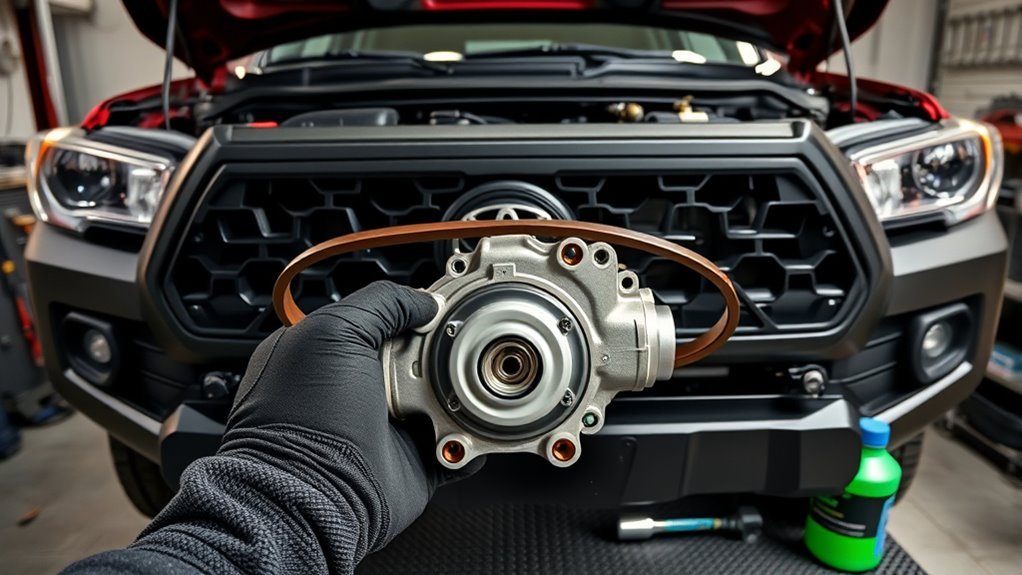
You’ll drain the coolant, remove the radiator hoses and shroud, then loosen the AC and power‑steering belt tensioners to take belts and fan off. Unbolt the old water pump (keep fasteners organized), pry it free, clean the mounting surface, and fit the new Aisin pump with fresh O‑rings and gasket. Torque bolts in a star pattern, reinstall belts and fan, refill and burp the system, check for leaks and proper belt tension—continue below for full step‑by‑step guidance.
Quick Checklist: Parts, Tools, Time, and Safety

Before you start, gather all parts and tools so the job goes smoothly: you’ll need a thermostat with black housing, an Aisin water pump with its gasket and O-rings, optional new radiator hoses and clamps, plus a socket extension, ratchet, 10mm/12mm/14mm sockets, vise grips, a flat head screwdriver, and thread lock. Confirm thermostat compatibility with your Tacoma model year before removal. You’ll also want proper coolant and a plan for disposal.
Plan 4–6 hours for the full procedure; allocate extra time if you haven’t done this before. Let the engine cool completely, wear safety goggles and gloves, and work in a ventilated area to avoid fumes. Inspect the new pump gasket and O-rings for defects; precise gasket installation prevents leaks and preserves system pressure. Use thread lock on specified fasteners per torque specs. Maintain focus and deliberate motions—this is mechanical liberation: reclaim control by executing each step methodically, minimizing risk and ensuring reliable coolant circulation.
Tools, Parts & Safety Gear for a Tacoma Water Pump Swap
With your checklist confirmed, gather the specific tools, parts, and PPE you’ll use for the Tacoma water pump swap so nothing interrupts the procedure. You’ll need a socket extension, ratchet, and 10mm, 12mm, and 14mm sockets for access and removal; organize them so each step flows without search. Select an Aisin water pump with its gasket, plus a thermostat assembly, thermostat O-ring, and water pump O-ring to guarantee a factory-quality seal. Keep thread lock available to secure critical bolts against vibration.
Wear gloves and safety glasses to guard against coolant and sharp edges. Consider optional new radiator hoses and hose clamps to extend system life and reduce repeat work.
- Tools: socket set, extension, ratchet.
- Parts: Aisin pump, gasket, thermostat, O-rings.
- Consumables: thread lock, hose clamps.
- PPE: gloves, safety glasses.
Focus on water pump basics and maintenance tips: clean mating surfaces, torque bolts correctly, and replace seals every time.
Drain Coolant and Remove Radiator Shroud & Hoses
Start by draining the radiator: open the petcock near the driver-side front tire and remove the radiator cap to speed flow, then catch coolant in a drain pan. Work deliberately: let the system fully drain, then close the petcock only after flow has stopped. Handle used antifreeze per local coolant disposal rules — you’re responsible for proper recycling or hazardous-waste drop-off.
Next, loosen the upper radiator hose clamp, twist the hose to break the seal, and pull it off the neck. Repeat for the lower hose, using towels to catch residual fluid and prevent spills. Detach the small overflow/overflow tank hose to free the radiator assembly completely.
Unbolt the radiator top shroud — typically 10mm fasteners — and lift it clear to expose downstream components. Keep fasteners organized and label any that differ. This procedure frees access for the pump swap and aligns with sound radiator maintenance practices. Move discarded fluid and parts to designated containment; liberation includes stewardship.
Remove Fan and Loosen AC & Power‑Steering Belt Tensioners
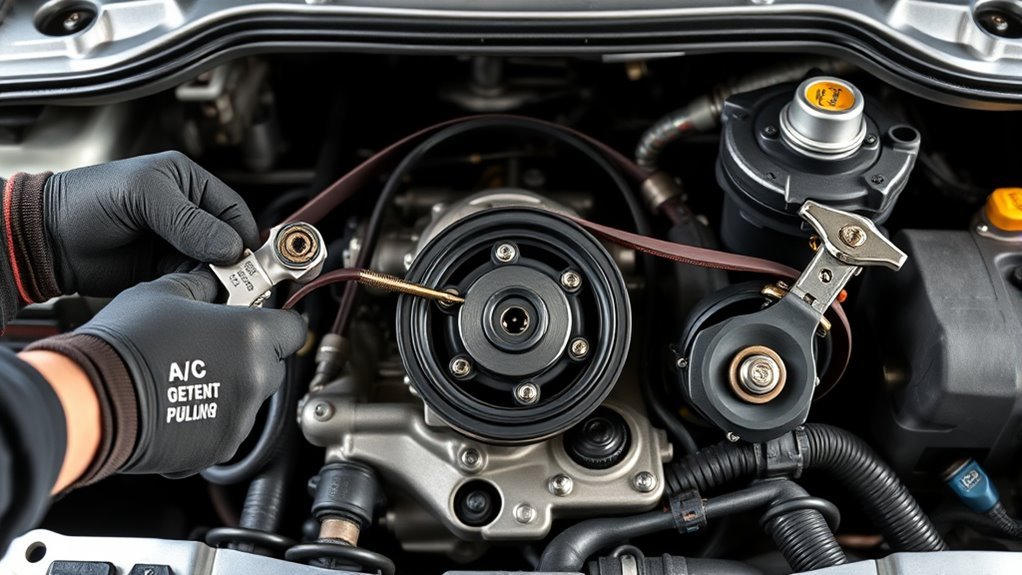
Loosen the power‑steering pump tensioner with a 14 mm wrench to relieve belt tension, then unthread the adjuster bolt so the belt can slip off while leaving the alternator position undisturbed. From below, repeat the same motion on the AC belt tensioner with a 14 mm socket to free its belt. Remove seized pulley by tapping it gently; work patiently to avoid collateral damage. Unbolt the fan shroud (four 10 mm bolts) and lift it clear to complete fan removal, granting unimpeded access to the pump area.
- Use a 14 mm wrench/socket for both power‑steering and AC tensioners to standardize tools.
- Unthread adjuster bolt on the pump tensioner until belt slips off; don’t alter alternator alignment.
- Tap seized pulley lightly until it loosens; protect adjacent components while prying.
- Remove four 10 mm shroud bolts, set shroud aside to expose the water pump.
Maintain belt maintenance discipline—label belts and routing; liberation comes from clear, methodical steps.
Unbolt and Remove the Old Water Pump (Step‑by‑Step)
Begin by locating and removing every bolt that secures the water pump—note there are both 10 mm and 12 mm fasteners—starting with the lower bolts to control coolant flow as you work. Systematically back out the lower 10 mm bolts, catch any draining coolant, then remove the remaining 12 mm bolts in a star pattern to relieve stress evenly. If the pump sticks, use a flathead screwdriver or small pry bar to break the seal; apply even, controlled force to avoid warping the housing.
Once the unit is free, lift the water pump straight off and set it aside for inspection. Perform thorough gasket removal: scrape the old gasket material with a razor blade and clean the mounting surface of debris and corrosion. Inspect the mating surface for pitting or damage that could compromise sealing. Dispose of spilled coolant responsibly. These steps free you from hesitation and prepare the engine for the next precise installation phase.
Install New Water Pump & Thermostat : O‑Rings, Alignment, Torque
Fit the new O‑rings into their grooves on the pump and thermostat housing to guarantee a proper seal and prevent coolant leaks. Seat the pump squarely against the engine block, matching all mounting holes before inserting bolts. Tighten the bolts in a star pattern with thread lock applied and torque them to the factory spec (about 16 ft‑lbs) to avoid warping and guarantee consistent clamping.
O-Ring Placement
1. You’ll seat O ring materials correctly: place the thermostat O-ring squarely in its groove so it seals without distortion. O ring maintenance begins here — clean grooves, inspect for cuts, replace old rings.
1. Align the water pump and gasket with care, ensuring the pump O-ring isn’t pinched or twisted during engagement.
1. Apply a thin layer of thread lock to water pump bolts to deter vibration loosening; this secures the assembly while preserving seal integrity.
1. After assembly, verify both O-rings visually and by running the engine briefly; check for moisture around the thermostat and pump to confirm no coolant leakage.
Follow these steps methodically; precise placement and inspection deliver reliable seals and mechanical freedom from repeat repairs.
Bolt Torque Pattern
Start by hand-threading one bolt to hold the pump squarely against the gasket, then tighten the remaining bolts in a star pattern to distribute clamping force evenly and avoid warping the pump or mating surface. With the O-ring seated, confirm pump alignment visually and by feel; the flange must sit flat. Apply thread lock if desired on bolt threads to resist vibration-induced loosening. Perform bolt tightening in incremental stages: snug all bolts in the star pattern, then torque to specification in two steps — roughly half then full torque — to achieve uniform clamping. Typical torque falls between 10–15 ft-lbs, but consult the service manual for exact values. This methodical bolt tightening secures the pump, prevents leaks, and preserves your control.
Refit Belts, Fan Assembly & Shroud; Set and Verify Belt Tension
Reinstall the belts and fan components in sequence, making sure each belt sits correctly on its pulleys before applying tension: slide the alternator belt over the water pump pulley so it rests on all pulleys without preload, align the power steering belt ribs and tighten the tensioner bolt to take up slack, then secure the fan clutch by starting one mounting nut to hold it in place and tightening the rest so the fan spins freely. Follow deliberate belt installation and fan alignment steps to restore driveability and autonomy.
Verify belt tension by twisting the longest exposed run: 90° indicates correct tension on long stretches, 45° for short runs. After fan clutch seating and shroud reattachment, reconnect hoses, inspecting and replacing any damaged lines.
- Confirm alternator belt seating on every pulley before tensioning.
- Align power steering belt ribs; torque tensioner bolt to spec.
- Start one fan nut to locate, then evenly tighten remaining nuts.
- Twist belts at longest span to verify 90°/45° criteria and adjust.
Work methodically; reclaim control of your vehicle maintenance.
Fill, Burp, Test for Leaks, and Troubleshooting Tips
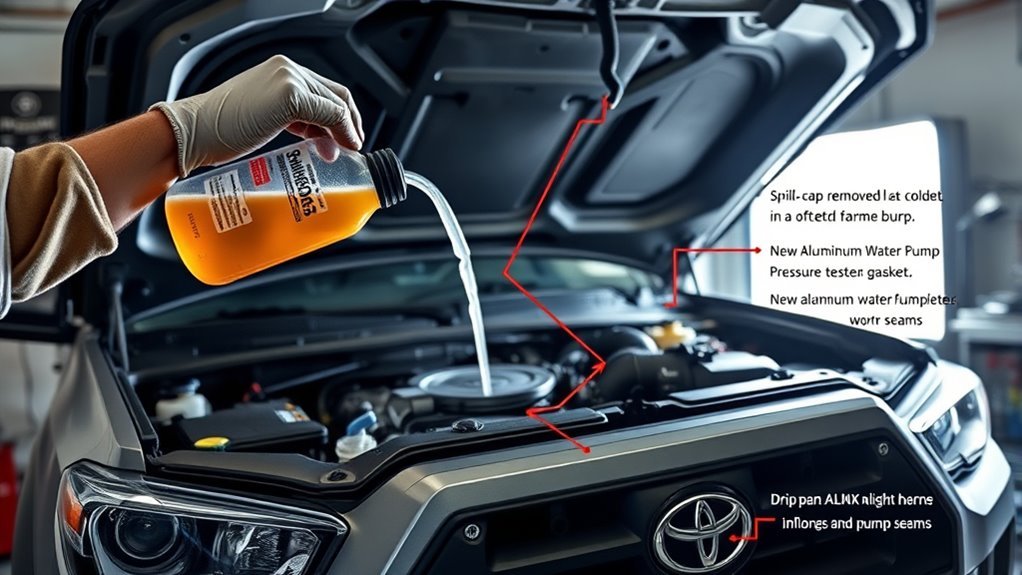
With belts, fan and hoses back in place, you’re ready to refill and purge the cooling system: mount a spillproof funnel at the radiator neck, pour manufacturer‑specified coolant until bubbles stop rising, and run the engine at idle with the heater on high so the thermostat opens and the pump forces trapped air out through the funnel. Maintain idling until temperature stabilizes and no more air bubbles appear; this removes air pockets that cause hot spots and cavitation. Use the coolant types recommended by Toyota to preserve seals and corrosion resistance. Inspect around the water pump, hoses, clamps and gasket for leaks while the system is pressurized; tighten or replace components if seepage appears. If overheating or persistent air remains, recheck belt tension, hose routing and bleed points—repeat the filling cycle. For stubborn leaks, pressure-test the system and verify pump installation torque and mating surface cleanliness. Document what you changed; disciplined, repeatable checks free you from future roadside dependency.
Frequently Asked Questions
Can I Reuse the Old Water Pump Gasket if It Looks Intact?
No — you shouldn’t reuse it. Even if the gasket integrity appears good, degradation can compromise sealing performance; replace the gasket to guarantee a reliable seal, prevent leaks, and maintain system freedom from repeat failure.
Do I Need to Replace the Timing Chain/Belt During This Job?
No, you don’t automatically replace the timing belt/chain during this job; follow the vehicle’s maintenance schedule, inspect tensioners and guides, and replace components only if wear or age suggests failure to guarantee liberated, reliable engine operation.
What Coolant Type and Mix Ratio Should I Use Afterward?
Think of coolant as lifeblood: use Toyota-approved OAT or OEM equivalent coolants; mix ratios 50/50 propylene glycol/water for freezing/boiling protection, or 60/40 in extreme cold. Check specs, flush thoroughly, bleed air.
Are There Torque Specs for Other Nearby Bolts I Should Check?
Yes — check nearby bolts: thermostat housing, timing cover, and accessory brackets. For water pump maintenance, follow factory torque specifications, use a calibrated torque wrench, and tighten in sequence to prevent leaks and free your driving.
How Long Should I Run the Engine to Properly Burp the System?
You’ll run the engine about 10–15 minutes, like shaking the world awake, to guarantee coolant circulation and purge air pockets; monitor temperature, heater heat, and reservoir level, topping off as needed until readings stay steady.
Conclusion
You finished the pump swap; now verify, tidy, and test. Think of your Tacoma like a pulse—after flushing and refilling, start the engine and watch coolant flow steady through the clear hose for 10 minutes; that steady rhythm tells you seals, o‑rings, and torque are working. I once chased a slow leak for hours until a loose 10 mm bolt stilled the pulse—tighten to spec, recheck hoses, and road‑test before calling it done.