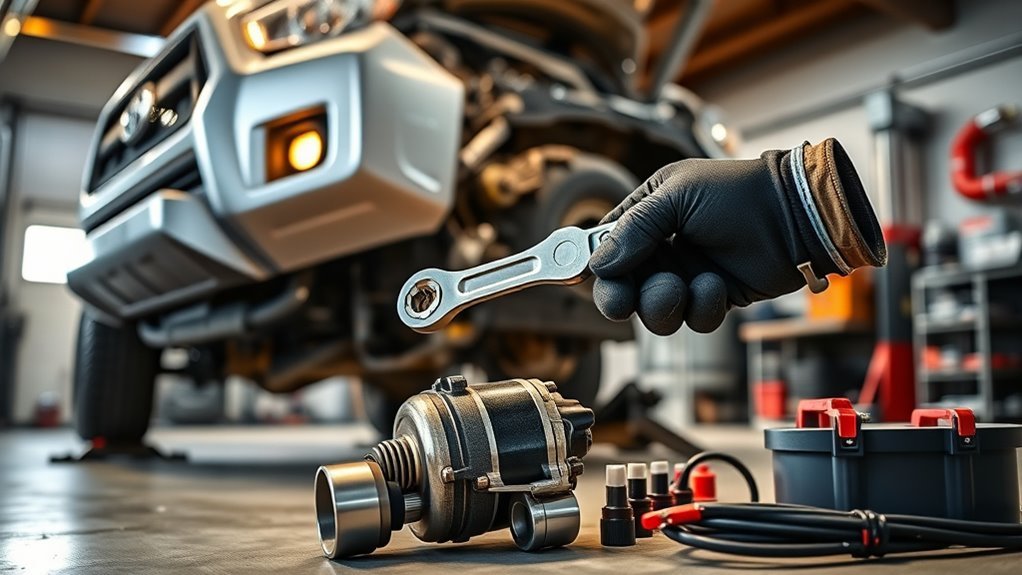
You can swap a Toyota Tacoma starter in about 2–3 hours with basic sockets, a swivel extension, jack stands and safety gear. Park level, chock wheels, disconnect the battery, remove the driver wheel and splash guard for access. Support the starter, unbolt the motor and solenoid with 14mm/12mm sockets, note wiring positions, then install the new unit, torque bolts and terminals to spec and reconnect grounds. Follow post‑install checks and simple troubleshooting to confirm a reliable start if you want more detail.
Quick Start for Toyota Tacoma Starter: Time, Difficulty, Tools
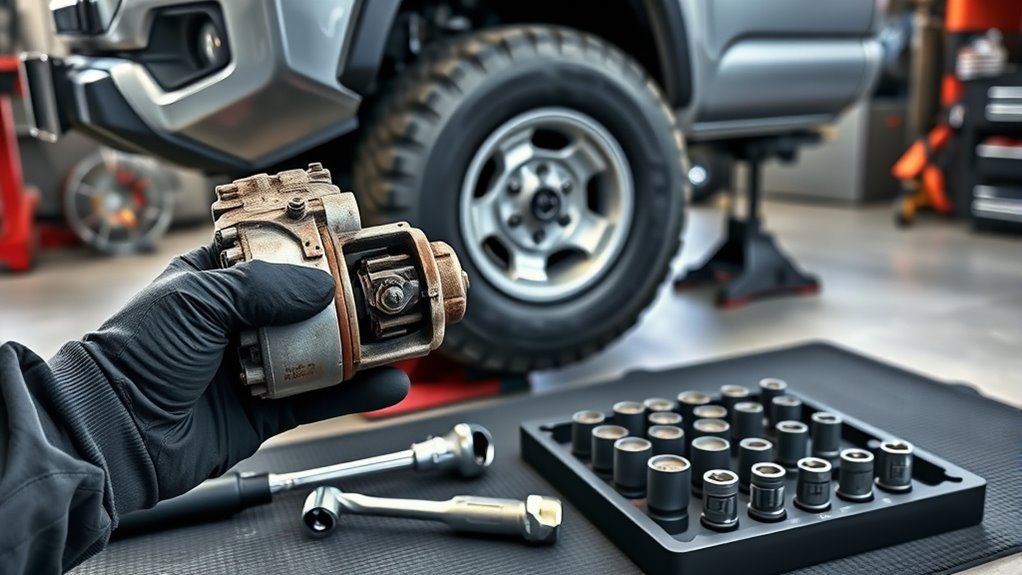
If you’re ready to replace a Toyota Tacoma starter, plan on about 2–3 hours and expect a moderate level of difficulty due to tight access around the unit. You’ll act decisively: this quick start covers time, difficulty, and essential tools so you can move from diagnosis to repair and reclaim control. Recognize starter failure by common symptoms—no-crank, intermittent engagement, or grinding—so you don’t waste time. Gather a 12mm and 14mm socket, swivel extension, and a ratchet; have a jack and stands ready (you’ll remove the driver-side wheel and splash guard for access). Work methodically: disconnect the battery, note harness locations, and unbolt the starter. Disassemble the starter while it’s in the bay if needed to ease removal and installation. Expect to avoid steering-rod or exhaust-manifold removal when you follow this path. Stay focused, use steady torque, and verify electrical connections before finalizing the install to guarantee liberation from repeat failures.
Prep Your Tacoma: Jack, Wheel, and Access
Start by jacking up the driver side of your Tacoma and seating a jack stand under a reinforced frame point to secure the truck before you go underneath. Remove the driver wheel to improve visibility and maneuvering room around the starter. Take off the rear engine-bay splash guard and have a 12mm and 14mm socket ready to remove starter fasteners.
Jack Truck Safely
Before you lift the Tacoma, park it on a flat, stable surface and engage the parking brake so the truck can’t roll. Check your safety measures: wheel chocks front and rear, sturdy gloves, and eye protection. Inspect the hydraulic jack for leaks, proper oil level, and intact saddle—jack maintenance prevents failures. Position the jack under the manufacturer’s frame lift point on the driver side and pump smoothly until the tire clears the ground. Slide a rated jack stand under a solid frame member, lower the truck gently onto the stand, and confirm stability by shaking the vehicle lightly. Never work under a truck supported only by a jack. Keep the removed wheel nearby and organized so you can reattach it confidently after the job.
Remove Driver Wheel
Raise the driver side of your Tacoma on a secure jack and support it with a rated jack stand before removing the wheel. Loosen lug nuts, lift slightly if needed, then remove the wheel to free space for starter access. Check tire condition and note any debris; good maintenance keeps you mobile and free. Watch wheel alignment marks or rim orientation so reinstallation restores original position.
- Confirm jack and stand rated capacity
- Break lug nuts before full lift
- Use a 12mm socket for nearby fasteners
- Inspect wheel studs and tire condition for damage
- Keep removed wheel upright and clear
Stay deliberate and assertive—removing the wheel gives room to work and preserves your autonomy while you proceed to the starter.
Access Splash Guard
With the wheel removed and the Tacoma supported on a rated jack stand, crawl under the fender and locate the rubber splash guard at the rear of the engine bay; removing it gives clear access to the starter area. Sit comfortably, keep your tools within reach, and work methodically. Use a flat screwdriver or trim tool to pry out the plastic fasteners—turn and pull or pop them straight out depending on style. Set fasteners aside in a labeled container so you can reinstall them. Peel the splash guard down and away for full engine bay access; inspect for cracks or missing clips and replace if needed. With the guard out, you’ll have unobstructed reach to the starter, speeding removal and asserting control over the job.
Remove the Tacoma Starter (No Exhaust/Steering)
Jack up the driver’s side of the Tacoma, support it securely on a jack stand, then remove the driver-side wheel and the rubber splash guard at the rear of the engine bay to expose the starter. You’ll want clear access for starter troubleshooting and to check for solenoid issues without wrestling the exhaust or steering. Follow these steps and stay liberated from guesswork:
Jack up the driver’s side, remove wheel and splash guard for clear starter access—no exhaust wrestling needed
- Disconnect the battery: remove the positive lead harness and the negative terminal with a 12mm socket.
- Unbolt the brake line mounts: take out the two 12mm bolts to gain workspace.
- Position a support under the starter so it won’t drop when loose.
- Use a swivel and long extension with a 14mm socket to loosen both starter bolts; hold the starter while removing the upper bolt.
- Withdraw the starter straight down and out, keeping wiring clear and noting connector positions.
You’re now ready to inspect or remove the starter for off-vehicle work, maintaining safety and control throughout.
Take the Starter Apart In-Engine: Solenoid + Motor
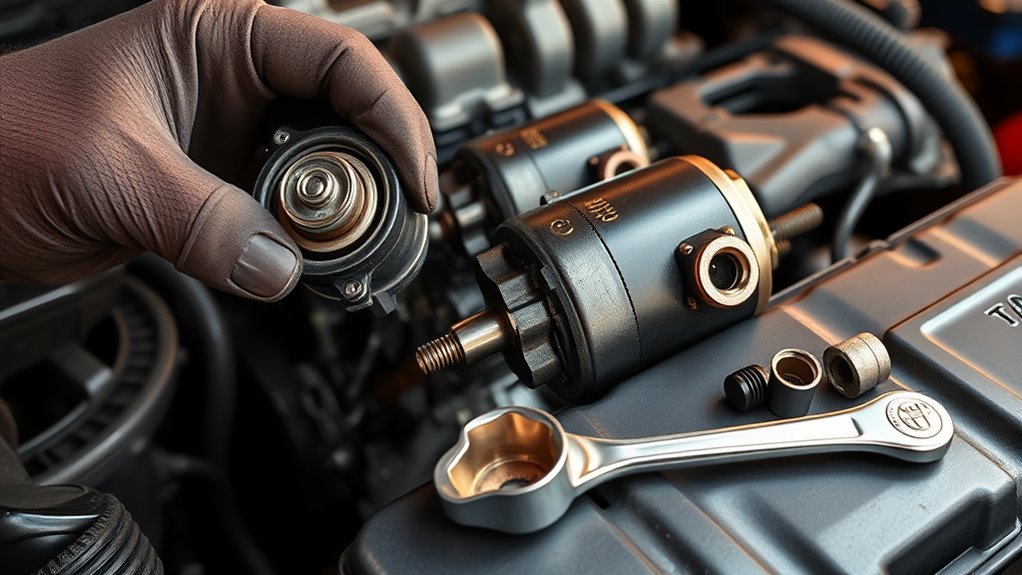
Start by disconnecting the solenoid ground with a 12mm socket to remove any risk of accidental engagement. With power isolated, use a 10mm socket to remove the two long bolts that secure the solenoid to the motor assembly. Work deliberately; you’ll be operating in tight engine-bay space, so keep your movements controlled to avoid dropping hardware. Once the bolts are out, separate the solenoid from the motor, pulling straight to prevent bending terminals or catching internal components. Inspect the solenoid function visually—plunger, contacts, and return spring should move freely and show no burning. Check the motor assembly for free rotation and obvious damage to the pinion gear or brushes. Maintain the solenoid orientation as you set parts aside so reassembly mirrors removal; incorrect alignment compromises solenoid function and starter engagement. Keep fasteners together and note their positions. This in-engine disassembly saves time but demands focus; stay deliberate, keep components clean, and prepare for the next installation step.
Install New Starter: Bolt Sequence, Torque, and Wiring
Insert the solenoid into the engine bay with the correct orientation, then hand-start the motor-to-solenoid bolts to align everything before torquing. Use a 10mm socket for the solenoid long bolts and a 14mm with a swivel/extension for the starter bolts, tightening each to the torque values in your service manual and following the manufacturer’s bolt sequence. Reconnect the ground to the solenoid with a 12mm socket, then attach the positive lead harness and negative terminal, double-checking each connection for security and correct placement.
Bolt Tightening Sequence
Begin by loosely threading the two long 10mm bolts that secure the motor and solenoid so the assembly seats without binding, then fit the starter into the engine bay and install the two upper 14mm mounting bolts using a swivel and long extension to reach them. Stay focused on bolt alignment and a consistent torque pattern as you tighten. Work progressively, alternating bolts to draw the starter flush, then finish in sequence.
- Start 10mm long bolts until snug to set position.
- Install upper 14mm bolts, alternate to maintain alignment.
- Reconnect positive lead harness, then negative terminal.
- Reattach brake line with two 12mm bolts, verify seating.
- Inspect all connections and torque settings before lowering.
You’ll free yourself from guesswork by following this orderly, repeatable tightening routine.
Torque Specifications Guide
1 clear checklist governs the torque and wiring steps when you install the new starter: torque values, sequence, and where to tighten. You’ll first hand-start the two long motor-solenoid bolts, then torque them to ~18 ft-lbs with a 10mm socket for proper clamp without stripping. Next, secure the starter mounting bolts and torque them to 36 ft-lbs with a 14mm socket so the unit sits solidly against the flange. Connect the positive lead harness before fully securing the starter; torque that terminal to 12 ft-lbs to avoid loose contact. Tighten the solenoid ground to 12 ft-lbs with a 12mm socket for reliable grounding. Installation tips: follow manufacturer specs, recheck each torque, and work cleanly to guarantee lasting freedom from failures.
Wiring Connections Order
When you install the new starter, connect the positive lead harness first and snug it so the terminal seats fully before torquing, then mount the starter with the upper and lower 14mm bolts and torque them to spec so the unit sits flush; after that, fasten the solenoid ground with a 12mm socket to 12 ft‑lbs and reinstall the brake line with its two 12mm bolts torqued to spec, finally double‑check every wiring connection for tightness and correct orientation before lowering the vehicle. Follow this connection sequence to mirror the wiring diagram and avoid surprises. Stay methodical and free yourself from doubt by following each step.
- Connect positive lead harness first
- Mount starter with upper and lower 14mm bolts
- Torque bolts to manufacturer spec
- Fasten solenoid ground with 12mm to 12 ft‑lbs
- Reinstall brake line and verify all connections
Post-Install Checks: Wiring, Battery, and Safety Tests
Before you close the hood, double-check every wiring connection for secure fittings and signs of wear, clean and tighten the battery terminals, and make sure no tools or debris remain in the engine bay. Perform a focused wiring inspection: confirm terminals are tight, insulation intact, and connectors seated in the order you followed earlier. Practice disciplined battery maintenance — wire brush corrosion, tighten clamps, and verify voltage holds under starter load.
| Check | Action |
|---|---|
| Wiring inspection | Verify tightness, look for frays, secure routing |
| Battery maintenance | Clean posts, torque clamps, confirm voltage |
| Safety sweep | Remove tools, check for leaks, secure heat shields |
Turn the ignition and confirm the starter engages smoothly without grinding or unusual sounds. Inspect around the starter for leaks or loose fasteners; torque if needed. Only after a clean engine bay and successful start should you consider the job complete. You reclaim reliability and safety by finishing methodically.
Troubleshooting: Click, Spin, No-Crank, and Loose Wires
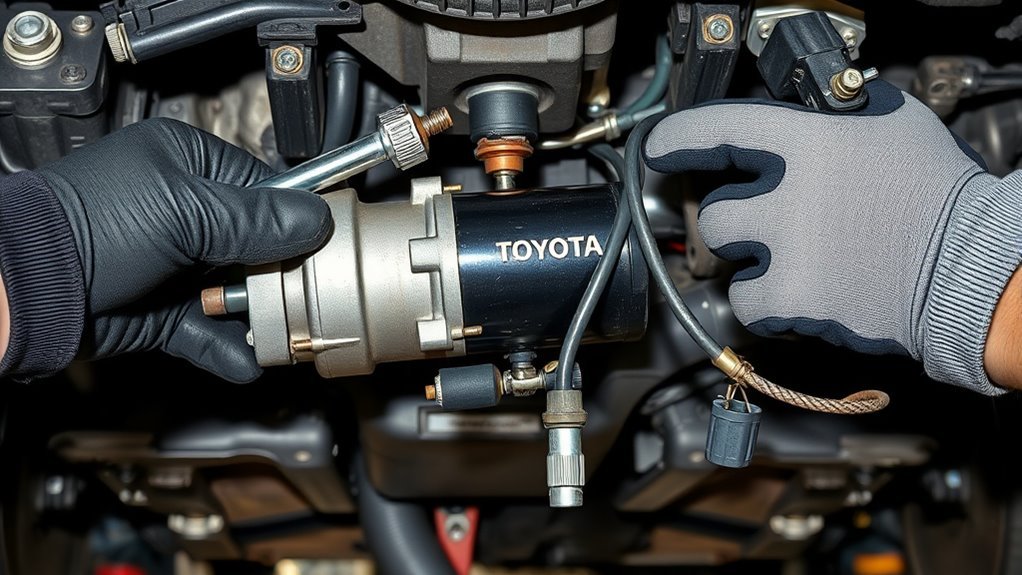
If you hear a click, a whir, or nothing at all when you turn the key, start by checking voltage and connections at the battery and starter—loose terminals or a weak battery are the most common culprits and will produce a rapid click or no-crank; use a multimeter to confirm battery voltage (12.4–12.7 V at rest) and voltage at the starter terminal while cranking, then inspect the positive lead harness, ground straps, and starter lug for corrosion, frays, or loose fasteners that could drop voltage under load. Use these steps to diagnose starter issues and perform electrical diagnostics methodically so you regain control. Check for starter spin without crank (worn starter gear or flywheel teeth), grinding (misalignment or solenoid fault), intermittent clicks (poor connection), and total no-crank (dead battery or open circuit). Follow this checklist to free yourself from guesswork:
- Verify battery resting and cranking voltage with a multimeter
- Tighten and clean battery and starter terminals
- Inspect positive lead harness and ground straps
- Check starter engagement gear and flywheel teeth
- Test solenoid operation and listen for grinding
Frequently Asked Questions
How Long Does It Take to Replace a Toyota Tacoma Starter?
Expect about 1–3 hours; you’ll likely finish near 2 hours if prepared. Use installation tips like swivel sockets and bay disassembly, follow troubleshooting advice for connections, and stay confident—liberate yourself by learning and doing.
How Much Does It Cost to Replace a Starter on a Toyota Tacoma?
Think of pennies buying freedom: you’ll pay about $200–$600 for a starter motor replacement. You’ll get OEM or aftermarket parts, follow replacement tips, compare labor vs DIY, and reclaim control over costs and timing.
Conclusion
Quickly check connections, charge the battery, and confirm clean contact—consistently clean connections create correct cranking. Start the starter securely, snug bolts to specified torque, and secure the solenoid and signal wires; simple, steady steps stop sudden stalls. Run a short road-ready rotation to reassure reliable responses. If clicking, spinning, or silence shows, scrutinize signs: stressed wires, stray grounds, or slipped sockets. Careful, consistent care keeps your Tacoma turning.