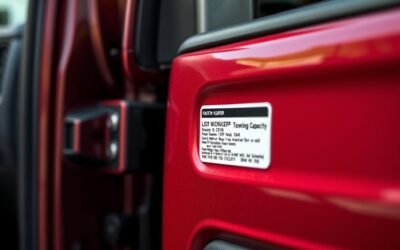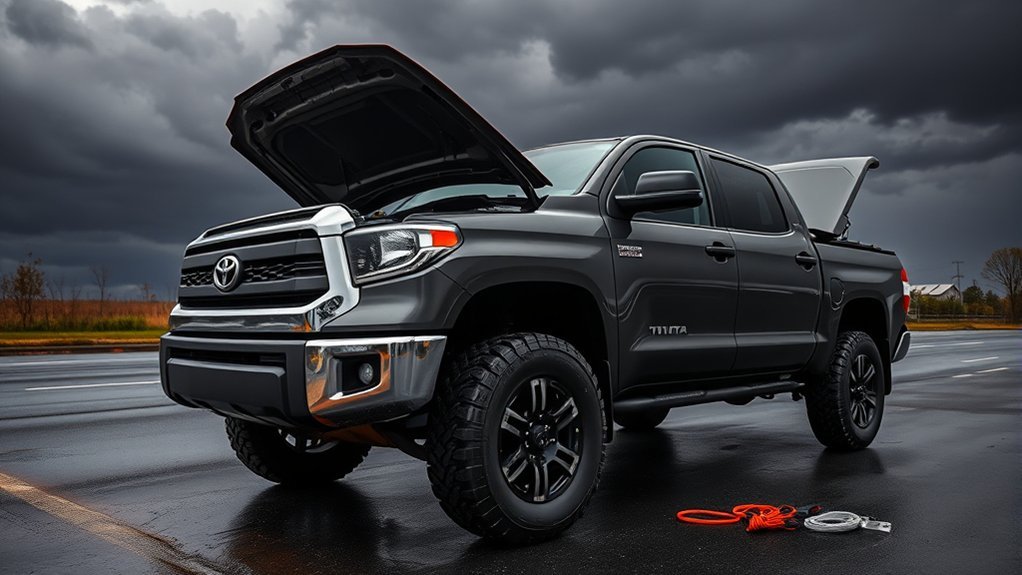
Prep your Tundra by checking tread and rotating tires regularly, keeping cold pressure at 35–38 psi, and adding about 400 lbs in the rear for stability; consider LT tires with water-evacuation patterns. Practice 4WD engagement monthly, use 4WD High for slick climbs only, keep traction control on, and shift to lower gears in heavy rain. Slow down, avoid standing water, and if you stall assess depth before exiting. Continue for step-by-step actions and inspection tips.
Prep Your Tundra’s Tires, Pressure, and Rear Weight for Wet Roads
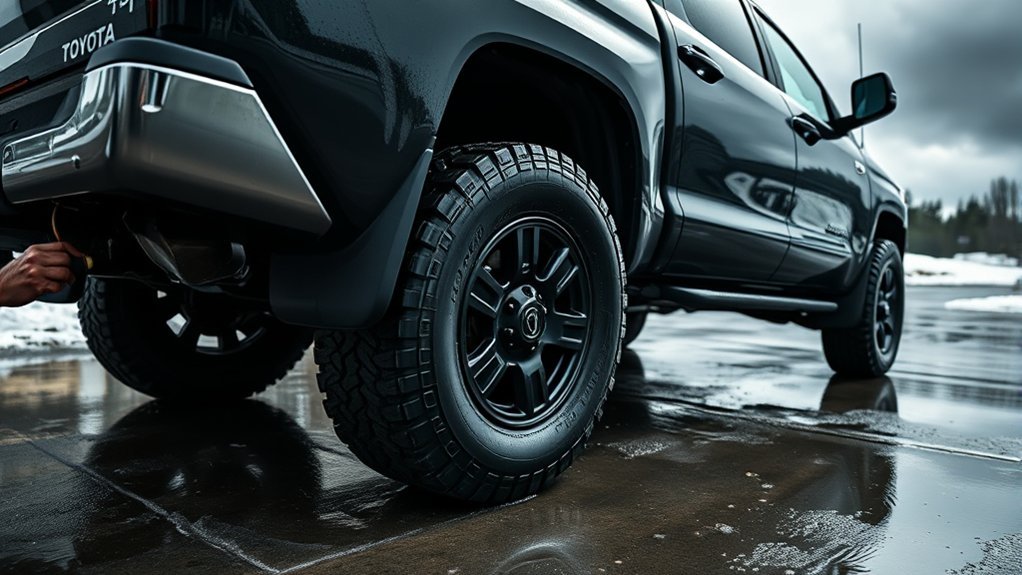
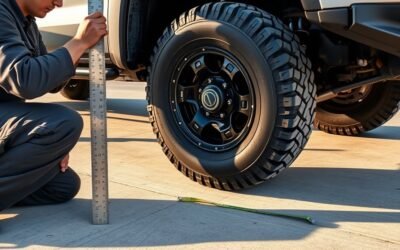
Start by checking your tires—both tread depth and pressure—because they’re your first line of defense on wet roads. You’ll measure tread wear and replace tires at 4/32” to channel water and cut hydroplaning risk. Inspect for uneven wear and schedule tire rotation every 5,000–7,000 miles to extend life and keep grip consistent. Keep pressure between 35–38 psi; check cold and adjust before driving in storms so handling stays predictable.
Consider LT light-truck tires if you want better wet traction than passenger-rated rubber—choose patterns designed for water evacuation. Add rear weight thoughtfully: secure about 400 lbs over the rear axle with sandbags or a ShurTrax system to improve stability and rear traction on slick roads. Finally, confirm your Tundra’s traction control is active; it complements tire prep and rear ballast to help you maintain control when conditions threaten freedom on the road.
Set Drivetrain and Traction: When (and When Not) to Use 4WD
How and when you engage your Tundra’s four-wheel-drive makes a big difference in wet-weather control, so use 4WD High for uphill sections on slick pavement but avoid it on dry roads or ordinary wet streets to prevent drivetrain wear. Be deliberate: reserve 4WD High for reduced-traction climbs or muddy shoulders, and never substitute 4WD Low for pavement situations — it’s for off-road crawls and severe slip recovery only. Practice monthly 4WD engagement to keep the system lubricated and ready; shift per the owner’s guide so you don’t bind components. Leave traction control (VSC) on — it’s a safety net that complements 4WD engagement by modulating power and braking to maintain stability. Listen to owner feedback but prioritize your truck’s limits and your freedom to move safely: thoughtful drivetrain choices expand where you can go without risking mechanical harm. Track conditions, choose the correct mode, and execute traction management confidently.
Drive Safely in Heavy Rain: Speeds, Gears, Lanes, and Hydroplaning Response
Even if you’re confident behind the wheel, slow down in heavy rain so your Tundra stays responsive and you reduce hydroplaning risk; choose a slow speed that keeps water buildup manageable and lets you react. Shift into lower gears on slick stretches to improve traction and engine braking. Increase your following distance to at least four seconds to compensate for reduced stopping power and avoid frantic maneuvers.
- Keep steady inputs: smooth steering, gradual acceleration, and controlled braking preserve grip and your freedom to move safely.
- Use lanes with the least standing water; avoid puddles near curbs and seams that can hide hazards and force abrupt corrections.
- If you hydroplane, lift off the accelerator and don’t brake hard; wait for the tires to bite back before steering gently.
You’ll maintain control, stay decisive, and protect your ability to travel where you want—even when conditions fight you.
If You Hit Floodwater or Stall: Immediate Steps and Evacuation
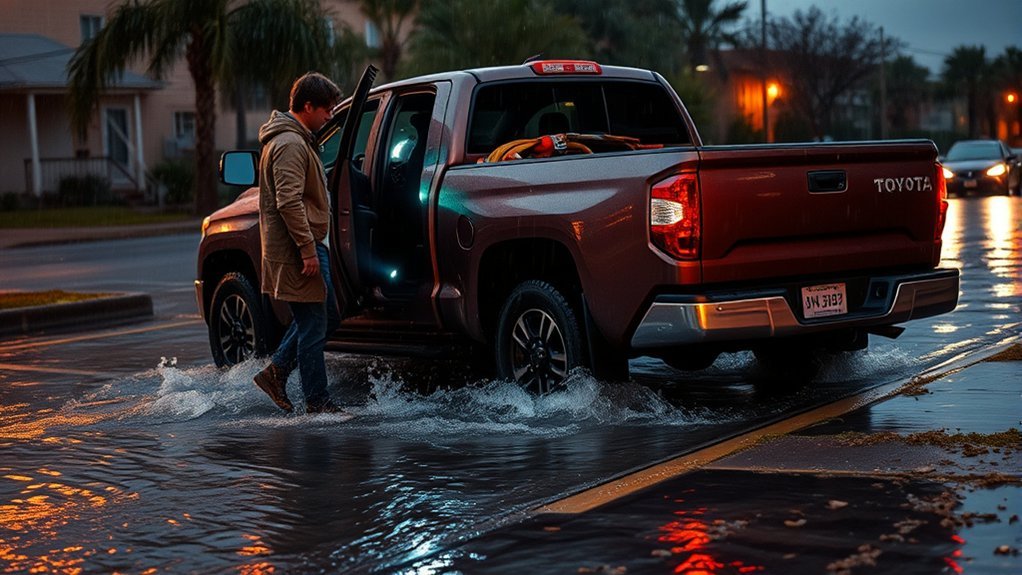
If your Tundra stalls in rising water, don’t try to restart it—doing so can hydro-lock the engine—unbuckle, get out while it’s still safe, and move to higher ground. Stay calm and prioritize floodwater safety: assess current depth and flow, and exit through a door or window if water or power locks block the usual egress. Roll down a window or break it with an emergency tool if you must; free movement beats a trapped vehicle.
Before you leave, turn off electronics and hazard lights to reduce electrical damage and fire risk. Keep belongings minimal—grab keys and phone if reachable—and help passengers evacuate. Once you’re safe, call for help or roadside assistance to arrange vehicle recovery and relocation to higher ground. Do a quick set of photos or video from a safe distance showing water level and vehicle position to support later claims. Treat vehicle evacuation as a human-first decision: nothing’s worth risking your life.
Post-Flood Inspection, Documentation, and Repair Next Steps
After you get to safety, start documenting and securing your Tundra right away: take clear photos and video of the interior, engine bay, undercarriage, and any wet or dislodged components to support insurance claims, then disconnect the battery and avoid turning on the ignition or electronics until a qualified technician inspects the vehicle. Inspect visually for water lines, mud, and displaced wiring; don’t try to restart a stalled engine to avoid hydro-lock. Record everything: time, location, and observations, because thorough documentation strengthens flood damage and insurance claims. Prioritize a professional electrical and mechanical assessment—hidden corrosion and shorted modules can make the truck unsafe. Keep copies of all estimates, invoices, and inspection reports to preserve a clear repair history and resale integrity. Aim to reclaim control: document, secure, and plan repairs with trusted shops. Bullet points to act on now:
- Photo/video log: interior, engine bay, undercarriage.
- Disconnect battery; do not start the vehicle.
- Schedule certified flood-damage inspection and save all records.
Frequently Asked Questions
Should You Use 4h in Heavy Rain?
Yes — you can use 4H in heavy rain uphill to improve tire traction, but don’t on regular wet pavement; practice driving techniques, engage 4WD monthly, and prioritize safety to avoid unpredictable handling or hydroplaning.
How Deep of Water Can a Tundra Drive Through?
You shouldn’t drive a Tundra through more than about 6 inches of water; beyond 12 inches it can float. Prioritize water resistance and flood safety, assess depth and flow, and don’t risk liberation by guessing.
Does 4WD Help With Hydroplaning?
No, 4WD doesn’t prevent hydroplaning; it can help off-road traction but not water dispersal. You should check tire pressure, use traction control, replace worn tread, and choose wet-rated tires so you stay safer and freer on wet roads.
Conclusion
Think of your Tundra as a mountain guide: sharpen its boots (tires, pressure, rear weight), tune its grip (4WD when firm, avoid it when slick), and teach it slow, steady steps (lower speeds, proper gears, lane choices). If water bites, pull clear, shut it down, and get out safely. After the storm, inspect, document, and repair like checking a map—methodical, precise, and always safety-first.