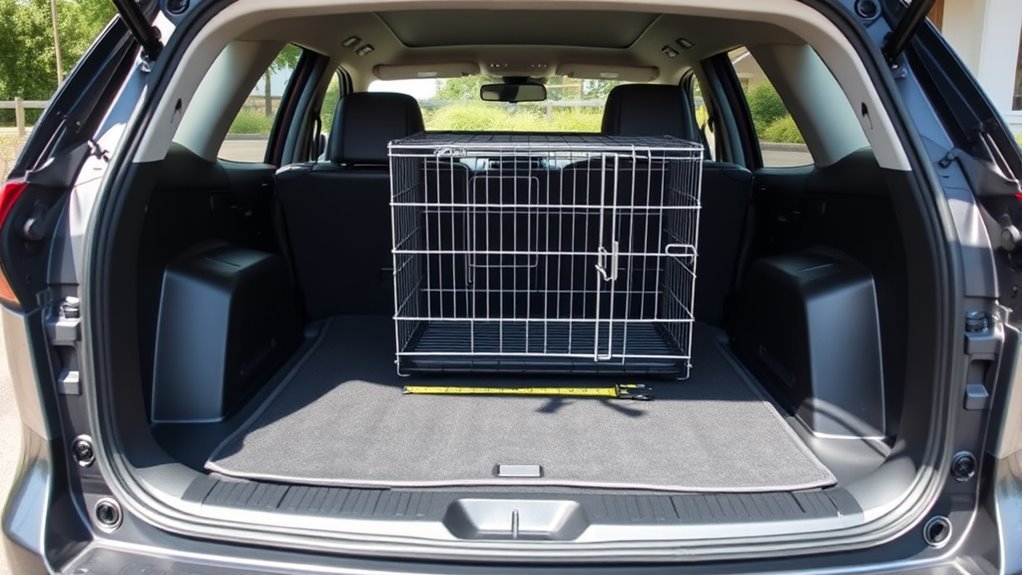
Measure your RAV4’s cargo width, depth and rear-seat slant, then pick an intermediate or slanted kennel that lets the hatch close and sit flat against the seatback. Position crates against the seat to use the slope, secure them with adjustable straps or anchors, and use a non‑slip liner to prevent shifting. Confirm airflow and test hatch operation before you go. Keep sizes conservative for side‑by‑side setups and keep going for fit, safety and comfort tips.
Quick Answer: Will a Crate Fit in a 2019 RAV4?
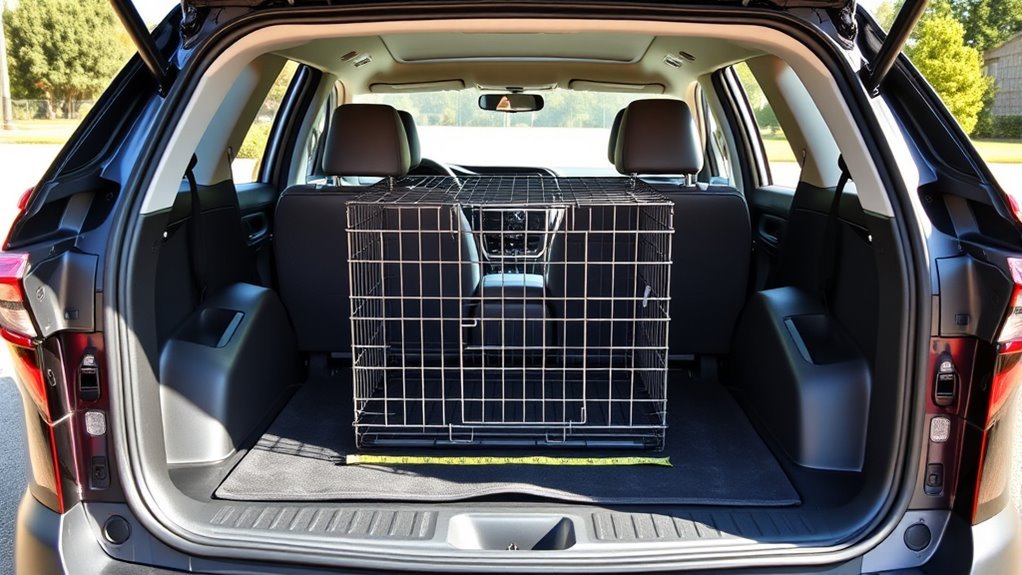
Wondering if a crate will fit in a 2019 RAV4? You can, but it depends on crate dimensions and chosen cargo configurations. With back seats up, intermediate kennels—like Rough Land intermediate SUV slant and Medium models—often fit neatly, sometimes side by side, letting you keep passengers free and secure. Larger crates may clash with the cargo slant and prevent the hatch from closing unless you reposition them creatively. You’ll want to test positioning while prioritizing safe closure and stable placement; a crate that shifts undermines both safety and freedom. Community feedback is valuable: other owners’ setups reveal which intermediate sizes and orientations work without compromise. Measure and try before committing, favoring crates that allow full hatch closure and minimal movement. That approach lets you transport dogs responsibly, preserves vehicle function, and keeps you feeling liberated rather than boxed in.
Measure Your 2019 RAV4 Cargo: Width, Depth, and Slant Points
Start by measuring three key dimensions of your 2019 RAV4 cargo area—width, depth, and height—from the exact points your crate will sit: width between the wheel wells (about 41.5 inches), depth from the hatch to the rear-seat backs (roughly 36 inches with seats up), and vertical clearance to the hatch (approximately 28 inches); also note the cargo-floor slant, since slant-specific kennels can be required to let the hatch close and keep the crate stable. You’ll record crate dimensions against these figures, prioritize safety, and plan cargo organization so the dog travels secure and free.
| Dimension | Approximate Value |
|---|---|
| Width (wheel wells) | 41.5 in |
| Depth (hatch to seats) | 36 in |
| Height (to hatch) | 28 in |
| Notes (slant) | Requires slant/intermediate kennel |
Measure precisely where the crate base will rest, consider intermediate slant kennels for side-by-side placement, and design cargo organization to maximize safe freedom for your dog.
How the Rear-Seat Angle Affects Crate Fit and Hatch Closure
Because the RAV4’s rear seatbacks slope toward the hatch, you’ll need to position any kennel so its back matches that angle or use an intermediate/slant model; otherwise the crate can press against the hatch and prevent it from closing. You’ll want precise crate alignment so the kennel sits flush with the seatbacks, preserving hatch clearance and airflow for your dog. Experiment with small shifts forward/back and slight rotations while keeping seatbacks up for safety.
Align the crate to the RAV4’s sloped seatbacks or use a slanted model to protect the hatch and ensure airflow.
- Check that the crate’s rear face mirrors the seatback slope to avoid pressure on the hatch.
- Favor slant considerations: an intermediate or slanted kennel saves space and keeps the door operable.
- Secure the crate once aligned to prevent movement during transit and maintain ventilation.
Move deliberately, prioritize freedom for your dog and yourself, and don’t accept a setup that risks hatch damage or restricted airflow. Proper alignment equals safer, liberated travel.
Which Crate Sizes Fit a RAV4: Intermediate, Medium, Large
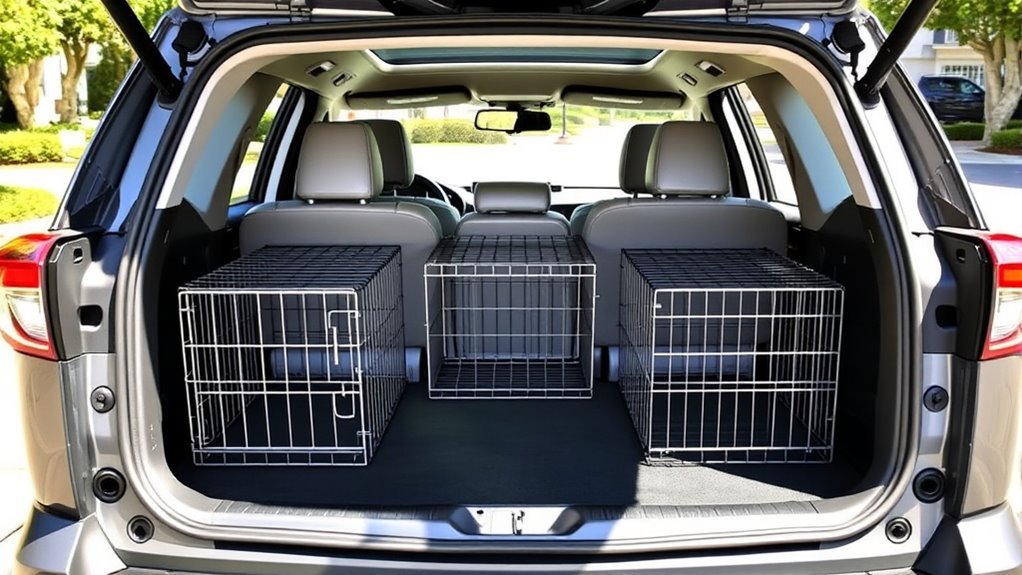
One or two intermediate-size crates are usually your best bet for a RAV4: they fit the 2019 cargo area side-by-side with seats up and, in many cases, let the hatch close when you use a slant model. For liberation-focused travel, choose intermediate or medium kennel types that match measured crate dimensions to the vehicle’s slanted rear. The 2019 RAV4 reliably accepts Rough Land intermediate SUV slant and medium kennels side-by-side with seats up; larger kennels often won’t fit cleanly and can block hatch closure.
On a 2016 RAV4, two intermediate double-door RTKs will work if you remove the gap guard when seats are up. Prioritize slant kennels where possible so the hatch seals; the rear angle matters. Use creative positioning—offset, rotated, or slightly forward—to optimize space and keep crates secure. Always verify crate dimensions against your RAV4’s cargo measurements before purchase to guarantee safe, legal transport.
Two-Crate Setups: Side-by-Side, Cargo + Passenger, and Sideways Options
When you’re fitting two crates in a RAV4, plan placements that prioritize secure restraint, clear sightlines, and a fully closing hatch where possible. You can fit intermediate kennels side-by-side in a 2019 RAV4 with seats up (Rough Land intermediate slant or Medium), and in a 2016 RAV4 two intermediate double-door RTKs will fit when the gap guard is removed. Larger two-door kennels may need to go sideways to use space efficiently. One crate in cargo and one in the passenger area is a practical alternative that preserves hatch closure.
Prioritize secure restraint, clear sightlines, and hatch clearance when fitting two crates in a RAV4.
- Measure crate dimensions precisely and test fit before long trips.
- Secure crates to anchor points; use straps and non-slip pads for stability.
- Choose slant or sideways configurations only after confirming hatch clearance and ventilation.
Focus on safety considerations first: restraint, ventilation, and unobstructed driver sightlines. You’ll gain freedom to travel knowing each dog is secure and your vehicle functions as intended.
Placement Options: Straight, Sideways, and Slanted That Close the Hatch
Start by measuring both your RAV4 cargo area and the kennel footprints so you can choose straight, sideways, or slanted placement that lets the hatch close and maintains secure restraint and ventilation. You’ll find three practical orientations: straight (nose-to-tail along the vehicle center), sideways (widthwise with the kennel back aligned to the vehicle’s slant), and slanted (angled to marry crate depth with hatch geometry). For intermediate kennels, straight or side-by-side often works with seats up; larger kennels may force you to slant them or reconsider size. When placing sideways, align the kennel rear with the RAV4’s cargo slope so the hatch seals. Slanted placement can exploit corner depth and permit closure without deforming the crate. Use crate orientation tips to verify clearance at the hatch and rear window. Prioritize ventilation, access to double doors, and stable contact points. Note securing measures are essential—plan attachment points and test for movement before driving so your dog rides free and safe.
How to Secure the Crate (Straps, Anchors, and Crash‑Tested Options)
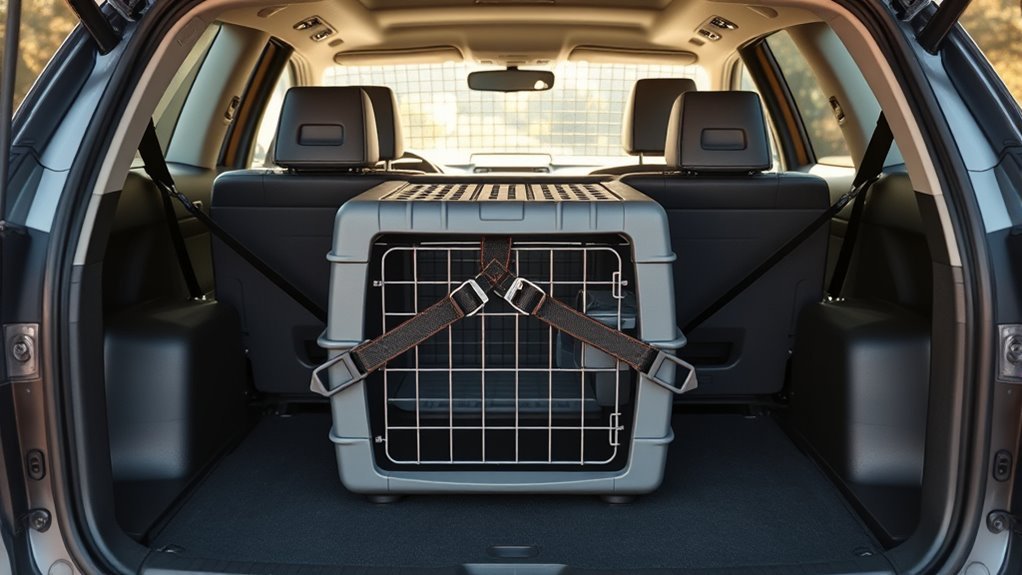
Because a loose crate can become a deadly projectile, secure it with crash‑tested gear and proper anchor points before you hit the road. You’ll want a crash‑tested crate like the Variocage to combine structural protection with essential safety features. Position the crate against the back seat to use the vehicle’s slant, let the hatch close, and improve crate stability. Use adjustable straps or dedicated anchors to lock the crate to factory tether points; that prevents shifting during hard braking or evasive maneuvers. Maintain airflow by checking venting and door clearance so your dog stays comfortable while restrained. Verify local regulations for pet transport so your setup meets legal requirements.
- Choose a crash‑tested crate for impact protection and integrated safety features.
- Use rated straps or anchors attached to vehicle anchor points for maximum crate stability.
- Position and tension straps to allow ventilation while eliminating movement.
Secure, legal, and liberated travel keeps both you and your dog safe.
DIY Cargo Liners and Simple Mods to Protect Floors and Stop Slipping
Cut a 71×50 inch section of carpet to fit around the wheel wells and hatch, trimming with a box cutter on the non-fuzzy side for clean, adjustable edges. Place a non-slip underlay between the carpet and RAV4 floor to stop the crate from shifting and to protect against spills and pet hair. Pairing this DIY mat with WeatherTech-style liners makes cleanup easier and adds a layer of crash‑aware protection for your interior.
Cut-To-Fit Cargo Mat
A single, well-trimmed piece of carpet sized to 71×50 inches will give your RAV4 a snug, non-slip base for a dog crate while protecting the cargo floor from scratches and dirt. Choose cargo material options that balance durability and weight; inexpensive indoor-outdoor carpet works well for around $20. Measure, score the non-fuzzy side, then use a sharp box cutter and steady cutting techniques to trim around wheel wells and the hatch for a precise fit. Scoring first yields smooth edges and easier adjustments. Expect about 30 minutes to complete the job. You’ll end up with a stable, protective liner that reduces shifting and preserves your freedom to travel safely with your dog.
- Measure twice, cut once.
- Score before cutting.
- Trim for tight fits.
Non-Slip Underlays
Start by laying a non-slip underlay beneath your DIY cargo liner to keep a dog crate from shifting during sudden stops or cornering. Cut a 71×50 inch carpet piece to fit the cargo area, score around wheel wells and the hatch, then trim for a snug fit. Add non slip materials under the liner—rubber mesh or foam pads—to grip flooring and crate feet. This boosts safety, keeps the crate stable, and protects the floor. Assembly takes about 30 minutes and costs roughly $20. Check and clean the area regularly to preserve grip and extend protection. These simple mods give you freedom to travel safely with your dog.
| Item | Purpose |
|---|---|
| Rubber mesh | Grip |
| Foam pads | Cushion |
| Carpet liner | Floor protection |
| Maintenance | Longevity |
Comfort & Airflow: Ventilation, Cooling Pads, and Remote-Start Tips
While you’re fitting a crate in your RAV4, prioritize airflow and temperature control so your dog stays safe and comfortable: use window vent shades to let fresh air circulate without compromising security, position the crate so it doesn’t block factory vents or ducting, and add a cooling pad for extra heat relief during warm trips. Use ventilation techniques that keep air moving—open vent shades slightly and orient the crate toward cabin flow. Remote-start the vehicle on hot days to cool the cabin before your dog boards, but always verify local laws about leaving pets unattended. Place the cooling pad on a non-slip underlay and check it regularly for wear.
Prioritize airflow and temperature control when fitting a RAV4 crate—vent shades, proper placement, and a pet-rated cooling pad.
- Verify vents remain unobstructed when loading gear.
- Use remote start only when you can monitor the vehicle.
- Choose a cooling pad rated for pets and easy to clean.
These measures protect your dog, preserve freedom to travel, and guarantee responsible, liberated mobility.
Troubleshooting Common Fit Problems and Quick Fixes Before a Trip
Before you hit the road, walk around your RAV4 with the crate and measure the cargo width, wheel-well clearance, and hatch swing to spot fit issues early. Check crate dimensions against that width and the distance to the hatch; many larger kennels only fit with back seats up, so keep them raised to maximize space. If the hatch contacts the kennel, swap to a slant kennel or tilt the crate slightly to clear the hatch without stressing latches. For two-dog setups, try one kennel in cargo and one in passenger space—double-door models can free space while preserving travel safety. If an intermediate kennel jams the hatch, slide it forward or rotate it 90 degrees to redistribute clearance. Secure loose crates with straps or cargo anchors and test hatch operation before your trip. These quick fixes prevent surprises, protect your dog, and let you travel free with confidence and safety.
Frequently Asked Questions
How to Secure Dog Crate in Cargo Area of SUV?
Anchor the crate types you choose against the rear seats, use crash-tested options for dog safety, attach tie-down straps or bungees to cargo hooks, add a pet barrier, and check fittings regularly to keep freedom and security.
How Long Is the Cargo Area in a Toyota RAV4?
You’ll find about 37.6 inches with seats up and roughly 69.8 inches with seats folded; visualize measuring cargo dimensions so your chosen crate sizes fit snugly, and secure placement keeps you and your dog safe.
Where Is the Safest Place to Put a Dog Crate in a Car?
Put the dog crate placement in the cargo area with seats up for ideal vehicle safety; you’ll secure a crash-tested crate, guarantee airflow and visibility, and install a barrier so your dog travels safely and freely.
How to Transport a Dog in the Back of a SUV?
You secure your dog in a crash-tested crate, using crate training and breed considerations to choose size; follow travel tips: tether or anchor crate, provide ventilation, breaks, water, and prioritize dog safety for liberated, confident journeys.
Conclusion
You’ll fit a crate in your RAV4 by measuring carefully, choosing the right size, and anchoring it securely—think of the cargo area as a puzzle where every inch matters. Make comfort and ventilation non-negotiable, protect the floor, and use crash‑tested straps or anchors when possible. If two crates are needed, test layouts beforehand and avoid blocking visibility. Prioritize safety over convenience, and you’ll travel with peace of mind and a secure pup.