You can dramatically extend your Tundra’s transmission life by staying proactive: check fluid monthly with the engine warm and level, replace dark or burnt-smelling ATF every 60–100k miles (sooner for towing), and use high‑quality synthetic fluid. Service the valve body and replace filters during fluid changes, add a stacked‑plate auxiliary cooler and an in‑line ATF filter, tune line pressure or fit a shift kit for firmer shifts, and adopt gentler towing habits — keep going to learn specific sizing, parts, and procedures.
When and How Often to Check & Replace Transmission Fluid
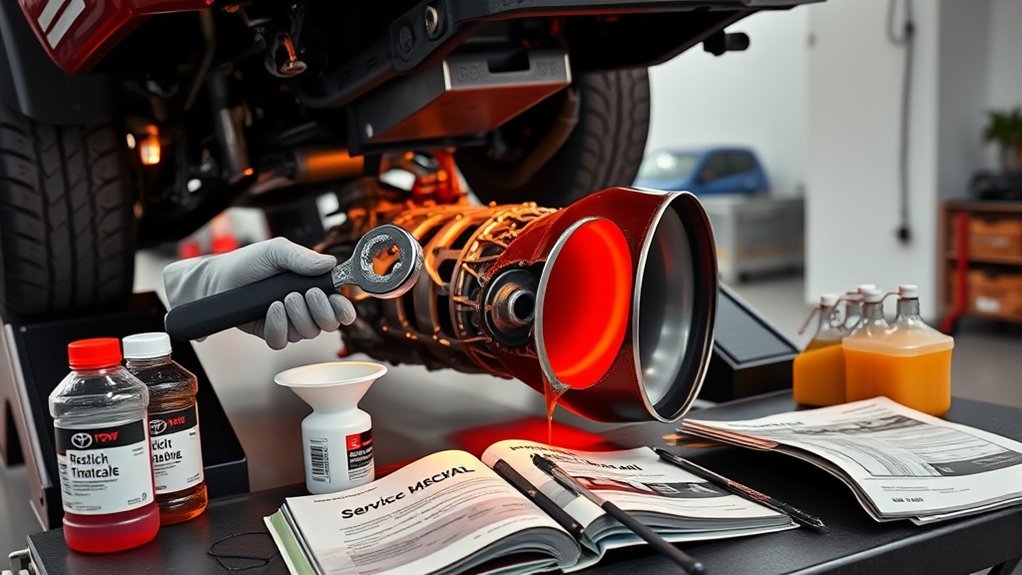
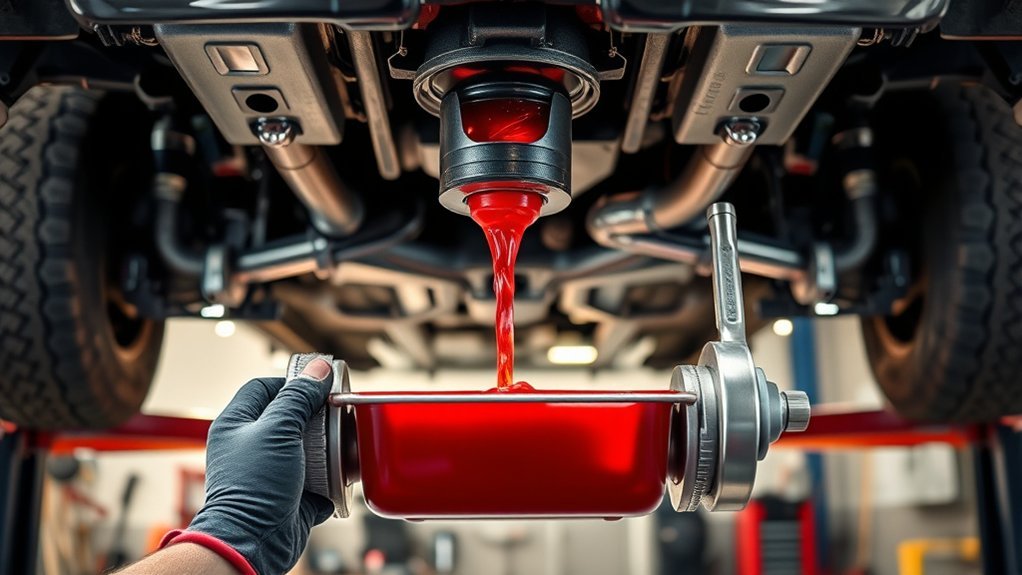
Check your Tundra’s transmission fluid every month and whenever you suspect a leak, since low level or dark, burnt-smelling fluid signals trouble; you’ll perform routine fluid maintenance and leak detection to keep control. Inspect the dipstick with the engine warm, on level ground, and confirm the level matches the manufacturer’s range. If fluid’s dark or smells burnt, change it immediately to avoid clutch glazing or overheating. Replace fluid every 60,000–100,000 miles under normal use; shorten interval for towing, delivery, or extreme temperatures. Use a high-quality synthetic transmission fluid for thermal stability and wear resistance, especially if you want fewer interruptions and longer service intervals. During drain-and-fill service, follow torque specs and use clean pans and funnels to prevent contamination. Track dates and miles in your maintenance log so you can act before failure. Regular, disciplined checks and timely replacement let you preserve freedom of mobility and avoid being stranded.
Inspect and Service the Valve Body and Transmission Filter
One critical service you shouldn’t skip is inspecting and cleaning the valve body and replacing the transmission filter, since the valve body directs hydraulic flow and any contamination can cause erratic shifts or valve sticking. You’ll perform valve body maintenance to keep hydraulic passages clear and solenoids responsive. Inspect for metal flakes, varnish, or contamination that indicate wear or fluid breakdown. Remove the valve body only if you’re equipped and follow torque and gasket specifications precisely.
Transmission filter care means replacing the filter whenever you drain and refill or whenever diagnostics show restricted flow. A clogged filter raises fluid temperature and starves the valve body, accelerating wear. Use OEM-spec filters and the correct fluid type and volume to maintain pressure and cooling.
Schedule valve body maintenance and filter replacement at intervals based on load and towing frequency; under high-stress use, shorten intervals. This targeted service preserves shifting integrity and liberates you from avoidable failures and costly rebuilds.
Add the Right Auxiliary Transmission Cooler (Sizing & Placement)
After inspecting the valve body and replacing the filter, add an auxiliary transmission cooler to keep fluid temperatures down and protect internal components. You’ll see up to 40°F reduction in operating temps, which frees you from premature wear and degraded performance. Choose cooler types deliberately: a stacked plate design outperforms tube-and-fin for towing and heavy-duty use. Match capacity — select a unit rated for at least 15 quarts to align with your Tundra’s transmission capacity.
Place the cooler where it gets steady airflow, typically in front of the radiator or behind the grille, to maximize heat rejection. Use robust mounting brackets and quality hoses; secure fittings prevent leaks during off-road use and high-vibration conditions. Follow clear installation tips: avoid kinks, maintain straight runs, and keep the cooler above exhaust heat sources. You’ll preserve transmission integrity, extend service intervals, and reclaim confidence on the road and trails without compromising reliability.
When to Install an In‑Line ATF Filter : Types & Best Brands
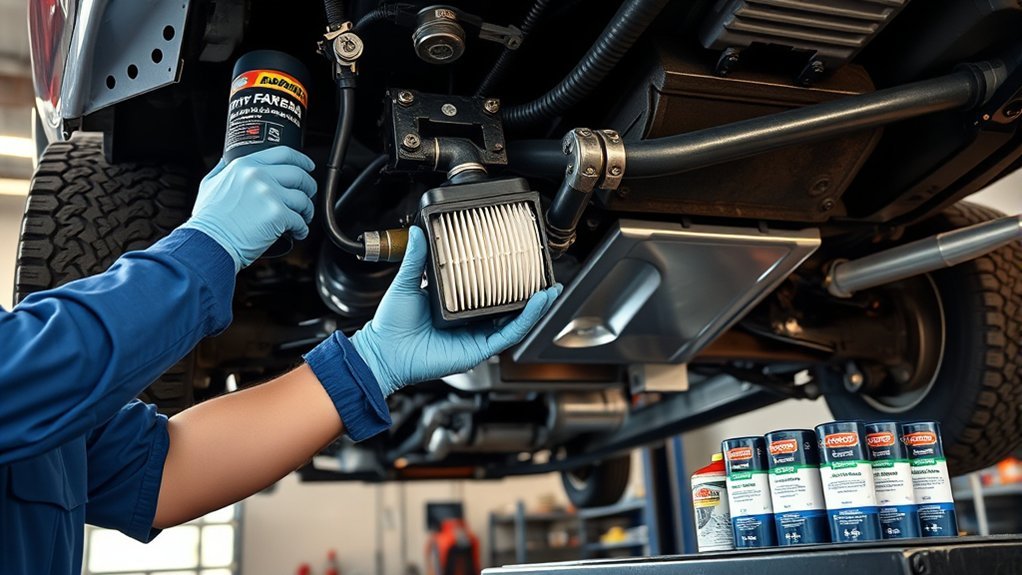
Installing an in-line ATF filter during a fluid and filter service gives you the best chance to remove metal shavings and debris before they circulate through the valve body and clutches. You should fit an in-line filter whenever you perform routine transmission maintenance—especially on high-mileage Tundras or trucks used in severe conditions—to capture contaminants immediately downstream of the cooler. The in line filter benefits include improved fluid cleanliness, reduced abrasive wear, and a lower chance of clutch or valve-body damage.
Choose proven media like Magnafine or Filtran; both trap very small metal particles and resist collapse under pressure. For installation, follow these filter installation tips: mount the filter after the cooler and before the transmission inlet, use proper AN-style fittings or OEM-matched adapters, orient the flow arrow correctly, secure hoses to prevent chafing, and pressure-test for leaks. Inspect and replace the in-line element at each fluid change interval to sustain liberation from premature transmission failure.
Tune Shifts for Longevity: Line Pressure, Shift Kits, Valve‑Body Fixes
You can improve shift firmness and reduce clutch slip by increasing line pressure to OEM+ levels, especially if you tow or carry heavy loads. Pairing that with targeted valve‑body upgrades or a cleaned, recalibrated valve body corrects factory flow paths and prevents pressure loss that causes soft or erratic shifts. Together these adjustments lower heat and wear, extending transmission life when done with proper measurements and quality parts.
Increase Line Pressure
A properly increased line pressure improves shift firmness and cuts clutch slip, which reduces wear under heavy loads and towing. You’ll perform a line pressure adjustment to gain measurable shift quality improvement and reduced component stress. Use a calibrated gauge during fluid changes, and log pressures for different gears and temperatures. Install a shift kit if you tow frequently; it gives selectable pressures for load conditions and improves durability without harshness when tuned. Clean the valve-body passages to support consistent pressures; contamination masks true readings. Monitor performance and revert if NVH or harsh engagements rise. Liberation means control: you maintain, measure, and adapt. Below is a concise reference.
| Item | Action |
|---|---|
| Gauge | Measure pressure |
| Shift kit | Adjustable settings |
| Fluid change | Recheck |
| Log data | Track trends |
| Clean valve-body | Maintain flow |
Valve-Body Upgrades
After increasing line pressure and verifying readings, focus on the valve body to lock in those gains and refine shift behavior for longevity. You’ll pursue valve body enhancements that tighten tolerances and restore precise hydraulic metering; improved ports and upgraded springs deliver repeatable, firmer engagements that raise shift quality and cut clutch slip. Install a calibrated shift kit so you can tune pressure and timing for towing or spirited driving, reducing heat and component wear. Keep the valve body clean—regular disassembly and solvent flushing prevents debris-induced valve sticking that degrades responsiveness. Monitor and adjust shift points after every modification to balance efficiency and durability. These targeted, mechanical steps free you from frequent failures and extend Tundra transmission life.
Drive Smarter When Towing: Habits That Cut Transmission Wear
When towing heavy loads, downshift manually and use lower gears on grades to reduce transmission stress and heat; this gives the drivetrain better control and cuts reliance on automatic gear changes that can overwork the unit. You’ll use proven towing techniques and disciplined load management to extend service life. Shift into an appropriate lower gear before climbs and descents so the transmission isn’t forced to hold torque under heat. Avoid rapid acceleration and hard braking—smooth inputs reduce clutch slip and fluid shear. Monitor transmission temperature with a gauge; keep it below 200°F to minimize thermal degradation. If temps trend upward, reduce speed, decrease load, or pull off to let the system cool. When parked on an incline, engage the parking brake to remove static pressure from the gearbox and parking pawl. These habits free you from reactive maintenance cycles: consistent, intentional driving cuts wear, preserves fluid integrity, and keeps control in your hands rather than leaving longevity to chance.
Identify Symptoms Early and When to Call a Pro
Because the transmission is the truck’s most stressed component, you should watch for early warning signs and call a professional at the first clear symptom. Monitor dashboard warning lights constantly; they flag electronic or hydraulic faults that demand prompt professional assessment. Note any grinding, whining, or metallic noises—these sound signatures point to bearing, gear, or pump wear and justify immediate shop inspection.
Inspect under the truck for reddish fluid puddles; low fluid causes overheating and clutch failure. Track shifting behavior: slipping, hard shifts, delayed engagement, or irregular downshifts signal internal wear or valve body problems and require diagnostic pressure and scan tests. If you detect a burning odor or excessive heat from the transmission area, stop driving and seek a professional right away to avoid catastrophic failure.
You’re aiming for mechanical freedom: early, decisive action—document symptoms, drive minimally, and get a trained technician to perform fluid checks, leak tracing, and a professional assessment.
Frequently Asked Questions
How Long Does a Toyota Tundra Transmission Last?
You can expect a Tundra transmission to last roughly 150,000–250,000 miles, often more with diligent transmission maintenance tips; watch for signs of failure like slipping, delayed shifts, or fluid burning, and act proactively to preserve freedom.
What Year Did Tundras Have Transmission Problems?
2000–2007 Tundras had notable transmission problems. You’ll notice transmission symptoms like slipping, rough shifts, shudder; you’ll perform preventative maintenance—fluid changes, inspections, software updates—to reclaim control and extend drivetrain freedom.
How Often Should You Change the Transmission Fluid in a Tundra?
You should change Tundra transmission fluid every 60,000–100,000 miles under normal use; for severe conditions change every 30,000–50,000 miles. Follow fluid change frequency and maintenance tips, check levels, and use quality synthetic fluid.
Conclusion
You’ve got the tools and timing to keep your Tundra’s transmission running longer; now act. Check and change fluid on schedule, service the valve body and filter, add a properly sized cooler, and fit an in‑line ATF filter if you tow heavy. Tune shifts and adopt gentler towing habits to cut wear. Watch early symptoms and call a pro when needed—think of your truck as a marathon runner: steady care keeps it crossing the finish line.