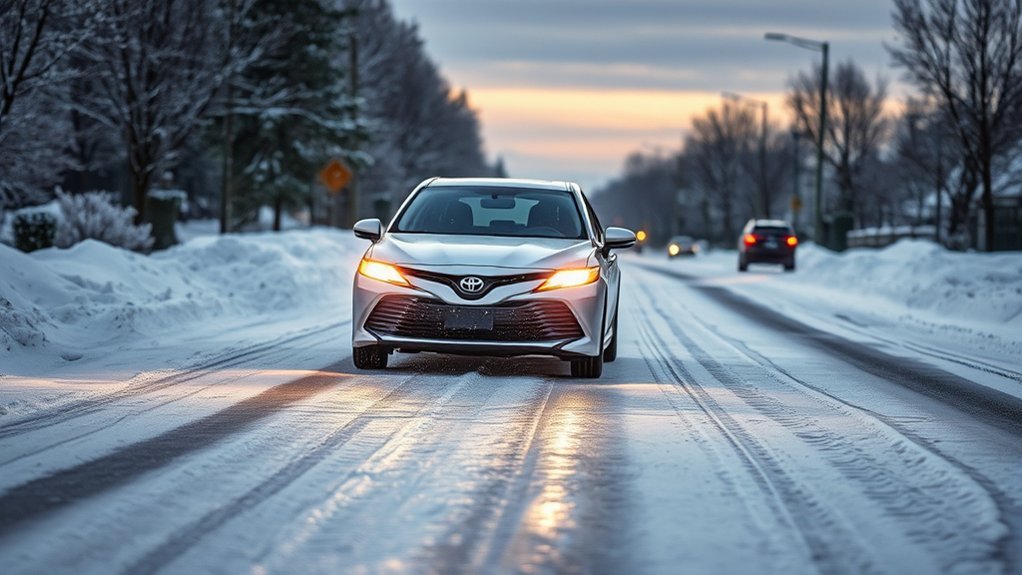
You can drive your Toyota Camry safely in snow and ice by preparing tires, battery, wipers, and fluids, and by clearing sensors, cameras, lights, and mirrors before each trip. Fit winter tires or chains when temperatures drop, check tire pressure often, and keep jumper cables, a shovel, traction mats, and a warm blanket onboard. Use gentle acceleration and braking, maintain longer following distances, and leave adaptive systems if sensors are obstructed; follow these basics and you’ll find more tips to improve winter confidence.
Camry Pre-Winter Checklist: Exterior, Systems, and Cabin
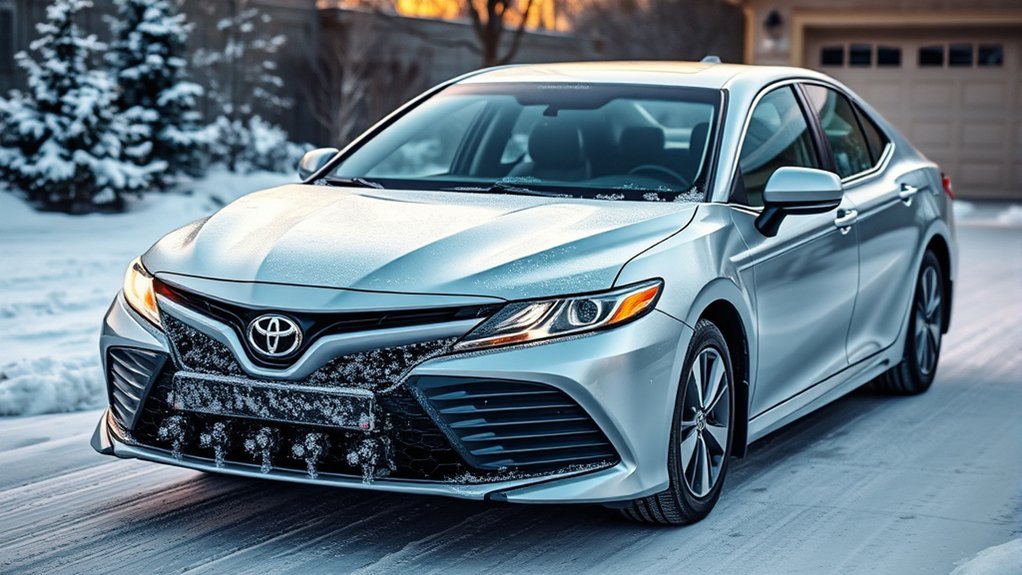
Before cold weather sets in, get your Camry ready: wash and wax the exterior to shed snow and ice and protect paint, repair any windshield chips or cracks, check tire pressure and fit winter tires if you can, verify the battery and clean its connections, and stow emergency gear like a scraper, traction mats, and a first-aid kit. You’ll take control by adding focused interior preparation: clear vents, test heating and defrost, replace worn wipers, and keep a compact blanket and flashlight accessible. Run thorough fluid checks—antifreeze concentration, washer fluid rated for subzero temps, and oil condition—to prevent freeze-related failures. Inspect hoses and belts for stiffness or cracks that cold will worsen. Confirm battery load and terminals; swap weak batteries before they strand you. Pack condensed emergency tools and a charged phone battery pack. These steps free you from winter anxiety: you won’t be reactive, you’ll be prepared, mobile, and self-reliant when storms arrive.
Clear Sensors, Cameras, and Lights to Keep Safety Systems Working
Keep sensors, cameras, and lights free of snow, ice, and grime so your Camry’s safety systems work as intended. Gently defrost cameras and wipe lenses with a soft cloth or use the vehicle’s heated functions rather than sharp tools, and switch to regular cruise control if adaptive systems warn you. If parking sensors keep chirping while blocked, mute alerts in the menu and clear the obstruction as soon as it’s safe, all while retaining traction control for winter driving.
Clear Sensors Regularly
If snow or ice builds up on your Camry’s grille, headlights, or sensor areas, clear it right away so adaptive cruise control and pre‑collision systems keep working as intended. You’ll liberate the car’s safety systems by following simple sensor maintenance tips: inspect the grille, headlights, and sensor housings before driving and after stops. Use a soft brush or cloth to gently remove snow and ice so cameras and sensors aren’t scratched or obscured. Blocked sensors can trigger dashboard warnings — treat those alerts as immediate calls to action. Periodically check for buildup during winter drives, especially after parking in heavy snow. You can disable obstruction alerts in settings if needed, but prioritize physically clearing sensors for true winter visibility precautions and reliable protection.
Defrost Cameras Safely
When snow or ice builds up around your Camry’s cameras, sensors, or lights, clear them promptly so the car’s safety systems keep working reliably. You want freedom to move without relying on obstructed tech. Use gentle camera defrost techniques and proven sensor cleaning tips to maintain control and safety.
- Brush loose snow with a soft brush or microfiber cloth; avoid scraping hard.
- Melt ice gradually—use the car’s defrost system and wait rather than forcing wipers on frozen surfaces.
- Inspect camera lenses and sensor housings; remove grime softly to prevent scratches.
- If a sensor warning appears, switch to regular cruise control and stop to clear buildup safely.
Be deliberate: clear sensors before driving so safety features perform as intended.
Keep Lights Free
Because snow and ice can quickly blind your lights and sensors, clear them before you drive so visibility and safety systems work as intended. Inspect headlights, taillights and turn signals every trip; headlight maintenance isn’t optional in winter. Remove buildup with a soft brush or high‑pressure wash, paying special attention to camera and sensor housings at the front of the Camry.
Keep cameras, windshield, mirrors and sensor faces free of ice and debris so adaptive cruise control and collision detection function without false warnings. Check the underside for packed snow that can disrupt parking sensors. Clean taillight visibility areas too, so drivers behind you can see brake and turn signals clearly.
Act deliberately: clear, check, and drive—reclaim control of your winter commute.
Camry Tire Prep: Pressure, Winter Tires, and Chains
1 clear step you should take before winter hits is to get your Camry’s tires ready: use tire maintenance tips and winter driving techniques to keep control and freedom on slippery roads. Check and adjust tire pressure regularly—cold drops it, harming traction and handling. Inspect tread; aim for at least 6/32 inches. Consider dedicated winter tires for superior grip in low temperatures.
- Verify tire pressure monthly and before long trips; follow the placard PSI.
- Measure tread depth; replace tires below 6/32″ for safer winter performance.
- Install winter tires as temperatures fall below ~45°F; they provide better braking and cornering.
- Learn to fit compatible chains, keep a serviceable spare, and practice mounting in dry conditions.
You’ll reduce skids, preserve maneuverability, and refuse winter confinement. Keep a spare in good shape; chains are a last-resort tool for icy routes. Be prepared, assertive, and liberated on cold roads.
Manage Adaptive Cruise and Pre-Collision Alerts in Winter
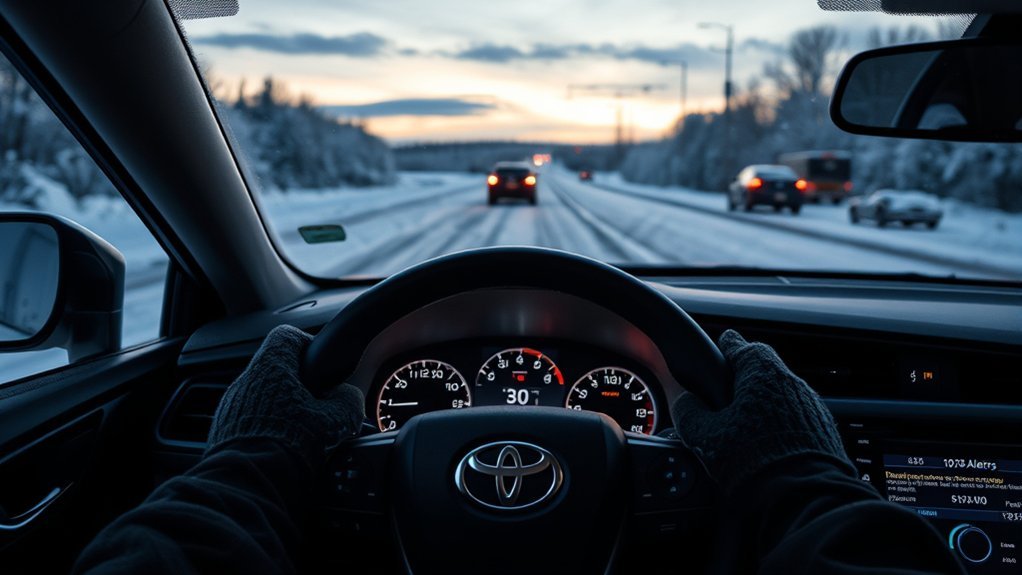
If snow or ice is blocking your Camry’s sensors, clear them promptly and switch to regular cruise control by pressing the mode button twice to avoid adaptive-cruise warnings; you can also temporarily disable the pre-collision alerts through the vehicle menu to stop distracting notifications while you clear the buildup. You’ll want to act decisively: clear sensor housings and grille areas so adaptive cruise can resume reliable operation. If parking sensors or warning chimes keep firing because of buildup, use the settings to silence alerts until you’ve cleared the obstruction. Don’t disable traction control to silence warnings — that compromises safety and won’t always stop messages. Use pre collision management only as a temporary measure while you remove snow or ice; re-enable systems once sensors are clean. This keeps automated aids available when you need them, preserves your autonomy on the road, and prevents needless distractions so you can drive deliberately and free from avoidable warnings.
How to Drive a Camry on Snow, Ice, and Low-Traction Roads
When roads are covered with snow or ice, drive your Camry deliberately: fit winter tires, keep your headlights on, and maintain a 6–8 second following distance so you have time to stop. You’ll move with purpose, not fear. Use gentle acceleration and braking to preserve traction and prevent wheel spin. Keep traction control engaged—don’t turn it off unless a situation demands it. These snow driving techniques and ice road safety habits free you to travel confidently.
- Fit winter tires for superior grip and handling on snow and ice.
- Maintain a 6–8 second gap to allow for longer stopping distances.
- Accelerate and brake smoothly; avoid sudden inputs that cause skids.
- Keep headlights on to boost visibility for you and others.
Drive deliberately, trust the car’s systems, and choose controlled inputs. You’re asserting freedom through preparedness and disciplined technique, not taking risks. Stay steady, stay visible, and own the road responsibly.
Emergency Kit Essentials to Keep in Your Camry
Knowing how to drive your Camry on snow and ice is only half the equation—being prepared with the right gear keeps you safe if conditions go from inconvenient to hazardous. You’ll want a compact scraper to clear windshield and windows for immediate visibility, plus a small shovel to dig out packed snow around wheels. Traction mats belong in the trunk so you can regain grip without waiting for a tow. Pack jumper cables to handle cold-related battery failures; they’re simple, reliable, and non-negotiable for winter safety.
Round out your emergency supplies with a warm blanket, insulated gloves, and a flashlight with fresh batteries so you can stay warm and see if you’re stranded. Store items in a durable bag and check them monthly; replace batteries and worn tools. Being equipped lets you move freely, not fear the weather—practical prep protects your autonomy on icy roads.
Keep Your Camry Running All Winter: Battery, Fluids, and Wipers
Check your Camry’s battery regularly and clean the posts and connections so cold mornings don’t leave you stranded. Swap to winter-specific wiper blades and replace worn rubber to keep your windshield clear in snow and sleet. Also confirm your oil, coolant, and washer fluid are rated for low temperatures and run the A/C occasionally to prevent moisture buildup.
Battery Care Tips
Because cold saps battery power, you should test your Camry’s battery and charging system before temperatures drop and keep it fully charged through the season. Embrace Battery maintenance and Cold weather preparedness: a strong battery gives you freedom from roadside dependence. Inspect terminals, cables, and the case for corrosion, cracks, or loose connections. Clean posts and secure clamps to maintain reliable electrical flow.
- Test battery voltage and CCA rating; upgrade if CCA is low for your climate.
- Use a battery maintainer or trickle charger during long idle periods to prevent discharge.
- Replace an aging battery proactively—don’t gamble on winter mornings.
- Keep jumper cables or a portable booster as an emergency backup.
Act now; reclaim control of winter travel.
Winter Wiper Maintenance
1 simple routine will save you from a frozen windshield: inspect and equip your Camry’s wipers for winter. You’ll perform a quick wiper blade inspection before the season—look for cracks, tears, or stiff rubber and replace blades that can’t clear ice. Clear heavy snow and ice from the glass by hand first so your blades and motor aren’t strained.
Top off the reservoir and switch to winter fluid usage that resists freezing and melts light ice. Test the system so spray pattern and defrosting work together. Use a windshield cover when parked to cut ice buildup and protect blades. These steps keep visibility strong and free you from avoidable stops, letting you move with confidence through winter roads.
Frequently Asked Questions
Can I Use Hill-Start Assist on Icy Hills?
Yes — you can use hill-start assist on icy hills, but don’t rely solely on it; combine gentle braking techniques, traction control, and smooth throttle to free yourself from fear, maintain control, and reclaim confident winter driving.
Is All-Wheel Drive Available on Camry Models?
Yes—you can get All wheel drive on select Toyota Camry trims, so you’ll feel steadier and freer on slippery roads; embrace control, choose AWD-equipped models, and trust the system to expand your driving confidence.
How Does Cold Affect Tire Pressure Monitoring Accuracy?
Cold temperatures lower tire pressure readings, so your TPMS can show deflation even if slow; check tire pressure regularly, adjust for winter driving, and follow safety tips to keep you liberated and in control on icy roads.
Can Engine Block Heaters Help in Extreme Cold?
Yes — coincidentally, when temperatures plunge you’ll notice engine performance improves with a block heater; you’ll start easier, reduce wear, and simplify winter maintenance, so plug in overnight and reclaim reliable cold-weather freedom.
Should I Add Fuel Stabilizer for Winter Storage?
Yes — add stabilizer before storage; it prevents fuel degradation, protects injectors and preserves fuel efficiency. You’ll reduce winter maintenance hassles, avoid costly repairs, and keep your freedom to start and drive confidently come spring.
Conclusion
Drive confidently, but don’t overestimate tech—test adaptive cruise and pre-collision alerts before you need them. You’ll still be the primary safety system: slow down, brake gently, and steer smoothly. Verify tire pressure and winter rubber, clear sensors and lights, and keep battery and fluids topped. Pack an emergency kit and know how chains fit. In short: trust your prep, not assumptions; proving tech limits in a safe setting keeps you safer when conditions surprise you.