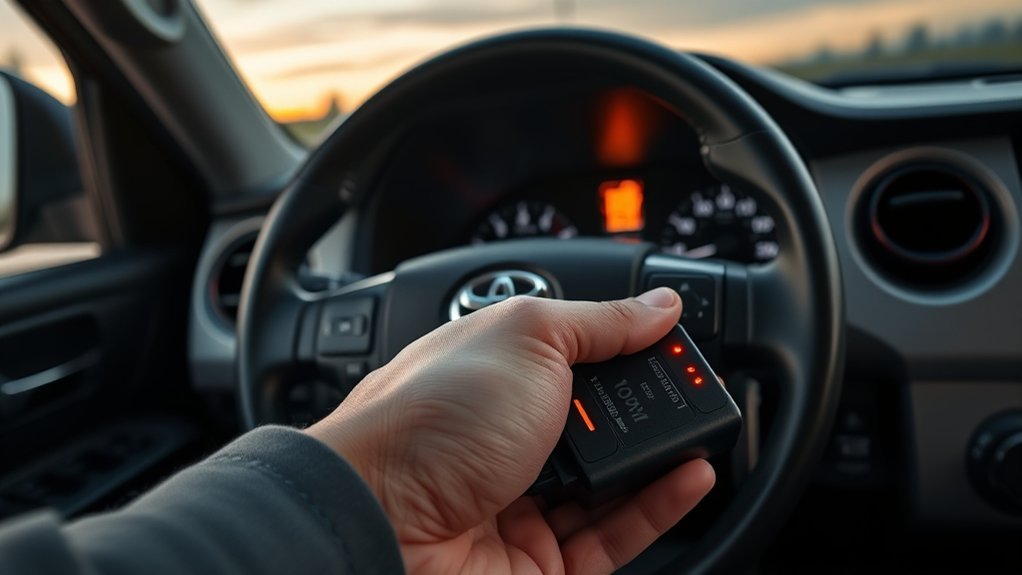
You can clear a Toyota Tundra check engine light by retrieving and addressing OBD‑II trouble codes, then erasing them with a scanner or performing a timed reset. Plug a scanner into the under‑dash port, turn the key to ON, record codes and freeze‑frame data, fix obvious faults (tighten or replace the gas cap), then use the scanner’s erase or disconnect the negative battery for 10–15 minutes. Verify with drive cycles and readiness monitors; continue for steps to confirm and troubleshoot further.
Quick Answer: Clear a Tundra Check Engine Light Now
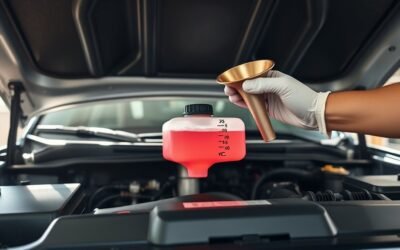
Start by choosing the reset method that fits your situation: disconnect the negative battery terminal for about 15 minutes to hard-reset the ECU, use an OBD-II scanner to read and clear stored trouble codes for a targeted reset, or fix obvious faults (like a loose gas cap) and drive roughly 20 miles to allow the system to re-evaluate and extinguish the light automatically. You’ll pick among reset methods based on urgency and information access. If you want immediate action without diagnostics, a battery disconnect clears volatile memory and forces the ECU to relearn — it’s blunt but effective. If you can’t or won’t scan now, address visible faults (tighten the gas cap) then drive to let the system verify repairs. Throughout, treat the check engine indicator as a prompt to act, not a sentence: use systematic light diagnostics when possible, monitor the lamp during the next drive cycle, and follow up with scans or repairs if the light returns.
Read & Clear Codes With an OBD‑II Scanner (Plus Common Tundra Codes)
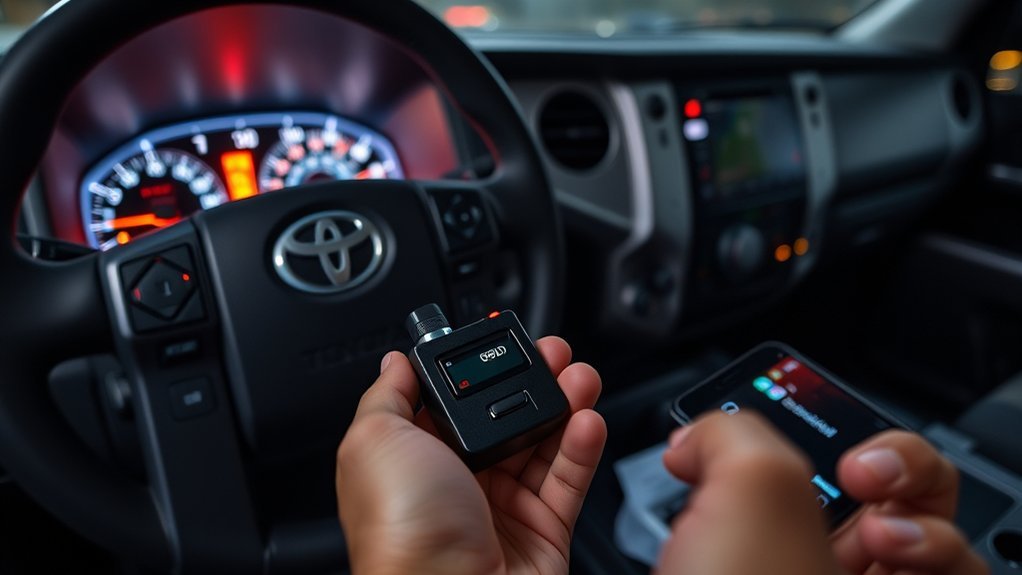
Grab an OBD‑II scanner and plug it into the Tundra’s diagnostic port under the dashboard near the steering column; turn the ignition to ON (don’t start the engine) and follow the scanner prompts to read stored codes. Use OBD II basics: power the tool, select vehicle, and retrieve DTCs. Record codes, freeze frame data, and pending status for accurate code interpretation.
Compare codes to common Tundra faults: P0420 (catalytic converter efficiency), P0440 (evaporative emission control), P0171 (system too lean). These point to specific systems so you can target repairs and reclaim control over your vehicle. After you repair the root cause, reconnect the scanner and clear codes using the tool’s erase function; verify the check engine light stays off after a drive cycle. Don’t clear codes to hide issues—liberation comes from diagnosing, repairing, and confirming resolution, not masking faults.
Fast DIY Fixes: Gas Cap, Battery Disconnect, and Key‑Cycle Tips
If a Tundra’s check engine light comes on and you haven’t yet diagnosed it with a scanner, try a few fast DIY fixes that often resolve common, non-critical triggers: start by inspecting and tightening the gas cap—replace it if damaged—since evaporative system leaks commonly set codes. If the cap is secure and the issue persists, perform a battery reset: disconnect the negative cable for 5–15 minutes to clear residual faults, then reconnect firmly. Use the key-cycle method as a low-impact alternative: turn the ignition to ON (don’t start) three times within a few seconds to prompt the vehicle’s control modules to reset. These steps liberate you from needless shop visits when faults are minor, but don’t skip diagnosis if the light returns or symptoms persist. Remember that scanning gives precise codes; use an OBD‑II tool when uncertain to avoid masking an underlying failure.
Verify the Fix: Drive Cycles, Readiness Monitors, and When the Light Returns
Once you’ve tightened the gas cap or performed a battery reset, you’ll need to confirm the repair by completing several drive cycles so the Tundra’s computer can run its tests and set readiness monitors. Drive cycles: do at least three, totaling about 20 miles of mixed driving (city and highway) to let the ECU complete self-tests. Use an OBD-II scanner to check monitor status and any retained codes. If monitors return “ready” and no codes appear, the light should stay off. If the light returns, the root cause persists and needs further diagnosis.
| Task | Target | Purpose |
|---|---|---|
| Drive cycles | ≥3 (≈20 miles) | Allow ECU tests |
| Monitor status | All “ready” | Confirms emissions systems |
| OBD-II scan | No retained codes | Verifies repair |
Follow this methodical sequence to reclaim control — validate, confirm monitor status, and act if faults recur.
When to See a Mechanic for Your Tundra Check Engine Light (Typical Costs & Options)
Because a persistent check engine light can signal anything from a minor sensor fault to a serious drivability or emissions problem, you should consult a mechanic when resets and basic fixes don’t clear the light. If your own inspections and free code scans from parts stores don’t resolve it, seek mechanic consultation to avoid escalation.
- Prioritize immediate service if you notice performance loss, strange noises, or drivability changes.
- Use free scans (AutoZone, O’Reilly’s) to gather codes before visiting a shop.
- Expect dealership diagnostic services to cost roughly $75–$150; complexity can raise that.
- Ask the shop to explain codes, required repairs, and whether temporary measures will restore safe function.
- Maintain regular service to reduce future failures and repair bills.
Choose a technician who documents diagnostics and offers options. You’ll free yourself from uncertainty by combining proactive maintenance, informed diagnostic services, and timely mechanic consultation to protect the Tundra and your autonomy on the road.
Frequently Asked Questions
Can a Smartphone OBD-II Adapter Clear Codes Reliably?
Yes, you can: smartphone compatibility and OBD II reliability vary, but modern adapters reliably read and clear codes if you use trusted apps, verified adapters, and follow diagnostic steps so you’re empowered to control car maintenance.
Will Clearing Codes Affect My Vehicle Warranty?
Yes — code clearing can affect warranty implications if you mask a fault that should be repaired; you’ll void coverage for related parts or diagnostics. Protect your rights: document repairs, don’t erase codes before dealer inspection.
Can Emissions Test Fail After I Clear the Light?
Yes — you can fail an emissions test after you clear the light if emissions failures persist or readiness monitors aren’t set. Use diagnostic tools to verify codes, readiness status, and fix faults before testing to reclaim freedom.
Does a Check Engine Light Reset After Replacing a Catalytic Converter?
Yes — but don’t relax yet. You’ll often see the light reset after replacing the catalytic converter, though catalytic converter lifespan, engine performance impact, and ECU readiness checks can delay or require driving cycles before it fully clears.
Can Repeated Battery Disconnects Harm My Tundra’s Electronics?
Yes — repeated battery disconnects can stress your Tundra’s electrical systems and risk data loss; you should follow battery maintenance protocols, disconnect safely, and reset modules methodically so you’ll keep systems reliable and preserve control.
Conclusion
You’ve got practical options: read and clear codes with an OBD‑II scanner, try simple fixes like tightening the gas cap or disconnecting the battery, then verify with drive cycles and readiness monitors. About 90% of CELs on Toyotas stem from emissions‑related sensors (oxygen, EVAP), so start there for fastest results. If codes persist after basic checks and drive cycles, see a mechanic—diagnostics typically cost $80–$150; repairs depend on the fault.