
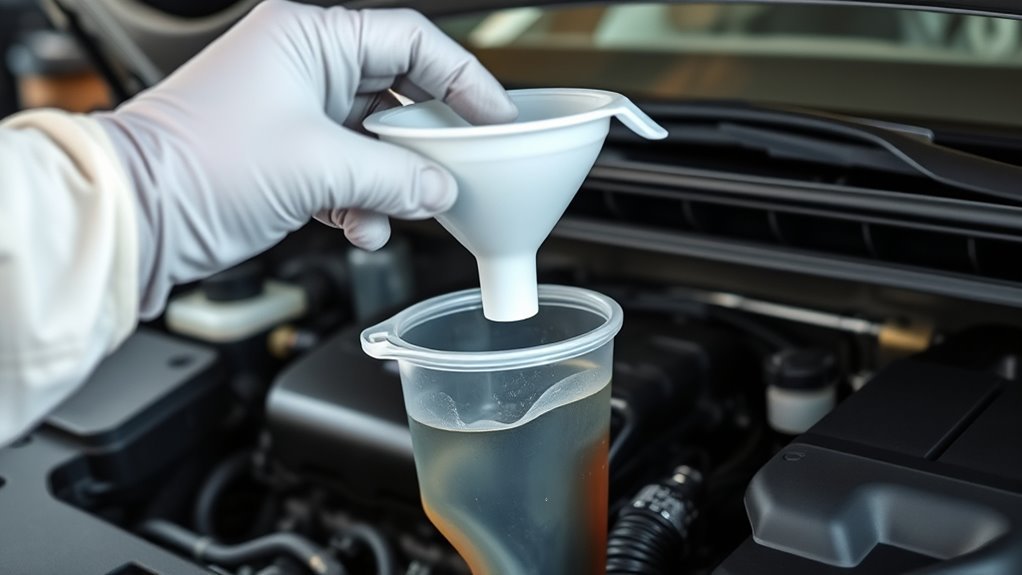
Checking brake fluid on a Toyota RAV4 is a quick driveway task, but it is still a safety-critical brake-system check. The goal is simple: find the translucent reservoir, confirm the fluid sits between the MAX and MIN marks, and only add the correct fluid if the level is low. A low level can also point to worn brake pads or a leak, so do not treat topping off as the whole repair.
Last updated: August 20, 2026 · By AutoReviewNest Editorial `[VERIFY: add real author name/credentials matching site convention]` · Compiled from Toyota owner documentation and federal brake-fluid standards, not hands-on fluid testing — always confirm the spec on your own reservoir cap.
Quick Answer
On most Toyota RAV4 models, the brake fluid reservoir is a translucent tank on the driver’s side of the engine bay. Check that the fluid is between the MAX and MIN marks. If it is low, use only the brake fluid type listed on the cap or in the owner’s manual, usually FMVSS No.116 DOT 3/SAE J1703 or DOT 4/SAE J1704.
Key Takeaways
- Check the reservoir with the RAV4 parked on level ground and the engine off.
- The fluid level should stay between the MAX and MIN marks; do not overfill it.
- Use only newly opened, clean brake fluid that matches Toyota’s specification for your model year.
- Repeatedly low brake fluid, a soft pedal, or visible wetness around brake parts needs inspection before you keep driving.
At a Glance
| Time Required | 5–10 minutes for a level check; longer if you also inspect pads and lines |
| Difficulty | Easy for checking; moderate if wheels must be removed for pad inspection |
| Tools Needed | Clean cloth, flashlight, clean funnel, and the correct newly opened brake fluid if topping off |
| Cost | Usually low for a small bottle of brake fluid; professional diagnosis costs more if leaks or pedal issues are found |
Quick Steps to Check and Top Off RAV4 Brake Fluid
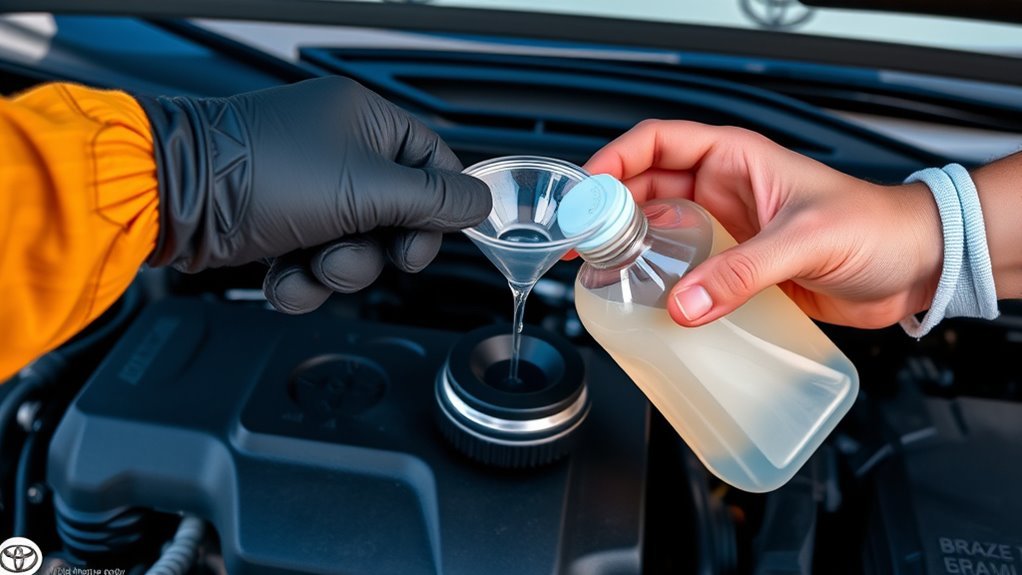
- Park safely. Stop on level ground, set the parking brake, turn the vehicle off, and let the engine bay cool enough to work around comfortably.
- Open the hood. Secure the hood and use a flashlight if the reservoir markings are hard to see.
- Find the reservoir. Look for the translucent brake fluid tank on the driver’s side of the engine bay. On many newer RAV4 models, topping off may require lifting a rubber strip and removing a small service cover as shown in Toyota’s owner information.
- Read the level from the outside first. The fluid should be between the MAX and MIN lines. You normally do not need to open the cap just to check the level.
- Clean before opening. If you need to add fluid, wipe the cap and surrounding area so dirt cannot fall into the reservoir.
- Confirm the fluid specification. Check the reservoir cap and your owner’s manual. Toyota lists brake fluid meeting FMVSS No.116 DOT 3/SAE J1703 or FMVSS No.116 DOT 4/SAE J1704 for recent RAV4 models. For a full breakdown by model year, see our RAV4 brake fluid type guide or our general DOT 3 vs DOT 4 comparison.
- Add slowly if needed. Use a clean funnel and fluid from a newly opened container. Stop just below the MAX line.
- Close and clean up. Tighten the cap securely and wipe spills immediately, especially from painted surfaces.
Warning: Brake fluid can damage paint and irritate skin or eyes. If it spills on the vehicle, rinse the area promptly with water. If it gets on your hands or in your eyes, flush with clean water immediately and follow the safety directions on the container.
[Products Worth Considering]
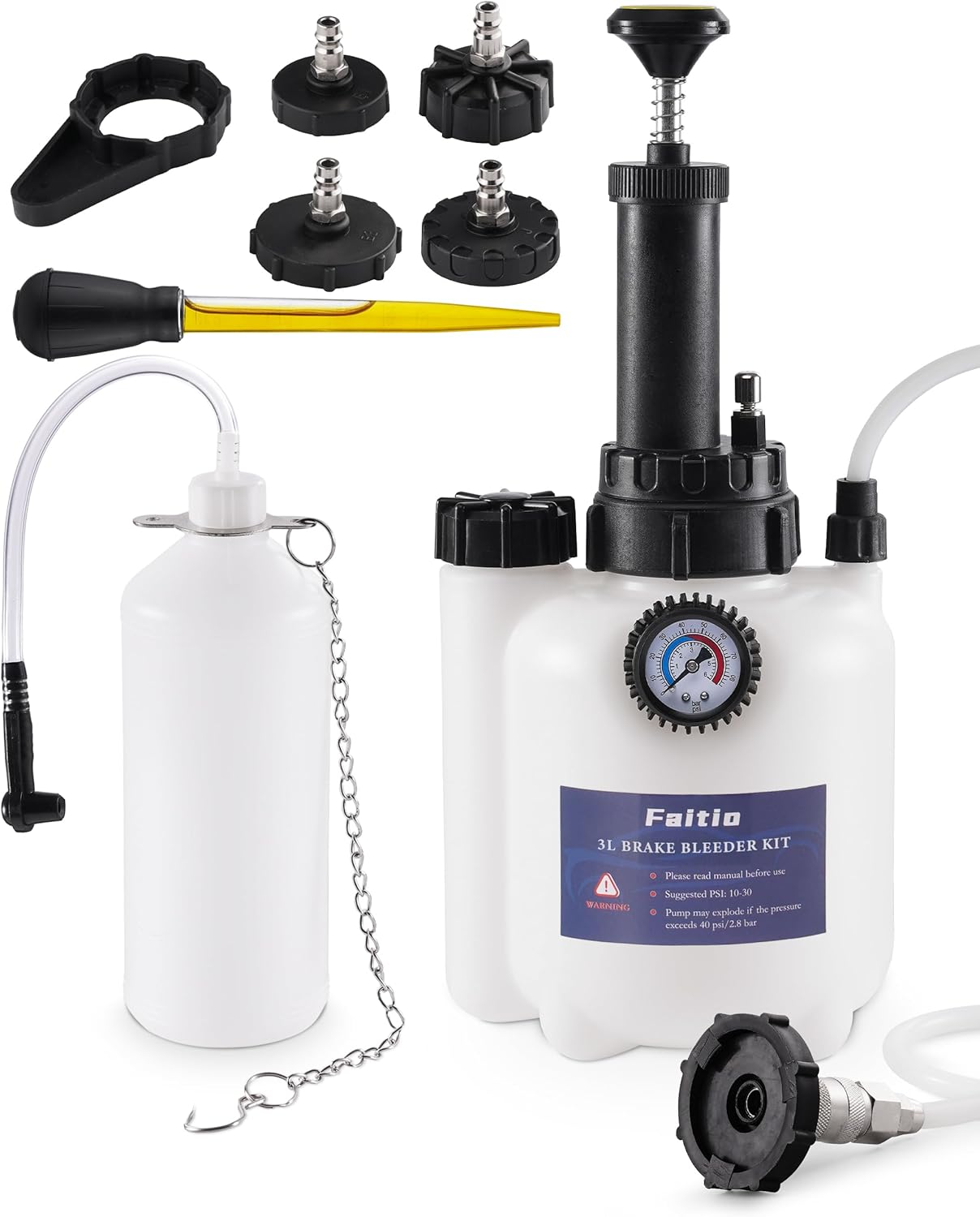
This one-man brake bleeding kit helps flush old brake fluid and remove trapped air for firmer, more responsive braking without the hassle of a second person. Its improved sealing and translucent catch bottle help prevent leaks while making fluid level checks easy during use. With multiple adapter sizes for many vehicle makes, it is a practical tool for clean, efficient brake system maintenance.

This universal brake bleeder kit makes one-person brake and clutch line bleeding simple by using compressed air to create stable vacuum-assisted fluid flow. Its extra-large 3L tank helps complete full-system flushes with fewer interruptions, while the included refill bottle, flexible hose, and universal adapter support clean, efficient use on standard and ABS brake systems.

The Mityvac MV8500 Silverline Elite is a versatile automotive service kit for brake and clutch bleeding, diesel fuel priming, and vacuum or pressure testing. Its dual-capability pump streamlines diagnostics and maintenance across motorcycles, cars, trucks, and SUVs, while the ergonomic design supports comfortable use during longer jobs. Built with a durable zinc-aluminum die-cast body and a 4.5oz fluid reservoir, it delivers reliable performance for professional and DIY repair work.
Where to Find the Brake Fluid Reservoir on a RAV4
Open the hood and look on the driver’s side of the engine bay for a small translucent plastic reservoir with MAX and MIN markings. Depending on the model year and engine layout, it may sit toward the rear driver-side area and may be partly covered by a service panel. The reservoir cap usually identifies the brake fluid specification.
Engine Bay Location
The RAV4 brake fluid reservoir is part of the hydraulic brake system, so keep dirt, water, oil, and old fluid away from it. For a routine level check, use the translucent side of the reservoir instead of opening the cap. The fluid should be visible and should sit between the molded level lines.
Near the Air Filter or Rear Driver-Side Cover
Older descriptions often point to the driver’s side near the air filter housing, while some recent RAV4 manuals show extra access steps before adding fluid. The safest rule is to identify the tank by its brake fluid cap, translucent body, and MAX/MIN marks rather than relying only on one landmark in the engine bay.
- Confirm the label: The cap or manual should identify the approved fluid type.
- Check the sides: The translucent reservoir lets you read the level without opening it.
- Look nearby: Wetness, stains, or peeling paint around brake components can point to a leak.
MAX/MIN Markings
The correct level is between the MAX and MIN marks. A small drop over time can happen as brake pads wear, because the caliper pistons move outward and hold more fluid in the brake calipers. A sudden drop, repeated low readings, or fluid below MIN is not normal and should be inspected.
| Item | What to Do | When |
|---|---|---|
| Fluid level | Verify it sits between MAX and MIN | Monthly and before long trips |
| Cap specification | Match the fluid to the cap or owner’s manual | Every time you add fluid |
| Low level | Inspect pads, calipers, lines, hoses, and master cylinder area | Immediately |
| Dark or dirty fluid | Schedule a brake fluid inspection or exchange | When discoloration is obvious |
| Soft pedal | Stop driving until the brake system is checked | Immediately |
How to Check Your Brake Fluid Level Safely Step by Step
Use a clean, careful process. Brake fluid is not like windshield washer fluid; contamination can reduce braking performance and cause expensive repairs.
- Start with the vehicle off. Park on level ground and let the engine bay cool.
- Use good light. Shine a flashlight through the side of the reservoir so the fluid line is easier to see.
- Read the marks. The level should be above MIN and below MAX.
- Check the color. DOT 3 and DOT 4 brake fluid should generally be clear to amber. Very dark brown or black fluid should be inspected and replaced.
- Do not open the reservoir unless needed. Every time the cap is opened, moisture and debris have a chance to enter.
- If the level is low, inspect before topping off. Look for worn pads or leaks. Adding fluid without finding the cause can hide a brake problem.
Note: Brake fluid is hygroscopic, meaning it absorbs moisture from the air. That is why Toyota advises using only newly opened brake fluid and why a clean, sealed system matters.
Top Off Brake Fluid Safely: DOT 3 vs DOT 4 and Avoiding Contamination
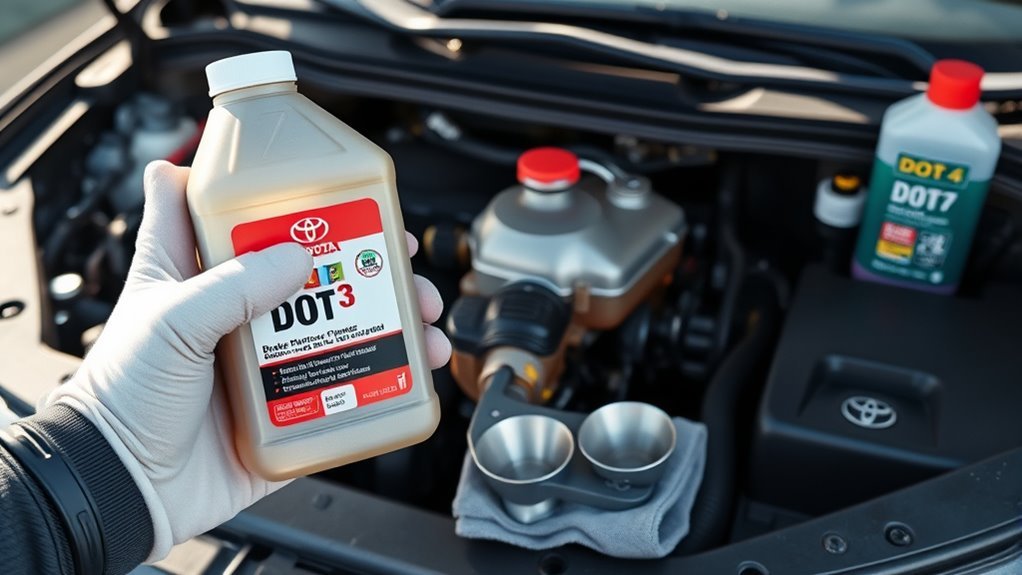
Before adding anything, confirm the correct brake fluid type. Toyota owner information for recent RAV4 models lists fluid meeting FMVSS No.116 DOT 3 or SAE J1703, or FMVSS No.116 DOT 4 or SAE J1704. The federal brake-fluid standard also defines performance requirements for DOT fluid grades, including boiling point, packaging, and labeling requirements. For the full comparison of what these grades mean and when to choose one over the other, see our DOT 3 vs DOT 4 brake fluid guide.
| Fluid Type | What It Means | RAV4 Guidance |
|---|---|---|
| DOT 3 | Common glycol-based brake fluid; federal minimum dry boiling point is 401°F | Use if listed on the cap/manual or already confirmed in the system |
| DOT 4 | Glycol-based brake fluid with a higher federal minimum dry boiling point of 446°F | Use only when approved by the cap/manual for your model |
| DOT 5 | Silicone-based fluid, not the same as DOT 5.1 | Do not use in a RAV4 brake system unless Toyota specifically calls for it, which typical RAV4 owner information does not |
Pro Tip: Buy the smallest sealed bottle that completes the job. Once opened, brake fluid can absorb moisture, so an old half-used bottle from the garage is not the right choice for topping off a brake system.
To top off safely, clean the cap area, open the reservoir only when ready, pour slowly through a clean funnel, and stop just below the MAX line. Do not overfill. When brake pads are later replaced, fluid can rise as the caliper pistons are pushed back into place.
[Products Worth Considering]

This brake bleeder bottle helps simplify brake fluid replacement by draining old fluid while reducing air in the line. Its rubber connector fits most bleed screws, and the included hose and chain help keep the bottle securely in place during use. Built from durable, corrosion-resistant plastic, it is suitable for a wide range of vehicles including cars, motorcycles, ATVs, dirt bikes, and scooters.

This brake bleeder bottle is designed to make fluid bleeding easier for one-person use with a built-in check valve and magnetic mount. The flexible hose fits most bleeder valves and helps reduce the chance of air entering the system during service. With a practical fluid capacity and universal fit, it is a handy tool for brake maintenance and repair.

Provides an extra margin of safety in extreme braking conditions (packaging may vary)
Troubleshooting Low Brake Fluid: Pads, Leaks, or Other Causes
If your RAV4’s brake fluid level drops, do not assume the fluid simply “used itself up.” Brake fluid does not normally evaporate from a sealed system. The most common explanations are brake pad wear, a leak, or service history that left the level low.
[Products Worth Considering]

[Scope of Application] --- Automotive Brake Fluid Detector is common fit for most vehicle. Check the health status of DOT-3, DOT-4, DOT-5.1 brake fluid and also most synthetic brake fluids. It's extremly convenient for personal use and broadly applied in individual workshops, repair factories and dealer workshops.
Low Fluid from Brake Pad Wear
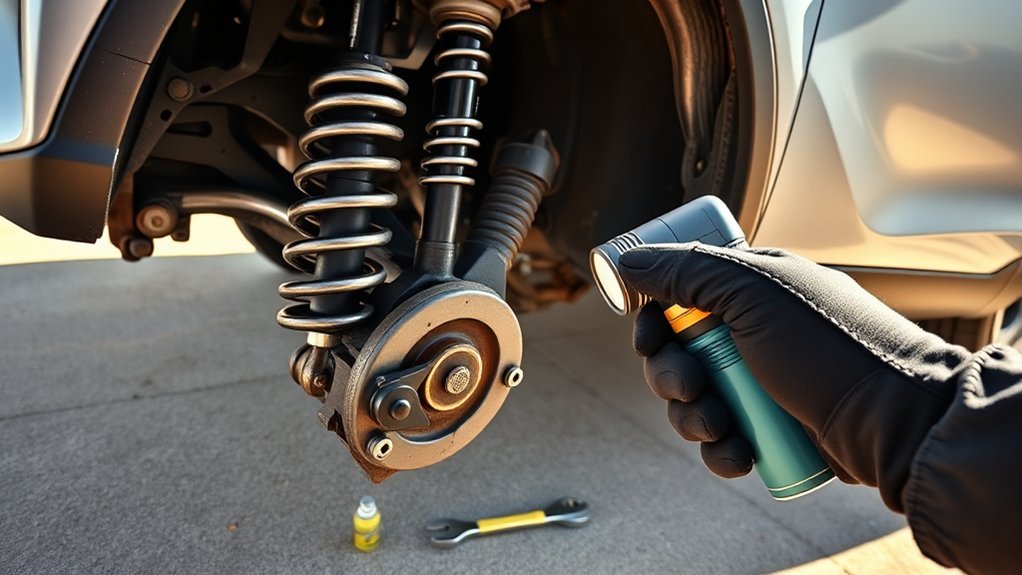
As disc brake pads wear thinner, the caliper pistons sit farther out. That can lower the fluid level in the reservoir even when there is no leak. This is why topping off should be paired with a pad inspection. If the pads are near the end of their life, service the brakes instead of only adding fluid.
Low Fluid from a Leak
A leak is more urgent. Check around the master cylinder, reservoir, brake lines, rubber hoses, calipers, wheel areas, and the ground under the vehicle. Brake fluid often feels slippery and may leave wet, shiny spots or damaged paint.
Soft Brake Pedal or Warning Light
A spongy pedal, a pedal that slowly sinks, a brake warning light, or a low-fluid warning deserves immediate attention. Air in the system or a hydraulic leak can reduce braking power. RAV4 Hybrid and RAV4 Prime models use a brake-booster pump as part of the hydraulic circuit, so a soft pedal or warning light on these variants should be treated the same way — stop and have the system inspected rather than assuming it is just low fluid. `[VERIFY: confirm applicability to your specific model year and trim]`
Warning: If the brake pedal feels soft, the brake warning light is on, or the fluid level drops below MIN again after topping off, do not keep driving as normal. Have the brake system inspected before the vehicle returns to regular use.
Routine Checks and Pad Inspection Schedule to Prevent Low Fluid
Make brake fluid checks part of your regular RAV4 maintenance routine. Toyota notes that regular owner checks and scheduled maintenance help keep the vehicle operating properly, and brake fluid is one of the fluids that should not be ignored.
Fluid Level Inspection Routine
Check the reservoir monthly, before road trips, and whenever braking feels different. The fluid should remain between the MAX and MIN marks. If the level is low, write down the date and mileage, then inspect the system rather than repeatedly adding fluid.
Scheduled Pad Thickness Checks
Inspect brake pads during tire rotations or routine service. A visual check through the wheel may be enough for a quick look, but a proper inspection may require removing the wheel. Many technicians recommend planning service before pads become extremely thin, especially if you hear squealing, grinding, or scraping.
When to Replace or Flush Brake Fluid
Brake fluid should be replaced when it is contaminated, very dark, moisture-heavy, or due under the maintenance guidance for your model and driving conditions. If you tow, drive in mountains, sit in heavy stop-and-go traffic, or drive in humid conditions, ask a Toyota dealer or qualified mechanic whether shorter fluid-service intervals make sense.
Clean brake fluid helps transfer pedal force into hydraulic pressure. Dirty, moisture-contaminated, or incorrect fluid can reduce the safety margin your brakes depend on.
Common Mistakes to Avoid
- Opening the reservoir just to look inside: Read the level through the translucent tank first.
- Using old brake fluid: Use fluid from a newly opened container only.
- Guessing the fluid type: Match the reservoir cap and owner’s manual.
- Overfilling: Stop just below MAX, not above it.
- Ignoring repeated low readings: Low fluid can be a symptom of pad wear or a leak.
- Using DOT 5: Do not use silicone DOT 5 fluid unless the vehicle manufacturer specifically requires it.
Frequently Asked Questions
Where is the brake fluid located on a Toyota RAV4?
The brake fluid reservoir is in the engine bay on the driver’s side. Look for a translucent plastic tank with MAX and MIN marks and a cap labeled for brake fluid. On some newer RAV4 models, adding fluid may require removing a small service cover.
What kind of brake fluid does a Toyota RAV4 take?
Recent Toyota RAV4 owner information lists brake fluid meeting FMVSS No.116 DOT 3/SAE J1703 or FMVSS No.116 DOT 4/SAE J1704. Always confirm the specification on your reservoir cap and in the owner’s manual for your exact model year.
Can I use DOT 4 instead of DOT 3 in a RAV4?
Use the fluid type Toyota lists for your exact RAV4. Many recent RAV4 manuals list both DOT 3 and DOT 4 specifications, but you should not guess or mix unknown fluids. If you do not know what is currently in the system, have the brake fluid inspected or exchanged.
Is it normal for brake fluid to get low?
A gradual drop can happen as brake pads wear, but a sudden drop or repeated low level is not normal. Check the pads and look for leaks around the master cylinder, lines, hoses, and calipers.
What happens if I overfill the brake fluid reservoir?
Overfilling can cause overflow when brake components are serviced or when fluid expands. Brake fluid can damage paint and create a mess in the engine bay. Keep the level below the MAX mark.
How often should I check the brake fluid on a RAV4?
A monthly visual check and a check before any long trip is a reasonable routine for most owners. `[VERIFY: confirm the exact interval stated in your specific model-year owner’s manual, as wording can vary by generation]`
How much does a RAV4 brake fluid service cost?
A simple level top-off is inexpensive if you do it yourself, and many shops will check the level for free or a small fee. A full brake fluid flush is a separate, more involved service. `[VERIFY: current pricing — costs vary too much by region and shop to state a specific figure here]`
Conclusion
You can check RAV4 brake fluid in minutes, but the details matter. Keep the reservoir clean, read the MAX/MIN marks carefully, use only the correct newly opened fluid, and never ignore a low level that comes back. If the pedal feels soft, the warning light is on, or you see signs of a leak, stop treating it as a simple top-off job and get the brake system inspected. For the deeper fluid-type-by-model-year breakdown, see our RAV4 brake fluid type guide.
Sources
- Toyota Owners: 2025 RAV4 Engine Compartment — brake fluid type, adding procedure, and safety notes
- Toyota Owners: 2025 RAV4 Maintenance Requirements — owner maintenance and scheduled maintenance guidance
- eCFR: 49 CFR § 571.116 Motor Vehicle Brake Fluids — DOT brake fluid performance, packaging, and labeling requirements
- AAA Car Maintenance Guide — brake fluid checking, color, contamination, and fluid-matching guidance
- Toyota 2023 RAV4 Warranty & Maintenance Guide — general maintenance and owner inspection guidance

[…] a complete illustrated procedure, use the dedicated RAV4 brake-fluid checking and top-off guide. The summary below focuses on the safety decisions relevant to fluid […]