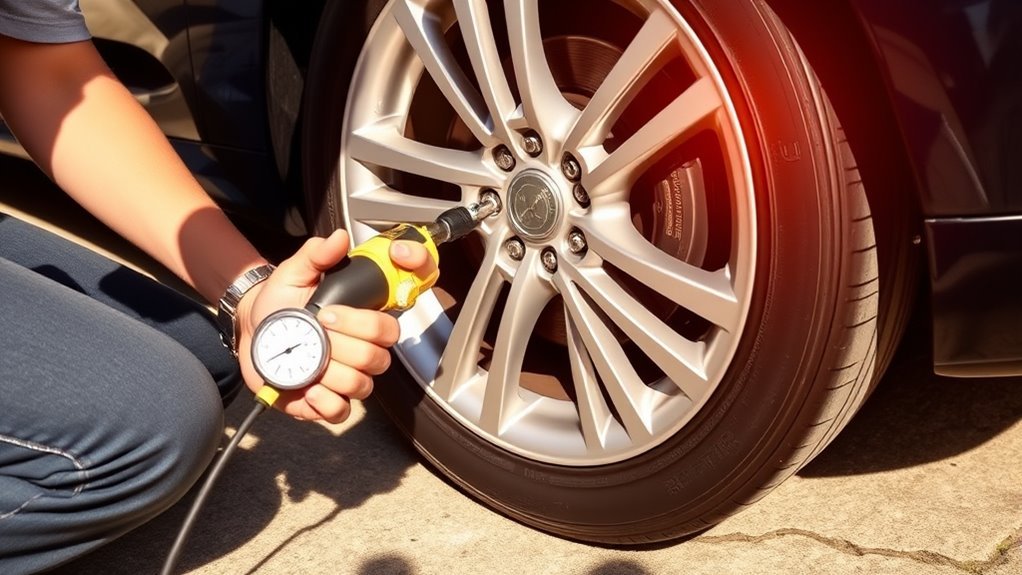
To check tire pressure with an inflator, start by removing the valve cap from the tire. Attach the inflator nozzle securely to the valve stem. Read the pressure gauge for the current PSI. If it’s below the recommended level, slowly add air until you reach the ideal pressure. Replace the valve cap after inflating. Remember to check each tire regularly, especially when temperatures change. You’ll discover more essential tips for maintaining proper tire pressure and avoiding common mistakes.
Why Tire Pressure Matters for Your Vehicle
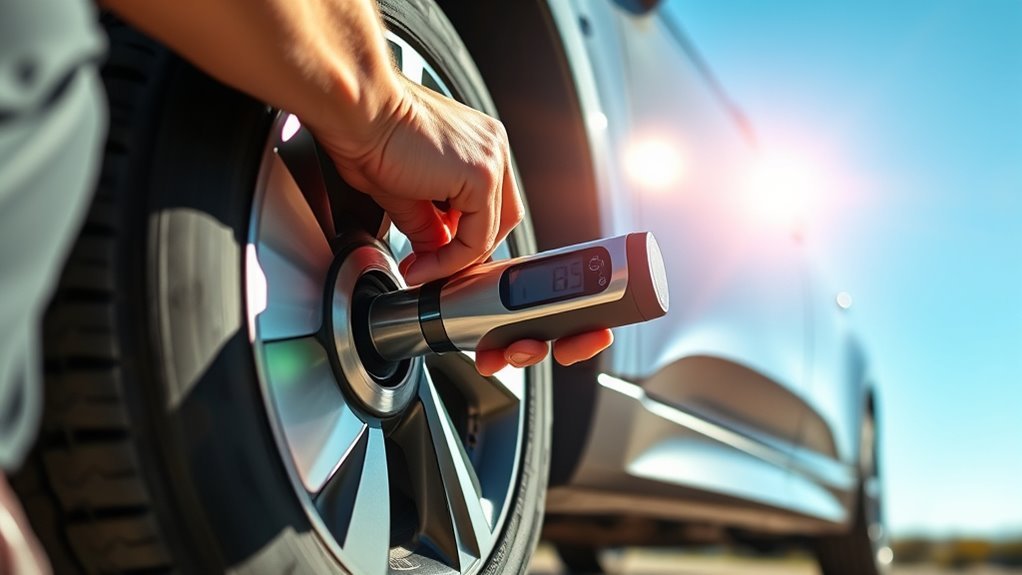
While you may not think about it often, maintaining the correct tire pressure is essential for your vehicle’s performance and safety. A properly inflated tire can enhance fuel economy by up to 3% for every 1 PSI drop in pressure. To guarantee peak performance, use a tire pressure gauge regularly; this simple tool helps you avoid the pitfalls of under-inflation. Inadequate tire pressure not only increases the risk of blowouts but also compromises traction and handling, making your drive less safe. Checking your tires can prevent uneven wear, ultimately extending their lifespan and saving you money on replacements. Aim for around 35 PSI, as indicated on the manufacturer’s decal, to achieve the best results.
How to Find the Right Tire Pressure for Your Tires
To find the right tire pressure for your vehicle, start by checking the manufacturer’s decal located inside the driver’s door. This decal provides the recommended PSI for ideal performance, which is often lower than the maximum values marked on the tire sidewall. Additionally, consider vehicle load factors, as carrying extra weight may require adjustments to tire pressure for safety and efficiency.
Check Tire Sidewall Markings
Checking tire sidewall markings is essential for maintaining ideal tire pressure. While the sidewall displays maximum PSI ratings, these numbers don’t necessarily indicate the best pressure for your vehicle’s performance and safety. You should always rely on the manufacturer’s decal for the most accurate tire pressure recommendations, as it considers your vehicle’s weight and handling characteristics. Typically, a recommended tire pressure is around 35 PSI, but this can vary. When you check your tire pressure, make sure it aligns with the manufacturer’s specifications rather than just the sidewall numbers. After verifying, use the valve stem to inflate or deflate your tires accordingly. Regular checks against these markings enhance fuel economy, traction, and overall vehicle safety.
Locate Manufacturer’s Decal
Finding the manufacturer’s decal is essential to determining the correct tire pressure for your vehicle. Make sure to locate it, usually found on the inside of the driver’s side door frame. This decal provides the ideal PSI (pounds per square inch) for both front and rear tires, ensuring safe and efficient operation. In some vehicles, you might also find this information in the glove compartment or on the fuel filler door. It’s vital to refer to the manufacturer’s decal instead of relying on the maximum PSI printed on the tire sidewall. To maintain performance and longevity, you need two things: a reliable gauge and regular checks. This practice can lead to improved fuel economy and enhanced tire life.
Consider Vehicle Load Factors
When considering tire pressure, it’s important to account for the vehicle’s load, as this directly impacts the required PSI for ideal performance. Here are some key tire load considerations to remember:
- Check the manufacturer’s decal for specific PSI recommendations.
- Adjust pressure guidelines based on whether you’re fully loaded or light.
- Understand that vehicle weight impacts front and rear tire pressure differently.
- Regularly adjust tire pressure to enhance fuel efficiency and traction.
- Monitor tire wear to guarantee even performance over time.
Must-Have Tools for Checking Your Tire Pressure
Accurate tire pressure measurement hinges on having the right tools at your disposal. First, invest in a reliable tire pressure gauge to guarantee you get precise readings before and after using an inflator. This will help maintain peak tire performance and safety. Next, consider a valve cap tool, which simplifies accessing the tire valve for both checking pressure and inflating tires. Some portable inflators come with built-in pressure gauges, offering instant readings while you fill your tires, making the process even more convenient. Keeping a portable tire inflator in your vehicle allows for quick adjustments at any time, empowering you to take control of your tire maintenance and guarantee a smooth driving experience.
How to Use an Inflator for Tire Pressure
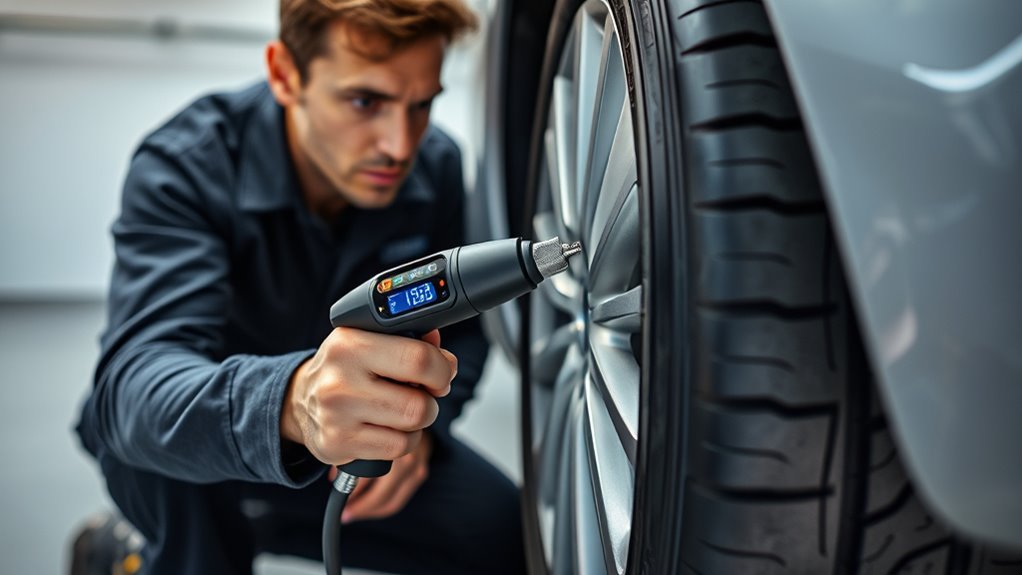
To effectively use an inflator for checking and adjusting tire pressure, start by removing the valve cap from the tire you want to assess. Follow these steps for accurate results:
- Attach the inflator nozzle firmly to the valve stem to guarantee a complete seal.
- Observe the pressure gauge for current pressure readings in PSI.
- If pressure is below the recommended level, gradually add air using the inflator.
- Frequently check the pressure until it meets the ideal PSI on the manufacturer’s decal.
- Once achieved, remove the inflator, quickly replace the valve cap, and repeat for all tires, including the spare.
Regular tire maintenance with various inflator types keeps your vehicle safe and efficient on the road.
Top Mistakes to Avoid When Inflating Your Tires
While inflating your tires might seem straightforward, several common mistakes can compromise your safety and vehicle performance. Here are key pitfalls to avoid:
| Mistake | Impact | Solution |
|---|---|---|
| Ignoring cold tire pressure | Inaccurate readings | Check pressure when tires are cold |
| Overinflating tires | Risk of blowouts | Monitor pressure during inflation |
| Neglecting valve integrity | Air leaks | Check valve integrity before inflating |
| Forgetting the spare tire | Reduced safety | Always check the spare tire too |
Understanding PSI limits is essential. Use a reliable gauge after inflation to ascertain peak pressure is achieved. Avoiding these common inflation errors helps maintain your vehicle’s performance and safety.
Tire Maintenance Tips for Optimal Pressure
To maintain ideal tire pressure, check it regularly, ideally once a month or before long trips. Adjust your tire pressure based on load; heavier loads may require a slight increase in pressure for safety and performance. This proactive approach not only enhances fuel efficiency but also extends the life of your tires.
Regular Pressure Checks
Regularly checking your tire pressure is vital for maintaining ideal performance and safety on the road. Aim for a tire pressure frequency of once a month to guarantee tire pressure accuracy. Here’s what you should focus on:
- Refer to the manufacturer’s decal for the recommended pressure.
- Use a reliable tire pressure gauge for accurate measurements.
- Check tire pressure when tires are cold for the best results.
- Monitor your spare tire; it’s essential for emergencies.
- Consistent pressure checks can prevent uneven tire wear and reduce blowout risks.
Emphasizing tire pressure benefits not only enhances fuel efficiency but also prolongs tire lifespan, giving you the freedom to drive with confidence. Regular maintenance is key to keeping you safe and your vehicle performing at its best.
Adjusting For Load
Carrying heavy loads can greatly impact your tire performance, so it’s important to adjust your tire pressure accordingly. Refer to your vehicle manufacturer’s decal for specific pressure guidelines when loading your vehicle. Under-inflating tires can lead to increased wear and reduced fuel efficiency, especially with added weight. Typically, you should increase tire inflation by 3-5 PSI above the standard recommendation to accommodate for load adjustments. Always measure tire pressure when the tires are cold to guarantee accuracy, as heat from driving can distort readings. Don’t forget to check your spare tire’s pressure, too, especially when planning to travel heavy. Proper adjustment enhances safety and promotes ideal performance on the road.
Handling Frequent Underinflation Issues?
While temperature fluctuations can considerably impact tire pressure, addressing frequent underinflation issues requires a proactive approach. You’ll want to understand the common causes and implement preventative measures to maintain ideal tire pressure. Here’s what you can do:
- Check tire pressure at least once a month.
- Verify you’re maintaining the recommended tire pressure from the manufacturer’s decal.
- Look for signs of slow leaks or damage, which could necessitate a professional inspection.
- Consider using nitrogen instead of air to help retain pressure longer.
- Adjust for temperature changes, remembering that a 10°F drop decreases pressure by about 1 PSI.
Frequently Asked Questions
How to Properly Check Correct Amount Tire Pressure?
To properly check tire pressure, use a tire gauge for accurate readings. Employ inflation techniques at gas stations or home compressors, ensuring you follow checking methods for consistent maintenance and ideal vehicle performance.
What Is the 3% Tire Rule?
The 3% Tire Rule states you should maintain tire pressure within 3% of the recommended PSI. This guarantees inflation accuracy, enhances safety benefits, and helps you avoid decreased fuel efficiency and increased tire wear.
What Is the 4 Psi Rule?
The 4 PSI rule states you should check tire pressure when tires are cold. Maintain proper tire maintenance by ensuring pressures stay within 4 PSI of the manufacturer’s recommendation, especially when using an inflator for adjustments.
What Is the 5 Psi Rule?
The 5 PSI rule means you should maintain your tire pressure within 5 PSI of the recommended level. Use a reliable pressure gauge and follow an inflator usage guide for effective tire maintenance tips.
Conclusion
Keeping your tire pressure in check is as essential as maintaining a steady heartbeat for your vehicle’s performance. Regularly using an inflator not only guarantees safety but also enhances fuel efficiency and tire lifespan. By following the steps outlined and avoiding common mistakes, you can maintain ideal pressure with ease. Remember, a well-inflated tire is your best defense against road hazards. Stay attentive, and your tires will reward you with a smoother, safer ride.