
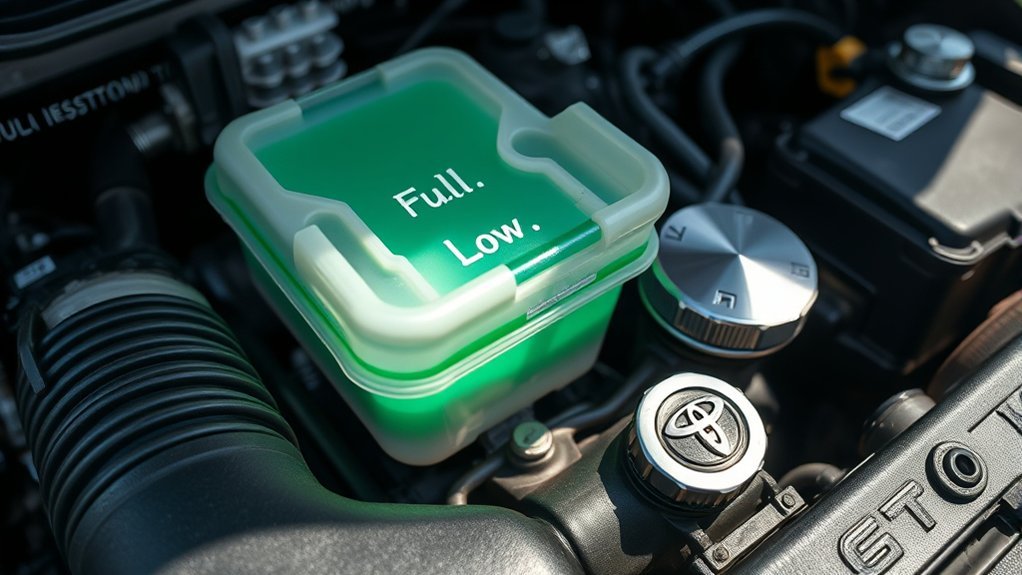
To check the coolant level in a Toyota Tacoma, park on level ground, turn the engine off, and wait until the engine is completely cold. Open the hood and read the translucent engine-coolant reservoir from the side. The level should be between the “F” and “L” marks. If it is on or below “L,” add only the coolant specified for your Tacoma’s model year, then recheck the level after the next cold drive cycle.
Last updated: July 22, 2026. This guide was reviewed against Toyota Tacoma owner-manual guidance and Toyota Genuine coolant information.
Quick Answer
Check the Toyota Tacoma coolant level only when the engine is cold. Look through the side of the engine-coolant reservoir without opening it. A level between “F” and “L” is normal. If the level is on or below “L,” top off to “F” with the coolant named in your owner’s manual. Many newer Tacomas use Toyota Super Long Life Coolant, while some older model years specify a different Toyota coolant. On i-FORCE MAX hybrid models, use the cap labels and hybrid owner’s manual to identify the engine-coolant reservoir because the engine bay may contain more than one coolant circuit.
Key Takeaways
- Always check Tacoma coolant with the engine off and cold; hot coolant can spray under pressure and cause burns.
- The coolant level is normal when it sits between the “F” and “L” marks on the engine-coolant reservoir.
- Use the coolant specified for your exact model year. Many newer models call for Toyota Super Long Life Coolant or a Toyota-compatible equivalent.
- Do not identify coolant by color alone. Confirm the chemistry and whether the bottle is premixed before adding it.
- If the level drops again soon after topping off, inspect for leaks and have the cooling system pressure-tested if the source is not visible.
- Use plain water only as a temporary emergency measure when the owner’s manual allows it, then restore the correct coolant mixture as soon as possible.
At a Glance
| Time Required | 3–5 minutes |
| Difficulty | Easy beginner maintenance |
| Tools Needed | Clean rag, flashlight, correct coolant if topping off |
| Normal Reading | Between “F” and “L” with the engine cold |
Why Is the Correct Coolant Level Important?
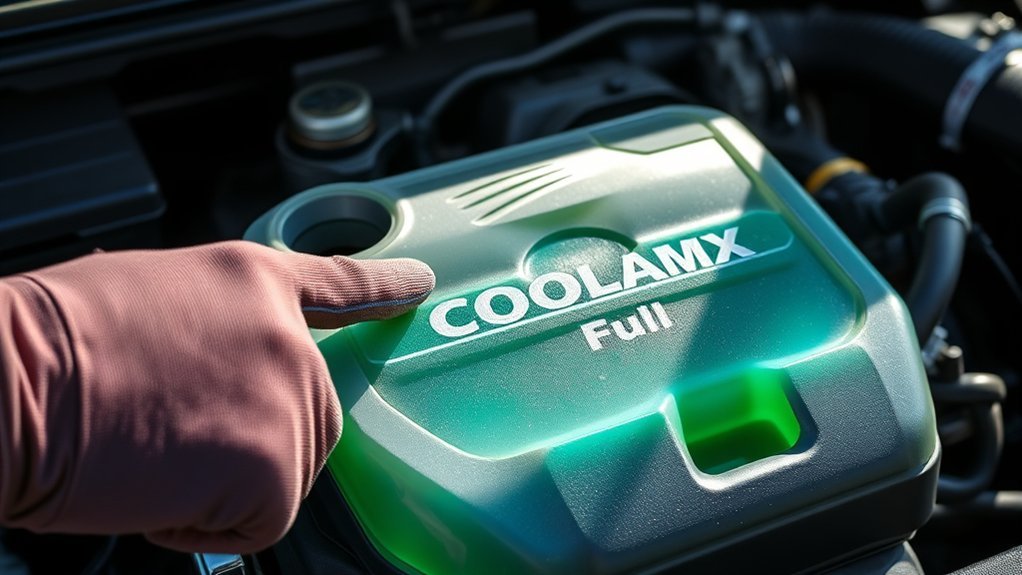
Coolant carries heat away from the engine, protects against freezing, and supplies corrosion protection for cooling-system parts. A low level can allow air into the system and reduce heat transfer. That can contribute to overheating, weak cabin heat, unstable temperature readings, or component damage if the truck continues to run hot.
A repeated level loss is more important than a single low reading. Toyota’s owner guidance directs owners to check visible cooling-system components when the level falls again soon after replenishing it. A top-off restores the level; it does not repair a leaking hose, cap, radiator, drain cock, water pump, or internal engine problem.
When Should You Check Your Tacoma’s Coolant Level?
Check the level when the engine is cold, preferably before the first drive of the day. A practical schedule is once a month, at oil-change checks, before demanding trips, and again after any top-off. The owner’s manual remains the controlling source for your truck’s maintenance schedule.
Before Long Trips, Towing, or Off-Road Use
Check the coolant before road trips, towing, off-road driving, or long highway runs. These conditions can place more heat load on the cooling system. Confirm the cold level is between “F” and “L,” and look for wet hoses, dried pink or red residue, or puddles before leaving.
Before Summer Heat or Winter Cold
Inspect the level before hot-weather towing and before freezing weather. Correct concentration matters as much as fluid height because the mixture controls freeze protection, boil protection, and corrosion resistance. Do not change concentration by adding extra water to premixed coolant.
When a Temperature Warning or Overheating Symptom Appears
If a coolant-temperature warning, overheating message, or abnormal temperature-gauge reading appears, stop as soon as it is safe. Shut the engine off and let it cool completely. If you see steam, smell coolant, find a puddle, or notice a rapidly falling level, do not continue normal driving. Arrange an inspection or tow if overheating persists.
How to Check Coolant Level in a Toyota Tacoma
Use this cold-engine procedure for a routine reservoir check. The exact reservoir location and cap design vary by Tacoma generation and powertrain, so confirm the component in the Toyota owner’s manual portal when the engine bay layout is unfamiliar.
- Park on level ground. Turn the engine off and wait until the engine and cooling system are completely cold.
- Open the hood. Find the translucent engine-coolant reservoir and identify the “F” and “L” marks molded into the plastic.
- Read the level from the side. Use a flashlight if needed. Do not open the cap for a normal visual check.
- Decide whether coolant is needed. A cold level between “F” and “L” is satisfactory. If the level is on or below “L,” use the coolant specified in the owner’s manual.
- Top off only when cold. Clean around the cap, open it slowly, add coolant to the “F” line, and reinstall the cap securely. Do not overfill.
- Recheck after a few drives. Once the engine is cold again, confirm the level remains stable and look for wet areas, dried coolant residue, or puddles.
Warning: Never remove the radiator cap or a pressurized coolant-reservoir cap while the engine is hot. Hot coolant and steam can escape under pressure and cause serious burns.
[Products Worth Considering]

Direct Fit
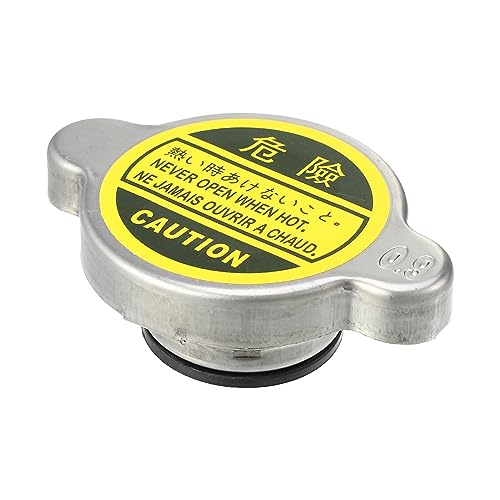
Fit for: for Toyota Tacoma 1995-2004, OE Number:164010C010

Applicable for Toyota Sienna 2004-2010
What Do the “F” and “L” Coolant Marks Mean?
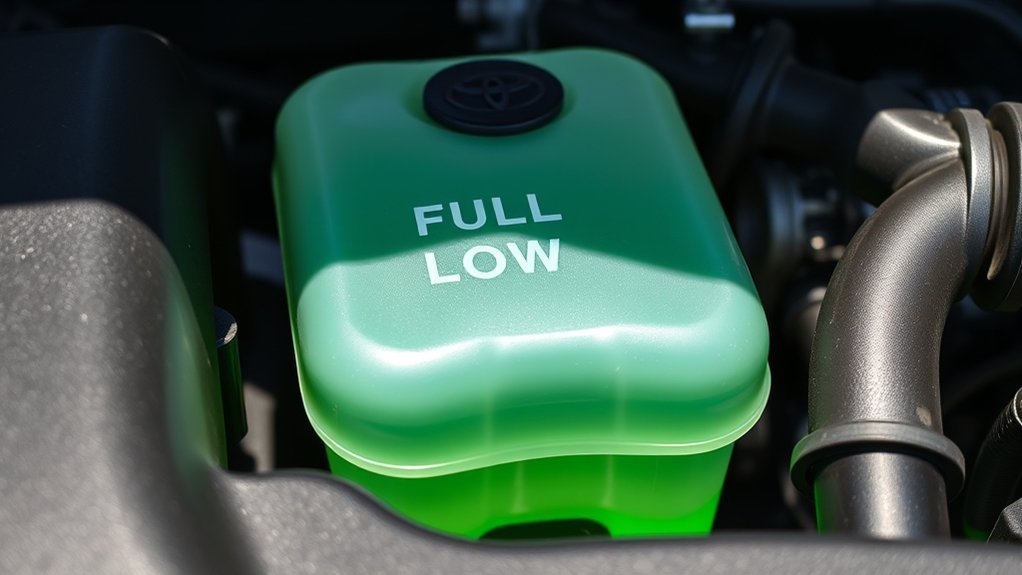
The coolant level is satisfactory when it is between the “F” and “L” lines with the engine cold. If the level is near “F,” no coolant is normally needed. If it is on or below “L,” add the correct coolant to the “F” line. Do not fill above “F,” because the coolant needs room to expand as the engine warms.
If the plastic is stained or difficult to read, wipe the outside of the reservoir and shine a flashlight through the side. Do not shake or rock the truck to find the level. If the reservoir appears empty, do not assume a simple top-off is enough; inspect for leaks and follow the owner’s manual before opening any other cooling-system cap.
| Cold Reading or Symptom | What It Can Mean | Next Step |
|---|---|---|
| Between “F” and “L” | Normal reservoir level | No coolant needed; reinstall the hood and monitor normally |
| On or below “L” | Coolant is low | Top off with the specified coolant when cold |
| Reservoir appears empty | Significant coolant loss or an unreadable reservoir | Check for leaks and consult the owner’s manual or a qualified repair shop |
| Level drops again quickly | Possible leak or pressure problem | Inspect visible components and arrange a pressure test |
| Steam or temperature warning | Overheating risk | Stop safely, shut the engine off, and let it cool completely |
Pro Tip: Toyota Super Long Life Coolant sold for many newer U.S.-market Tacomas is commonly pink, but color is not a compatibility standard. If the coolant looks rusty, oily, dark, sludgy, or cloudy, have the system inspected instead of covering the symptom with a top-off.
What Happens If Your Tacoma’s Coolant Level Is Low?
Low coolant reduces the system’s ability to carry heat away from the engine. If the level falls far enough, air pockets can form and the engine can overheat. Continuing to drive while the temperature is high can turn a small leak into expensive engine damage.
Engine Overheating Risks
Possible signs include a temperature warning, rising gauge, weak heater output, steam, a sweet smell, or coolant under the truck. Severe overheating can damage gaskets, warp metal components, and contaminate engine oil. Stop before the temperature remains in the hot range.
Cooling-System Component Damage
Low coolant or repeated overheating can stress the water pump, thermostat, hoses, radiator, reservoir cap, seals, and engine passages. If the reservoir repeatedly needs coolant, treat the loss as a fault to diagnose rather than routine consumption.
How Do You Top Off Toyota Tacoma Coolant Safely?
Only add coolant when the engine and cooling system are cold. Keep dirt out of the reservoir and use the exact fluid specified for the model year.
- Park the Tacoma on a level surface and turn the engine off.
- Wait until the engine is completely cold.
- Open the hood and confirm you have identified the engine-coolant reservoir.
- Read the level against the “F” and “L” marks.
- Clean around the cap with a clean rag.
- Slowly remove the cap only after confirming the system is cold.
- Add the specified coolant slowly until the level reaches “F.”
- Reinstall the cap securely and wipe up any spill.
- Look around the reservoir, hoses, radiator area, drain cock, water pump area, and ground for signs of leakage.
- Recheck the level after the next few drives, once the engine is cold again.
Emergency only: Toyota owner guidance allows water as a temporary substitute when coolant is unavailable during an overheating emergency. It is not a permanent fill because it lacks the specified freeze and corrosion protection. Restore the correct coolant mixture as soon as practical.
[Products Worth Considering]
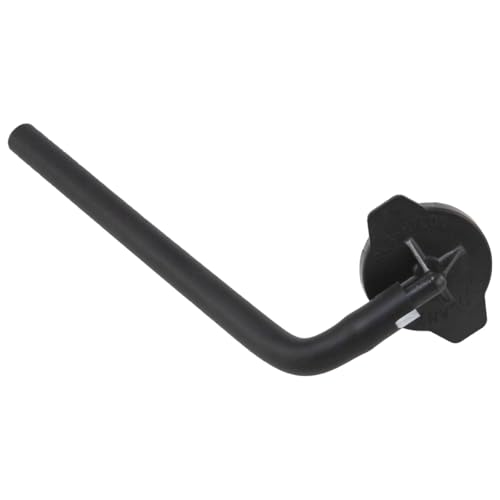

【Fitment】Compatible with Toyota Highlander 2014-2019
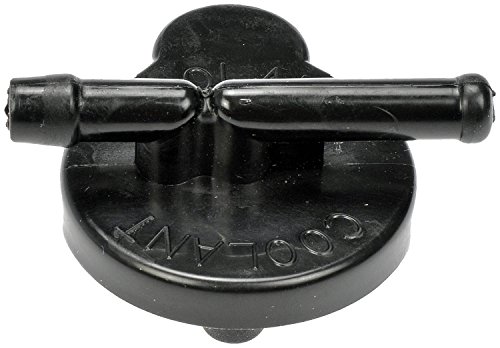
Direct replacement - this engine coolant reservoir cap directly replaces a cracked or lost original cap
What Coolant Should You Use in a Toyota Tacoma?
The safest choice is the coolant named in the owner’s manual for your exact Tacoma model year and powertrain. Many newer models specify Toyota Super Long Life Coolant or a similar high-quality ethylene-glycol coolant that is non-silicate, non-amine, non-nitrite, and non-borate, with long-life hybrid organic acid technology. Some older Tacoma manuals specify Toyota Long Life Coolant instead, so do not apply a newer-fluid recommendation to every generation.
Toyota’s U.S. owner information commonly lists Super Long Life Coolant as a premixed 50% coolant and 50% deionized-water solution, with protection to about -31°F (-35°C). Canadian owner information may specify a 55% coolant and 45% deionized-water mixture, with protection to about -44°F (-42°C). Follow the bottle label and the manual for the market where the truck was sold.
Do not add water to a bottle labeled premixed, pre-diluted, or ready to use. Avoid choosing a random green, orange, red, pink, “universal,” or unknown coolant by color alone. For a model-year overview, see the Toyota Tacoma coolant types and colors guide.
Hybrid note: An i-FORCE MAX Tacoma may have more than one coolant circuit. Use the hybrid owner’s manual and the labels on the caps to identify the engine-coolant reservoir. Do not open, fill, or service a hybrid cooling circuit based only on reservoir shape or location.
[Products Worth Considering]

Factory-Engineered Coolant: Genuine extended life coolant for Polaris snowmobiles, UTVs, and off-road vehicles. Exact OEM part ensures proper fit and OEM performance.
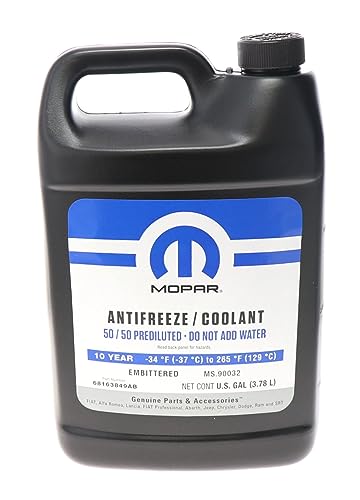
Item Name: MOPAR Antifreeze/Coolant 50/50 Prediluted MS.90032

1 GALLON ENGINE ANTIFREEZE/COOLANT: Fully compatible with other extended life antifreeze/coolants. This item contains a bittering agent called Denatonium Benzoate.
Does Coolant Capacity Matter for a Level Check?
Not for a routine reservoir check. You only need enough of the specified coolant to bring the cold level to “F.” Total system capacity matters during a drain, flush, repair, or full refill, and it varies by generation, powertrain, drivetrain, and model code. For example, Toyota lists 12.6 or 12.8 U.S. quarts for certain non-hybrid 2024 Tacoma configurations, but those figures should not be applied to older trucks or i-FORCE MAX models. Use the exact capacity chart in your manual or the Tacoma coolant capacity guide before buying fluid for a full service.
How Often Should You Check Tacoma Coolant?
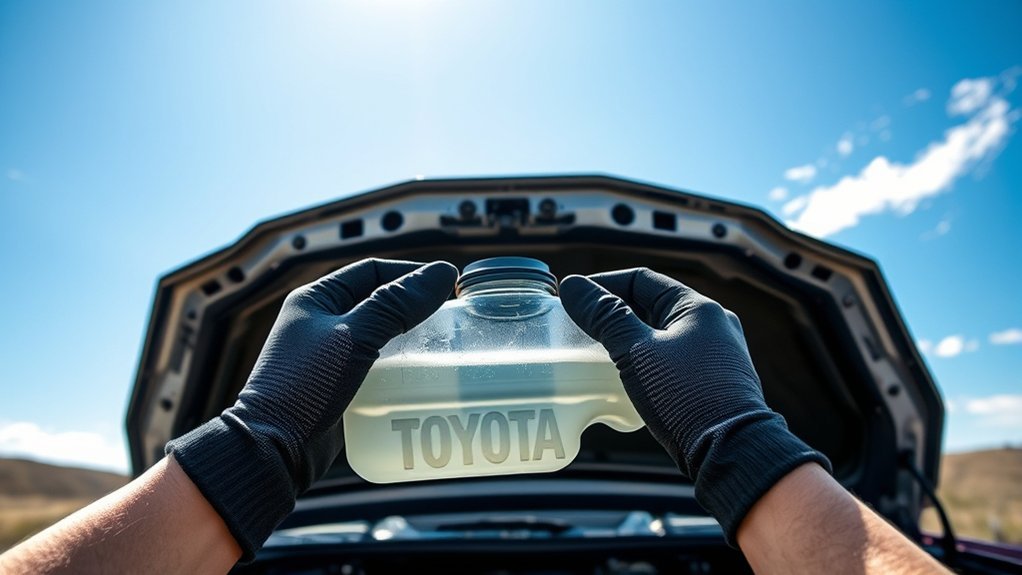
Most routine checks are visual. Look through the side of the cold reservoir and avoid opening the cap unless coolant must be added. Record the date and mileage when you top off the system so you can tell whether the level is falling again.
A Practical Check Schedule
| When To Check | What To Look For |
|---|---|
| Monthly | Cold level between “F” and “L,” clear reservoir view, no puddles |
| Before long trips or towing | Correct level, secure cap, no wet hoses or dried residue |
| During oil-change checks | Reservoir level and visible hose, radiator, and water-pump areas |
| Before summer or winter | Correct level and owner-manual-approved mixture |
| After topping off | Whether the cold level drops again within the next few drives |
What Are the Signs of Low Coolant?
Low coolant or a developing cooling-system fault may cause one or more of these signs:
- Cold reservoir level on or below the “L” mark
- Dashboard temperature warning or overheating message
- Temperature gauge rising higher than normal
- Sweet coolant smell around the front of the truck
- Pink, red, or other colored residue or puddles under the engine bay
- White steam from the engine area
- Heater blowing cool air after the engine has warmed
- Frequent need to add coolant
Weak cabin heat can also point to trapped air, low coolant, or a heater-core problem. See the Tacoma heater-core coolant-flow guide for the next checks.
Why Does Tacoma Coolant Keep Getting Low After a Top-Off?
If the level drops again soon after replenishing it, visually inspect the radiator area, hoses, engine-coolant reservoir cap, radiator cap where applicable, drain cock, and water pump area. Look for wet spots, dried crusty residue, a sweet smell, or coolant on the ground. If no source is visible, have a Toyota dealer or qualified repair shop test the cap and pressure-test the cooling system.
A top-off corrects the fluid level. It does not correct the leak that caused the level to fall.
Practical Tacoma Coolant Maintenance Tips
These habits make the level easier to track and reduce the chance of contamination:
- Keep the correct owner-manual-approved coolant sealed in the garage for small top-offs.
- Write down the date and mileage whenever you add coolant.
- Photograph the cold level after topping off so you have a comparison point.
- Use a clean funnel only when needed, and keep dirt away from the cap opening.
- Do not mix coolant types unless the manufacturer information confirms compatibility.
- Wash spilled coolant from painted or metal surfaces and clean the ground promptly.
- Keep coolant away from children and animals, and recycle used antifreeze through an approved local program. Do not pour it onto land, into a storm drain, or into surface water.
Frequently Asked Questions
Should Tacoma coolant be checked hot or cold?
Check it with the engine off and completely cold. A cold reading is the reference used for the “F” and “L” marks, and it avoids exposure to hot pressurized coolant.
Is it safe to drive with low coolant in a Toyota Tacoma?
Do not ignore a low reading. If the engine is cold, there are no warnings or leaks, and the level is only slightly low, add the specified coolant before driving. If the truck is overheating, steaming, leaking, or showing a temperature warning, shut it off and arrange an inspection or tow.
What coolant should I use in a Toyota Tacoma?
Use the coolant specified in the owner’s manual for the exact model year and powertrain. Many newer Tacomas call for Toyota Super Long Life Coolant or a Toyota-compatible equivalent, while some older model years specify Toyota Long Life Coolant.
Can I add water instead of coolant?
Water is a temporary emergency substitute only when the owner’s manual allows it and proper coolant is unavailable. It does not provide the specified freeze, boil, and corrosion protection, so restore the correct mixture as soon as possible.
Why does my Tacoma coolant keep getting low?
A repeated drop can indicate a leaking hose, cap, radiator, drain cock, water pump, heater core, or an internal engine problem. Inspect visible components, then have the system pressure-tested if the source is not obvious.
What color should Toyota Tacoma coolant be?
Many newer U.S.-market Tacomas use pink Toyota Super Long Life Coolant, while some older models use a different Toyota coolant. Color alone is not enough to confirm compatibility. Match the specification in the owner’s manual and on the product label.
What should I do if the coolant reservoir is empty?
Treat an empty reservoir as possible significant coolant loss. Do not open a hot cap. Let the truck cool, look for leaks, and follow the model-year owner’s manual. If the truck overheated or the correct refill procedure is unclear, have it inspected before normal driving.
Which coolant reservoir do I check on an i-FORCE MAX Tacoma?
Use the hybrid owner’s manual and the labels on the caps to identify the engine-coolant reservoir. Hybrid models can have more than one coolant circuit, so do not fill a reservoir based only on its shape or position in the engine bay.
Conclusion
Check your Toyota Tacoma coolant level with the engine cold, read the reservoir from the side, and keep the level between “F” and “L.” Use the coolant specified for the exact model year, avoid mixing fluids by color, and never open a hot cooling-system cap. If the cold level falls again after a top-off, stop treating it as routine maintenance and have the leak diagnosed.
Sources
- Toyota Owners: 2025 Tacoma Engine Compartment — coolant level, coolant type, cold-engine safety, and leak-check guidance.
- Toyota Owners: 2024 Tacoma If Your Vehicle Overheats — “F” and “L” reservoir guidance and emergency water note.
- Toyota: 2024 Tacoma Hybrid Owner’s Manual — model-specific guidance for i-FORCE MAX hybrid systems.
- Toyota Owners: 2026 Tacoma General Maintenance — engine-compartment maintenance and safety context.
- Toyota Genuine Super Long Life Coolant — Toyota coolant product information.
- U.S. EPA: Antifreeze Recycling Best Practices — disposal and recycling guidance for used antifreeze.

[…] For related cold-level checks, see the Tacoma coolant-level guide. […]