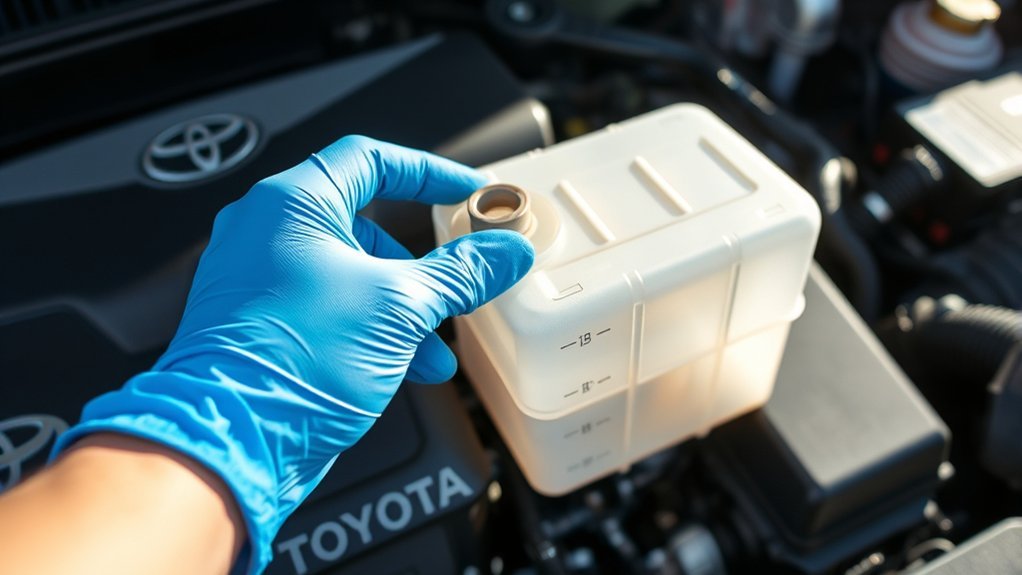
To check the brake fluid level in your Toyota Camry, locate the translucent reservoir near the back of the engine bay on the driver’s side. Confirm the vehicle is on a level surface and visually inspect the fluid; it should be clear to light amber. If it’s low or discolored, it’s time to address it. Look for signs of leaks as well. There’s more to confirming your braking system’s health and safety, so keep exploring.
Locate the Brake Fluid Reservoir in Your Toyota Camry
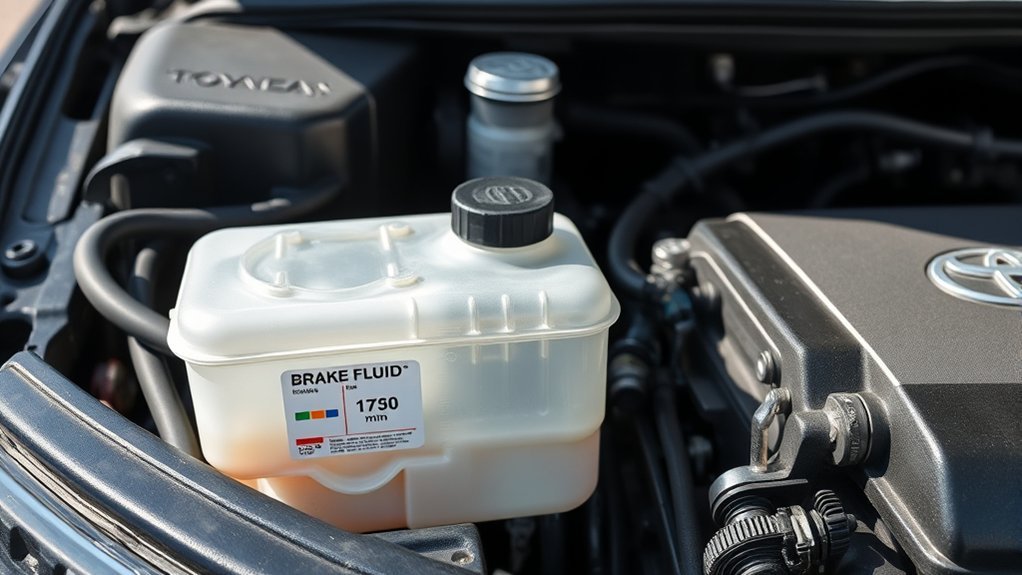
To check your brake fluid level, first, locate the brake fluid reservoir in your Toyota Camry. It’s typically positioned near the back of the engine bay, close to the driver’s side. Look for a translucent plastic reservoir with a cap labeled “Brake Fluid.” This design allows you to visually inspect the fluid level without needing to remove the cap.
Ensure your vehicle is on a level surface for an accurate reading. Check the fluid markings on the side of the reservoir—there are minimum and maximum indicators to guide you. If the fluid level is below the minimum mark, it’s time to refill. Opening the cap usually requires turning it counterclockwise, but always consult your owner’s manual for specific instructions regarding your model. This straightforward process empowers you to maintain your vehicle effectively.
Why You Should Check Brake Fluid Regularly
Regularly checking your brake fluid is vital for vehicle safety and performance, as it helps you catch potential issues before they become costly repairs. A drop in brake fluid level often signals wear on brake components, necessitating checks for peak performance. By keeping fluid at the proper level, you guarantee effective braking response, which directly impacts your control during operation.
Contaminated brake fluid can lead to corrosion within the brake system, so routine inspections are essential for maintaining fluid clarity and preventing expensive damage. Consistent monitoring also aids in early detection of leaks, which, if ignored, can compromise the entire braking system. Incorporating brake system maintenance into your regular safety inspections not only enhances your vehicle’s reliability but also safeguards your well-being on the road. Make sure your brake fluid is always up to par to enjoy a safer driving experience.
Steps to Inspect Brake Fluid Level and Condition
To inspect your brake fluid level and condition, start with a visual check of the reservoir. Next, assess the fluid’s color; it should be clear to light amber. Finally, look for any signs of contamination, as these could indicate the need for a fluid change.
Visual Inspection Techniques
While checking your brake fluid level is essential for vehicle safety, it’s crucial to execute the visual inspection accurately. Start by locating the master cylinder reservoir, typically at the back of the engine bay. Confirm your vehicle is on a level surface for an accurate reading. Carefully remove the reservoir cap and observe the fluid level against the marked minimum and maximum lines to see if a refill is necessary. Pay attention to visual cues regarding fluid clarity; it should be clear or slightly yellow. Any dark or cloudy fluid indicates contamination and may require replacement. Look for debris or particles, signaling potential issues. After checking, clean the cap before securely replacing it to maintain system integrity.
Fluid Color Assessment
One key aspect of checking your brake fluid is evaluating its color and clarity. The fluid should be translucent and light amber. If it looks dark or murky, it may indicate the need for a replacement due to contamination. Always inspect for debris or particles, as these can signify moisture or other issues within the brake system.
| Color Condition | Significance |
|---|---|
| Light Amber | Healthy, good fluid clarity |
| Dark or Murky | Needs replacement, potential contamination |
| Clear, No Debris | Ideal condition |
| Cloudy, Particles | Urgent attention required |
Contamination Indicators Check
Checking for contamination indicators in your brake fluid is essential for maintaining ideal braking performance. Start by inspecting the fluid’s color; it should be a clear, light amber. Dark or murky fluid indicates contamination and needs replacement. Next, look for debris or particles floating in the fluid, as these can signal contamination sources and potential damage to your brake system. Check for signs of water absorption, like a cloudy appearance, which compromises safety. Confirm the fluid level is between the minimum and maximum lines on the reservoir; a low level might indicate a leak or wear. Regular fluid maintenance helps identify issues early, preventing costly repairs and confirming reliable braking performance.
Identifying the Right Type of Brake Fluid for Your Vehicle
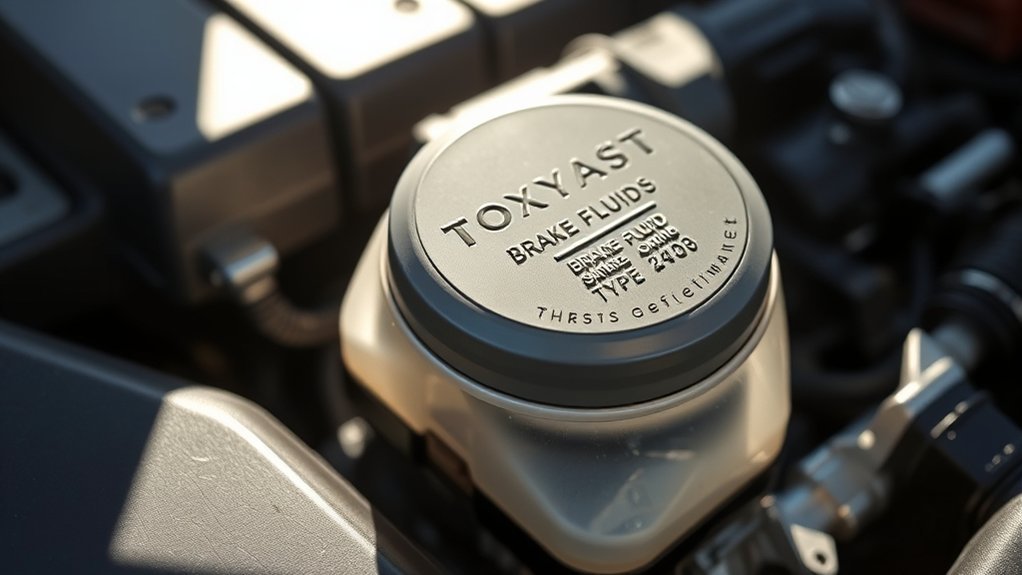
To guarantee ideal brake performance, you need to use the correct type of brake fluid for your vehicle, typically noted on the master cylinder reservoir cap. Always check your owner’s manual for specific recommendations, as mixing different fluid types can compromise braking efficiency. Remember, using fresh, compatible brake fluid is essential for maintaining your brake system’s integrity.
Recommended Brake Fluid Types
Making sure you use the correct brake fluid type is essential for maintaining your vehicle’s braking system. For your Toyota Camry, the recommended brake fluid types are typically DOT 3 or DOT 4, which you’ll find specified on the master cylinder reservoir cap. Using the exact fluid type is critical for peak braking performance and to prevent potential damage to the brake system. Mixing different brake fluid types can compromise fluid compatibility, leading to serious safety issues. Since brake fluid is hygroscopic, it absorbs moisture over time, making regular checks for the correct type and condition important. Always consult your vehicle’s owner manual for specific recommendations tailored to your model year to guarantee you’re using the right brake fluid.
Importance of Fluid Compatibility
Understanding fluid compatibility is vital for maintaining your vehicle’s braking system. Using the wrong brake fluid type can trigger harmful chemical reactions, leading to brake system failure. Always refer to your owner’s manual or the master cylinder reservoir cap for specifics—commonly, DOT 3, DOT 4, or DOT 5.1 are indicated.
| Brake Fluid Type | Characteristics |
|---|---|
| DOT 3 | Glycol-based, standard use |
| DOT 4 | Glycol-based, higher boiling point |
| DOT 5.1 | Glycol-based, high-performance |
| DOT 5 | Silicone-based, incompatible |
| Compatibility | Guarantee peak braking performance |
Prioritizing brake fluid compatibility protects your vehicle’s components and guarantees safety on the road. Always use the specified type to avoid costly repairs.
Fill Your Brake Fluid Reservoir
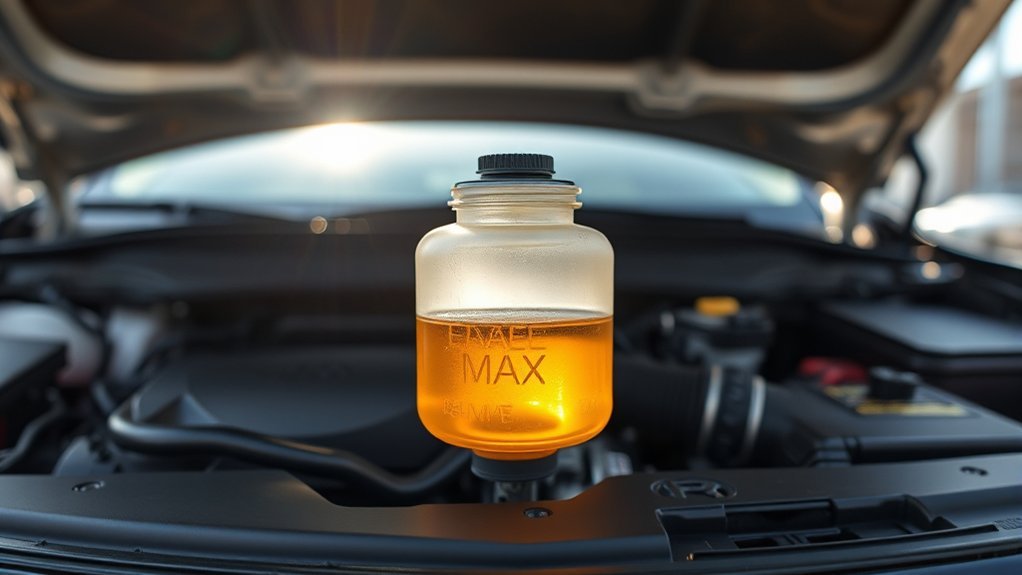
Start by parking your Toyota Camry on a level surface and letting the engine cool down for safety. Next, locate the master cylinder reservoir cap, typically found near the back of the engine bay on the driver’s side. Using a funnel, carefully pour the appropriate brake fluid—usually DOT 3 or DOT 4, as indicated on the cap—into the reservoir. Be mindful not to exceed the maximum fill line to guarantee ideal brake fluid maintenance.
After filling, wipe down the cap to maintain reservoir cleanliness and prevent contamination. Securely replace the cap to maintain system integrity. Regularly check the brake fluid level to confirm it remains within the designated minimum and maximum lines. Keeping an eye on these levels is vital for effective braking performance and overall safety. Prioritize this essential task to make sure your Camry remains in prime condition on the road.
Signs Your Brake Fluid Needs Replacing
Even if your brake fluid looks clear, it’s essential to stay vigilant for signs that it needs replacing. Proper fluid maintenance is vital for peak brake performance. Here are four key indicators:
- Dark or Murky Fluid: If your brake fluid appears discolored, it’s contaminated and should be replaced.
- Low Fluid Level: A significant drop over time may indicate a leak in the brake system, requiring immediate inspection and replacement.
- Debris or Sediment: The presence of particles can compromise your hydraulic system, signaling the need for a fluid change.
- Sticky or Cloudy Appearance: Brake fluid that absorbs moisture can lead to reduced boiling points; this is a clear sign for replacement.
Regular checks show that brake fluid typically needs changing every 2-3 years, depending on your vehicle usage and environmental conditions. Stay proactive to maintain your vehicle’s safety and performance.
What to Do If You Have a Brake Fluid Leak?
If you suspect a brake fluid leak, act quickly to guarantee your safety. Start by inspecting the brake lines, master cylinder, and wheel cylinders for any signs of fluid escaping or wet spots. Look under your vehicle for puddles, especially near the wheels or beneath the master cylinder, to confirm a leak. A significant drop in the brake fluid reservoir indicates a problem that needs immediate attention.
If you detect a leak, don’t drive the vehicle. Low brake fluid can severely compromise your braking performance. For a proper leak diagnosis, consult a professional mechanic who can identify the issue accurately. They’ll assess whether damaged components or lines need replacing. Explore your repair options with them, ensuring your vehicle is safe to drive once again. Prioritize your safety and don’t delay in addressing any brake fluid leaks.
Frequently Asked Questions
How Often Should I Check My Brake Fluid Level?
You should check your brake fluid level every few months to guarantee proper brake fluid maintenance. Regular checks support your brake system health, preventing issues that could compromise safety and performance on the road.
Can I Use Any Brake Fluid Type for My Camry?
Can you really use any brake fluid type for your Camry? Not quite. Always choose compatible fluids, like DOT 3 or DOT 4, to guarantee peak performance and safety for your vehicle’s braking system.
What Happens if I Overfill the Brake Fluid Reservoir?
If you overfill the brake fluid reservoir, fluid can expand during heating, causing a reservoir overflow. This may lead to brake performance issues or damage components, so always maintain the proper level for ideal safety.
Is It Safe to Drive With Low Brake Fluid?
Driving with low brake fluid isn’t just risky; it’s like steering a ship without a rudder! If you spot brake fluid leaks or warning signs, get your brakes checked immediately for safety’s sake.
How Can I Tell if My Brake Fluid Is Contaminated?
You can tell if your brake fluid’s contaminated by checking for dark coloration, particles, or a burnt smell. Fluid contamination causes include moisture absorption and debris, which compromise braking efficiency. Always prioritize safety when driving.
Conclusion
In today’s fast-paced world, neglecting your brake fluid can be as risky as texting while driving. Regularly checking your brake fluid level guarantees peak braking performance and safety. If you notice low fluid or signs of contamination, top it off or replace it promptly. Stay proactive about maintenance, and you’ll keep your Toyota Camry running smoothly. Remember, a well-maintained vehicle is your best defense on the road. Don’t wait for trouble to find you—act now!