You can expect Tacoma rotors to last about 30,000–70,000 miles under typical use, with careful driving and maintenance sometimes pushing them past 100,000 miles. Aggressive driving, towing, and urban stop‑and‑go work accelerate wear and thermal stress, while smooth braking and proper torqueing extend service life. Watch for squeaks, grinding, pedal pulsation, or dashboard warnings and measure thickness regularly; resurfacing is possible before deep scoring. Continue for practical inspection and replacement guidance.
How Long Do Tacoma Rotors Last?
How long will your Tacoma’s rotors last? You’ll typically see 30,000 to 70,000 miles from factory rotors under normal use. That range reflects rotor materials and the alloy or cast-iron construction Toyota uses; metallurgy and machining determine wear rates and heat tolerance. Inspect routinely—uneven wear patterns reveal trouble before failure. In ideal driving environments and with conservative use, some owners report surpassing 100,000 miles on stock rotors, demonstrating that environment and usage narrowly govern longevity. You’ll want to monitor thickness; resurfacing can be a precise, short-term extension when surfaces are within spec. Replace rather than resurface when rotors are scored, warped, or below minimum thickness, since continued operation risks braking efficiency and control. Your maintenance regimen—measurements, inspections, and timely service—lets you reclaim control over component life and avoid being bound by unpredictable failures.
What Shortens or Extends Rotor Life
Your driving style, whether you habitually make hard stops or maintain smooth braking, directly alters rotor wear by changing heat and friction cycles. Carrying heavy loads or towing increases braking force and thermal stress, accelerating thickness loss and warping. Routine inspections, correct installation torque, and choosing quality OEM or aftermarket rotors will slow deterioration and reveal issues before they cause failure.
Driving Style Impact
Several common driving behaviors directly affect Tacoma rotor life: aggressive acceleration and hard braking generate high heat and rapid wear, stop-and-go urban driving increases brake cycles and abrasion, and frequent towing adds sustained braking loads that accelerate degradation. You can extend rotor life by adopting controlled braking techniques—progressive pedal application, earlier deceleration, and avoiding panic stops reduce peak temperatures and thermal stress. Your driving environment matters: urban commuters will see faster wear than highway drivers due to increased duty cycles and particulate abrasion. Regular inspections let you identify uneven wear, glazing, or scored surfaces before failure propagates. Combine disciplined braking with scheduled maintenance and you’ll minimize rotor thickness loss, preserve braking efficiency, and retain the mobility and autonomy you value.
Load And Towing
Because towing and heavy loads raise the kinetic energy your brakes must absorb, you’ll see rotor temperatures and wear rates climb sharply when hauling—even a 5,100 lb trailer can turn routine stops into high-heat events. You must respect the Tacoma’s towing capacity and manage load distribution to minimize brake stress. Higher vehicle weight and uneven load transfer increase braking force at the front rotors, accelerating thermal cracking, glazing, and uneven wear. Urban stop-and-go towing compounds the problem versus steady highway coasting. You can extend rotor life by adopting smooth, predictive braking and optimizing cargo placement to reduce rearward or lateral bias. Inspect rotors more frequently when you tow; replacement intervals will be shorter under repeated heavy-load cycles, so plan accordingly.
Maintenance And Installation
Towing and heavy loads raise rotor temperatures and wear, but maintenance and installation choices will often determine how long those rotors actually last. You’ll extend rotor life by inspecting pads, monitoring brake fluid condition, and resurfacing or replacing rotors before deep scoring occurs. Aggressive driving and hilly, stop-and-go routes accelerate wear; smooth inputs conserve material. During service, use correct installation tools, follow torque specs for lug nuts, and avoid overtightening that causes warping. Regular checks liberate you from unexpected failure.
| Practice | Effect |
|---|---|
| Smooth driving | Lowers heat |
| Brake pad timing | Prevents scoring |
| Brake fluid checks | Maintains hydraulics |
| Proper torque | Prevents warp |
| Installation tools | Guarantee accuracy |
Signs Your Tacoma Rotors Are Worn
When your Tacoma’s rotors wear, you’ll notice precise, measurable changes in braking feel and sound that shouldn’t be ignored. You rely on consistent brake performance; any deviation demands immediate rotor inspection. Pay attention to pedal feedback: a pulsating pedal under firm stops signals uneven rotor thickness, while a loose pedal or increased travel suggests material loss or warping.
When Tacoma rotors wear, changes in pedal feel and sound demand immediate inspection to maintain safe, consistent braking.
Listen for noises—squeaks point to glazing or pad chatter; grinding means metal-on-metal contact and severe surface damage. Visually inspect the rotor face for deep grooves, scoring, or heat spotting; these are objective signs of compromised friction surfaces. Your dashboard may also illuminate a Brake Warning light; treat that as a mandate for inspection.
- Pulsation or vibration in the brake pedal during application.
- Squeaking/grinding noises when braking; visible rotor grooves or scoring.
- Loose pedal feel, increased pedal force, or Brake Warning light activation.
Act decisively to restore safe, liberated control of your Tacoma.
Resurface or Replace? How to Decide
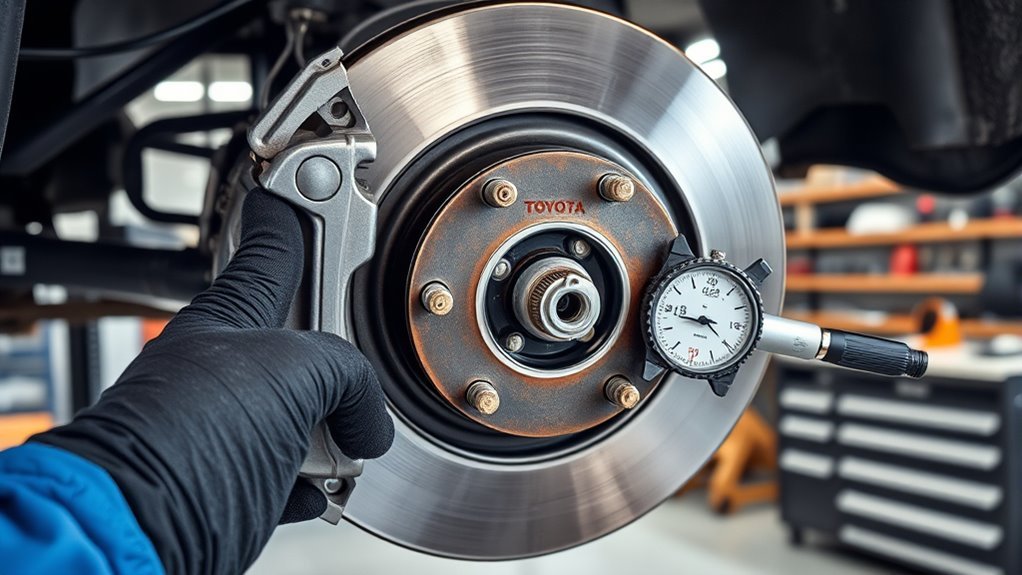
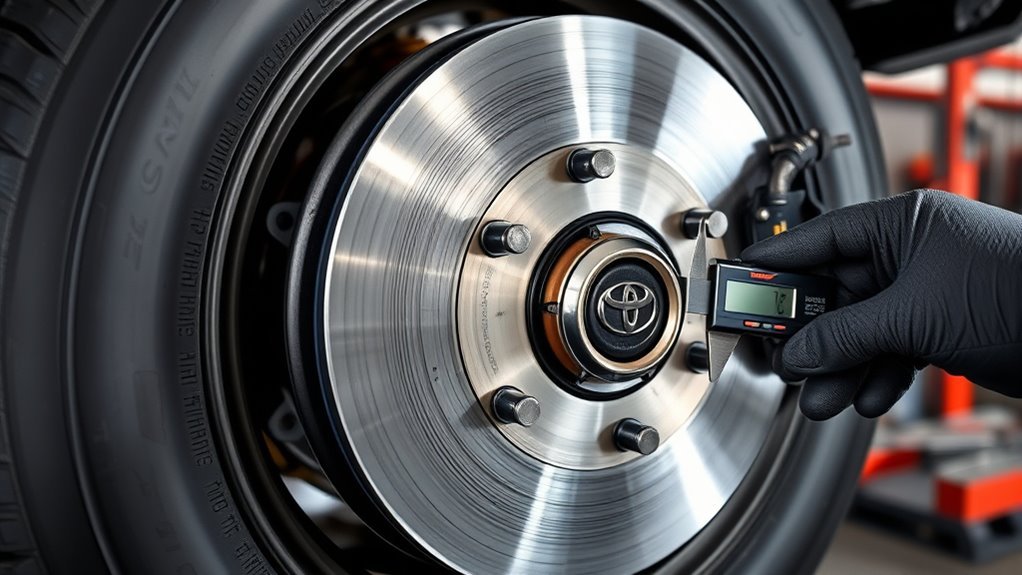
How do you decide whether to resurface or replace Tacoma rotors? You start by measuring rotor thickness against Toyota’s minimum spec: if thickness is above spec and the surface has only light glazing or minor ridges, resurfacing benefits include restored flatness, improved pad contact, and extended rotor life. Use a micrometer to verify rotor thickness at several points; uneven readings or measurements at or below minimum mean replacement.
Inspect for deep scoring, heat cracks, or warping that causes vibration or pulsation during braking—these symptoms usually mandate replacement to restore safe braking. Remember many modern rotors are thinner and not engineered for multiple resurfacings; machining too much reduces heat capacity and can produce failure.
Schedule inspections every 10,000 miles or sooner if you feel vibration. When in doubt, prioritize safety and liberation from risk: choose replacement over resurfacing if structural damage, minimum rotor thickness, or braking symptoms are present.
Rotor Replacement Cost for Tacomas
Anyone replacing all four Tacoma rotors can expect to pay roughly $300–$750 for parts depending on brand and quality, with resurfacing available at about $9 per rotor when the disc meets thickness and condition criteria. You’ll weigh cost comparison and quality factors: cheaper rotors save upfront, higher-grade units resist heat and warp longer. Labor and pad costs change the equation—pads run about $150–$450 per axle and labor varies by location; dealerships can sometimes be cheaper than independents.
- Parts: aftermarket vs OEM—track material specs, thermal capacity, and warranty.
- Service: resurfacing viability depends on minimum thickness; machining at ~$9 per rotor reduces cost if tolerances allow.
- Total cost profile: include pads, labor, and potential future replacements to quantify lifecycle expense.
You’ll decide with data: compare immediate expense to longevity, prioritize quality factors that align with your use and desire for freedom from recurrent repairs.
Maintenance Checklist to Maximize Rotor Life
Because rotors wear predictably with use, you should follow a concise maintenance checklist to maximize their life: inspect rotors every 10,000 miles for thickness and surface condition, measuring against minimum specs and noting scoring or heat spots. Check brake pad maintenance at each inspection; replace pads before backing plate contact to prevent accelerated rotor wear. Maintain proper brake fluid levels and follow the manual’s fluid replacement intervals to avoid moisture-induced corrosion. Torque wheel lug nuts to spec during installation—use a calibrated torque wrench and a star pattern to prevent rotor warping from uneven clamping. Avoid aggressive driving: eliminate habitual hard braking and tailgating to reduce thermal cycling and material fatigue. Schedule routine service appointments that explicitly include rotor micrometer readings and pad thickness records so you can track wear trends. These disciplined actions free you from unexpected failures and extend rotor life predictably, saving time and preserving control.
Frequently Asked Questions
How Long Do Brake Rotors Last in Tacoma?
You’ll typically get 30,000–70,000 miles (occasionally up to 100,000) from Tacoma rotors; follow brake maintenance tips, monitor rotor wear indicators, inspect every 10,000 miles, and avoid heavy towing to maximize lifespan.
How Much Does It Cost to Replace Rotors on a Toyota Tacoma?
You’ll pay about $300–$750 for rotor replacement costs on a Tacoma; you can resurface for roughly $9 each, add $150–$450 per axle for pads, and follow Tacoma maintenance tips to avoid costly surprises.
How Long Do Toyota Rotors Last?
You’ll typically get 30,000–80,000 miles; heavy towing or city traffic shortens life. Watch rotor wear signs like vibration, grooves, or thickness loss, follow brake maintenance tips, and you’ll preserve braking performance and driving freedom.
Conclusion
You’re looking at rotors that typically last 30,000–70,000 miles, but wear varies with driving conditions, maintenance, and pad material. Want predictable life? Track pad thickness, avoid aggressive braking, and resurface only if thickness and runout meet specs; otherwise replace. Expect OEM rotor costs plus labor; consider upgraded vented or slotted rotors for heavy use. Follow a regular inspection and torque-to-spec lug procedure to maximize service life and safety.