To check wheel bearings for play, lift the wheel off the ground, support the vehicle on jack stands, grip the tire at 12 and 6 o’clock, and rock it in and out. On a modern car with sealed hub bearings, any clunk or movement you can feel usually means the bearing is worn. Then spin the wheel by hand and listen for grinding or roughness, and confirm the cause by having a helper hold the brake to rule out ball joints.
This is a general method for most cars, SUVs and trucks. It does not replace your vehicle’s service manual, which gives exact endplay and torque specs.
Signs of a Worn Wheel Bearing
| Symptom | What it suggests |
|---|---|
| Humming or growling that rises with speed | Classic bearing noise; often changes when you swerve left or right |
| Clunk or play when rocking the wheel at 12 and 6 | Bearing wear (or ball joint; see test below) |
| Grinding or roughness when spun by hand | Damaged rollers or races |
| Steering wheel vibration or vague feel | Excessive play; also check tires and balance |
| ABS warning light | Some hub bearings carry the ABS sensor ring; play can disturb the signal |
| Uneven inner or outer tire wear | Play or alignment issues; check bearings and bushings |
Tools Needed
- Floor jack and jack stands, wheel chocks
- Pry bar (for extra leverage, optional)
- Helper to press the brake pedal
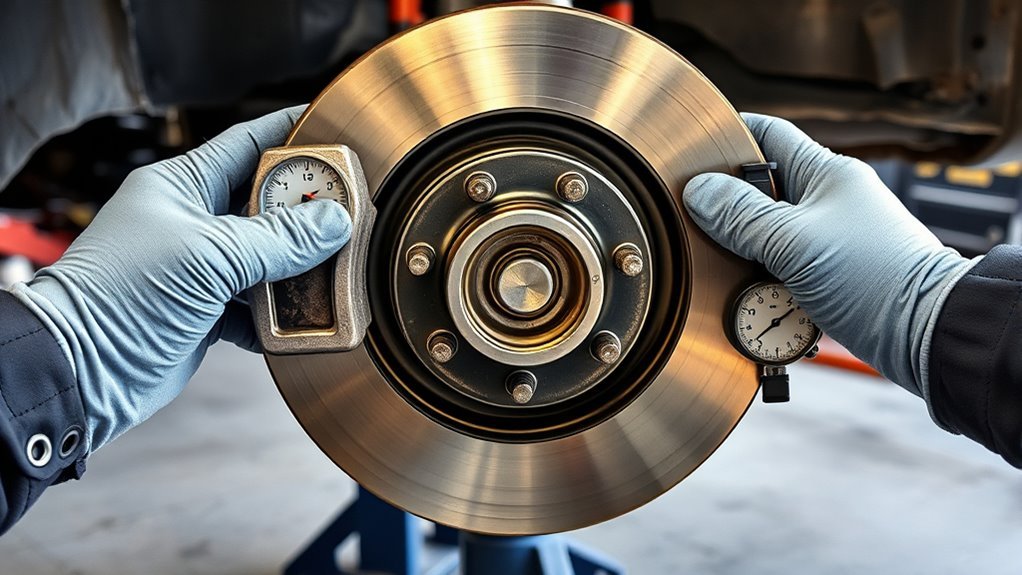
- Dial indicator with magnetic base (to measure endplay on serviceable bearings)
- Gloves and safety glasses
- Torque wrench
How to Check Wheel Bearings for Play: Step by Step
- Park and chock. Level ground, parking brake on (when checking fronts), and chocks on the opposite axle.
- Lift and support. Raise the corner at the manufacturer jacking point and set it on a jack stand so the tire is off the ground.
- Rock at 12 and 6 o’clock. Push the top in while pulling the bottom out, then reverse, firmly but without hammering. Feel and listen for a clunk.
- Rock at 3 and 9 o’clock. On front wheels, play here usually means a tie rod end or steering part, not the bearing.
- Isolate the bearing. Have a helper press the brake pedal and repeat the 12 and 6 test. If the play disappears, it was the bearing. If it remains, check ball joints and bushings.
- Spin the wheel. With the tire off the ground, spin it by hand and feel for roughness through the tire or coil spring. (Brake drag is normal; grinding is not.)
- Compare sides. Repeat on every wheel so you know what normal feels like on your vehicle.
- Road test (if safe). Listen for a hum that changes with speed and gets louder when weight shifts onto the bad side in a gentle curve.
Safety: never put any part of your body under a vehicle held only by a jack.
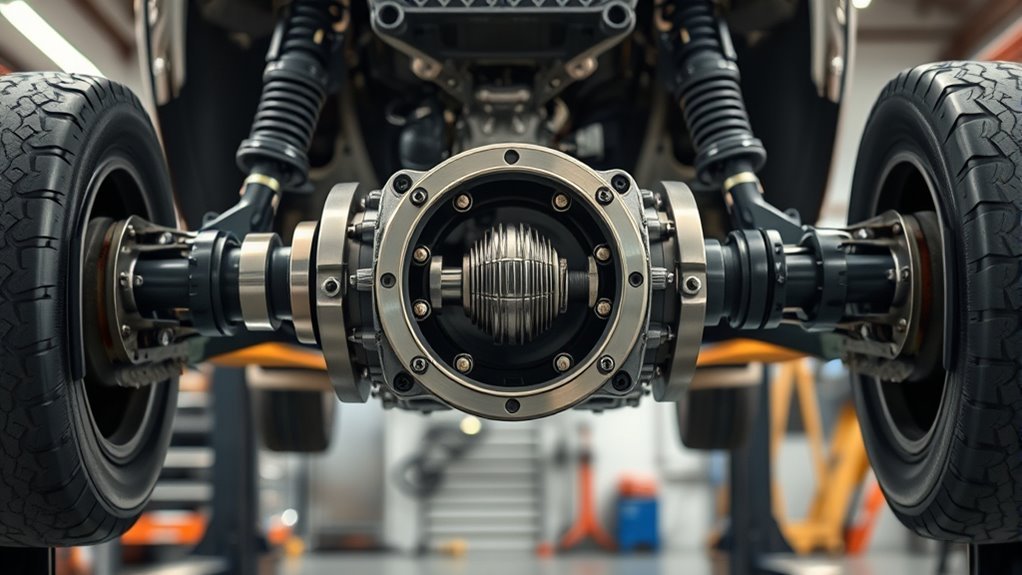
Sealed Hub vs Serviceable Bearings

| Type | Found on | Acceptable play | Service |
|---|---|---|---|
| Sealed hub unit | Most modern cars and many SUVs | None you can feel by hand | Replace as an assembly |
| Serviceable tapered roller bearings | Many older vehicles, some trucks, trailers | Small specified endplay (typically a few thousandths of an inch; check the manual) | Can be cleaned, repacked, and adjusted |
For serviceable bearings, measure endplay with a dial indicator against the hub face and compare with the manual. Inspect races for pitting, scoring, or blue heat marks and replace bearings and races as a set if damaged.
When It Is Not the Bearing
- Ball joints: play at 12 and 6 that does not disappear with the brake applied.
- Tie rod ends: play at 3 and 9 on the front.
- Bushings: movement in the control arm rather than the hub. See our guide to inspecting suspension bushings for wear.
- Tire noise: cupped or feathered tires can hum like a bearing. Regular tire rotation helps keep wear even.
When to See a Professional
- You confirm play or roughness in a sealed hub (replacement often needs special tools or a press).
- The hub is hot to the touch after a short drive.
- The ABS light comes on along with bearing noise.
- You cannot tell whether the play is bearing, ball joint, or steering.
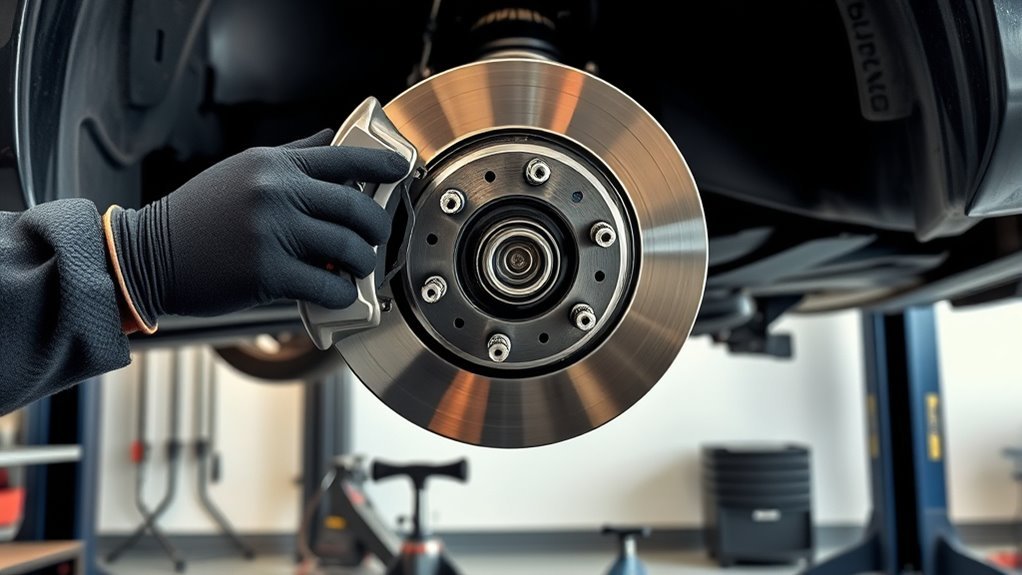
While the wheel is off, it is a good time to inspect brake pads and rotors too.
Frequently Asked Questions
How much wheel bearing play is acceptable?
On most modern cars with sealed hub bearings, there should be no play you can feel by hand. Older serviceable tapered bearings have a small specified endplay, typically only a few thousandths of an inch, so check the service manual and measure with a dial indicator.
Is play at 3 and 9 o'clock a wheel bearing?
Usually not on the front. Movement when you rock the wheel at 3 and 9 o'clock more often points to a worn tie rod end or steering part. Play at 12 and 6 o'clock is the classic bearing or ball joint check.
How do I tell bearing play from ball joint play?
Have a helper press the brake pedal while you rock the wheel at 12 and 6 o'clock. If the play disappears, it was the bearing; if it remains, look at the ball joints or suspension bushings.
Can I drive with a bad wheel bearing?
A slightly noisy bearing may last a short time, but play, grinding, or heat at the hub mean it should be replaced soon. A severely failed bearing can affect steering and braking and, in extreme cases, let the wheel separate.
Can I repack a sealed hub bearing?
No. Sealed hub units are replaced as an assembly. Only serviceable tapered roller bearings, found on many older cars, trailers and some trucks, can be cleaned, repacked and adjusted.
Bottom Line
Rock the raised wheel at 12 and 6 o’clock, use the brake-pedal test to isolate the bearing, and spin it to feel for roughness. On modern sealed hubs, any play you can feel is a reason to replace the unit.