Your Toyota Land Cruiser’s engine air filter replacement interval depends on the model year and operating conditions, so the factory maintenance guide should be your first reference. For the 2024 U.S. Land Cruiser, Toyota schedules engine air filter replacement at 30,000 miles or 36 months. Current Toyota guidance also calls for much more frequent inspection when the vehicle is driven on dirt or dusty roads or used seriously off-road.
Quick Answer
For a 2024 U.S. Toyota Land Cruiser, Toyota schedules engine air filter replacement at 30,000 miles or 36 months. Inspect it more often if you regularly drive on dirt or dusty roads, and check it after demanding off-road use. Older Land Cruisers may differ, so verify your model-year maintenance guide.
Key Takeaways
- Toyota’s 2024 U.S. Land Cruiser schedule calls for engine air filter replacement at 30,000 miles/36 months, not a generic 30,000–45,000-mile range.
- If you primarily drive on dirt or dusty roads, Toyota adds an engine air filter inspection at 5,000-mile maintenance intervals.
- After driving off-road through deep sand, mud, or water, include the engine air filter in your post-trip inspection.
- Replace a torn, deformed, contaminated, wet, or poorly sealing filter early rather than waiting for the scheduled mileage.
- Do not wash, oil, or aggressively blow out a normal disposable filter. Clean a filter only when its manufacturer specifically identifies it as reusable and provides a cleaning procedure.
At a Glance
| Time Required | About 5–15 minutes for a basic inspection or replacement on many Land Cruiser models; access varies by year. |
| Difficulty | Easy for most owners if the air-cleaner housing is readily accessible. |
| Tools Needed | Often no tools or a basic screwdriver/socket, depending on the model year, plus a clean cloth and the correct replacement filter. |
| Cost | Filter price varies by Land Cruiser model year, engine, and brand; DIY installation adds no labor charge. |
When to Replace Your Land Cruiser Air Filter
For the current-generation Land Cruiser, use Toyota’s maintenance schedule rather than a generic interval. The official 2024 Toyota Land Cruiser Warranty and Maintenance Guide lists engine air filter replacement at 30,000 miles or 36 months. Toyota’s current 2026 Land Cruiser manuals and warranty page provides the latest model-year maintenance guide.
Older U.S. Land Cruisers also commonly used a 30,000-mile engine-air-filter replacement point, but generations, engines, markets, and maintenance schedules differ. For example, Toyota’s 2018 Land Cruiser maintenance guide also lists engine air filter replacement at 30,000 miles/36 months.
| Driving Situation | Practical Air-Filter Action |
|---|---|
| Normal road use | Follow the replacement mileage/month interval in the maintenance guide for your exact model year. |
| Primarily dirt or dusty roads | Inspect the engine air filter at Toyota’s additional severe-use maintenance points; the 2024 guide includes inspection at 5,000-mile intervals. |
| Off-road through deep sand, mud, or water | Check the engine air filter as part of the post-off-road inspection rather than waiting for the next scheduled service. |
| Torn, wet, deformed, or poorly sealing filter | Replace it immediately, regardless of mileage. |
For a 2024 U.S. Land Cruiser, Toyota schedules engine air filter replacement at 30,000 miles or 36 months and adds extra inspections for dusty-road use.
Pro Tip: If your Land Cruiser regularly follows other vehicles on dusty trails, inspect the filter soon after the trip. Toyota specifically includes the engine air filter in its off-road daily-maintenance checks after demanding sand, mud, or water use.
Signs Your Land Cruiser Air Filter Needs Immediate Replacement
A dirty appearance alone does not always tell you how much restriction a filter creates, but physical damage, heavy contamination, a distorted seal, moisture damage, or debris reaching the clean side of the airbox are good reasons to replace the filter before its normal service interval.
Visible Dirt or Damage
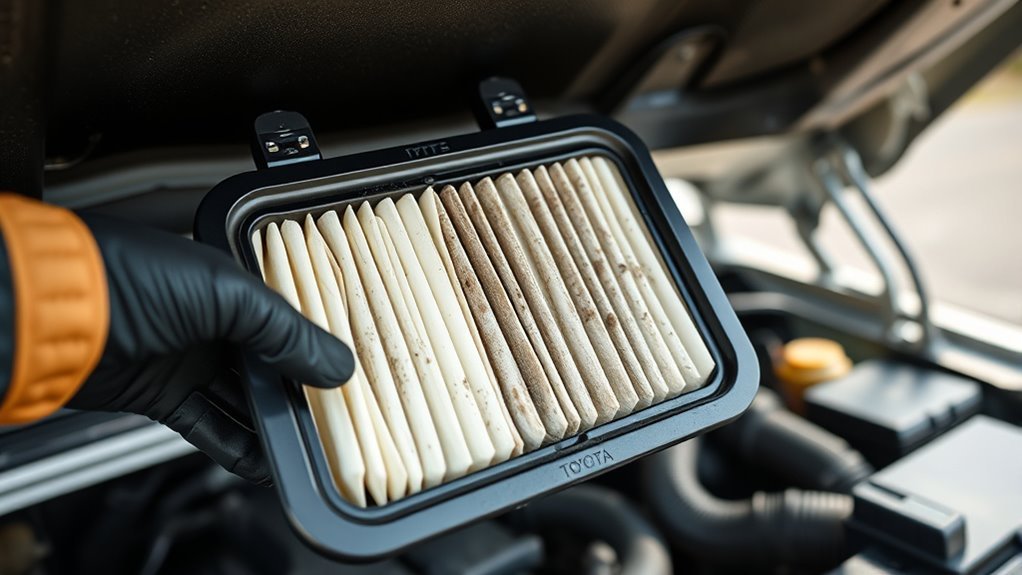
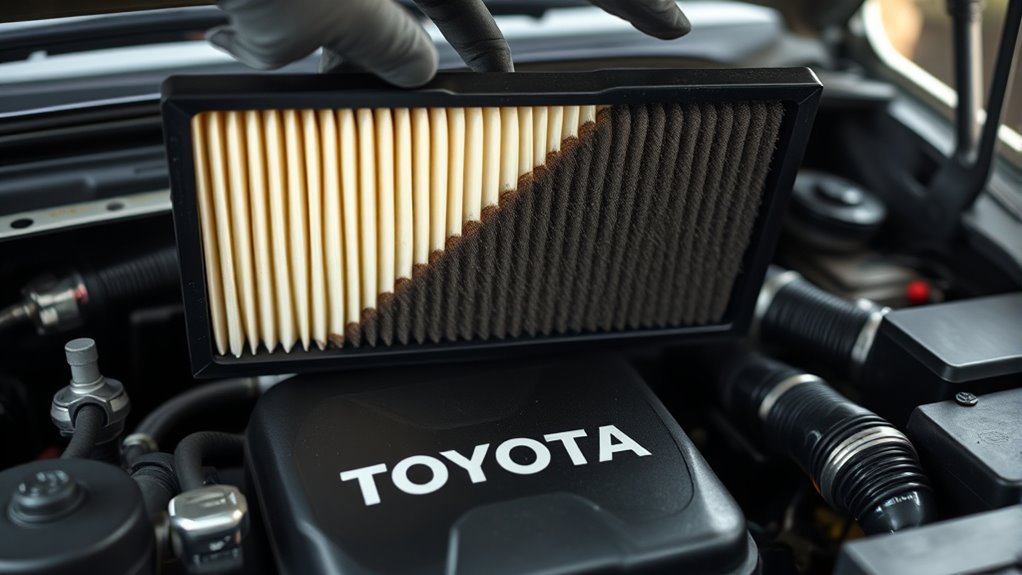
Remove the filter carefully and inspect the pleats, frame, and sealing edge. A usable filter should sit flat in its housing and seal completely around the perimeter. Replace it if the media is torn, crushed, wet, deteriorated, or so heavily loaded that airflow is clearly restricted.
| Sign | Action | Main Concern |
|---|---|---|
| Torn or punctured media | Replace now | Unfiltered dirt can reach the intake |
| Damaged or distorted sealing edge | Replace now | Air may bypass the filter |
| Heavy embedded dust or debris | Replace if heavily loaded | Possible airflow restriction |
| Wet or deteriorated filter media | Replace now | Reduced structural integrity |
Poor Engine Performance
A severely restricted filter can reduce the amount of air available at high engine load and may make acceleration feel weaker. However, sluggish performance does not prove the filter is responsible. Intake leaks, ignition faults, fuel-delivery problems, turbocharger issues, sensor faults, and other engine problems can produce similar symptoms.
Testing by the U.S. Department of Energy and Oak Ridge National Laboratory found that replacing a severely clogged filter can improve acceleration performance, but modern computer-controlled vehicles generally did not show the fuel-economy improvement often claimed for air-filter replacement. See the U.S. Department of Energy fuel-saving guidance.
Unusual Exhaust Smoke
Do not treat black or unusual exhaust smoke as proof that your Land Cruiser needs an air filter. Modern engine controls continuously adjust fueling, and visible smoke can have several causes that require proper diagnosis.
- Inspect the filter if performance dropped after heavy dust exposure.
- Check that the airbox is fully closed and the filter is properly seated.
- Inspect accessible intake ducts and clamps for anything left loose during recent service.
- If smoke, rough running, warning lights, or major power loss continue after the filter has been checked, have the vehicle diagnosed rather than repeatedly replacing filters.
A flashing check-engine warning, severe misfire, or significant drivability problem deserves prompt professional diagnosis and should not be assumed to be an air-filter-only fault.
Mileage vs Time: Choosing an Interval by Use Case
Toyota specifies many maintenance items by both mileage and elapsed time. For the 2024 U.S. Land Cruiser, the normal engine-air-filter replacement point is 30,000 miles or 36 months. That is more useful than applying an unsupported 30,000–45,000-mile range to every generation.
Dust changes the inspection strategy more than it changes the published replacement number. In the 2024 schedule, a Land Cruiser primarily operated on dirt or dusty roads receives an engine-air-filter inspection at the 5,000-mile/6-month service and subsequent 5,000-mile maintenance points. If inspection shows damage or excessive contamination, replace it early.
Toyota also gives off-road owners a separate rule: after driving through deep sand, mud, or water, check the engine air filter along with other off-road inspection items. This is especially useful because a single dusty trail trip can expose the filter to far more debris than months of clean highway driving.
Note: Do not automatically shorten the interval simply because the climate is hot. Follow the conditions Toyota actually identifies for your model year and use the filter’s physical condition to decide whether earlier replacement is necessary.
Inspecting and Cleaning: Disposable vs Reusable Air Filters
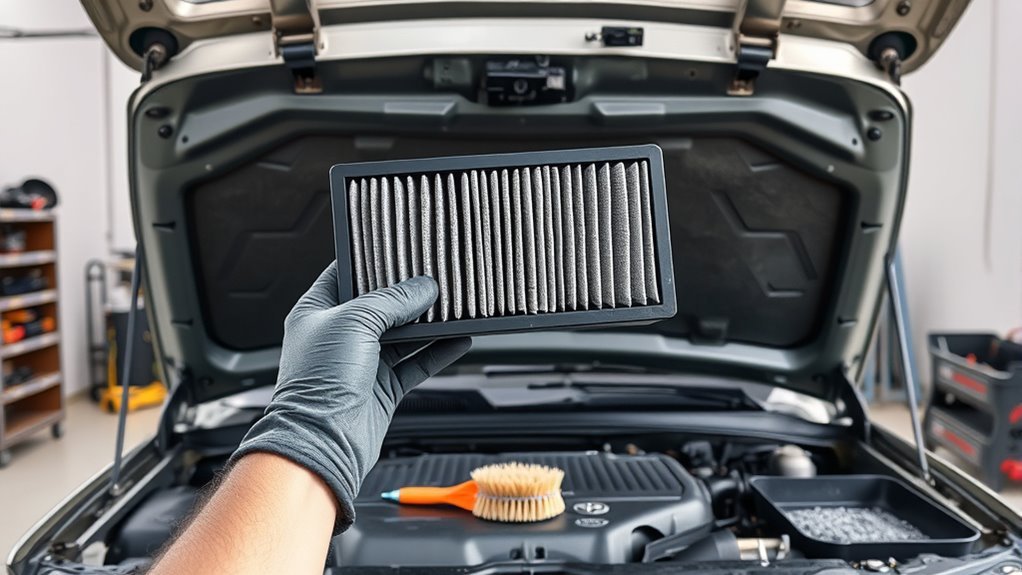
Do not assume your Land Cruiser has a Toyota “forever” engine air filter. Toyota’s scheduled maintenance documentation treats the normal engine air filter as a replacement item. Some owners install washable performance filters, but those require their own manufacturer-specific cleaning and, in some designs, re-oiling procedures.
Replace a normal disposable filter when it reaches its service interval or becomes damaged; clean it only if the filter manufacturer specifically says the element is washable and reusable.
- Disposable filter: inspect the pleats, frame, and seal; replace rather than washing or oiling it.
- Reusable filter: follow the exact cleaner, drying, and re-oiling instructions supplied by its manufacturer.
- Avoid aggressive cleaning: excessive compressed-air pressure, scrubbing, or incorrect chemicals can damage filter media.
- Dry completely: never reinstall a washable element until its manufacturer’s required drying process is complete.
- Check the seal: even a clean filter should be retired if its frame or sealing edge is damaged.
A reusable element is not automatically better or worse than a disposable one. What matters is correct fit, effective filtration, a reliable perimeter seal, and following the product’s maintenance requirements.
[Products Worth Considering]

This A-Premium engine air filter is designed to help maintain clean airflow for compatible Lexus and Toyota vehicles, supporting better engine performance and efficiency. It uses fine filtration media to capture debris while minimizing airflow restriction, making it a practical replacement for routine maintenance. With fitment for multiple popular models and a convenient boxed single-pack design, it offers a straightforward solution for keeping your engine protected.

This Toyota replaceable air filter element is designed to help keep your engine intake clean by effectively removing contaminants. Built for reliable fit and routine maintenance, it supports cleaner airflow and helps protect engine performance over time. It is a practical replacement part for drivers looking to maintain proper filtration in compatible Toyota vehicles.

This EPAuto engine air filter is designed as an OEM replacement for select Toyota Camry and Venza models with 4-cylinder gas engines. It helps protect the engine by filtering dust, dirt, and debris from incoming air while supporting efficient performance and improved fuel mileage. Built for a precise fit, it is a practical replacement choice for routine maintenance.
How to Inspect and Replace a Land Cruiser Engine Air Filter
The exact air-cleaner housing and fasteners vary by Land Cruiser generation, but the basic process is straightforward.
- Park and shut the vehicle down fully. Let hot engine-compartment parts cool before working around the airbox.
- Locate the air-cleaner housing. Confirm its location and opening method in the owner’s manual if your model uses unfamiliar clips, bolts, ducts, or electrical connectors.
- Open the housing carefully. Do not allow loose leaves, sand, or dust to fall into the clean side of the intake.
- Lift out the filter. Note its orientation so the replacement sits the same way.
- Inspect the element and housing. Check for tears, deformation, water, heavy debris, a damaged seal, or dirt that appears to have bypassed the filter.
- Clean loose debris from the housing. Keep dirt away from the clean-air outlet leading toward the engine.
- Install the correct replacement element. Make sure it lies flat and the entire sealing edge is seated in its groove.
- Close the housing completely. Refasten every clip or bolt and restore any duct or connector that was moved.
- Do a final visual check. Confirm that no tools, rags, loose fasteners, or debris remain in the engine compartment before driving.
Warning: Current Land Cruisers use a hybrid powertrain. Fully switch the vehicle off before engine-compartment work and never touch, disconnect, or service orange high-voltage wiring or connectors. Keep hands and tools away from electric cooling fans and other components that can present an injury risk.
Do not run the engine with the air-cleaner element removed. Toyota warns that operating without the filter can allow dirt into the engine and cause excessive wear.
[Products Worth Considering]

This Bosch Workshop Engine Air Filter is designed to help protect compatible Toyota RAV4 engines from harmful airborne particles while supporting strong performance and efficiency. It uses high-pleat construction, 98% filtration efficiency, and high-velocity cellulose media to reduce air resistance and help maintain clean airflow. The polyurethane foam seal adds reliable sealing against water and heat intrusion for dependable engine protection.

This engine air filter replacement is designed for select Toyota, Lexus, Scion, Pontiac, and Lotus models to help maintain cleaner airflow to the engine. It helps protect against dirt and support consistent performance while contributing to better fuel efficiency. Built as a direct replacement for compatible OEM and FRAM part numbers, it is a practical maintenance choice for routine filter changes.
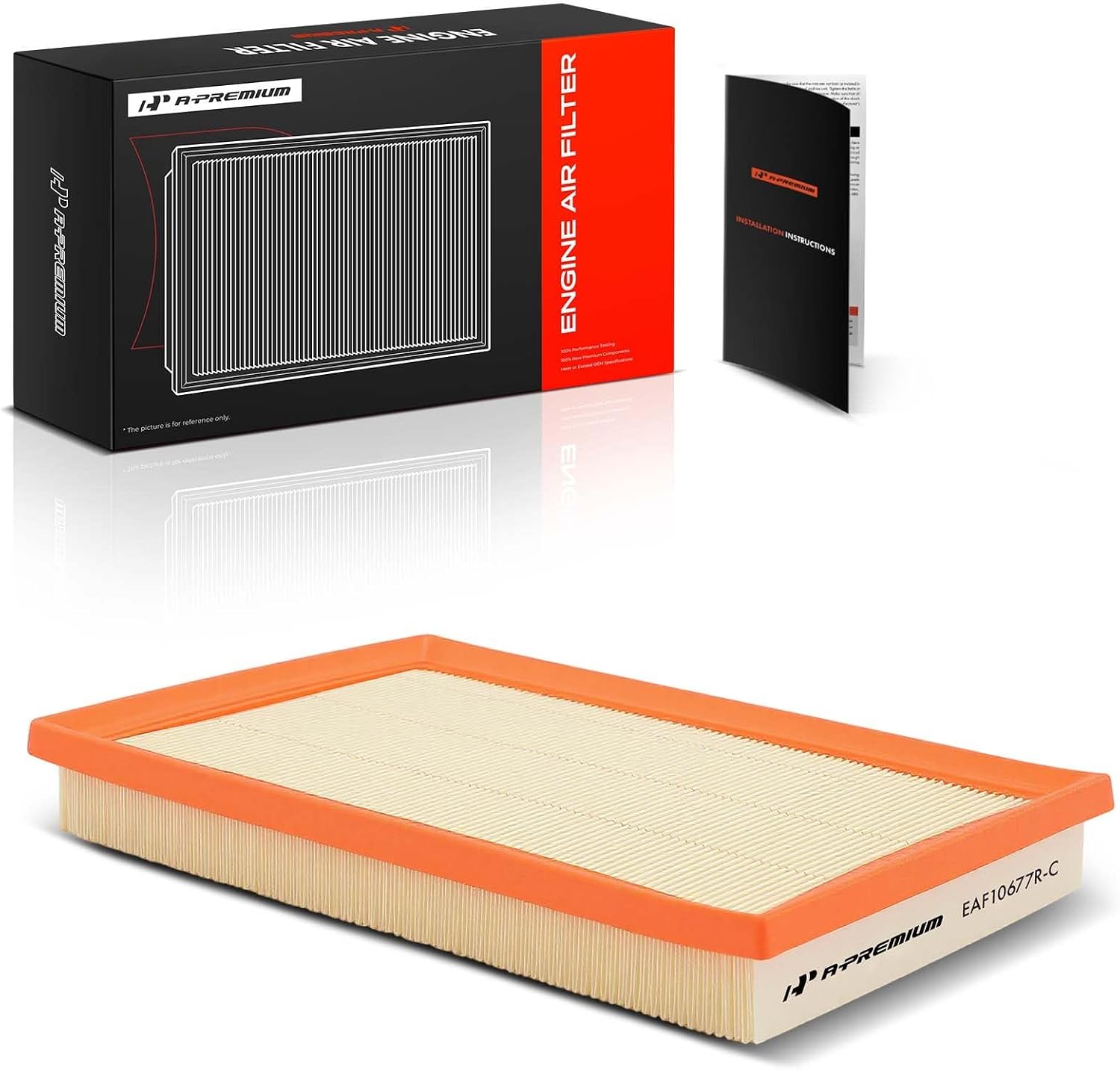
This A-Premium engine air filter is designed to replace the factory filter on select Toyota and Lexus vehicles, helping keep harmful debris out of the engine intake system. Its cellulose filter media supports cleaner airflow, improved engine performance, and longer engine life. Built as a direct-fit replacement, it offers dependable maintenance for compatible models with the recommended service interval.
OEM vs Aftermarket Filters: Cost, Performance, and Longevity
Choosing between a Toyota Genuine filter and an aftermarket filter should be based on correct fit, sealing, filtration performance, maintenance requirements, availability, and price. Avoid assuming that every OEM element has higher efficiency or that every aftermarket filter costs less; those claims depend on the specific products being compared.
[Products Worth Considering]
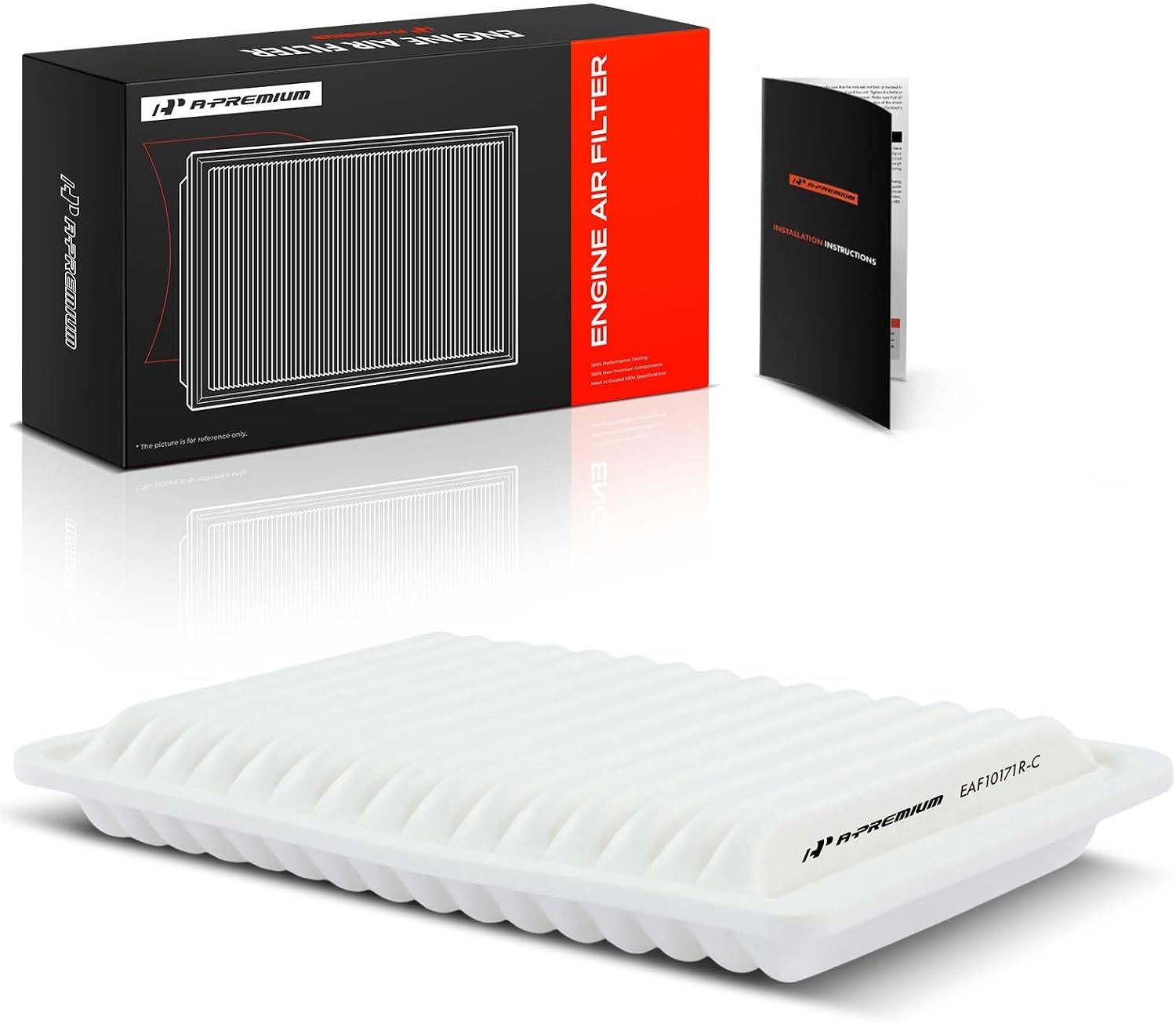
This A-Premium engine air filter is designed to help Toyota Camry and Venza models maintain cleaner airflow and stronger engine performance. Its fine filtration media captures debris while keeping air moving efficiently, and the rectangular, front-mounted design offers a direct replacement fit for select vehicles. Replace it regularly to support engine efficiency and cleaner intake air.

This CARORY AF377 engine air filter is designed as a direct replacement for a wide range of Toyota and Lexus gas models, helping maintain steady airflow and cleaner intake performance. It supports efficient fuel combustion for smoother engine operation and reliable everyday driving. With broad fitment coverage and multiple cross-reference numbers, it offers a practical maintenance solution for compatible vehicles.

The CARORY AF289 engine air filter is designed for a wide range of Toyota, Lexus, and Subaru vehicles, helping support steady airflow and efficient fuel combustion. It serves as a direct replacement for multiple OE and reference numbers, making it a practical choice for maintaining engine performance and smooth driving across many model years.
OEM vs Aftermarket Cost
Air-filter pricing changes by model year, engine, brand, seller, and whether the element is disposable or reusable. Toyota Genuine filters provide vehicle-specific fitment information, while aftermarket filters can range from basic replacement elements to higher-priced washable designs.
The safest buying method is to match the filter to your Land Cruiser’s exact model year, engine, and preferably VIN-based fitment information. A filter that is slightly too small, too large, or poorly sealed can defeat the purpose of using good filter media.
- OEM: straightforward factory-style fit and maintenance approach.
- Aftermarket disposable: can be a suitable option when fit and specifications match the vehicle.
- Reusable performance filter: may cost more initially and requires the cleaning procedure specified by its manufacturer.
- Unknown-brand filter: avoid choosing solely on price when fitment and filtration information are unclear.
Filtration Efficiency Differences
Filter efficiency cannot be judged reliably from brand name, color, pleat count, or marketing language alone. When comparing filters, look for credible published filtration or restriction testing and make sure the test method is comparable between products.
For everyday Land Cruiser use, proper sealing deserves just as much attention as the media itself. Air that bypasses a poorly fitted seal is not being filtered at all. After installation, inspect the entire perimeter before closing the airbox.
Reusability and Longevity
A normal replacement filter and a purpose-built reusable filter have different maintenance requirements. Do not convert one procedure into the other.
- Standard disposable element: replace at the applicable Toyota service interval or sooner if damaged or heavily contaminated.
- Washable element: clean only according to its manufacturer’s specified interval and procedure.
- Oiled reusable element: use only the amount and type of oil specified for that filter.
- Any filter: replace it if the frame, sealing surface, or media is damaged enough to compromise filtration.
Maintenance Checklist and When to See a Pro
Air-filter service is simple when the filter is the only issue, but it should not become a substitute for diagnosis. Use this checklist whenever you inspect or replace the element:
- Confirm the replacement interval for your exact Land Cruiser model year.
- Inspect more frequently if you primarily drive on dirt or dusty roads.
- Check the filter after demanding off-road trips.
- Verify that the filter fits flat and seals around its complete perimeter.
- Make sure every airbox clip, fastener, intake duct, and connector disturbed during service is secure.
- Look for cracks or loose connections in accessible intake ducting.
- Do not routinely spray or clean intake sensors simply because the air filter was replaced.
- If power loss, smoke, rough running, or warning lights remain, have the vehicle diagnosed by an authorized Toyota dealer or qualified technician.
If the airbox is damaged, dirt is visible on the clean side of the intake, the vehicle has persistent diagnostic trouble codes, or performance remains poor with a properly installed new filter, professional diagnosis is more useful than installing another filter.
Frequently Asked Questions
How long does a Land Cruiser engine air filter usually last?
For the 2024 U.S. Land Cruiser, Toyota schedules replacement at 30,000 miles or 36 months. Older model years may have different maintenance documentation, so confirm the schedule for your exact vehicle rather than assuming a universal mileage.
How often should I change the air filter on my Toyota Highlander?
Do not automatically apply the Land Cruiser interval to a Highlander. Toyota maintenance schedules vary by model year and powertrain. Check the Warranty and Maintenance Guide for your exact Highlander and replace the filter earlier if inspection reveals damage or severe contamination.
Should I inspect the Land Cruiser air filter more often on dusty roads?
Yes. Toyota’s 2024 U.S. maintenance guide adds engine-air-filter inspection at 5,000-mile maintenance points for vehicles driven primarily on dirt or dusty roads. Toyota also includes an air-filter check in its off-road daily-maintenance guidance after demanding off-road use.
Can I wash and reuse my Land Cruiser engine air filter?
Only if the specific filter is designed and labeled as washable or reusable. A normal disposable replacement element should be replaced rather than washed, oiled, or aggressively cleaned with compressed air.
Will replacing a dirty air filter improve fuel economy?
Do not count on an MPG increase in a modern computer-controlled Land Cruiser. U.S. Department of Energy testing found that clogged filters can reduce acceleration performance, while replacing them generally did not produce a measurable fuel-economy improvement in modern fuel-injected vehicles.
Conclusion
For Land Cruiser engine-air-filter maintenance, the safest rule is simple: use Toyota’s schedule for your exact model year and inspect sooner when conditions are dusty or off-road. On a 2024 U.S. Land Cruiser, the published replacement point is 30,000 miles or 36 months, while dirt-road operation calls for more frequent inspections.
Replace the filter early if its media or seal is damaged, but do not assume that every performance problem, warning light, smoke complaint, or fuel-economy change is caused by the filter. Install the correct element, seat it properly, close the airbox completely, and seek proper diagnostics when symptoms remain.
Sources
- Toyota 2024 Land Cruiser Warranty & Maintenance Guide — replacement interval, dusty-road inspections, and off-road maintenance guidance.
- Toyota 2026 Land Cruiser Manuals & Warranties — current Toyota owner documentation and maintenance-guide access.
- Toyota 2018 Land Cruiser Warranty & Maintenance Guide — older Land Cruiser maintenance interval reference.
- Toyota Maintenance Schedule — Toyota’s model-specific maintenance scheduling resource.
- U.S. Department of Energy Fuel Economy Guidance — effect of clogged engine air filters on modern-vehicle acceleration and fuel economy.