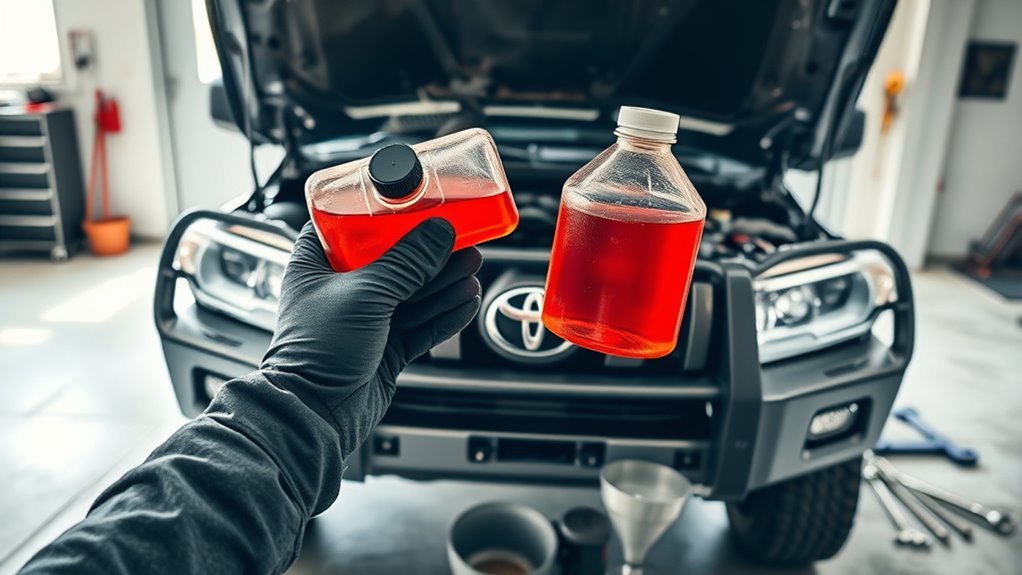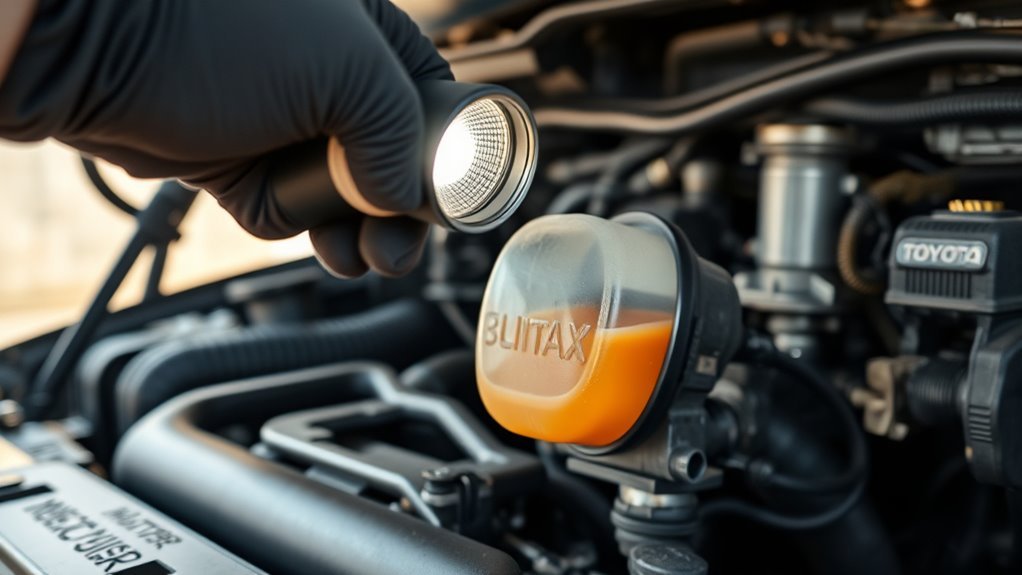
Checking your Toyota Land Cruiser’s brake fluid takes only a few minutes, but the result can reveal worn brake pads, a hydraulic leak, contamination, or overdue service. Because reservoir locations and approved fluid grades vary by model year and market, use the steps below together with the owner’s manual for your exact Land Cruiser.
Quick Answer
Park on level ground, switch the vehicle off, and find the translucent reservoir attached to the brake master cylinder. The level should be between MIN and MAX. Use only the DOT grade listed in your model-year manual. If the level is below MIN, the warning light is on, or the pedal feels soft, arrange brake service before driving.
Key Takeaways
- Check the level through the translucent reservoir before removing its cap.
- The fluid should remain between the molded MIN and MAX marks.
- A slight decline can occur as brake pads wear, but sudden or repeated loss may indicate a leak.
- Use only the fluid standard approved for your exact model year. Do not assume every Land Cruiser accepts the same grade.
- Do not drive with a red brake warning, a soft or sinking pedal, a visible leak, or unexplained fluid below MIN.
At a Glance
| Time Required | 5 to 10 minutes for a visual check |
| Difficulty | Easy for inspection; professional skill may be required for bleeding or flushing |
| Tools Needed | Flashlight, clean rag, gloves, safety glasses, and a clean funnel only if fluid must be added |
| Cost | No cost for a visual check; fluid and professional service costs vary |
Warning: Do not keep driving if the red brake-system warning stays on, the pedal feels soft or sinks toward the floor, braking power has changed, fluid is visibly leaking, or the reservoir is below MIN for an unknown reason. Park safely and have the Land Cruiser inspected or towed.
Locate the Brake Fluid Reservoir
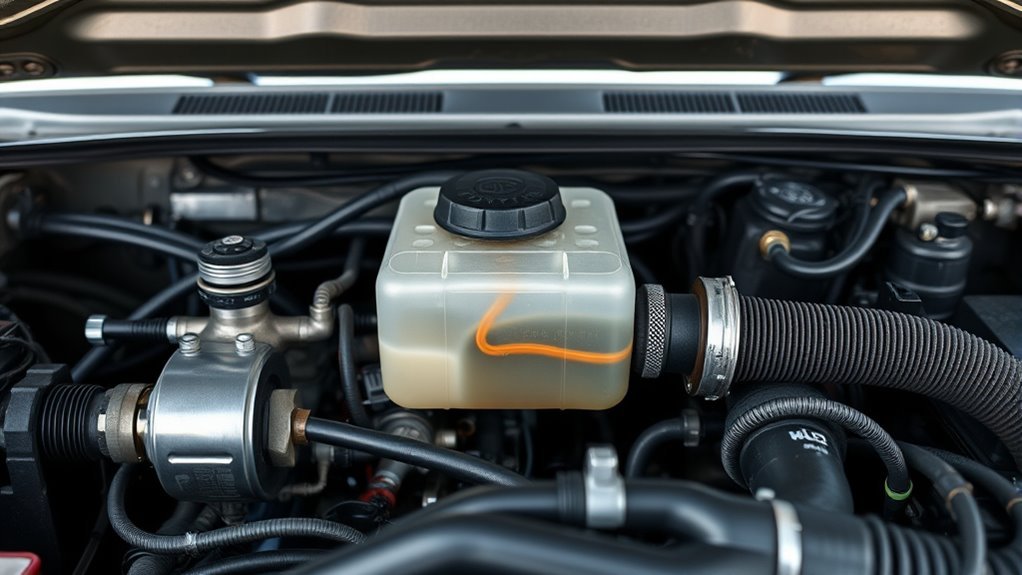
On many left-hand-drive Toyota Land Cruisers, the brake fluid reservoir is near the rear of the engine compartment on the driver’s side. It is a translucent plastic tank attached to, or positioned above, the brake master cylinder near the firewall.
The exact location can change with the generation, engine, hybrid system, and driving-side configuration. A right-hand-drive model may place the components on the opposite side. Confirm the location with the engine-compartment diagram in your model-year Toyota Land Cruiser owner’s manual.
Look for these identifying features:
- A small translucent or lightly colored reservoir.
- Molded MIN and MAX level marks.
- A cap labeled for brake fluid or displaying the approved fluid standard.
- A position close to the brake master cylinder rather than the radiator or windshield-washer tank.
Pro Tip: Use a flashlight to read the fluid line through the side of the reservoir. A normal visual inspection does not require you to remove the cap, which helps keep moisture and dirt out.
Quick Visual Check: Level and Fluid Condition
Park the Land Cruiser on firm, level ground. Apply the parking brake, shift into Park, switch the engine or hybrid system off, and keep the key away from the vehicle while you work. Let hot engine-compartment parts cool before reaching near the reservoir.
- Clean the outside: Wipe dust and loose debris from the reservoir and cap without opening it.
- Read the level: View the fluid through the translucent wall. Toyota’s general owner guidance says the level should be between the MIN and MAX marks.
- Check for a sudden drop: Compare the current level with earlier checks if you have a maintenance record.
- Inspect for leaks: Look for wetness around the master cylinder, brake hoses, hard lines, calipers, fittings, and the ground under the vehicle.
- Check the appearance: Note unusual cloudiness, visible particles, separation, or a very dark color.
- Check the pedal and warning lights: A soft pedal, sinking pedal, reduced braking, or red brake warning requires immediate professional attention.
A small, gradual reduction can occur as brake-pad material wears and the caliper pistons move farther outward. However, fluid that falls below MIN, drops quickly, or needs repeated topping up may indicate a leak or another brake-system problem.
New DOT 3 and DOT 4 brake fluid is generally colorless to amber under Federal Motor Vehicle Safety Standard No. 116. Fluid can become darker during service, but color alone does not accurately measure moisture content, boiling point, or remaining service life.
Note: Dark fluid is a reason to review the service history and request a condition check. Cloudiness, sediment, water separation, petroleum contamination, or an unknown fluid type requires more urgent service.
Add the Right Brake Fluid: Types and Compatibility
Use only the brake fluid listed on the reservoir cap, in the owner’s manual, or in the maintenance-data section for your exact Land Cruiser. Specifications can change between model years and countries.
For example, the 2026 U.S. and Canada Land Cruiser Owner’s Manual lists either:
- SAE J1703 or FMVSS No. 116 DOT 3 brake fluid; or
- SAE J1704 or FMVSS No. 116 DOT 4 brake fluid.
This current specification does not prove that every older Land Cruiser accepts both grades. Some previous models may specify one particular standard. Always let the model-year manual control your choice.
| Fluid | Use in a Land Cruiser |
|---|---|
| DOT 3 | Use only when the manual or reservoir cap permits DOT 3 or SAE J1703. |
| DOT 4 | Use only when the manual or reservoir cap permits DOT 4 or SAE J1704. |
| DOT 5 silicone | Do not add it unless Toyota expressly specifies it. It is not listed for the cited 2026 Land Cruiser. |
| DOT 5.1 | Do not substitute it merely because its name sounds newer. Use it only if the model-year manual expressly approves it. |
[Products Worth Considering]

This universal brake bleeder kit makes one-person brake and clutch line bleeding simple by using compressed air to create stable vacuum-assisted fluid flow. Its extra-large 3L tank helps complete full-system flushes with fewer interruptions, while the included refill bottle, flexible hose, and universal adapter support clean, efficient use on standard and ABS brake systems.

This brake bleeder bottle helps simplify brake fluid replacement by draining old fluid while reducing air in the line. Its rubber connector fits most bleed screws, and the included hose and chain help keep the bottle securely in place during use. Built from durable, corrosion-resistant plastic, it is suitable for a wide range of vehicles including cars, motorcycles, ATVs, dirt bikes, and scooters.

This universal brake bleeding kit lets you flush brake, clutch, and other hydraulic systems by yourself with fast, efficient vacuum-assisted operation. Built with a durable aluminum alloy pump, silicone tubing, and secure fittings, it helps maintain a tight seal for cleaner, easier service. The included blow-molded case keeps every part organized for convenient storage and transport between jobs.
How to Top Up the Reservoir Safely
Do not automatically add fluid whenever the level is slightly below MAX. If pad wear caused the decline, filling the reservoir to the top can make it overflow when new pads are installed and the caliper pistons are pushed back.
If the manual permits owner top-up, the level is genuinely low, and no active leak or brake symptom is present:
- Confirm the exact approved DOT or SAE specification.
- Use a newly opened, sealed container from a reliable supplier.
- Clean the reservoir cap and surrounding area before opening it.
- Wear gloves and safety glasses, and protect nearby paint with clean rags.
- Use a clean funnel reserved only for brake fluid.
- Add a small amount at a time while watching the level.
- Stop when the level is safely between MIN and MAX. Do not overfill.
- Install the cap securely to limit dirt and moisture contamination.
- Wipe up any spill immediately and rinse an affected painted surface with plenty of water.
The reservoir cap helps keep the fluid clean and dry. It does not create the hydraulic pressure used to apply the brakes.
Troubleshooting Low, High, or Dark Brake Fluid
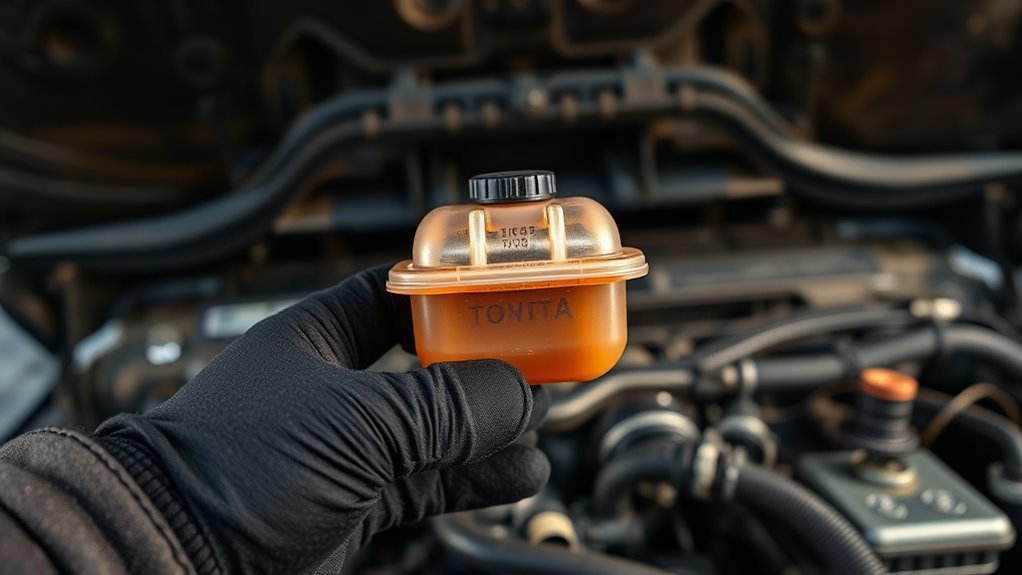
The fluid level and appearance can provide useful clues, but they should be considered together with pedal feel, warning lights, brake-pad condition, leak evidence, and service history.
| Finding | Possible Meaning | Recommended Action |
|---|---|---|
| Slightly lower but above MIN | Normal brake-pad wear may be increasing the fluid volume held in the calipers. | Inspect pad wear and monitor the level. Do not automatically fill to MAX. |
| Below MIN or dropping quickly | Possible leak, severe pad wear, master-cylinder issue, or another hydraulic fault. | Do not drive until the cause is found and repaired. |
| Above MAX | Previous overfilling, recent brake work, or an incorrect reading procedure. | Do not remove fluid with a dirty tool. Have the level corrected using the model-specific procedure. |
| Dark but clear | Age, heat exposure, or normal discoloration may be present. | Review service history and have the condition tested if replacement timing is uncertain. |
| Cloudy, separated, or gritty | Possible water, dirt, petroleum, or incompatible-fluid contamination. | Stop adding fluid and arrange professional inspection and service. |
[Products Worth Considering]

The Mityvac MV8500 Silverline Elite is a versatile automotive service kit for brake and clutch bleeding, diesel fuel priming, and vacuum or pressure testing. Its dual-capability pump streamlines diagnostics and maintenance across motorcycles, cars, trucks, and SUVs, while the ergonomic design supports comfortable use during longer jobs. Built with a durable zinc-aluminum die-cast body and a 4.5oz fluid reservoir, it delivers reliable performance for professional and DIY repair work.

This brake bleeder bottle is designed to make fluid bleeding easier for one-person use with a built-in check valve and magnetic mount. The flexible hose fits most bleeder valves and helps reduce the chance of air entering the system during service. With a practical fluid capacity and universal fit, it is a handy tool for brake maintenance and repair.

Test the car brake fluid quality quickly to check whether it’s qualified, which can remind you to change the brake fluid when necessary to avoid traffic accident
Low Fluid Causes
Low fluid can result from normal pad wear, but a sudden drop or frequent need for fluid is not normal. Check for wetness at the following areas without crawling beneath an unsupported vehicle:
- The brake master cylinder and reservoir.
- Hard brake lines and flexible hoses.
- Calipers, bleeder screws, and hose connections.
- The inside of each wheel and the ground where the vehicle was parked.
- Any component recently opened during brake service.
Do not treat a top-up as a repair. Adding fluid may temporarily raise the reservoir level while leaving a leak, worn pads, or a faulty component unresolved.
High Reservoir Risks
A reservoir above MAX is often the result of unnecessary topping up or brake work that pushed fluid back toward the reservoir. It may overflow when worn pads are replaced and the caliper pistons are retracted.
Brake fluid can damage painted surfaces. Do not use a household baster, syringe, funnel, or other contaminated tool to remove excess fluid. A technician should correct the level with clean equipment and check why it became overfilled.
On Land Cruisers with electronically controlled brakes, the specified fluid-checking state may depend on the brake actuator or accumulator. Follow the exact owner or repair manual rather than repeatedly switching the vehicle on and off in an attempt to change the reading.
Dark Fluid Actions
Darkening can occur as brake fluid ages, but it does not prove by itself that the fluid has reached an unsafe moisture level. Use these checks together:
- Appearance: Look for cloudiness, sediment, separation, or an unusual color.
- Service history: Find out when the fluid was last replaced and whether the hydraulic system was opened.
- Brake feel: Treat a soft, sinking, or inconsistent pedal as an urgent problem.
- Condition test: Ask a qualified shop to evaluate the fluid when its history or condition is uncertain.
- Correct service: Use the Toyota bleeding procedure for the exact model, especially when an electronically controlled actuator is involved.
When to Flush or Replace Brake Fluid
There is no single replacement interval that can safely be applied to every Land Cruiser generation and market. Follow the warranty and maintenance guide supplied with your exact vehicle.
For example, the U.S. 2025 Toyota Land Cruiser Warranty and Maintenance Guide calls for inspection of brake-fluid level and condition during scheduled maintenance. It does not establish a universal rule that every Land Cruiser must receive a fluid flush exactly every two years.
Brake-fluid replacement or professional evaluation is appropriate when:
- Your model-year maintenance guide specifies replacement.
- The fluid is contaminated, cloudy, separated, or contains particles.
- A moisture or boiling-point condition test indicates that service is needed.
- The fluid type is unknown or an incorrect fluid may have been added.
- A brake hose, caliper, master cylinder, actuator, or hydraulic line has been opened or replaced.
- The brake pedal is soft after hydraulic work.
- The service history is unknown and a technician recommends replacement after inspection.
Warning: Bleeding a modern Land Cruiser is not always a conventional two-person pedal-pumping job. Electronically controlled brake systems may require a scan tool, a specific ignition state, and a Toyota repair-manual sequence. An incorrect procedure can leave air trapped in the actuator and reduce braking performance.
Brake-fluid color is a useful warning clue, but the correct service decision also depends on the model-year schedule, fluid history, contamination, warning lights, pedal feel, and hydraulic-system condition.
[Products Worth Considering]

The exact Original Equipment Manufacturer fluid that your vehicle came with; developed for brake and hydraulic clutch systems to reduce vapor lock by providing a higher boiling point

Durable and Corrosion-Resistant : Featuring a corrosion-resistant probe, this brake fluid tester is designed for long-lasting performance. The durable construction ensures that the tool remains effective over time, even with frequent use, making it a reliable addition to your maintenance toolkit

WIDE RANGE OF APPLICATIONS: The automotive brake fluid tester is a universal device for most vehicles. It can check the condition of DOT-3, DOT-4, DOT-5.1 brake fluids as well as most synthetic brake fluids. It is extremely easy for personal use and is widely used for private workshops, repair shops and car dealerships.
Maintenance and Safety Tips
Brake fluid absorbs moisture and can damage paint. Treat the reservoir, cap, funnel, and fluid container as clean components throughout the job.
Prevent Paint Damage
- Wear chemical-resistant gloves and safety glasses.
- Place clean rags around the reservoir before opening it.
- Use a small, clean funnel reserved only for brake fluid.
- Pour slowly and stop below MAX.
- Wipe minor drips immediately.
- Rinse affected paint with plenty of clean water rather than rubbing the fluid across the surface.
- Do not leave fluid-soaked rags in the engine compartment.
If brake fluid contacts your skin or eyes, rinse the affected area with clean water. Seek medical care if irritation continues.
Avoid Moisture Absorption
Federal brake-fluid labeling rules direct users to keep the fluid clean and dry, store it in its original container, and keep the container tightly closed. Toyota’s owner guidance also advises using newly opened fluid.
- Clean the reservoir before opening it.
- Keep the cap off only as long as necessary.
- Never pour unused fluid back into its original container.
- Do not use fluid from an open bottle with an unknown storage history.
- Do not transfer brake fluid into an unmarked container.
- Keep petroleum products, water, dirt, and cleaning solvents away from the reservoir.
- Dispose of unwanted or used fluid according to local hazardous-waste rules.
Frequently Asked Questions
Can you drive with a low brake-fluid level?
Do not continue driving when the fluid is below MIN for an unknown reason, the red brake warning stays on, a leak is visible, or the pedal feels soft or sinks. These signs can indicate reduced braking ability or a hydraulic fault. Park safely and arrange an inspection or tow.
Should I fill the reservoir to MAX whenever the level drops?
No. A slight decline can occur as brake pads wear. Filling the reservoir to MAX without checking the pads can cause an overfill when new pads are installed and the pistons are pushed back. The level should remain within the approved range, and any unexplained loss should be diagnosed.
What brake fluid does a Toyota Land Cruiser use?
The required fluid depends on the model year and market. The 2026 U.S. and Canada Land Cruiser manual lists SAE J1703 or FMVSS DOT 3 and SAE J1704 or FMVSS DOT 4. Older or non-U.S. models may differ, so confirm the specification on the reservoir cap and in the exact owner’s manual.
Can I use DOT 5 or DOT 5.1 because the number is higher?
No. A higher number does not automatically make a fluid suitable for your vehicle. DOT 5 is silicone based, and the cited 2026 Land Cruiser specification does not list DOT 5 or DOT 5.1. Use only the standard Toyota approves for your exact model.
Does dark brake fluid always need an immediate flush?
Not based on color alone. Darkening is a reason to check the service history and fluid condition, but it does not directly measure moisture content or boiling point. Cloudy fluid, particles, separation, an unknown fluid type, or brake symptoms require faster professional attention.
How often should Land Cruiser brake fluid be replaced?
Follow the maintenance guide for the exact model year and country. Toyota’s U.S. Land Cruiser guidance may call for regular fluid-level and condition inspections rather than one universal replacement interval. Replace the fluid when the schedule, condition test, contamination, or hydraulic repair requires it.
Can I flush the Land Cruiser brake system at home?
A visual check and careful top-up may be suitable for an owner who follows the manual. A complete flush can require model-specific steps, especially on electronically controlled brake systems. Use the Toyota repair procedure and proper scan equipment, or have a qualified technician perform the work.
Conclusion
Check your Land Cruiser’s translucent brake-fluid reservoir on level ground and keep the level between MIN and MAX. A small decline may follow normal pad wear, but fluid below MIN, repeated loss, a red brake warning, a visible leak, or abnormal pedal feel requires prompt inspection.
Use only the DOT or SAE standard listed for your exact model year, and use newly opened fluid if a top-up is appropriate. Do not rely on color alone to set a replacement interval, do not fill automatically to MAX, and leave actuator bleeding or a complete flush to the correct Toyota procedure.
Sources
- Toyota 2026 Land Cruiser Owner’s Manual: Maintenance Data — supports the current DOT 3/J1703 and DOT 4/J1704 fluid specifications.
- Toyota Land Cruiser Manuals and Warranties — provides model-year owner-manual access.
- Toyota 2025 Land Cruiser Warranty and Maintenance Guide — supports scheduled inspection of brake-fluid level and condition.
- 49 CFR 571.116, Motor Vehicle Brake Fluids — supports fluid categories, fresh-fluid color, packaging, cleanliness, and moisture-control requirements.
- Toyota Owner’s Manual Guidance for Checking and Adding Brake Fluid — supports MIN/MAX inspection, newly opened fluid, clean-funnel use, and paint and eye safety.