Checking your Toyota Land Cruiser’s engine oil takes only a few minutes, but using the correct procedure matters. This guide focuses on the 2025–2026 U.S.-market Land Cruiser 250 with the 2.4-liter turbo-hybrid powertrain. Oil grades, capacities, dipstick markings, and checking instructions can differ on older generations and vehicles sold in other markets, so confirm your exact model-year owner’s manual before adding oil.
Quick Answer
For a 2025–2026 U.S. Land Cruiser, park on level ground, warm the engine, switch the hybrid system off, wait about five minutes, then wipe, fully reinsert, and read the dipstick. Add approved 0W-20 slowly only when needed. Stop immediately for a low-oil-pressure warning, and contact Toyota if the level remains above the upper mark.
Key Takeaways
- Use a warm engine, level ground, and a wait of about five minutes for a consistent reading.
- Wipe and fully reinsert the dipstick before judging the level.
- Dark oil alone does not prove that the oil has failed; watch for grit, metallic particles, milkiness, a strong fuel odor, or a changing level.
- Add the exact oil specified for your model in small amounts and recheck before adding more.
- Treat a low-oil-pressure warning as urgent. A low-level message, maintenance reminder, and check-engine light mean different things.
At a Glance
| Time Required | About 5–10 minutes after warming the engine |
| Difficulty | Easy |
| Tools Needed | Clean lint-free towel; clean funnel and correct engine oil if topping up |
| Cost | Free to check; top-up cost depends on the amount and oil purchased |
How to Check Your Land Cruiser Oil: Step-by-Step
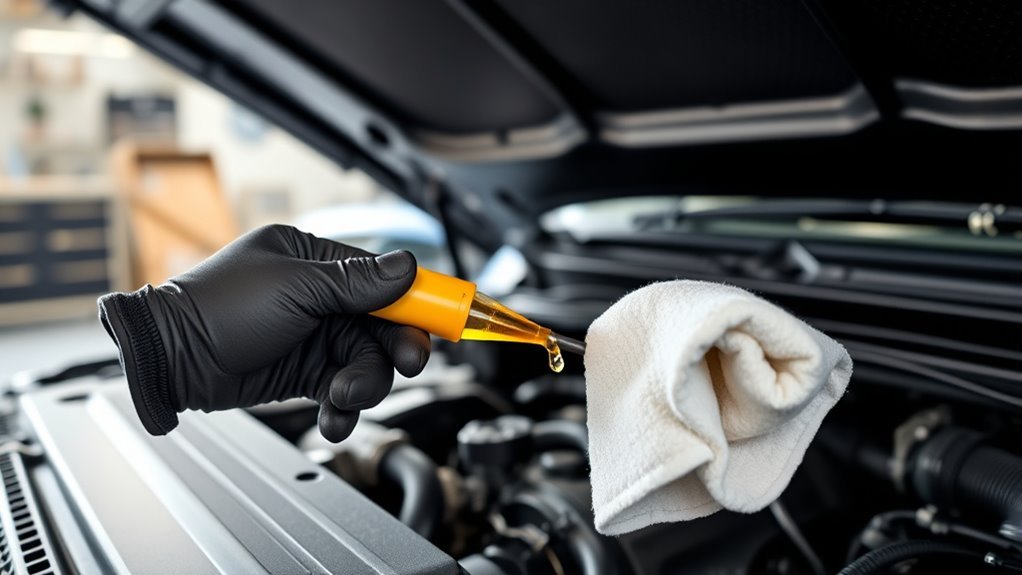
Toyota’s current Land Cruiser maintenance guidance calls for checking the oil after warming the engine, switching off the hybrid system, and waiting about five minutes. Use the same location and process each time so changes in the reading are easier to recognize.
- Park on level ground. Shift to Park, apply the parking brake, and make sure the vehicle cannot roll.
- Warm the engine. Drive normally or allow the engine to reach its usual operating temperature.
- Switch the hybrid system off. Wait about five minutes so oil can drain back into the oil pan.
- Open the hood carefully. Keep loose clothing, jewelry, tools, and hands away from moving or hot components.
- Remove the dipstick. Pull it straight out and wipe both sides with a clean, lint-free towel.
- Reinsert it fully. Push the dipstick all the way into its tube. A partly inserted dipstick will give a false reading.
- Withdraw and read it. Hold the dipstick level and identify the clean oil line relative to the low and refill-upper-limit marks.
- Repeat an unclear reading. If oil is smeared up one side, wipe and check again. Use the clear, repeatable level rather than the highest random streak.
- Reinstall the dipstick. Seat it fully before closing the hood.
Warning: The cooling fan may continue operating after the hybrid system is switched off. Do not reach into the engine compartment while the fan is moving. The hood support rod and nearby components may also remain hot.
Pro Tip: Take a clear photo of the dipstick beside the date and odometer reading. Checking in the same parking spot under similar conditions makes a slow leak, consumption trend, or rising level easier to identify.
When to Check Land Cruiser Oil
Toyota advises checking the oil regularly. A monthly check is a practical routine for many drivers, but you should inspect it sooner whenever operating conditions or symptoms increase the chance of a level change.
| Situation | When to Check | Reason |
|---|---|---|
| Routine ownership | About once a month | Catches gradual consumption or leaks |
| Long road trip | Before departure and after returning | Confirms the engine has enough oil for extended operation |
| Towing, off-roading, or heavy use | Before and after the activity | High load and rough conditions can reveal leaks or consumption |
| Oil change or top-up | After service and again after a short drive | Checks the final level and identifies leaks |
| Warning, odor, smoke, or visible leak | Immediately when safe | Helps determine whether the vehicle needs oil or professional service |
Reading the Dipstick and Judging Oil Condition
The dipstick is primarily a level-checking tool. It can also reveal obvious contamination, but it cannot accurately measure viscosity, fuel percentage, additive life, or the remaining service life of the oil.
- Between the marks: The level is within the indicated operating range.
- At or below the low mark: Add the correct oil gradually and investigate why the level fell.
- Above the refill upper limit: Repeat the check using the correct procedure. If the result remains high, contact a Toyota dealer or qualified technician.
- Different readings on each side: Wipe and repeat until you obtain a clear, consistent oil line.
Oil level and changes over time are more useful than color alone. Normal engine oil can become dark while continuing to lubricate properly.
| Observation | What It May Mean | Recommended Action |
|---|---|---|
| Amber to dark brown or black, with a smooth film | Often normal color change during use | Follow the normal service schedule and monitor the level |
| Grit, flakes, or metallic sparkle | Possible contamination or internal wear | Limit operation and arrange an inspection |
| Milky, tan, or foamy oil on the dipstick | Possible water or coolant contamination | Have the vehicle inspected before continued use |
| Strong gasoline odor combined with a rising level | Possible fuel dilution | Document the trend and contact a qualified technician |
| Level repeatedly falling | Leak or oil consumption | Inspect beneath the vehicle and schedule diagnosis if the loss continues |
Note: Do not rub used oil between your fingers to judge viscosity. The test is unreliable, and repeated skin contact with used engine oil should be avoided. Wear disposable gloves when handling oil and wash exposed skin promptly.
What to Do If Oil Is Low, High, or Smells Like Gasoline

[Products Worth Considering]

Custom-fit floor mats and cargo liner designed to provide edge-to-edge protection for the Toyota Land Cruiser Prado. Made from durable TPE material, they offer all-weather defense against rain, slush, snow, mud, and everyday dirt while remaining easy to install, clean, and maintain. The odorless, non-slip design helps keep your interior safer, cleaner, and more comfortable in every season.

The Funnel King 32950 Oil Drain Pan is a compact fluid catch basin designed for clean, easy draining during routine maintenance. Its open shape and pour edge help transfer used oil, coolant, and other shop fluids with less mess, while the lightweight polypropylene construction stands up to common automotive chemicals. Sized to fit under many cars and small engines, it is a practical choice for garages, workshops, and DIY oil changes.

These custom floor mats are designed to fit the Toyota Land Cruiser GX550 with a 5-seat layout for a precise, secure install. Made from durable TPE, they help shield your interior from spills, mud, snow, dirt, sand, pet hair, and everyday debris while making cleanup quick and easy.
If the Oil Level Is Low
Confirm the reading with the warm-engine procedure before adding oil. Remove the filler cap, place a clean funnel in the opening, and add the specified oil in a small amount. Wait briefly, recheck the dipstick, and repeat only if needed. Do not pour in an entire container without checking the level between additions.
After topping up, tighten the filler cap, reinstall the dipstick, and inspect the ground and engine compartment for leakage. A level that falls again needs diagnosis rather than repeated topping up alone.
If the Oil Level Is Too High
Wipe the dipstick and repeat the check on level ground after the correct five-minute wait. Oil dragged up the dipstick tube can create a misleading streak. If a clean, repeated reading remains above the refill upper limit, contact a Toyota dealer or qualified repair shop and avoid unnecessary operation until the cause and amount are confirmed.
Do not crawl beneath the vehicle and loosen the drain plug merely to remove an estimated amount. Draining safely requires suitable equipment, correct lifting procedures, and a way to measure and contain the oil.
If the Oil Smells Like Gasoline
A faint petroleum odor by itself is difficult to interpret. A strong gasoline smell becomes more concerning when the dipstick level is also rising, the oil appears unusually thin, the engine runs poorly, or the vehicle is used mainly for repeated short, cold trips.
Record the mileage, outdoor temperature, trip pattern, dipstick position, and any warning messages. If the level exceeds the upper limit or continues rising, arrange a professional inspection.
Warning: A red low-oil-pressure warning or an “Oil Pressure Low” message is an emergency. Pull over as soon as it is safe, switch the hybrid system off, and contact roadside assistance or a Toyota dealer. Adding oil does not make continued driving safe if the pressure warning remains on.
Why the Oil Level Can Rise on a Newer Land Cruiser
A high reading does not automatically prove that the factory overfilled the engine. Toyota explains that repeated operation without fully warming the engine can allow moisture and unburned fuel to mix with the oil. This is more likely during repeated short trips, low-speed use, and cold weather.
Some temporary level rise under those conditions is not automatically a mechanical failure. However, Toyota advises contacting a dealer when the level exceeds the refill upper limit. A persistent rise, strong fuel odor, warning message, rough operation, or poor fuel economy also deserves inspection.
For a useful comparison, check the level under the same warm-engine conditions after a longer normal drive. Do not try to correct a high reading by changing to a thicker oil or adding an aftermarket oil treatment.
Land Cruiser Oil Warning Lights and Messages
Oil-related dashboard alerts do not all mean the same thing. Read the displayed wording and check the owner’s manual rather than assuming every oil symbol is a simple low-level reminder.
| Alert | Meaning | What to Do |
|---|---|---|
| Red oil-pressure warning or “Oil Pressure Low” | The engine may not have adequate oil pressure or circulation | Stop safely, switch the vehicle off, and seek assistance |
| Low-engine-oil-level message, if equipped | The measured oil level may be low | Park level, perform the correct dipstick check, and add the specified oil if needed |
| Oil-maintenance reminder | Scheduled service is due or approaching | Arrange the required maintenance and reset the reminder correctly after service |
| Check-engine or malfunction indicator lamp | A powertrain or emissions-related fault has been detected | Follow Toyota’s warning guidance and obtain diagnostic trouble codes; do not treat it as the normal low-oil-level warning |
How to Safely Top Up or Change Land Cruiser Oil

[Products Worth Considering]

Castrol EDGE 0W-20 advanced full synthetic motor oil is engineered for drivers seeking strong wear protection, excellent viscosity control, and thermal stability. It delivers superior performance in critical engine areas, including fuel economy, high-temperature protection, sludge control, and wear defense. Designed for extended oil-change intervals, it helps keep modern engines running smoothly under demanding conditions.

This versatile automotive funnel kit makes oil and coolant filling cleaner, safer, and more efficient across a wide range of vehicles. With multiple color-coded adapters, secure sealing, and hands-free locking support, it helps prevent leaks, spills, and mismatched fittings during maintenance. The organized magnetic storage and durable heat-resistant construction make it a practical choice for both DIY repairs and professional service work.

The Scepter AM07029 Oil Drain Pan makes oil changes cleaner and easier by helping contain spills and reducing mess in the garage or driveway. Its lidded opening, removable drain screen, and gasketed pour spout support convenient collection, transport, and disposal of fluids. Built from durable high-density polyethylene, it resists rust, dents, and corrosion for reliable use with engine oil, transmission fluid, hydraulic fluid, and antifreeze.
Current Oil Specification
For the 2026 U.S.-market Land Cruiser, Toyota specifies ILSAC GF-6A SAE 0W-20 engine oil. Toyota lists a reference drain-and-refill capacity of 5.9 qt (5.6 L) with the filter or 5.6 qt (5.3 L) without the filter.
Those figures are reference quantities, not instructions to pour in that exact amount without checking. The final level must remain between the dipstick’s low and refill-upper-limit marks. Check the manual for your exact year because earlier Land Cruiser engines can require a different viscosity and capacity.
Safe Top-Up Procedure
- Confirm the low reading using the correct warm-engine procedure.
- Verify the required oil grade in the owner’s manual.
- Clean around the filler cap before opening it.
- Use a clean funnel and add a small amount.
- Allow the oil to drain into the pan, then recheck the dipstick.
- Repeat only until the level is within the marked range.
- Tighten the filler cap and inspect for leaks.
DIY Oil Change Versus Dealer Service
A DIY oil change can reduce labor cost, but it requires more than a wrench and drain pan. You need the correct filter, sealing washer, service torque specifications, suitable wheel chocks, a properly rated jack and stands or ramps, spill-control supplies, and a safe recycling plan.
Never work under a vehicle supported only by a jack. Follow model-specific lifting and service instructions, and do not guess the drain-plug or filter torque. After refilling, run the engine as directed, inspect for leaks, switch the hybrid system off, wait about five minutes, and set the final level with the dipstick.
Dealer or qualified-shop service is the safer choice when:
- The level is repeatedly above the upper limit.
- The oil has metal particles, milkiness, or a strong fuel odor.
- An oil-pressure warning appears.
- You cannot lift and support the vehicle safely.
- The vehicle is under warranty and the condition may require documented diagnosis.
- You do not have the correct torque and service information.
Store drained oil in a clean, leakproof container that previously held oil or another compatible automotive fluid. Do not mix it with coolant, fuel, solvents, or household chemicals. Take it and the used filter to an approved automotive-oil collection or recycling location.
When to Get a Professional Inspection and What to Ask
Arrange an inspection when a clean, repeated dipstick reading remains above the upper limit, the level keeps rising or falling, the oil appears milky or metallic, a strong fuel odor persists, or an oil warning returns after the level has been corrected.
[Products Worth Considering]
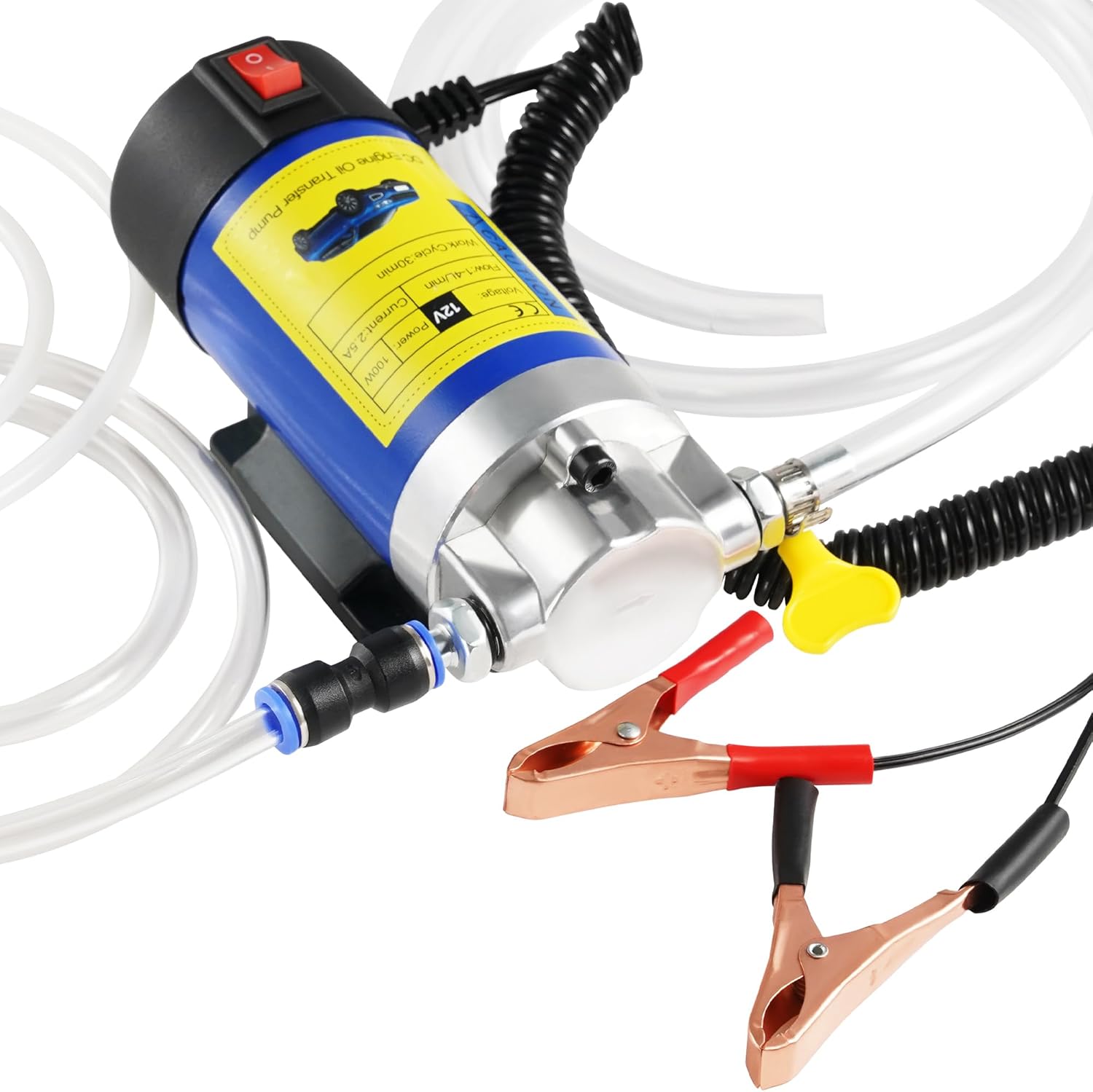
This electric oil extractor pump makes DIY oil changes cleaner and easier by removing old fluid through the dipstick tube, eliminating the need to crawl under the vehicle or deal with messy drain plugs. It is designed for synthetic oil changes and fluid maintenance across cars, motorcycles, lawn mowers, boats, and Jet Skis, while its pure copper motor delivers stable suction and dependable performance. Built for efficient topside oil changes, it supports multiple fluid types and offers continuous operation for longer service tasks.

CHAPIN’s low-profile oil drain pan is designed to slide under low-clearance vehicles and equipment, making fluid changes easier in tight spaces. The large splash-free target area helps reduce mess while the molded carry handles support easier lifting, pouring, and storage. Built for draining oil, coolant, and other automotive fluids, it offers a practical high-capacity solution for routine maintenance.

These genuine Toyota oil drain plug gaskets are designed to help maintain a reliable seal during oil changes, reducing the chance of leaks and supporting proper engine maintenance. With an OEM fit and trusted Toyota quality, they are a practical choice for routine service on compatible vehicles. The convenient quantity pack is ideal for keeping multiple maintenance intervals covered.
Document the Symptoms
Bring useful evidence instead of relying on a single uncertain reading:
- Dated photos of the dipstick.
- Odometer readings.
- Outdoor temperature and recent trip length.
- Whether the engine was warm and how long you waited.
- Any warning message or dashboard light.
- Recent oil-change and top-up records.
- Visible leaks, smoke, unusual sounds, or changes in fuel economy.
Request Relevant Tests
Ask the technician to verify the level using Toyota’s procedure and confirm the oil grade and amount previously installed. Depending on the symptoms, appropriate work may include checking for external leaks, reviewing oil-change history, inspecting the crankcase-ventilation system, checking fuel-system operation, and measuring the amount drained.
An oil analysis can help quantify fuel dilution, coolant contamination, viscosity change, or unusual wear metals when the cause remains uncertain. It is not required for every slightly unusual color or odor.
Get Written Findings
Request the measured oil level, drained quantity, oil specification, test results, repair recommendation, and warranty decision in writing. After any corrective work, repeat the dipstick check under the same conditions to confirm that the level remains stable.
Frequently Asked Questions
What does the oil warning light mean on a Toyota Land Cruiser?
A red oil-pressure warning indicates that the engine may not have adequate oil pressure or circulation. Pull over safely, switch the hybrid system off, and contact roadside assistance or a Toyota dealer. Do not continue driving merely because the dipstick shows some oil.
Can I drive when a low-oil-level message appears?
A low-level message is different from a low-pressure warning. Park on level ground, check the dipstick correctly, and add the specified oil if needed. If the level is extremely low, a leak is visible, the engine sounds abnormal, or an oil-pressure warning is also present, do not continue driving.
How do I check the oil level on a current Land Cruiser?
Park on level ground, warm the engine, switch the hybrid system off, and wait about five minutes. Pull the dipstick, wipe it, reinsert it fully, withdraw it again, and compare the clean oil line with the low and upper marks.
Can low oil turn on the check-engine light?
The check-engine light is not the normal low-oil-level indicator. Severe oil-related problems can contribute to other engine faults, but Toyota provides separate oil-pressure and oil-level warnings. Check the oil and diagnose the check-engine light rather than assuming one explains the other.
What oil does a 2025–2026 Land Cruiser use?
Toyota specifies ILSAC GF-6A SAE 0W-20 for the current U.S.-market Land Cruiser. Requirements differ across older engines and other markets, so verify the label and viscosity in the owner’s manual for your exact vehicle.
Does dark engine oil need to be changed immediately?
Not necessarily. Engine oil commonly darkens during normal use, and color alone does not show whether it has failed. Follow Toyota’s service schedule and investigate grit, metallic particles, milkiness, a strong fuel odor, a rising level, or a repeated low level.
Conclusion
Check your Land Cruiser’s oil on level ground after warming the engine, switching the hybrid system off, and waiting about five minutes. Wipe and fully reinsert the dipstick, repeat any unclear reading, and add the correct oil gradually rather than guessing.
Normal darkening is not automatically a problem, but a repeated high or low level, metallic debris, milkiness, a strong fuel odor, or an oil-pressure warning deserves prompt attention. Consistent checks and clear records give a technician far more useful information than a single dipstick reading.
Sources
- Toyota 2026 Land Cruiser Maintenance Data — oil-checking method, oil grade, viscosity, and reference capacity.
- Toyota 2025 Land Cruiser Manuals and Warranties — model-specific owner’s manual and maintenance documents.
- Toyota Land Cruiser Warning Lights and Indicators — dashboard warning identification.
- Toyota Land Cruiser Hood Safety Guidance — cooling-fan, hot-component, and hood-support precautions.
- U.S. Environmental Protection Agency: Managing Used Oil — safe storage and recycling guidance.
- Mobil: Explaining Oil Color Change — why darkening alone does not establish lubricant failure.