You should inspect your Camry’s serpentine belt every 60,000 miles and plan replacement near 100,000 miles, or around 60–70k in hotter climates where heat speeds wear. Check for cracks, glazing, fraying, and proper groove engagement; listen for squeal and verify tension at the tensioner. If you see deep cracks, severe fray, or glazing, stop driving and replace immediately. Continue below for step-by-step checks, temporary fixes, and cost expectations.
What a Serpentine Belt Does on a Toyota Camry

Think of the serpentine belt as the engine’s external drive link: it transfers crankshaft rotation to the alternator, power steering pump, air conditioning compressor, and often the water pump, so those systems run whenever the engine’s running. You’ll inspect a Camry belt because it powers essential accessories; loss of belt function can cause steering assist failure, battery drain, or overheating if the water pump’s affected. The belt’s V-shaped grooves provide grip on pulleys; you’ll check those grooves for cracking, glazing, or fraying as straightforward belt maintenance tips. Measure service life against the 60,000–100,000-mile guideline and log inspections to avoid surprise breakdowns. Look for audible squeal, visible wear, or accessory malfunction as clear replacement signs. When you detect defects, remove tension and swap the belt per torque and routing specs—don’t delay. Routine checks free you from roadside dependency and keep control of vehicle reliability.
Serpentine vs. Timing Belt: Key Differences
1 key distinction is location and function: the serpentine belt runs outside the engine and drives accessories like the alternator, power steering pump, A/C compressor, and often the water pump, while the timing belt sits inside the engine and synchronizes crankshaft-to-camshaft timing. You’ll check grooves and tension differently: serpentine belts use V-shaped ribs; timing belts use horizontal teeth. Failure modes differ — accessory loss versus catastrophic engine damage — so you’ll prioritize inspections based on risk.
| Feature | Serpentine Belt | Timing Belt |
|---|---|---|
| Location | External | Internal |
| Profile | V-grooves | Horizontal teeth |
| Failure impact | Accessory loss | Engine damage |
Follow procedural maintenance: inspect for cracking, glazing, or rib separation; confirm tension and alignment. Consider belt lifespan, replacing per service schedule or earlier under harsh conditions. Maintenance tips: document checks, replace pulleys/tensioners when replacing belts, and act immediately on abnormal noises. You’ll free yourself from surprise failures by being proactive.
Camry Serpentine Belt: Inspection & Replacement Intervals
Having reviewed how a serpentine belt differs from a timing belt, you’ll now focus on inspection and replacement intervals specific to the 2012 Toyota Camry. Inspect the belt every 60,000 miles as a baseline; that interval preserves system reliability and extends your vehicle’s operational freedom. Many technicians advise replacement near 100,000 miles—this default belt lifespan assumes moderate climate and normal use.
In hot climates, shorten intervals: inspect more frequently and plan replacements around 60,000–70,000 miles to avoid sudden failure. During each service, perform a visual check for cracking, fraying, and glazing; document findings and set a replacement target based on observed condition and vehicle age. Follow maintenance tips: keep accessory pulleys aligned, maintain proper tension, and replace tensioners or pulleys showing wear when you change the belt. You’ll prevent roadside entrapment and preserve mobility by pairing scheduled inspections with timely replacement decisions.
How to Spot Early Serpentine Belt Wear on Your Camry
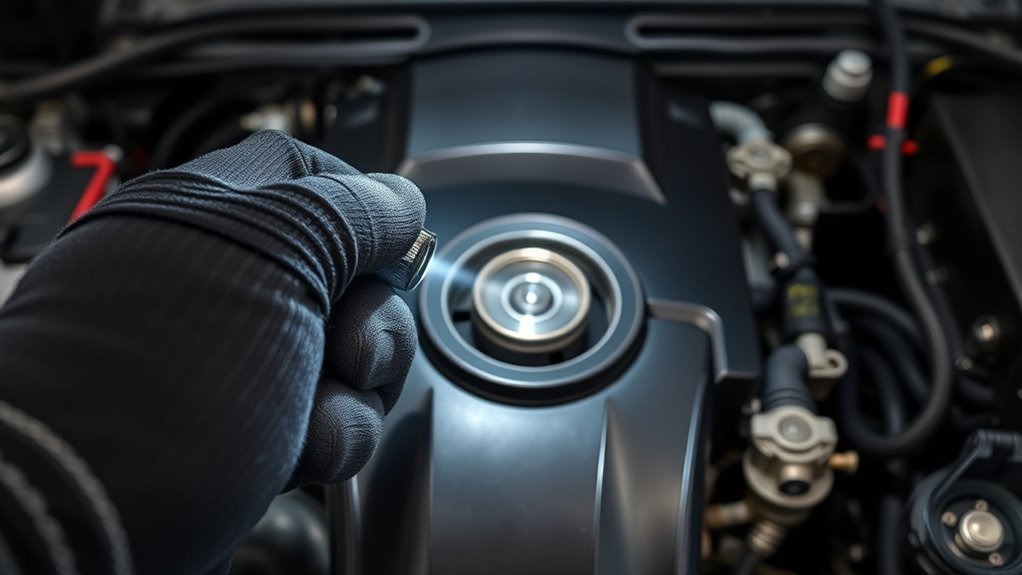
Start by visually inspecting the belt surface for cracks, glazing, fraying, or layer separation, focusing on the ribbed side and edges. Then run the engine briefly and listen for squealing or chirping that indicates slippage or wear. Finally, observe the tensioner for smooth, vibration-free movement and audible squeaks that suggest reduced belt integrity.
Visual Belt Surface Check
When you inspect the Camry’s serpentine belt, focus on the belt’s surface for cracks, fraying, glazing, missing chunks, or shiny smooth patches that indicate slippage and loss of grip. You’ll perform belt maintenance by scanning the entire length, looking for wear indicators: transverse cracks, edge fray, polished areas, and absent material. Do this every 60,000 miles or sooner in hot climates.
| Defect | Action |
|---|---|
| Cracks | Replace belt |
| Fraying | Inspect pulleys |
| Glazing/missing chunks | Replace immediately |
Use a flashlight, mirror, and gloves. Note locations and severity, then document for timely replacement. This procedural check frees you from sudden failures and keeps power delivery reliable, empowering independent vehicle care.
Listen For Squealing
Although a quiet belt is normal, any new squeal or chirp during startup or acceleration signals you should inspect the serpentine belt immediately; these noises usually mean the belt is slipping, glazing, or beginning to delaminate. Listen deliberately from engine bay while an assistant starts the engine; note when noise occurs—cold start, throttle, or steady idle. Use a focused approach to noise troubleshooting: isolate accessory loads by turning systems off, then on, to see if squeal changes. If you detect persistent noise, perform a visual check for cracking, fraying, or glazing and schedule replacement as part of serpentine belt maintenance. Acting quickly protects steering and cooling function, preserves freedom from roadside failure, and keeps your Camry reliably mobile.
Inspect Tensioner Movement
Because the tensioner keeps belt pressure consistent, you should inspect its movement whenever you check the serpentine belt—watch for smooth, damped travel without sticking, bouncing, or excessive play. You’ll palpate and observe the pulley while the engine’s off, noting any vibration or misalignment. Sticky or vibrating tensioners signal belt wear or slippage; squeaks often mean pressure loss. Check for cracks, excessive play, and alignment against belt run. Replace belt and tensioner proactively around 60,000–100,000 miles to avoid breakdowns. Know common tensioner types and follow tensioner maintenance intervals. Act decisively: a worn tensioner compromises freedom on the road.
| Symptom | Action |
|---|---|
| Squeak/vibration | Inspect pulley, replace if needed |
| Play/misalignment | Realign or replace tensioner |
If Your Camry Shows Belt Symptoms: Step-by-Step Fixes
Start by performing a close visual belt inspection: with the engine off, check for cracking, fraying, glazing, or missing rib material along the full length of the belt. If you spot severe wear or hear persistent squeal and can’t replace the belt immediately, remove engine load where possible (turn off accessories, avoid driving at high RPM) and limit use to reach a repair shop. For a short-term temporary fix only, apply a belt dressing sparingly to reduce slip while arranging prompt replacement—do not treat this as a long-term solution.
Visual Belt Inspection
When your Camry shows belt symptoms—squeals, chirps, or a Check Engine Light—you should perform a focused visual inspection of the serpentine belt and its hardware to identify cracks, fraying, glazing, and any signs of slippage. Use basic inspection tools and stick to belt maintenance intervals: inspect every 60,000 miles or sooner with symptoms. Check belt ribs for splits, surface glazing, and edge fray. Observe tensioner and pulleys for wobble or noise; any vibration suggests replacement. Record findings and act decisively to regain control.
| Component | What to look for | Action |
|---|---|---|
| Belt | Cracks, fray, glazing | Replace if present |
| Tensioner | Play, noise | Replace/adjust |
| Pulleys | Wobble, wear | Replace |
Immediate Temporary Fix
Reduce engine load immediately by switching off the A/C, radio, and other accessories, then visually confirm belt damage—cracks, fraying, or glazing—before attempting any temporary fixes. If you detect minor wear, apply belt dressing spray as a temporary solution to reduce squeal and slippage; follow product instructions and avoid excess application. Locate the tensioner and, with a wrench or socket set, gently check for and correct obvious looseness to restore proper tension temporarily. If glazing, deep cracks, or severe fraying exist, stop driving except to reach safe shelter—this isn’t negotiable. These procedural temporary solutions let you control risk while arranging professional belt maintenance or replacement. Preserve mobility without accepting long-term compromise.
Camry Serpentine Belt Options: OEM vs. Aftermarket
Although both OEM and aftermarket serpentine belts will keep your Camry running, they differ in fit, materials, warranty, and long-term reliability, so you should weigh those factors against price. You’ll apply OEM advantages when you prioritize exact fit, manufacturer-specified compounds, and a predictable 12-month/12,000-mile warranty; those attributes reduce installation adjustments and lower the risk of early failure. With aftermarket options, expect price savings but note Aftermarket drawbacks: variable material quality, inconsistent dimensions, and diverse warranty terms that can complicate liability and replacement planning. Conduct Quality comparisons by checking vendor specifications, material composition, and independent test data. Use Performance ratings from trusted reviews to rank belts by wear resistance, noise, and heat tolerance. Procedure: inspect pulleys and tensioner, match belt code to OEM spec, verify warranty terms, and select the belt that aligns with your service goals—choose OEM for reliability-driven projects, aftermarket only when vetted by performance data and solid warranty coverage.
Replacement Cost, Coupons, and Warranty for Camrys
Replacing your Camry’s serpentine belt typically costs about $171, though dealer fees and location can push that number higher, and you should factor in potential discounts from shop coupons or promotions. You’ll plan replacements proactively to avoid higher failure-related repairs; that’s a primary cost saving strategies point. Compare local shop coupons and online promotions, and prioritize facilities that publish transparent pricing.
When choosing service, verify warranty benefits: some independents and chains offer limited warranties, while Virginia Tire & Auto explicitly provides a 2-year/24,000-mile warranty on belt replacement. Confirm scope—parts, labor, and conditions—before authorizing work. Use procedural checks: get written estimates, confirm coupon applicability, and document service details to preserve warranty claims.
Treat replacement as preventive action: schedule inspections per recommended intervals (60k–100k miles), apply coupons where valid, and select providers whose warranty benefits align with your risk tolerance and desire for autonomy over repair choices.
How Pros Inspect and Replace a Camry Serpentine Belt (What to Expect)
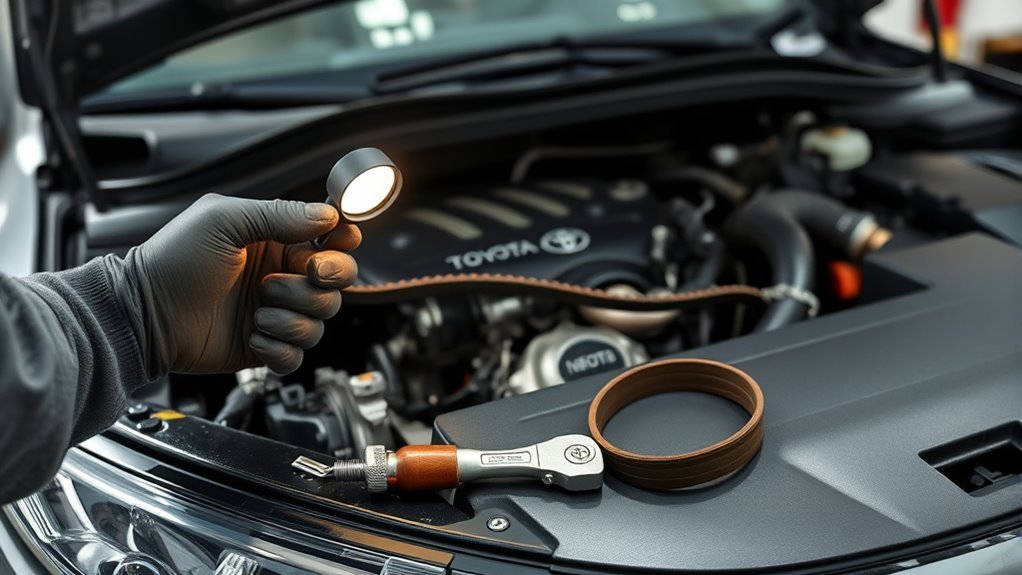
When you bring your Camry in, a technician will visually inspect the serpentine belt for cracks, glazing, and fraying, then check tension and groove engagement with handheld gauges or a tension meter. You’ll hear a concise explanation: they note belt wear, perform a tension check, and measure groove depth to confirm proper fitment on pulleys. If deterioration or mileage near 100,000 miles is evident, they’ll recommend replacement.
During replacement, the tech removes the belt, re-inspects tensioners, idler pulleys, and accessory pulleys for wear or play, replacing components as needed to prevent repeat failure. They route the new belt per factory diagrams, verify alignment, and perform a final tension check under static and idle conditions. You’ll be informed of expected lifespan given climate and usage.
Work typically carries a warranty—commonly two years or 24,000 miles—so you leave with documented coverage and the confidence to drive free from immediate serpentine-belt constraints.
Frequently Asked Questions
How Often Do You Change the Serpentine Belt on a Toyota Camry?
You should change the serpentine belt around 100,000 miles, inspecting for belt wear indicators every 60,000 miles. Follow maintenance tips: visually check cracks, fraying, tension, and replace sooner in hot climates to avoid sudden failure.
How Long Do Toyota Serpentine Belts Last?
Quick as a wink, Toyota serpentine belts typically last 60,000–100,000 miles; you’ll inspect belt wear indicators every 60,000, follow maintenance tips, replace by 90,000 as precaution, and adapt intervals to driving conditions.
Can a Serpentine Belt Last 200,000 Miles?
No — a serpentine belt lasting 200,000 miles is extremely unlikely. You should monitor serpentine belt lifespan, follow manufacturer intervals, and inspect for factors affecting durability like climate, driving conditions, wear signs, and maintenance to prevent failure.
Conclusion
Keep a close eye on your Camry’s serpentine belt: inspect every 30,000 miles or with any accessory noise, and replace by 60,000–100,000 miles or at first signs of cracking, glazing, fraying, or missing ribs. Like a worn shoe sole, a degraded belt slips and degrades accessory performance and can stall your charging and cooling systems. Follow the stepwise inspection, tension check, and guided replacement intervals outlined above to avoid roadside failures and costly collateral damage.