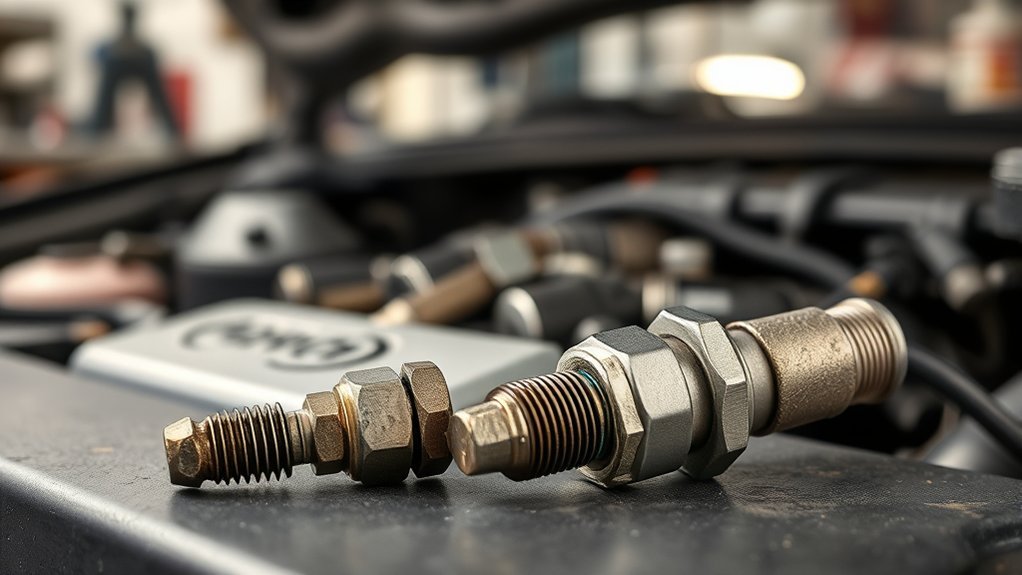
On a Camry, don’t confuse the upstream air‑fuel ratio (A/F) sensor with the rear O2 sensor: the A/F is a wideband sensor giving a continuous 0–5V signal the ECU uses for precise closed‑loop fuel control, while the rear narrowband O2 toggles roughly 0.1–0.9V to monitor catalytic converter efficiency. A/F failures hit fuel trims, idle and economy; rear O2 flags emissions performance. Keep VIN/connector info handy for correct parts and tests, and the guide explains diagnostics and replacement.
Who This Guide Is For and How to Use It
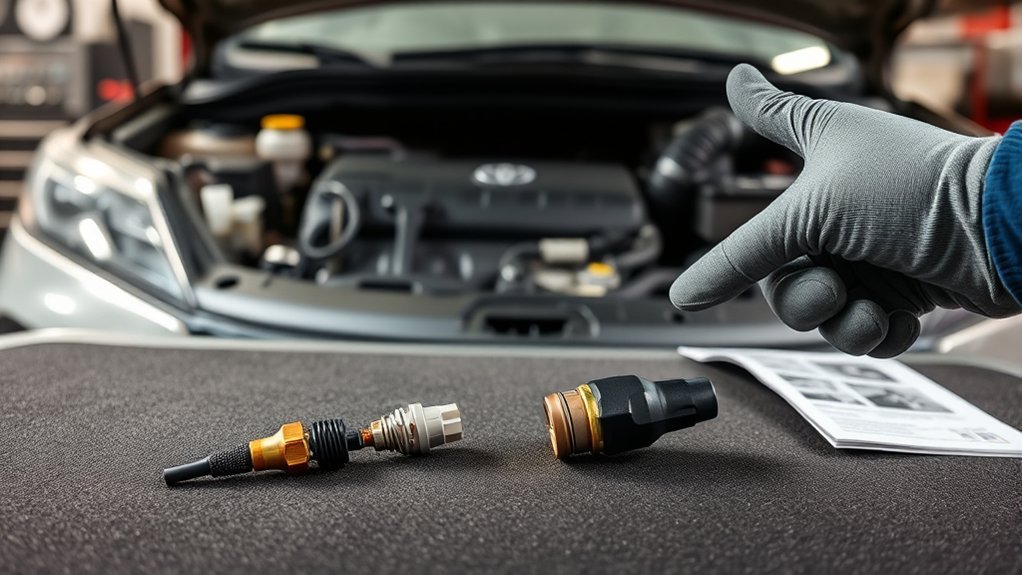
Anyone working on a Toyota Camry who wants to tell the difference between an O2 sensor and an air–fuel ratio (AFR) sensor will find this guide useful. You’re likely an enthusiast, mechanic, or owner aiming to reclaim control of your vehicle’s performance and emissions. This guide shows you how each sensor functions—O2 for exhaust oxygen and emissions, AFR for precise air-to-fuel mixture—so you can make informed choices about sensor maintenance and repairs.
You’ll get practical tips on identification, relevant DTCs, and why OEM sensors matter for reliability. Use basic diagnostic tools to read live data, compare voltages and volt-to-frequency outputs, and confirm sensor location and wiring before replacing parts. The approach is hands-on and freedom-minded: you’ll learn to diagnose decreased fuel economy or drivability issues without overreliance on shops. Follow the procedures here to maintain compliance with emissions rules while keeping your Camry running clean and efficient.
Quick Symptoms: Camry O2 & A/F Sensor Problems to Watch For
Watch for a Check Engine light and related DTCs — that’s often the first sign an O2 or A/F sensor’s misreading. You’ll also notice reduced fuel economy as the engine runs richer or leaner than intended. Rough idle or occasional stalling can follow, especially if the A/F sensor is giving erratic current or trim data.
Check Engine Light
If your Camry’s Check Engine Light comes on, don’t ignore it—oxygen (O2) and air/fuel ratio (A/F) sensors are common culprits and produce distinct trouble codes you can read with a scanner. Use diagnostic tools to pull codes like P0131/P0135 (O2 signal or heater) or P1130/P1155 (A/F range/performance). That code points you to targeted sensor maintenance instead of guessing. Symptoms vary—rough idle, hesitation, increased emissions—so act to keep control of your car and freedom from bigger repairs.
| Code | Likely Sensor | Symptom |
|---|---|---|
| P0131 | O2 | Weak signal |
| P0135 | O2 heater | Heater fault |
| P1130 | A/F | Rich/lean errors |
| P1155 | A/F | Range/perf issue |
Reduced Fuel Economy
Along with the check engine light and its codes, one of the first signs you’ll notice from a failing O2 or A/F sensor is worse fuel economy—often a 10–15% drop—because the engine computer isn’t getting correct oxygen or ratio readings and is over- or under-fueling to compensate. You’ll feel the difference at the pump and on longer drives: mileage falls, and the car may sip more fuel without obvious mechanical faults. Trouble codes like P0131 or P0135 point to O2 sensor voltage or heater problems, while a bad A/F sensor can stick at a steady voltage and confuse fueling strategy. Stay proactive with sensor maintenance and use selective performance tuning only after sensors are verified—freedom comes from control and reliable diagnostics.
Rough Idle Or Stalling
When your Camry starts idling rough or even stalls, a failing O2 or A/F sensor is often behind it because the engine computer isn’t getting the right air–fuel info and ends up running too rich or too lean. You’ll notice rough idle or stalling issues as the ECU chases bad readings: an O2 sensor misreports the exhaust oxygen content, upsetting mixture control, while an A/F sensor can flag DTCs like P1130 or P1150 for performance faults. A failed heater in the A/F sensor may set P0135 and cause stalling during acceleration. You’ll also see poor fuel economy and erratic engine behavior that mimics rough idle. Monitor codes, test sensors, and replace them promptly to reclaim reliable, liberated driving.
Identify Your Camry’s Sensor: VECI, VIN, and Connector Colors
Start by checking the underhood VECI label — it lists the sensor specified for your Camry’s engine. You can also confirm the exact part via a VIN check with your dealer if you’re unsure. Finally, inspect the harness connector wire colors, since A/F and O2 sensors use different wiring patterns that help you tell them apart.
Check The VECI Label
If you want to know whether your Camry uses a traditional oxygen (O2) sensor or a newer air/fuel ratio (AFR) sensor, check the Vehicle Emission Control Information (VECI) label under the hood first—it lists sensor types, locations, and specifications for your specific engine. Use the VECI label for clear sensor identification before you do anything else. It tells you whether your model year commonly used AFR sensors or retained O2 units. After reading the VECI, you can confirm via a VIN check with a dealer to verify precision for your VIN and trim. This approach frees you from guesswork and empowers accurate parts ordering or diagnostics. Rely on VECI label guidance as your authoritative starting point.
Inspect Connector Wire Colors
After you’ve checked the VECI label and confirmed details with a VIN lookup, inspect the sensor harness connector to identify whether your Camry uses an O2 or an AFR sensor by comparing wire colors and pin counts to the spec in your repair manual. Look closely at the connector: count pins, note wire colors, and photograph the plug. Typical color schemes vary by year and engine, so never assume—cross-reference wiring diagrams and repair manual tables for sensor compatibility. If your connector shows additional heater or signal wires, it likely indicates an AFR sensor; fewer wires usually mean a conventional O2 sensor. Don’t swap sensors without confirming compatibility—incorrect wiring undermines performance and your control over the vehicle’s emissions system.
What the Rear O2 Does vs the Upstream A/F Sensor
Although both sensors monitor exhaust gases, the upstream air/fuel (A/F) sensor sits before the catalytic converter and gives you a precise, continuous 0–5V signal that the engine control unit uses to adjust fuel delivery, while the rear O2 sensor, located after the converter, provides a narrower 0.1–0.9V signal that’s mainly used to verify the catalytic converter’s efficiency rather than to control the air–fuel mixture directly. You rely on the A/F sensor for real-time sensor functionality that shapes combustion, improves fuel economy, and reduces emissions. The rear O2’s diagnostic importance is confirming the catalyst is doing its job, so you won’t waste time chasing fuel trims when the converter has failed.
- Upstream A/F: continuous, precise input for closed-loop fuel control
- Rear O2: post-catalyst check to confirm emission treatment
- Your ECU trusts the A/F for active adjustments, not the rear O2
- A failing rear O2 flags catalyst problems; a bad A/F hits drivability
This keeps your Camry free and efficient, focused on liberation from unnecessary repairs.
Signal Differences: Narrowband O2 vs Wideband/A‑F (What the ECU Sees)
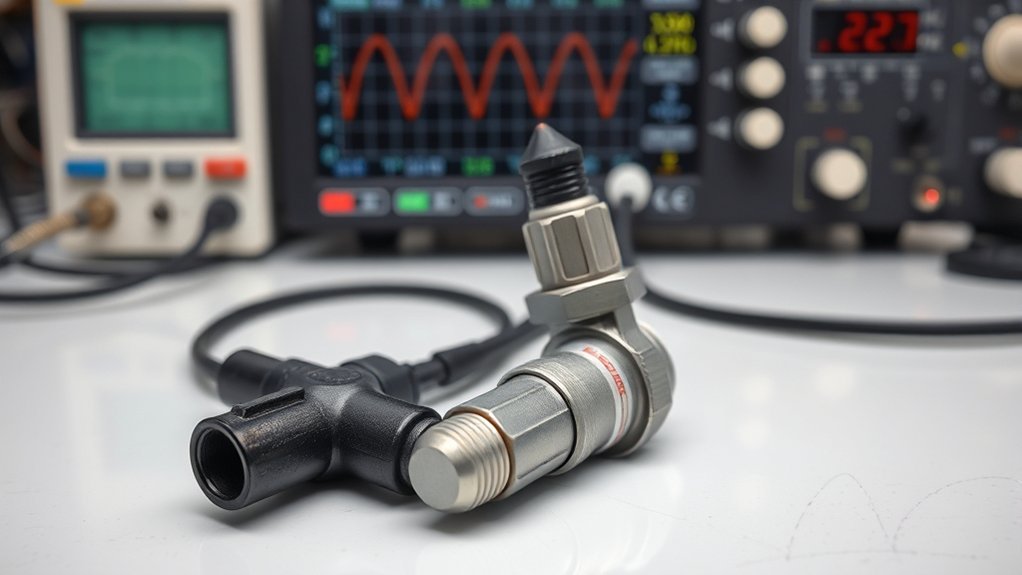
Think of the narrowband O2 as a binary signal your ECU watches for swings around lambda 1.0 — it jumps between about 0.2V (lean) and 0.8V (rich) and tells the controller only which side of 14.7:1 the mixture sits, while the wideband A/F sensor streams a continuous, calibrated voltage that maps the exact air–fuel ratio across a wide range so the ECU can make precise fuel adjustments under varying loads. You’ll see narrowband as a fast toggling voltage within a tight voltage range used for closed-loop trims; it’s simple, cheap, and tuned around stoichiometry. The wideband delivers a broader voltage range tied to precise sensor calibration and a richer numerical readout of AFR, letting the ECU manage mixtures during high load, cold start, or tuning. Remember the outputs aren’t interchangeable: wiring, ECU algorithms, and calibration expect one type or the other. Use the right sensor to free performance and emissions control from guesswork.
Common Camry Fault Codes and Fast Diagnostic Checks
When your Camry throws O2/A‑F related codes like P1135/P1155 (heater faults) or P1130/P1150 (sensor performance/range), you’ll want to move quickly to rule out wiring and heater failures before chasing intermittent symptoms. Start with basic troubleshooting techniques: visually inspect harnesses and connectors for corrosion, breaks, or pin damage. Check heater continuity and current with a low‑amp probe during start‑up. Verify KOEO AF voltages—about 3.0V on AF1 and 3.3V on AF2—to confirm sensor calibration baseline. Don’t ignore P0125; a cold engine can keep closed‑loop off and skew readings.
- Inspect wiring/connectors for damage, push‑pin or heat‑shrink failures.
- Probe heater circuit with low‑amp tool at cranking for continuity/current.
- Measure AF wire voltages KOEO to confirm sensor calibration reference.
- Consider coolant temp influence (P0125) before swapping sensors.
Use precise troubleshooting techniques so you stay free from unnecessary parts changes and regain control of your Camry’s emissions and driveability.
Replacing Sensors: Correct Parts, Heater Tests, Torque, and Sealant
Before you swap sensors, confirm you’ve got the right part (A/F sensors usually start with 89467, O2 with 89465) and test the heater circuit—A/F heaters should draw roughly 5–7 A (~75 W) at startup—so you don’t replace a good sensor or mask wiring issues. Check sensor compatibility with VIN and part listings; mismatched sensors can upset closed‑loop control and emission diagnostics. When installing, follow installation tips: inspect the pigtail routing, secure retainers, and avoid sharp bends or heat traps that stress wires. Coat threads sparingly with a nickel‑based high‑temp antiseize to prevent seizure, but keep compound off the sensing tip. Torque to the specified value (roughly 30 ft‑lbs) to seal the exhaust without stripping threads—use a calibrated torque wrench. After fitting, recheck heater current and wiring connectors for corrosion or looseness. These straightforward steps protect performance, reduce repeat work, and free you from needless parts swapping while respecting sensor compatibility and proper installation.
Emissions Impact, Fuel Economy, and When to Call a Pro
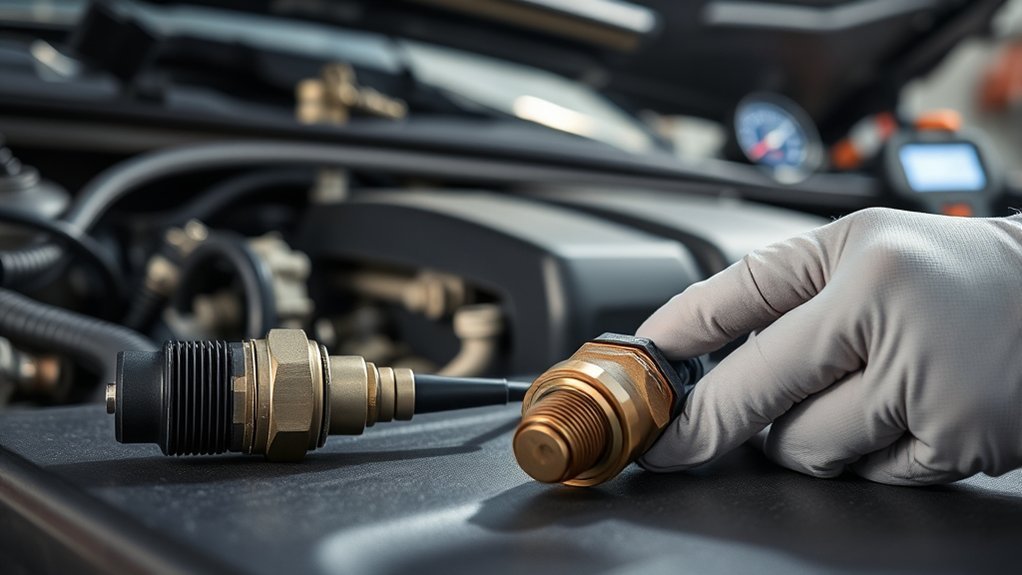
Because the A/F sensor reads air‑to‑fuel ratios far more precisely than a conventional O2 sensor, a failing A/F unit can quickly push your engine out of ideal trim and raise tailpipe pollutants and fuel use. You’ll notice worse fuel economy, more frequent check-engine lights, and a catalytic converter that can’t clean exhaust to meet emissions regulations. Don’t tolerate that—proper sensor maintenance preserves performance and your right to move freely without needless cost.
A failing A/F sensor quickly upsets fuel trim, harming economy, increasing emissions, and stressing the catalytic converter—get it checked.
- Dropped MPG from a sluggish A/F sensor that responds slowly to load changes.
- Increased NOx and CO emissions when the closed-loop system runs rich or lean.
- Early catalytic converter stress and potential failure from prolonged imbalance.
- False readings from cheap replacements that skirt emissions regulations and cause repeat failures.
If you see persistent symptoms or a CEL after DIY checks, call a pro. They’ll test both O2 and A/F sensors, use OEM parts, and restore efficient, compliant operation.
Frequently Asked Questions
What Is the Difference Between Oxygen Sensor and Air-Fuel Ratio Sensor?
You’ll see oxygen sensor types give binary rich/lean feedback using voltage swings, while air-fuel ratio sensors deliver precise quantitative sensor functionality for exact A/F control; you’ll use A/F sensors for finer tuning and emissions freedom.
Do O2 Sensors Read AFR?
No, you don’t get true AFR from O2 sensor functionality; it signals rich/lean around stoichiometry. You’ll need an AFR sensor for precise measurements and AFR sensor calibration to liberate tuning and maximize efficiency.
What Is an AFR O2 Sensor?
An AFR O2 sensor is a precise sensor that measures fuel mixture quantitatively, so you’ll get faster, higher sensor efficiency and tighter engine control, helping you free your ride from wasteful fueling and excess emissions.
Conclusion
You’ve now got the essentials to tell your Camry’s oxygen sensor from its air‑fuel (A/F) sensor, spot symptoms, read codes, and replace parts correctly. Trust VIN/VECI and connector colors, test heaters before swapping, and don’t confuse narrowband O2 signals with wideband A/F output—your ECU relies on both. If emissions, mpg, or drivability won’t improve, call a pro. Yes, it’s not quite like fixing a Model T, but it’s close enough.