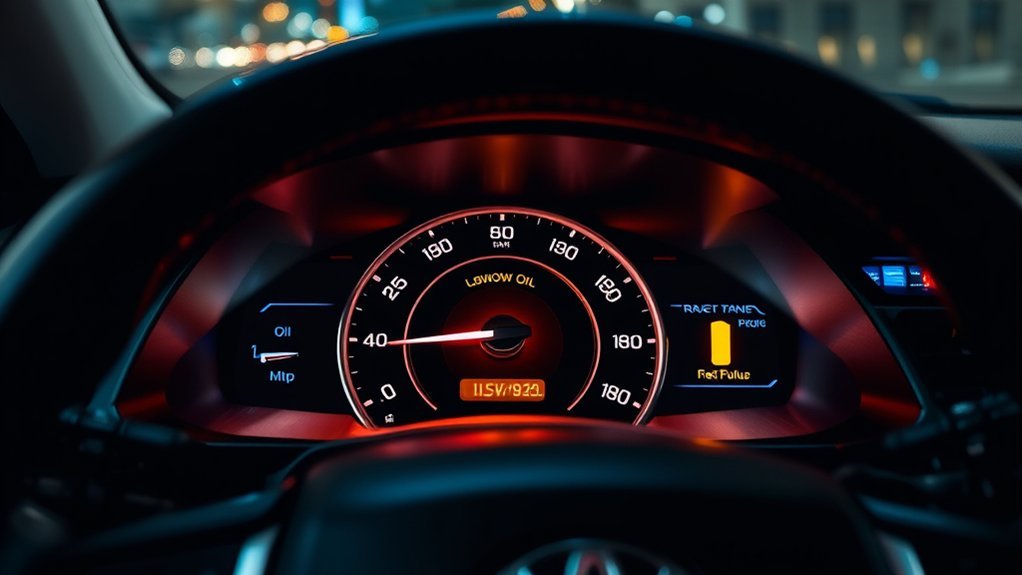
When your Camry’s low oil warning light illuminates, it signals a critical issue that needs your immediate attention—either low oil levels or low oil pressure. Ignoring this warning can lead to significant engine damage. Start by checking your oil level accurately on level ground using the dipstick, and top up if necessary. If the warning persists, investigate for leaks or consult a mechanic. Keep an eye on your engine’s health; there’s more to learn about preventing these issues.
What Does the Low Oil Warning Light Indicate?
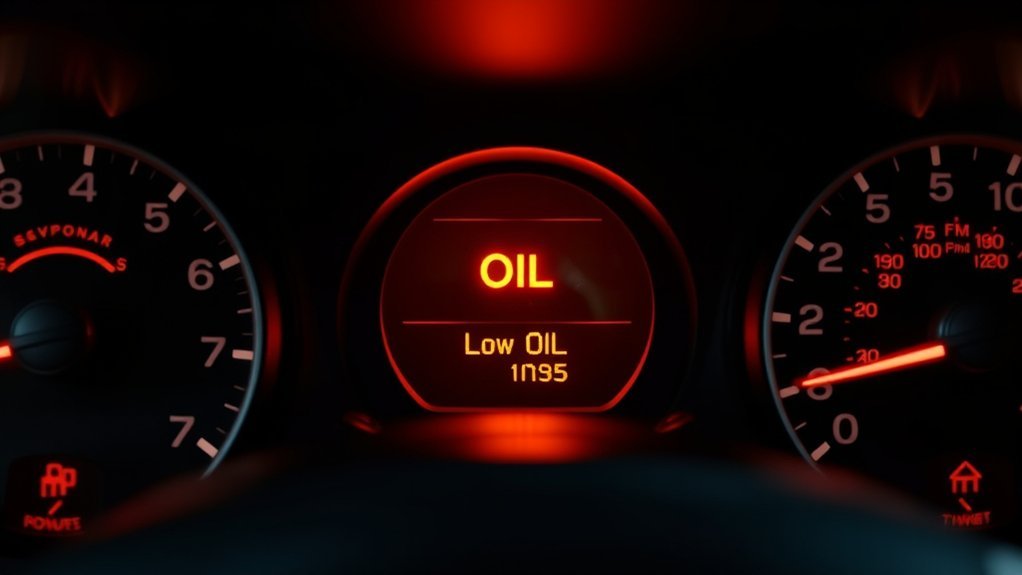
The low oil warning light in your Camry is a critical indicator of engine health. This light, often resembling a genie lamp with a drop or a red “OIL,” signals that your engine needs immediate attention. It can indicate low oil levels or low oil pressure—both serious issues that can lead to catastrophic engine failure if ignored. Low oil levels may arise from leaks or insufficient maintenance, while low oil pressure could mean a faulty sensor or clogged passages. Understanding these oil pressure indicators is key to maintaining engine lubrication importance. Regularly checking your oil level guarantees your engine has the necessary lubrication, preventing those warning lights from blinking at you. Don’t take the risk; act promptly to avoid premature engine wear and maintain your vehicle’s performance. Embrace the freedom that comes with a well-maintained engine—your Camry deserves it!
How to Check Your Oil Level Properly
Checking your oil level is a simple yet vital task that can save your engine from significant damage. Always perform the check on level ground after the engine has cooled down for accurate readings. Use the dipstick: remove it, clean it with a cloth, reinsert it fully, and then pull it out to read the level. Make sure it falls between the “min” and “max” marks; if it’s below the minimum, topping up is necessary.
Here’s a quick reference for oil checking:
| Step | Action | Importance |
|---|---|---|
| Check on level ground | Guarantees accurate reading | Prevents misinterpretation |
| Clean the dipstick | Removes contaminants | Ensures accurate viscosity check |
| Reinsert fully | Assures complete measurement | Avoids false readings |
| Check oil level | Confirms if topping up is needed | Maintains engine health |
Regular dipstick maintenance is vital for engine longevity.
Top Causes of Low Oil Pressure Warnings in Your Camry
When your Camry shows a low oil pressure warning, it’s essential to identify the underlying issues. Common culprits include oil leaks or excessive consumption, which can lead to low oil levels and pressure drops. Additionally, a faulty oil pressure sensor may trigger false alarms, so it’s important to check both the oil and the sensor’s condition.
Common Sensor Failures
Although low oil pressure warnings can be alarming, understanding the common sensor failures in your Camry can help you diagnose the issue more effectively. Faulty oil pressure sensors often lead to false alarms, providing inaccurate readings that may trigger warnings even when oil levels are adequate. Sensor calibration is essential; if it’s off, you might think there’s a problem when there isn’t. Additionally, oil pump malfunctions and blocked oil passages can cause actual pressure drops, complicating your understanding of the issue. Engine wear, like excessive bearing clearances, can also affect sensor readings. Finally, using the wrong oil viscosity in newer models can contribute to these misreadings. Regular maintenance and proper oil choices can help mitigate these concerns.
Oil Leaks and Consumption
Faulty sensors can sometimes mislead you into believing there’s an oil pressure issue when there isn’t. However, oil leaks and high consumption are real threats that can trigger these warnings. Regular oil maintenance is essential for your Camry’s health. Here’s what to watch for:
- Oil Leaks: Check under your vehicle regularly for any signs of oil pooling, as this can lead to significant drops in oil levels.
- High Oil Consumption: If you notice you’re frequently adding oil, it might indicate worn piston rings or valve seals.
- Clogged Oil Passages: Sludge buildup can restrict oil flow. Routine oil changes help prevent this issue.
Stay proactive with engine diagnostics to catch these problems early and keep your Camry running smoothly.
The Difference Between Oil Warning Light and Oil Change Reminder
Understanding the difference between the oil warning light and the oil change reminder is essential for maintaining your vehicle’s health. The oil change reminder alerts you when scheduled maintenance is due, typically based on mileage or time intervals. It’s a preventive measure designed to keep your engine running smoothly.
In contrast, the oil warning light signals an urgent issue, indicating low oil pressure or a severe drop in oil level. Often resembling a genie lamp with a drop or a red “OIL,” this warning requires immediate attention to prevent potential engine failure. Red warning lights like this one signify a risk of severe engine damage if ignored.
While the oil change reminder follows your maintenance schedule, the oil warning light demands prompt investigation to protect your engine. Recognizing these distinctions empowers you to take the right actions for your Camry’s longevity and performance.
Immediate Steps to Take When the Low Oil Pressure Light Illuminates
When the low oil pressure light comes on, your first step is to check the oil level with the dipstick. If it’s low, top it up with the recommended oil to protect your engine from damage. Don’t ignore potential leaks or burning, and if the warning persists, get your vehicle checked by a professional immediately.
Check Oil Level Immediately
As soon as the low oil pressure light flickers on your Camry’s dashboard, it’s crucial to act quickly. Ignoring this warning can lead to serious engine damage. Here’s what you should do to check the oil level:
- Park on Level Ground: Verify your vehicle is on a flat surface and let the engine cool down for an accurate reading.
- Use the Dipstick: Remove the dipstick, wipe it clean, and reinsert it. Pull it out again to check if the oil level is within the recommended range.
- Top Up if Necessary: If the oil level’s low, add the manufacturer-recommended oil type as specified in your owner’s manual.
Following these maintenance tips can help keep your engine running smoothly.
Inspect Warning Light Causes
The low oil pressure warning light on your Camry can signal several potential issues that need immediate attention. It typically indicates that your engine isn’t receiving adequate oil pressure, risking severe damage. First, check the oil level using the dipstick; if it’s low, top it up with the manufacturer-recommended oil to guarantee proper lubrication. If the light remains on after adding oil, you may have a faulty oil pressure sensor or problems with the oil pump. Don’t delay in having these components evaluated by a professional mechanic, as ignoring the warning can jeopardize your engine health. Regular maintenance and timely oil changes are essential to prevent low oil pressure issues and keep your Camry running smoothly.
Risks of Ignoring Low Oil Pressure Alerts
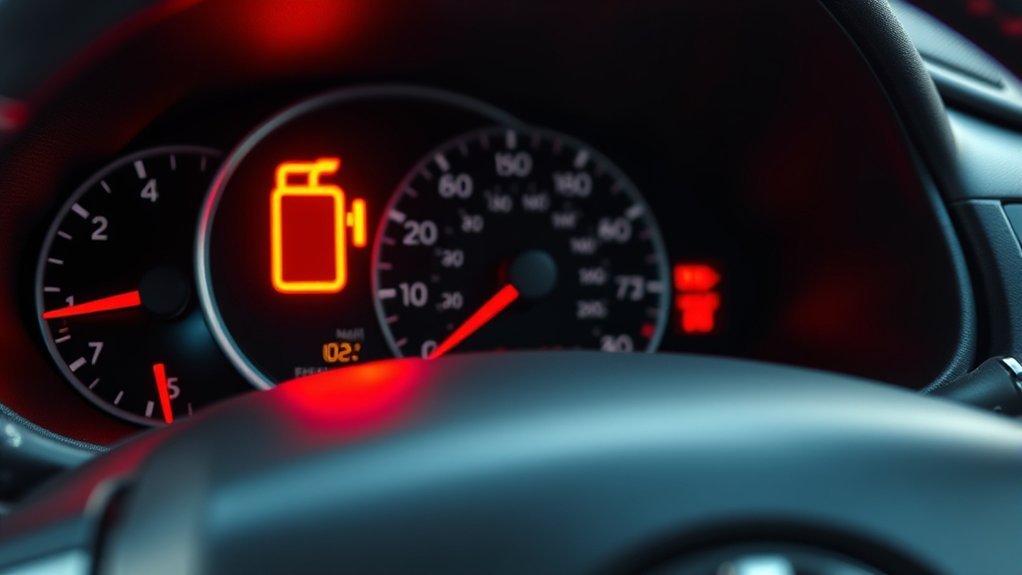
Ignoring low oil pressure alerts can have serious consequences for your engine’s health. When you overlook these warning signs, you risk:
- Increased Engine Wear: Inadequate lubrication causes friction, leading to premature wear of vital components.
- Severe Mechanical Failures: A persistent low oil pressure warning could indicate a failing oil pump or clogged passages, potentially resulting in catastrophic engine failure.
- Overheating and Seizure: Continuing to drive with low oil pressure can cause your engine to overheat, risking seizure and expensive repairs.
Timely attention to low oil pressure alerts isn’t just wise; it can also save you from voiding warranties or triggering lemon law protections after multiple repair attempts. Don’t wait for disaster—stay proactive and guarantee your engine runs smoothly.
How Ignoring Low Oil Pressure Risks Your Engine and When to Consult a Mechanic?
Ignoring low oil pressure can spell disaster for your engine, leading to immediate damage like bearing failure or even complete engine seizure. Your vehicle’s sensors are essential for diagnosing these issues, so don’t overlook their warnings. If the oil pressure light comes on, it’s best to pull over and consult a mechanic to prevent costly repairs down the line.
Immediate Engine Damage Risks
When you see the low oil pressure warning light, it’s essential not to dismiss it, as doing so can lead to severe engine damage. Ignoring this warning can jeopardize your engine’s health due to inadequate lubrication, resulting in:
- Bearing Failure: Insufficient oil leads to increased friction, causing critical components to wear out quickly.
- Overheating: Low oil pressure can result in overheating, which might cause catastrophic engine failure.
- Engine Seizure: Prolonged neglect can cause your engine to seize altogether, rendering it inoperable.
Regular checks of oil levels and pressure are crucial. If the warning persists even after topping off the oil, consult a mechanic to investigate the oil pump and sensor. Don’t risk irreversible damage—act promptly!
2. Diagnostic Importance of Sensors
While you might think a flashing low oil pressure warning light is just a minor inconvenience, it can signal significant issues lurking beneath your Camry’s hood. The engine oil pressure sensor plays an essential role in maintaining diagnostic accuracy. If it’s malfunctioning, it might falsely alert you to low oil pressure while actual problems could be brewing, like inadequate lubrication leading to severe engine damage. Regular maintenance and proper sensor calibration are important for ensuring these sensors function effectively. Ignoring the warning can result in catastrophic consequences, such as bearing failure or engine seizure. If that warning persists, don’t hesitate—consult a mechanic to diagnose potential issues with the oil pump or oil passages before it’s too late.
3. Seeking Professional Help Early
A flashing low oil pressure warning light shouldn’t be taken lightly; it often signals underlying issues that could jeopardize your engine’s health. Ignoring this alert can lead to severe engine damage due to inadequate lubrication, risking catastrophic failure and costly repairs. If you see this warning, consider these steps:
- Check Oil Levels: Low oil levels could be the culprit; make certain you have enough oil in the system.
- Inspect Pressure Sensors: A faulty oil pressure sensor might be malfunctioning, misreporting oil levels.
- Consult a Mechanic: Immediate professional help is essential; timely intervention can save your engine from further complications.
Don’t risk premature wear on your engine components—act quickly to maintain your vehicle’s performance and longevity.
Preventative Maintenance Tips for Your Toyota Camry
To keep your Toyota Camry running smoothly, regular preventative maintenance is vital. First, regularly check your engine oil level with the dipstick to guarantee it’s within the recommended range; low levels can lead to decreased oil pressure and potential engine damage. Follow the manufacturer’s oil change intervals, usually between 5,000 and 10,000 miles, to maintain peak engine performance and longevity. Always use the correct oil viscosity specified in your owner’s manual—especially for newer models, where the shift from 0W-16 to 0W-8 can affect operation. Keep an eye on dashboard warning indicators, particularly the oil warning light, and address alerts immediately to prevent severe issues. Finally, maintain a log of your service history and any oil-related warnings; this documentation can be essential for warranty purposes. By following these oil maintenance tips, you’ll safeguard your vehicle and enjoy a reliable driving experience.
How Oil Pumps Work and What Can Go Wrong
Understanding how oil pumps function is vital for maintaining your Toyota Camry’s engine health. The oil pump is key for circulating engine oil under pressure, guaranteeing all moving parts are lubricated, thereby preventing wear. Here’s what can go wrong with oil pump mechanics:
Understanding oil pump mechanics is essential for your Toyota Camry’s engine health, ensuring proper lubrication and preventing wear.
- Mechanical Failure: A malfunctioning oil pump can lead to inadequate oil distribution, triggering low oil pressure warnings.
- Clogged Passages: Oil flow issues can arise from clogged oil passages or a blocked oil pickup screen, forcing the pump to work harder and risking failure.
- Insufficient Oil Levels: Low oil levels, whether from leaks or consumption, can impair the pump’s ability to draw oil effectively.
Regular maintenance, including oil changes and inspections of the oil pump and related components, is vital to prevent these issues. By staying proactive, you can guarantee your Camry runs smoothly and efficiently.
Real Camry Owner Stories: Addressing Low Oil Pressure Issues
While driving your 2022 Toyota Camry, you might find yourself facing unexpected low oil pressure warnings, especially during specific conditions like braking or climbing hills. Many owners have shared their experiences, noting that these warnings often stem from software glitches rather than actual oil level issues. Dealers have confirmed that the Camry relies on software estimates instead of a physical oil level sensor, leaving some owners feeling uneasy about long-term engine health.
Responses from dealers vary; some customers feel reassured after consultations, while others remain anxious. A few drivers have even noticed that using cruise control seems to trigger these warnings, further hinting at a software issue. Community feedback emphasizes the significance of regular oil checks and documenting any warnings. If you encounter persistent issues, keeping detailed records could be essential for warranty claims and ensuring your engine’s well-being.
Frequently Asked Questions
Does Toyota Camry Tell You When the Oil Is Low?
Yes, your Toyota Camry alerts you when the oil level’s low. Regular oil maintenance is essential, so check the dipstick often—don’t solely rely on the dashboard warning for accurate readings, especially on inclines.
Can I Just Add Oil to My Car if It’s Low?
Yes, you can add oil if it’s low, but remember it’s just a temporary fix. Prioritize oil maintenance to guarantee your engine’s health and investigate any underlying issues causing the low oil level.
Conclusion
To sum up, ignoring that low oil warning can be like playing with fire—one misstep could lead to costly engine damage. Staying proactive and checking your oil regularly not only helps maintain your Camry’s performance but also prolongs its life. If you ever feel uncertain, don’t hesitate to consult a mechanic. After all, a well-cared-for car is a happy car, and you deserve a smooth ride on every journey. Stay vigilant and keep your engine healthy!